


SAN DIEGO – At AIAA AVIATION Forum 2026, industry and government leaders described a high-speed aviation sector that is technically close to commercial reality yet still constrained by economics, regulation, and environmental concerns.
Across supersonic jets, rocket-powered point-to-point concepts and low-boom demonstrators, panelists arrived at a shared conclusion: the technology is largely ready. The questions now involve financing, markets, standards, and proof that high-speed travel can be economically viable while remaining environmentally and socially acceptable.
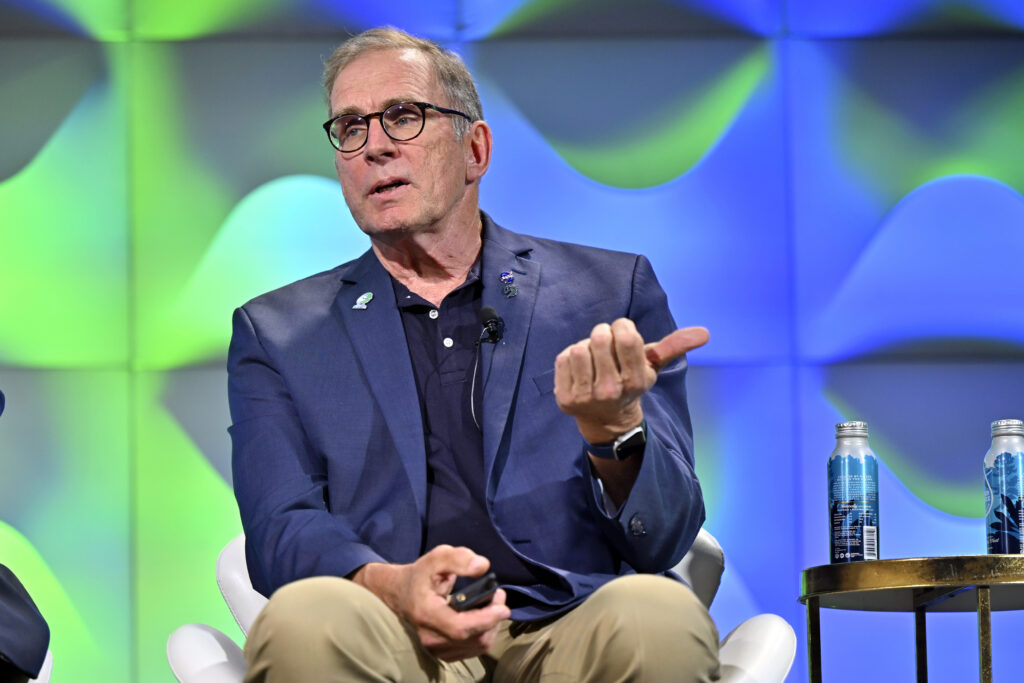
The panel discussion brought together experts from Boeing, Boom Supersonic, DLR (the German Aerospace Center), the Federal Aviation Administration, NASA, and New Frontier Aerospace.
Why Commercial Aviation Stalled at Mach 0.85
Todd Magee, Boeing’s chief engineer of high-speed flight, opened by tracing aviation milestones from the Wright Flyer to the Concorde. Despite these inroads, the modern Boeing 787, a marvel of carbon-fiber efficiency, cruises at Mach 0.85, essentially the same speed as jets from decades past, Magee said.
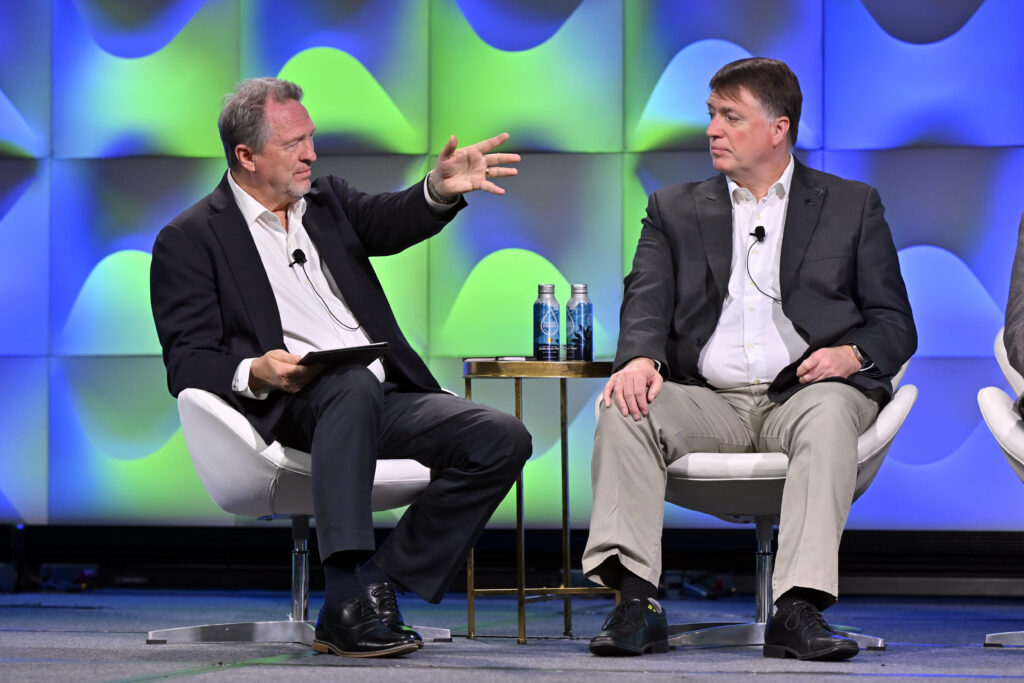
“So how come we’re stuck in the slow lane?” he asked the audience. In his view, the primary barrier is no longer physics, but economics and financing. “It’s hard to find an investor that’s going to wait 10 years to start making a profit,” he said.
Magee cited NASA market studies identifying the strongest civil opportunity between Mach 2 and Mach 4, with diminishing returns and increasing technical complexity above Mach 4. A follow-on NASA market study further narrowed the ideal speed range to Mach 1.5 to Mach 2, Magee stated after the session.
Boom Supersonic: Building the Engine and Airframe Together
David Lazzara, staff scientist and lead Overture engineer at Boom Supersonic, described how the Denver-based startup, founded in 2014, has organized around a single goal: making the world dramatically more accessible through affordable supersonic travel.
Boom’s first demonstrator, the XB-1, was a deliberate test of what a small, independent team could achieve building a crewed supersonic jet from scratch. Successful flights up to Mach 1.18, Lazzara said, helped unlock new policy momentum in Washington.
A strategic decision to design the Symphony engine in parallel with the Overture airframe has defined the company’s technical approach.
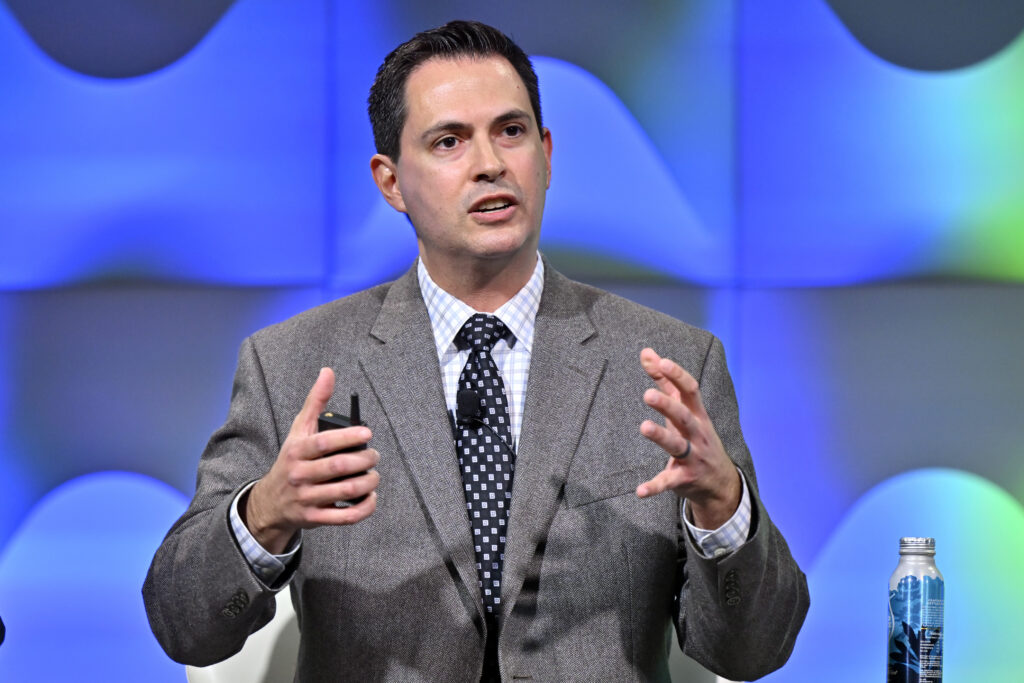
“Bringing an off-the-shelf engine and a custom-designed airplane together means you’re going to make compromises on both sides,” Lazzara said. “We found that an incredible part of the design space opens up when you design them together.”
In an unexpected development, the same core engine technology is now being targeted at terrestrial power markets; specifically, AI data centers. Lazzara explained the commercial opportunity would accelerate Symphony’s development while compressing the learning curve and generate sufficient revenue to fund the Overture airplane program.
Boom still publicly targets the end of the decade for Overture. Lazzara said the team “is working feverishly toward targets.” He continued, “It’s okay to set a target, and if you find something unexpected that has to be addressed, then it urgently gets addressed in real time. What matters is that we get to the finish line.”
Rocket-Powered Point-to-Point with Small Vehicles, Global Range
Jess Sponable, president and CTO of New Frontier Aerospace, and a former Air Force and DARPA program leader, argued that hypersonic flight is not a new concept and that advances in lightweight composite tanks and staged combustion rocket engines now make small, very fast vehicles feasible for point-to-point missions.
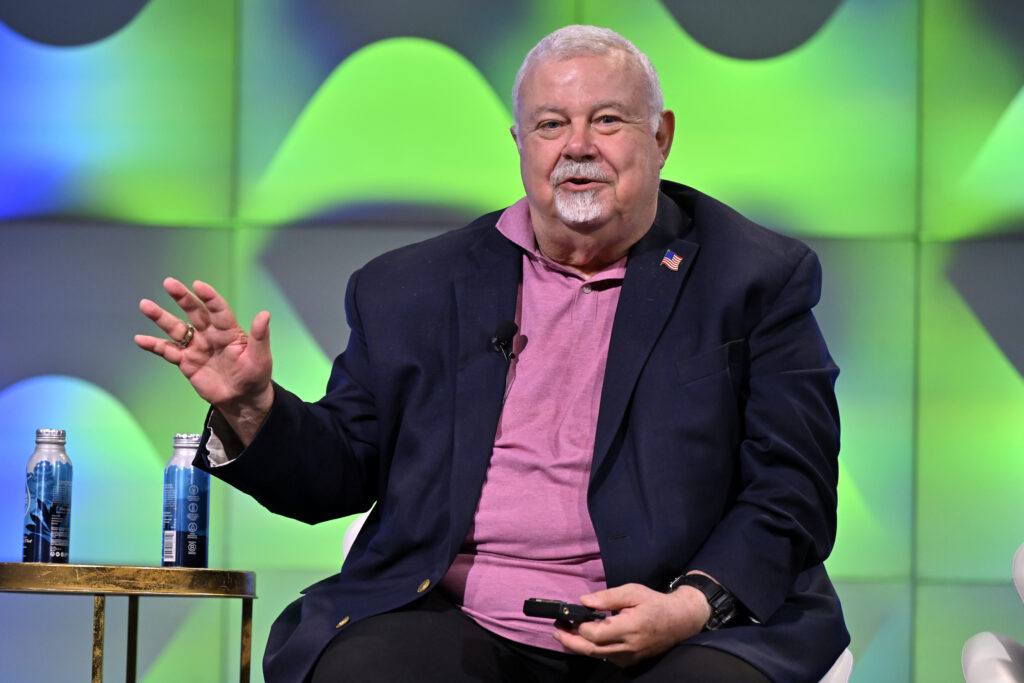
He highlighted a 3D-printed LOX-LNG engine weighing roughly 25 pounds with an approximate 100 to 1 thrust-to-weight ratio, three times lighter, he said, than the best LOX hydrogen engine ever built. Concept studies show a 34-foot, 5,000-pound vehicle powered by three such engines could cover nearly 2,000 miles, with larger variants reaching 8,000 miles in under two hours.
The real hurdle, Sponable noted, is not raw performance but certification, reliability and cost. “You’ve got to have flight hardware, and you probably have to fly it a few hundred times, maybe a few thousand, before you start putting people on it.”
X-59 and the Future of Overland Supersonic
Peter Coen, integrated mission manager for NASA’s Quesst mission, identified sonic boom as the primary barrier to routine overland supersonic routes. The X-59 low-boom demonstrator, now in flight testing, is the centerpiece of an effort to change that.
The X-59 is designed to produce a shaped, low boom signature instead of the classic N-wave shock. Built by Lockheed Martin Skunk Works for NASA, it has now moved from concept into real-world flying.
“We got back to flying at the end of March, very rapidly got up to high subsonic speeds and 40,000 feet…last Friday [5 June], we exceeded the speed of sound for the first time,” said Coen, who reported that the aircraft has completed 18 flights and is progressing through envelope expansion. On 12 June, the final day of AIAA AVIATION Forum, the X-59 achieved Mach 1.4 at 55,000 feet, representing the exact cruising speed and altitude profile the X-59 was built to fly above populated American communities.
Once acoustic validation test flights are completed, NASA will begin a series of community overflights at multiple U.S. locations, pairing ground measurements with public response surveys. The goal is to deliver a complete data package to the International Civil Aviation Organization’s (ICAO) Committee on Aviation Environmental Protection by its 2031 meeting, in support of new global standards for acceptable overland supersonic noise.
Europe’s Concorde Legacy and a Sustainability-First Approach
Europe also is actively pursuing supersonic and other high-speed flight, but in a slower, more sustainability-focused way. DLR Acting Director of the Institute of Air Transport Florian Linke reminded the audience that Europe already “made it happen once” with Concorde, which remains “an icon of aviation,” yet left lingering doubts about its broader value.
“As far as Concorde is concerned, we made it happen once. We successfully put a civil supersonic airliner into service, and it was, from a technical point of view, quite a success. It’s still an icon of aviation today,” he said. “But economically it didn’t work out so well, and also for the society it just had minor benefits, maybe except from the fact that the Concorde project contributed to the formation of Airbus.” Linke added that “in Europe there is probably little interest in repeating that kind of experiment, but of course there is interest in the technology.”
He stressed that Europe’s current work on high-speed concepts is shaped by a strong concern for climate and communities rather than a rush to market. “If you look at the European initiatives, research and development… in high-speed air transport, it becomes obvious that there is a strong focus on regulations, regulatory questions, and the protection of environment and society,” he said.
For Linke, noise is only part of the environmental equation. High-altitude emissions, particularly water vapor released in the lower stratosphere, pose a distinct climate risk that he suggested the industry has not fully reckoned with. “When it’s released up there, it acts as a greenhouse gas, and yeah, it’s radiatively forcing and contributes to global warming,” he said.

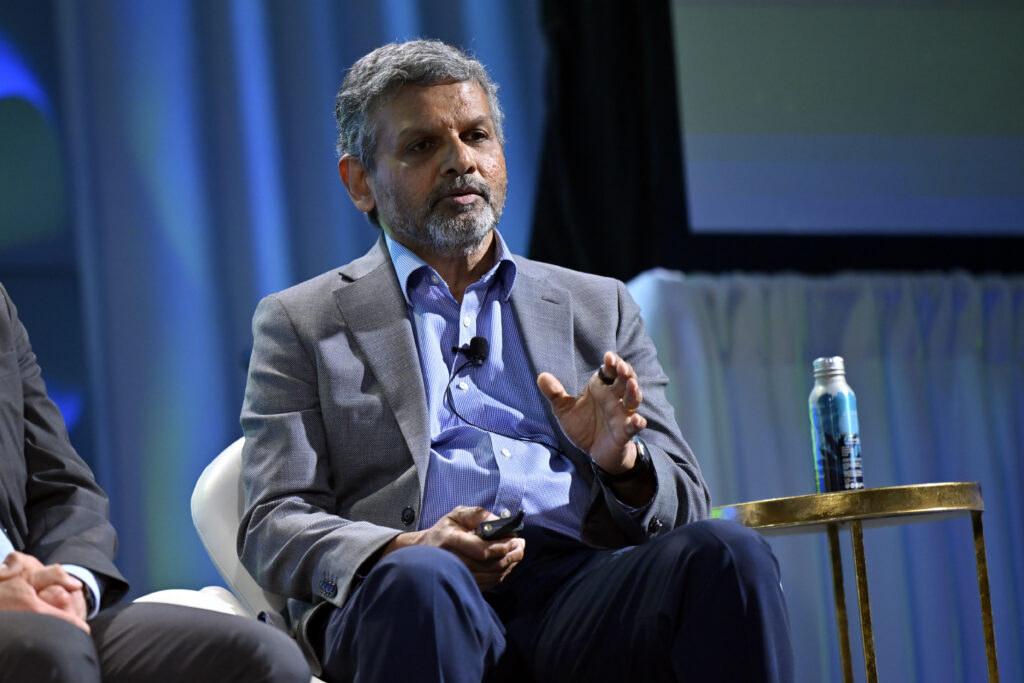
FAA’s Bimal Aponso, chief scientist and technical advisor for Dynamic Systems, outlined how the agency is adapting existing regulations for transport aircraft and launch vehicles to new high-speed concepts. He pointed to a forthcoming proposal to replace the current ban on overland supersonic flight, along with new takeoff and landing noise rules that must be finalized by 2027.
A Premium Market First, Then Scale
Moderator Kevin Bowcutt, chief scientist of Hypersonics for Boeing, closed the audience Q&A by pressing the panel on its bottom line: How close is commercial supersonic flight, and what is the single biggest hurdle?
Magee acknowledged that early high-speed services will target premium passengers, calling it a function of cost. He predicted it will expand quickly once scaled and costs decrease, drawing a parallel to consumer electronics.
Sponable anticipates that relatively small hypersonic demonstrators could be achieved for tens of millions of dollars, but a certified, passenger-carrying service “quickly pushes toward a billion or more dollars.”
Regulation was identified as a major secondary hurdle, particularly the need to certify new concepts and update rules regarding overland supersonic flight and airport noise.
The first commercial supersonic services, likely mostly over water, could appear around 2030 if programs like the Overture stay on track. Broader, overland, and more routine operations depends on international standards and could follow in the early 2030s, assuming NASA’s X-59 and ICAO processes stay on schedule.