

As deorbit approaches, NASA leaders, historians, and collectors race to decide what survives of humanity’s most ambitious experiment in orbit
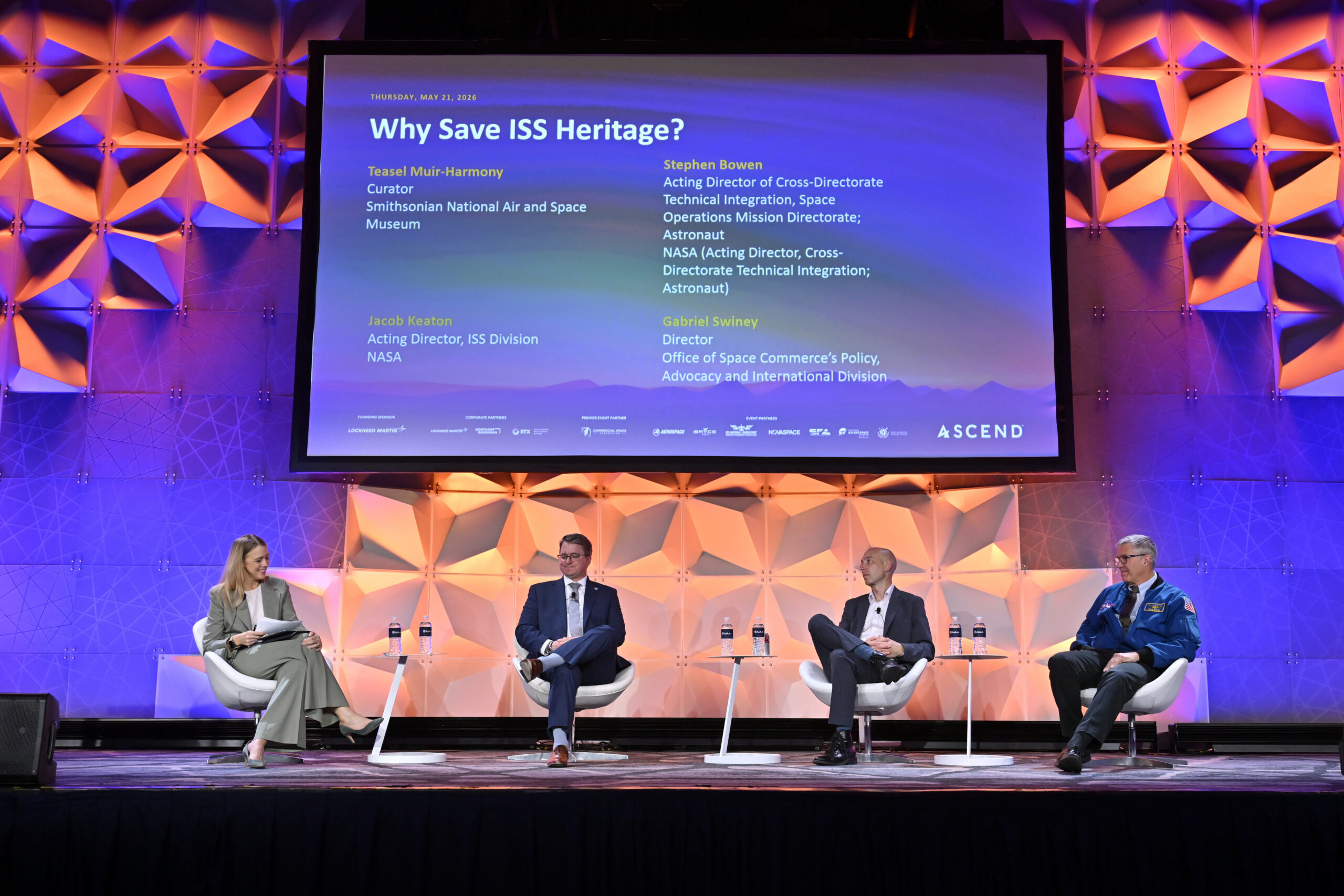
WASHINGTON, D.C. — On the final day of ASCEND 2026, NASA leaders, historians, and science stakeholders came together for three back-to-back International Space Station (ISS) Heritage sessions to explore the “why, what, and how” of preservation — why the legacy of the ISS matters, what artifacts should be saved, and how the story of continuous human presence in low Earth orbit can be told through real hardware and lived experience.
The first session, moderated by Teasel Muir-Harmony, curator of the Apollo Collection at the Smithsonian National Air and Space Museum, set out the stakes: with deorbit looming, what about the ISS must be preserved, and why? Muir-Harmony noted that space heritage work has long “focused on lunar sites, especially the Apollo program,” while the ISS — home to continuous human presence in orbit for a quarter century — faces a quieter path toward its end.
A Once-in-History Partnership
Jacob Keaton, acting director of the ISS at NASA, described the space station as an unprecedented engineering and diplomatic achievement. “There’s never been anything like it before. Fifteen countries, five space agencies working together over the course of really 30–35 years,” he said, adding that nothing of comparable scale is likely to be built again soon. He argued that assembling the partnership piece by piece, module by module, allowed cultures, engineering practices, and communication styles to evolve together into a durable operating culture.
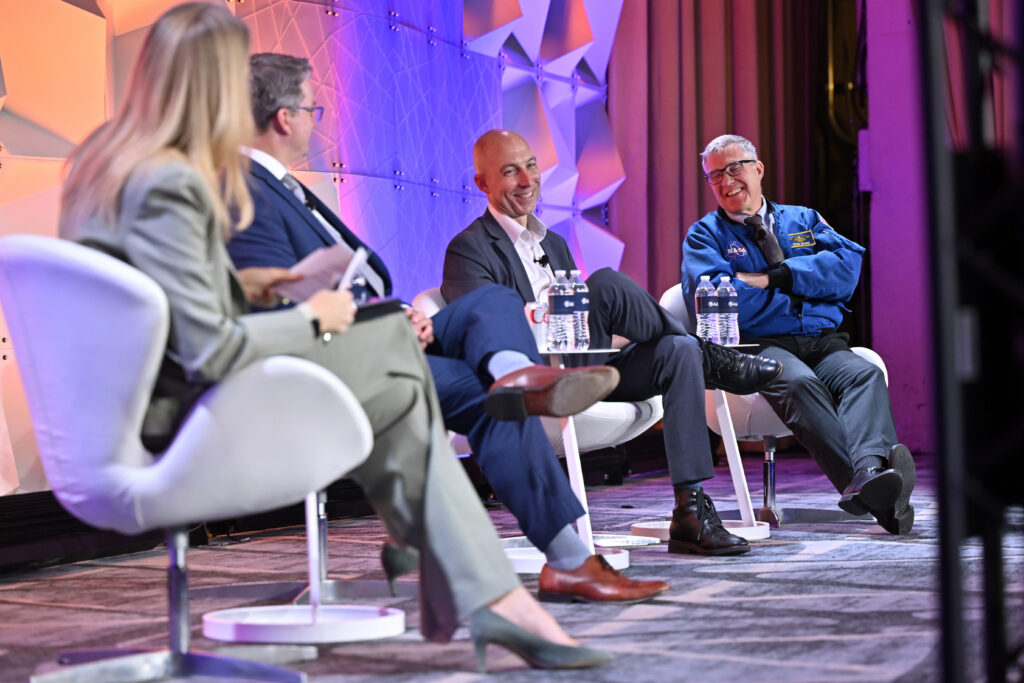
Gabriel Swiney, former NASA senior policy advisor, now at the U.S. Department of Commerce’s Office of Space Commerce and a principal architect of the Artemis Accords, reminded the audience that ISS cooperation was born of post-Soviet security anxieties.
“There were a lot of frankly Russian rocket scientists, who could also be ICBM scientists… and the United States had a strong political and security need to make sure that those skills were channeled somewhere that wasn’t scary,” he said. Over time, the ISS became proof that multinational partners can manage “really big, long-term projects in a way that I don’t think humanity has ever done before.”
For Captain Stephen Bowen, U.S. Navy (Ret.), a veteran of three shuttle assembly flights and NASA’s SpaceX Crew 6 mission, the station’s quietest achievement is how normalized it has made human spaceflight. “We’ve had people permanently living in space for 26 years,” he said. “A third of the world’s population doesn’t know an Earth where everybody lives on it.” Keaton echoed the sentiment: “Congratulations, guys, you made space boring. And we did, and that’s a good thing… It became part of our national fabric.”
When the conversation turned to preservation, panelists identified three pillars included in the technical and legal infrastructure.
- The docking standards, hatch specifications, and the intergovernmental agreements that made the partnership possible
- The everyday human experience of crew culture, international training, and unscripted moments that rarely enter mission reports
- Policy will
For the last point, Swiney noted, “Protecting heritage is a policy choice… and the opportunity does end eventually.”
Keaton suggested the ISS may ultimately be remembered the way Hubble defines the space shuttle era: “The station’s legacy will be defined by what comes after and what builds off of it…we don’t know that yet.”
Archaeology in Orbit
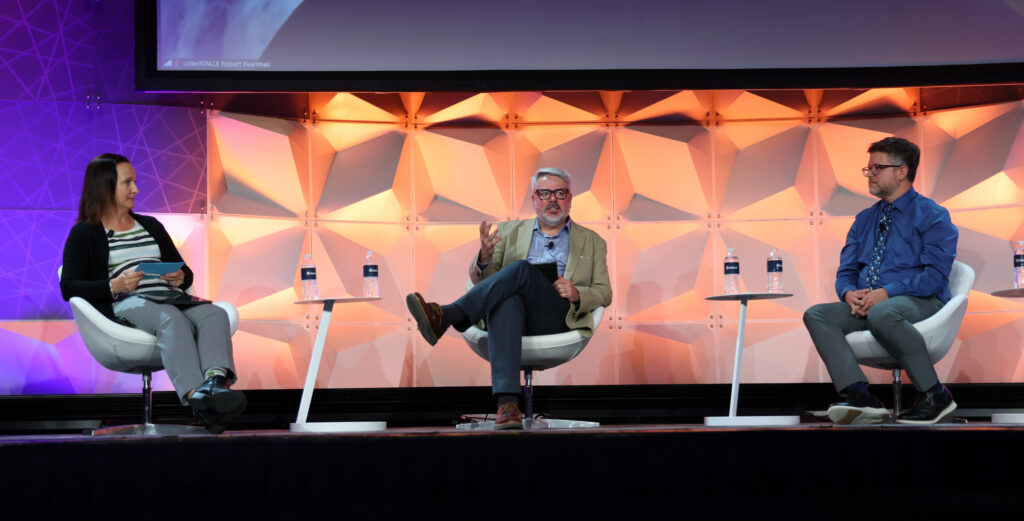
With the case for preservation established, the second panel, “What Should Be Saved from the ISS?” moved from principles to hard choices. Moderated by Jennifer Levasseur, curator of the Space Shuttle and ISS collections at the Smithsonian, the panel framed the ISS not just as a laboratory but as a long-lived human settlement whose loss risks an unprecedented cultural gap.
“With almost 26 years of habitation, that’s a tremendous amount of lived human experience that could go under-documented,” Levasseur warned.
Justin Walsh, a Chapman University archaeologist and co-principal investigator of the ISS Archaeological Project, treats the station as an archaeological site in low Earth orbit – a contemporary settlement where human activity can be read through objects, layout, and wear patterns. His team’s 2022 experiment – arguably the first archaeological fieldwork in space – tasked astronauts with photographing six sample locations in the U.S. segment daily for two months. By analyzing how astronauts adapt to a microgravity environment, researchers could identify gaps between how space habitats are designed and how they’re actually used.
For Walsh, archaeology is less about age than about understanding human activity through material culture. “We can think about the things that are not necessarily associated with the mission, like musical instruments… or a ship’s bell they ring in an old naval tradition to welcome new crews,” he explained. “I’m really interested in artifacts that tell about the crew’s personal lived experiences and how they’re using different parts of the station in new and unexpected ways. In our 2022 experiment, for example, a crew member’s toiletry kit was stored on the wall in a very high-traffic area – a small detail that speaks to both storage gaps and how crews adapt space to their needs.”
Panelists agreed that traditional hardware alone cannot carry the ISS story. Walsh highlighted ISS in Real Time, a NASA portal aggregating audio, video, transcripts, and orbital data as a model for digital preservation. He is also exploring an unusual sensory frontier: chemically reconstructing the smell of different modules so museums worldwide can recreate the experience.
Levasseur previewed the Smithsonian’s upcoming “At Home in Space” exhibit, opening in October, which will feature ISS artifacts and a smell experience based on astronaut feedback.
Geoffrey Nunn, curator at Seattle’s Museum of Flight, described his institution’s “Home Beyond Earth” exhibit, which opened in June 2024. He emphasized that preservation must also capture design art, training hardware, and corporate archives – often the only surviving records of concepts that never flew.
Space historian and journalist Robert Pearlman, editor of collectSPACE.com, an online community focused on the intersection of space exploration and pop culture, argued that private collectors are de facto custodians of much of this history, frequently loaning artifacts to local institutions and publishing detailed provenance online. He floated a democratizing vision for the deorbit: identify a structural element large enough to slice into thousands of pieces and distribute – through partnerships with entities like the U.S. Postal Service or Mint – so that anyone who wants a fragment of the space station can have one.
When pressed on their wish lists, panelists converged on intimate, human-scale objects. Walsh cited the multilingual onboard library and a well-worn paper notebook in the Destiny lab, filled with to-do lists and handwritten messages between crews. Nunn pointed to musical instruments, Halloween costumes, and other playful objects that reveal how astronauts build community in orbit. Levasseur’s answer was the cupola — or at least its essence. The heavily used viewing module, with Earth framed beyond a cluttered workspace, has become an iconic symbol of life aboard the ISS. “The cupola has long held the fascination with people,” she said, calling its Earthward vista a nearly impossible museographic challenge: museums can approximate the structure, but never fully recreate that view.
Racing the Clock

The final session tackled the “how” of preservation, with speakers highlighting mounting pressure on limited “down mass”— the capacity to return hardware from orbit — and the competing demands of ongoing science, engineering needs, and historical preservation. This discussion was led by Todd Mosher, Scholar-in-Residence and associate director for Graduate Programs in the Lockheed Martin Engineering Management Program at the University of Colorado.
Ryan Landon, director of Operations at NASA Johnson Space Center, outlined the hard logistical realities. The ISS will begin its natural decay around 2028, with the deorbit vehicle docking roughly 18 months before reentry. The last cargo vehicle is slated to return around mid-2029 – far sooner than many might expect – forcing difficult trade-offs in a compressed window. (The end of operations on the space station is currently scheduled for 2030, with NASA performing a controlled deorbit maneuver to safely crash the station into a remote area of the South Pacific Ocean in early 2031.) Return capacity is heavily constrained, and in recent years, weight, more than volume, has set the limit.
For Landon, the ISS legacy reduces to three pillars: extraordinary technology, unprecedented international cooperation, and decades of discovery whose full impact may take generations to understand. But when pressed to distill it further, she was unequivocal: “When you try to boil it down to one thing, it’s about the people, and it’s about their stories.”
Brian Odom, NASA chief historian, arrived at the same place from a different direction. Formal documentation, he warned, may capture only 1% of the full picture – and in the digital era, critical decisions often leave no durable paper trail.
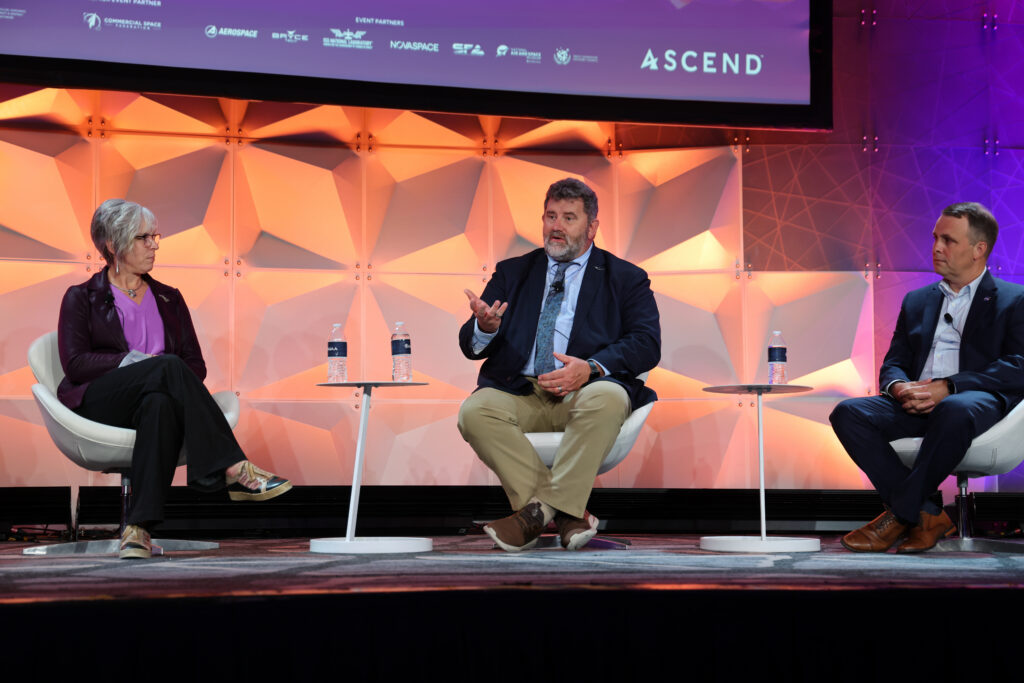
“You might know more about Apollo at any minute than we will know about ISS in five years,” he said, because Apollo-era bureaucracy generated a far richer documentary record. The antidote, he argued, is oral history. “Could you imagine if all you had was a PowerPoint presentation? What would you like to have? Well, you’d like to talk to somebody.”
Michael Roberts, chief scientist of the ISS National Laboratory, added that science utilization will continue right up until the end – but called for proactive decisions now on which instruments, training mockups, and datasets must be preserved to inform future commercial stations and deep-space missions.
With only a handful of cargo flights remaining before deorbit, panelists agreed: the window to decide what of the ISS survives – physically and historically – is closing fast.
“The preserving ISS sessions were timely and important,” said ASCEND audience member John Goodman, a 40-year engineer currently working in human spaceflight at Houston-based Odyssey Space Research. “A lot has been learned from the ISS experience, and the investment made by the U.S. government needs to be protected by preserving that knowledge,” he noted, adding, “We need to start planning now on what to preserve for various audiences. How do we preserve knowledge that is useful to managers, engineers, and scientists working on future programs? How do we improve such an effort in light of the challenges encountered when researching Apollo and the space shuttle?”
Anyone with ideas or interest in the ISS preservation effort can reach out to the panels’ organizers: Jennifer Levasseur ([email protected]), Teasel Muir-Harmony ([email protected]), or Todd Mosher ([email protected]).