


The AIAA Foundation has announced the winners of its 2026 undergraduate scholarships and graduate awards. Through its Foundation and supported by nearly 33,000 members, AIAA awards over $160,000 in academic scholarships and STEM educational grants to support the next generation of aerospace professionals.
Neil Armstrong Graduate Award ($10,000)
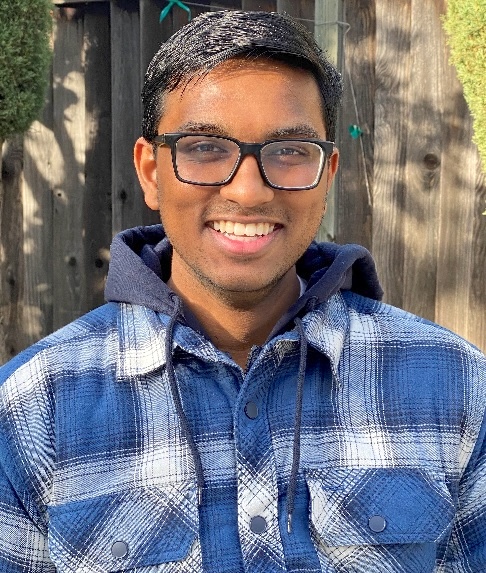
Shanmurugan (Shan) Selvamurugan, Georgia Institute of Technology
Selvamurugan is a Ph.D. candidate in Aerospace Engineering and an NSF Graduate Research Fellow at the Georgia Institute of Technology. He conducts research in the Space Systems Design Laboratory under Dr. Glenn Lightsey, where he focuses on leveraging distributed space systems to enable in-space servicing, assembly, and manufacturing (ISAM), with an emphasis on reusable in-space transportation. Selvamurugan holds both a B.S. and M.S. in Aerospace Engineering from Georgia Tech and brings a breadth of experience from the commercial space industry, having worked at SpaceX, Blue Origin (as a Matthew Isakowitz Fellow), Firefly Aerospace, and currently as a GNC engineer at Reditus Space. Selvamurugan has also contributed to shaping engagement strategies and leading customer discovery efforts for Georgia Tech’s newly launched Space Research Institute, with the goal of helping students pursue impactful careers in the space sector. In his free time, he enjoys cooking, snowboarding, and playing a variety of sports, including basketball and tennis.
To receive an award bearing Neil Armstrong’s name is immensely humbling. His legacy is a timeless reminder that extraordinary leaps stem from rigorous technical discipline and the courage to pursue the impossible. This generous support directly fuels my research in next-generation space systems, inspiring me to help drive the future of space flight.
Orville and Wilbur Wright Graduate Award ($10,000)
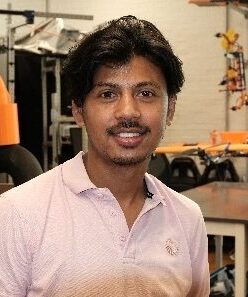
Bikash Kunwar, Auburn University
Kunwar is a Ph.D. candidate in the Department of Aerospace Engineering at Auburn University and a Graduate Research Assistant in the Vehicle Systems, Dynamics, and Design Laboratory (VSDDL). Since joining Auburn in Fall 2022, his research has focused on advanced air mobility (AAM) aircraft, including rapid concept-to-flight preparation of novel subscale AAM vehicles, flight-test data-driven simulation model calibration, in-flight system identification for learning aircraft dynamics models, and enhancing the safety and continued simplified vehicle operation of AAM aircraft through control effector failure detection and controller reconfiguration solutions.
Prior to joining Auburn, Kunwar earned his bachelor’s degree from the Institute of Engineering, Pulchowk Campus, Tribhuvan University, Nepal. He then worked at Prokura Innovations, where he contributed to the development of unmanned aerial vehicles for rural medical delivery in collaboration with UNICEF.
Receiving this award is an honor. It gives me confidence in the research direction and long-term career goals I have set for myself and motivates me to continue my work on advanced air mobility aircraft. The recognition also strengthens my commitment to building a career in research, teaching, and mentorship dedicated to advancing aerospace technologies.
Dr. Hassan A. Hassan Graduate Award in Aerospace Engineering ($9,000)
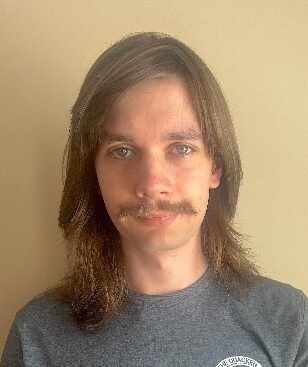
Aiden MacQueen, North Carolina State University
MacQueen has been fascinated by the mechanics of flight for as long as he can remember, and it has always been his dream to work in the field of aircraft design. When he was a small child, he thought that flying was magic. He used to run around with his sister pretending to fly, and he studied paper airplanes to see how far he could get them to go. Taking classes helped with the basic knowledge of aerospace engineering, but one day, MacQueen realized that classes alone were not enough to give him hands-on experience designing aircraft, so in his junior year, he joined the AIAA student branch.
The Design/Build/Fly team at the AIAA student branch provided the opportunity to really engage in hands-on design work, and the DBF team convinced MacQueen to become a DBF team lead in his senior year, a decision that ultimately changed his life for the better. Serving as the Stability Lead for the AIAA team in his senior year at NC State confirmed MacQueen’s career trajectory while highlighting how much there was still to learn.
MacQueen is passionate about exploring engineering problems in depth to develop his understanding of how and why things work the way that they do. He is beginning his M.S. in aerospace engineering in Fall 2026, and he plans to use his time in this program to really delve into thorny problems in flight engineering while continuing to develop and refine his design skills. MacQueen’s understanding of flight has improved significantly thanks to his experiences at NC State, but watching something fly still seems just as magical as it did when he was a kid.
This award is a huge blessing for me. It allows me the freedom to throw myself into research activities and project work during my graduate years rather than having to dedicate that time to a second job to cover my tuition payments. Because of this fellowship, I can focus my remaining time at NC State on hands-on design work, and I can engage in far more depth with the incredible faculty at NC State.
Dr. Hassan A. Hassan Graduate Award in Aerospace Engineering ($9,000)
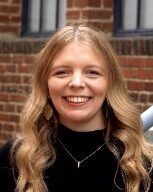
Kierra Shook, North Carolina State University
Shook was born and raised in Bryson City, NC. Her passion for space started early in age, wishing for a telescope and a science experiment set at just 5 years old. Shook attended North Carolina State University and received her Bachelors of Science in Aerospace Engineering. She is currently still at NC State pursuing her Masters of Science in Aerospace Engineering. Her research throughout her time at NC State has been in Rotating Detonation Rocket Engines, studying differing engine geometry and how it affects efficiency. In her free time, Shook enjoys working out, baking, traveling, and photography.
While I never had the opportunity to meet Dr. Hassan during my time at NC State, his reputation preceded him, serving as a reminder of what it means to be truly dedicated to one’s field. His passion for aerospace engineering inspired me to approach every day with curiosity, seeking new challenges and excitement within the field. My undergraduate journey was far from easy, particularly coming from a small North Carolina town where the STEM curriculum was less robust than the humanities. However, I am deeply grateful for those difficulties. I learned to embrace every aspect of aerospace engineering with a dream filled mindset, finding value even in the most demanding subjects.
Guidance, Navigation and Control Graduate Award ($3,500)
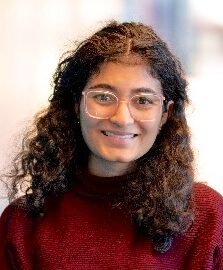
Jasmine Jerry Aloor, Massachusetts Institute of Technology
Aloor is a Ph.D. candidate in Aeronautics and Astronautics at the Massachusetts Institute of Technology (MIT), working in the Dynamics, Infrastructure Networks and Mobility (DINaMo) Group under Professor Hamsa Balakrishnan. Her research focuses on safe, fair, and decentralized coordination of autonomous aircraft for advanced air mobility, combining multi-agent reinforcement learning with formal safety methods. Her work spans fairness-aware navigation, safety-critical multi-agent learning, and decentralized traffic management, and has been published in the ACM Journal on Autonomous Transportation Systems and presented at AIAA SciTech, Robotics: Science and Systems, and IEEE ICRA. She was a visiting summer researcher at NASA Ames Research Center in 2025, contributing to NASA’s Transformational Tools and Technologies Project. Aloor is actively involved in AIAA, serving as a technical committee member of the Air Transportation Technical Committee, a Friend of the Intelligent Systems Technical Committee, and Communications Chair of the Aviation in Multimodal Transportation Aerospace Integrated Engagement Committee. She is also passionate about advancing women’s representation in aerospace through her leadership with WeLEAP Aerospace and MIT’s Graduate Women in Robotics Community.
Receiving this award is a meaningful milestone in my doctoral journey. It encourages me to continue pursuing challenging problems at the intersection of learning, control, and autonomous flight, to make future air transportation safer and more scalable. I am especially grateful for the recognition from the GNC community, whose work and mentorship have helped shape my own path in aerospace.
Liquid Propulsion TC Graduate Award ($2,500)
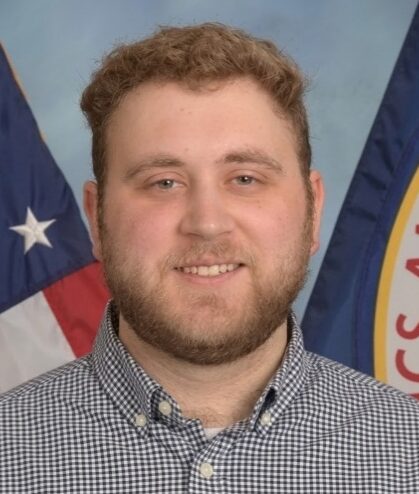
Schuyler McNaughton, Purdue University
McNaughton is in his final year as a Ph.D. student at Purdue University, conducting research at Maurice J. Zucrow Laboratories under the advisement of Professor Timothee Pourpoint. He earned undergraduate degrees in mechanical engineering and mathematics from Trine University and a master’s degree in Aeronautics and Astronautics from Purdue University. He is currently a NASA Space Technology Graduate Research Opportunities (NSTGRO) fellow, with his research focused on hypergolic transient combustion phenomena.
This award will help me achieve my goal of becoming a professor, so I can pay forward the guidance I’ve received and mentor the next generation of scientific innovators.
William T. Piper, Sr. General Aviation Systems Graduate Award ($1,500)
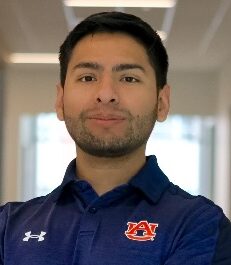
Luis Jose Alarcon-Aneiva, Auburn University
Alarcon-Aneiva grew up in Bolivia and is a first-generation college student who is now a Ph.D. student in Aerospace Engineering at Auburn University. His work confronts a basic gap in flight training: instructors grade students primarily as pass or fail, which says little about how well they actually fly. To close that gap, Alarcon-Aneiva designed an open-source X-Plane plugin that records a pilot’s flight and physiological data in real time, then measures the subtler indicators of skill, such as how smoothly a pilot handles the aircraft. He now explores how AI could provide students with faster feedback. A Link Foundation Fellow in Modeling, Simulation, and Training, he believes becoming a pilot should not depend on geography or wealth, and he spends his free time advocating for international students at Auburn.
Life never stops surprising me. I’m grateful for this award and for what it stands for: making general aviation safer for everyone. I wouldn’t be here without my parents, who believed in my goals when they seemed impossible, and who taught me that where you start does not decide where you can go.
Martin Summerfield Propellants and Combustion Graduate Award ($1,500)
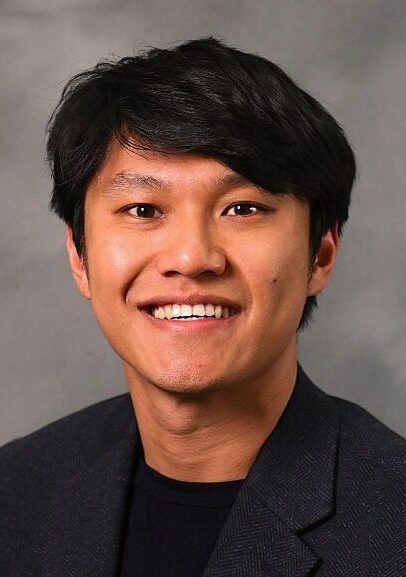
Andrea Ruan, Purdue University
Ruan is a Ph.D. candidate in Aeronautics and Astronautics at Purdue University. His research focuses on rotating detonation combustors, including their loss mechanisms, combustion dynamics, thermal structural design, and integration with gas turbines. He earned his M.S. from Purdue, where he experimentally studied transonic turbine rotors in an annular cascade, and his B.Eng. from the University of Bath where he investigated turbine cavity flows. He is passionate about gas dynamics, turbomachinery, combustion, and advanced propulsion systems.
Receiving the award is a meaningful recognition of my work to move rotating detonation combustion closer to practical propulsion systems. It motivates me to continue addressing the performance, thermal-management, and integration challenges that separate promising combustion concepts from deployable technologies. I am grateful to AIAA and the Propellants and Combustion Technical Committee for supporting my development and my long-term goal of advancing next-generation propulsion systems.
John Leland Atwood Graduate Award ($1,250)
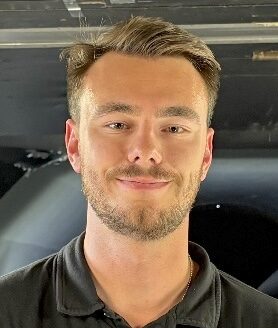
Kristoffer Saeves, Texas A&M University
Saeves is a Master of Science student in Aerospace Engineering at Texas A&M University, where he also earned his Bachelor of Science degree. As a graduate researcher in the Advanced Rotorcraft Aerodynamics, Design, and Engineering laboratory, his work focuses on wind tunnels, aerodynamics, and rotorcraft. His current research encompasses developing methods of gust and turbulence generation for subsonic wind tunnels and evaluating their effectiveness for complex flow
Receiving the award is a great honor and reflects AIAA’s deep commitment to catalyze the future of aerospace science. This generous award provides support that directly advances my work on subsonic wind tunnel research and academic pursuits.
Gordon C. Oates Air Breathing Propulsion Graduate Award ($1,000)
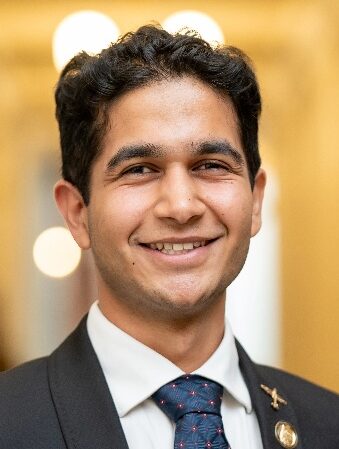
Adhiraj Bhagat, Georgia Institute of Technology
Bhagat is a Ph.D. student at the Georgia Institute of Technology in the Ben T Zinn Combustion Lab. His research focuses on swirl-stabilized supersonic combustion – a novel high-speed air-breathing propulsion technology – and he specializes in applying advanced laser diagnostics to reacting flows. He received his B.S. and M.S. in Aerospace Engineering from Georgia Tech. Bhagat is a current QUAD Fellow and a previous AIAA Diversity Scholar. Beyond his research, he is passionate about teaching and mentorship, and hopes to contribute to the development of the next generation of aerospace engineers and researchers.
Receiving the award is a tremendous honor. Recognition from the Air Breathing Propulsion community at this stage of my career is both humbling and motivating, reinforcing my commitment to advancing our understanding of supersonic combustion. As our field continues to drive innovations in high-speed air-breathing propulsion, this award inspires me to continue pushing the boundaries of supersonic combustion research while contributing to the technologies that will shape the future of supersonic and hypersonic flight.
2027 Scholarships and Graduate Awards
Applications for the 2027 scholarships and graduate awards are being
accepted from 15 October to 31 January. Please visit the AIAA Foundation’s
Scholarship and Graduate Awards website for more information.