
AIAA has identified 30 exceptional young professionals who are advancing aerospace through technical achievement, innovation, and leadership. The 30/30 Program highlights individuals in their 30s who are driving breakthrough research, advancing next-generation technologies, leading impactful programs and teams, and accelerating innovation across aerospace. They are presented in seven different technical categories. Meet the winners in our Aircraft Technology, Integration, and Operations Category below. And learn about the full list of 30 exceptional individuals at aiaa.org/get-involved/honors-awards/awards/30-30-recognition-program.
Aircraft Technology, Integration, and Operations

James “JP” Stewart
Senior Vice President of Product Development
Electra
James “JP” Stewart is a 31-year-old aerospace engineer and leader of note. As senior vice president of Product Development at Electra, he is responsible for all aspects of the company’s operations.
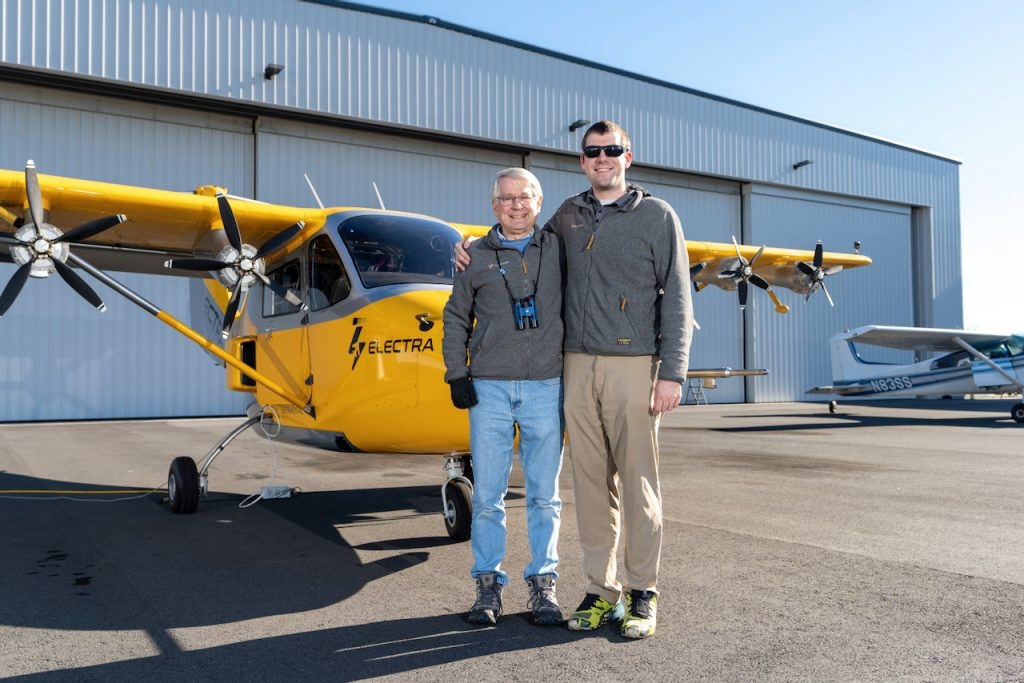
Stewart is transforming the future of flight through a new Direct Aviation paradigm for regional air mobility that gives people the freedom to travel from where they are to where they want to go, avoiding long drives and overburdened airports. Ultra-short takeoff and landing aircraft are the key enablers. Electra has successfully designed and flight demonstrated the world’s first two-seat EL-2 Goldfinch aircraft, which requires only a 150-foot runway for takeoff and landing. EL-2 proved the feasibility of an integrated system with blown-lift technology and hybrid-electric propulsion. As the EL-2 Program Manager, Stewart brought his exceptional technical expertise, practical insights, and impressive business acumen to bear on this successful endeavor. Stewart is now focused on developing the game-changing nine-passenger ultra-STOL EL-9 aircraft with entry into service in 2029.
Stewart is a 2026 AIAA Associate Fellow; a National Business Aviation Association 2024 Business Aviation Top 40 Under 40 award recipient; a 2021 Virginia Tech Alumni Emerging Leaders award honoree; and a 2016 Aviation Week 20 Twenties laureate. He is an active pilot and instructor, flying both sailplanes and powered aircraft. He has represented the U.S. Soaring Team four times in World Championships. Stewart earned a University Honors Bachelor of Science in Aerospace Engineering from Virginia Tech in 2018.

Evan Harrison
Senior Research Engineer and Division Chief
Georgia Institute of Technology
Evan Harrison has made significant contributions to the aviation field, particularly in aerospace systems safety, airworthiness certification, and model-based systems engineering (MBSE). At the Aerospace Systems Design Laboratory, his work bridges the gap between complex aircraft design and regulatory compliance.
One area of impact is Harrison’s research on advancement of model-based approaches for aircraft certification. Collaborating with agencies like FAA and NASA, he has developed frameworks to streamline noise certification and conduct regulatory gap analyses for novel, electrified powertrain aircraft. His research has provided foundational MBSE methods to support the airworthiness standards for innovative concepts like NASA’s X-57.
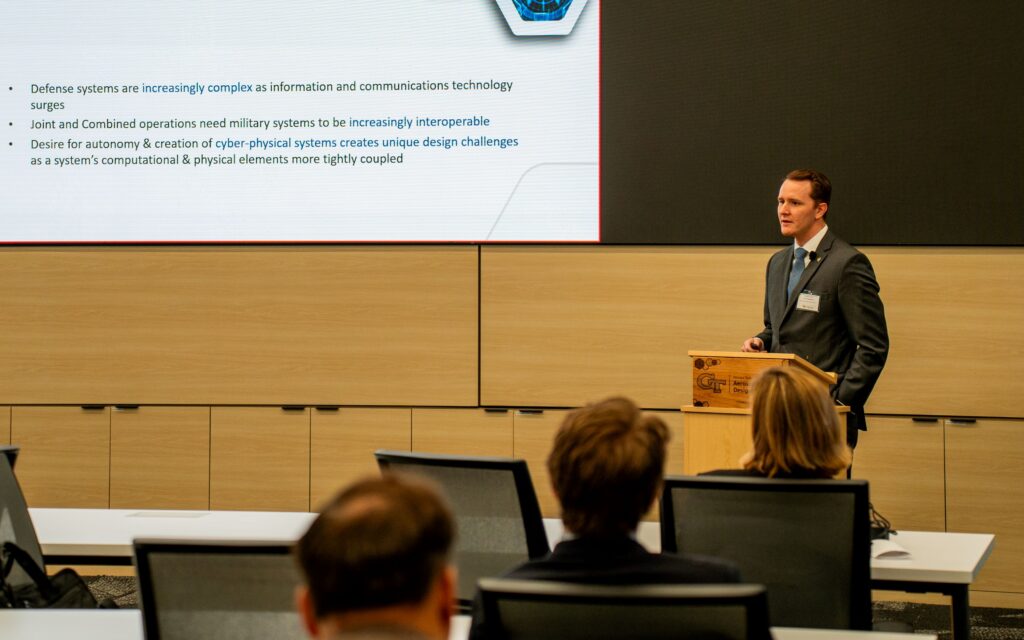
As an expert in vehicle- and system-level safety assessment, his research focuses on predicting and mitigating loss-of-control incidents for general aviation and evaluating the operational reliability of emerging urban air mobility and eVTOL vehicle designs. His safety frameworks and energy-based flight safety analysis methods have contributed to modern flight-data monitoring programs aimed at improving fixed-wing aviation safety.
He has also been impactful as an instructor for various undergraduate and graduate-level courses at Georgia Tech, educating the next generation of aerospace engineers about aircraft design, safety by design, and vehicle performance. Harrison contributes to the aerospace profession through his technical publications and active membership in the AIAA General Aviation Technical Committee and the Transformational Flight Technical Integration and Outreach Committee.
Through his research, teaching, and industry engagement, Harrison helps shape the future of safer, cleaner, and more efficient vehicle architectures.

Sang-A Lee
Graduate Research Assistant
Embry-Riddle Aeronautical University
Before the age of 30, Sang-A Lee has established herself as one of the leading emerging scholars in aviation safety and unmanned aircraft systems (UAS) research. As Lab Manager and principal research contributor on multiple FAA-sponsored ASSURE projects, she has helped secure and execute a portfolio exceeding $10 million in federally funded research focused on UAS traffic analysis, collision risk, remote identification, and airspace integration. Her work directly supports FAA efforts to safely integrate emerging aerospace technologies into the National Airspace System.
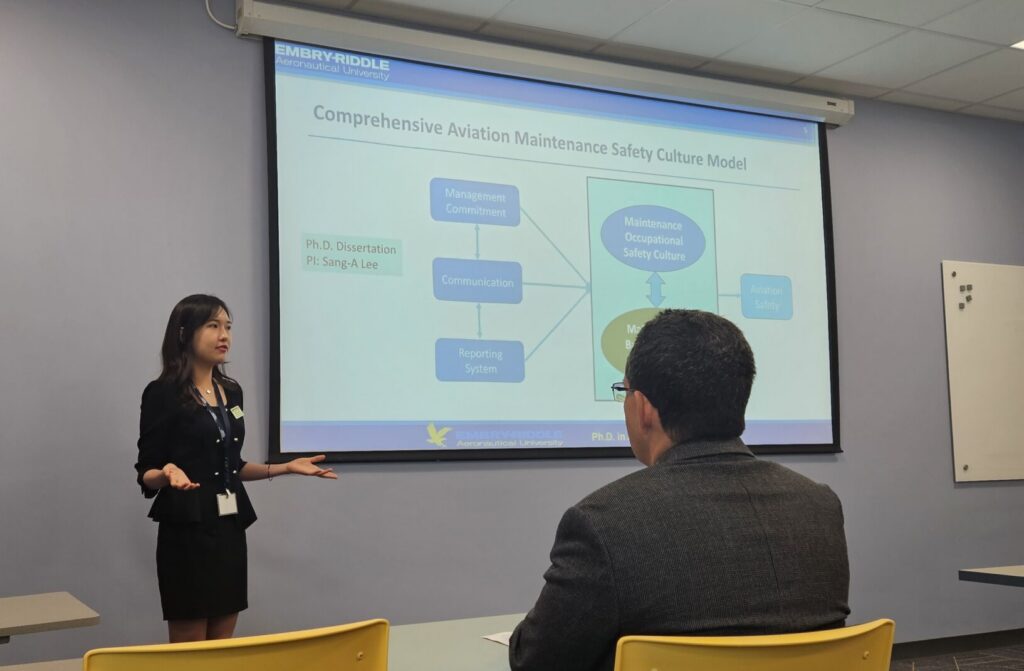
Lee’s innovative contribution includes her dissertation on aviation maintenance safety culture. Through the development of new frameworks examining trust, fear, and organizational influences on safety performance, she has introduced a human-centered approach to understanding and mitigating maintenance-related risk.
Her impact also extends beyond dissertation. Lee authored a 155-page FAA-sponsored gap analysis synthesizing 238 technical sources and has presented her work to FAA officials, industry leaders, military executives, and academic audiences. With 17 peer-reviewed publications, multiple first-author articles, and leadership of interdisciplinary research teams, she is shaping the future of aviation safety and advanced air mobility through research that is both scientifically rigorous and operationally relevant.

Max Z. Li
Assistant Professor, Aerospace Engineering
University of Michigan
Max Li is an emerging aerospace engineering leader whose work is shaping exciting advances in air transportation systems, including next generation air traffic management, aviation operations, airline and airport systems, and advanced air mobility. At the University of Michigan, Li has established a vibrant research program and the Laboratory for Air Transportation, Infrastructure, and Connected Environments (LATTICE) dedicated to air transportation system resilience, optimization, and decision-making under uncertainty – areas of critical importance to the future of air transportation. His work imaginatively addresses significant challenges, including how to make aviation networks more efficient, robust, adaptive, and capable of operating safely under uncertainty and disruption. Specific examples of his impactful research contributions include analysis of autonomous vehicle impacts on airport leakage and environmental implications, development of large-language-model-driven conversational agents for strategic air traffic flow management, and stochastically optimized distributionally robust ground delay programs using learning-driven airport capacity predictions.
Li’s extensive publication record includes more than 30 journal articles and more than 70 conference papers addressing a broad range of topics in air traffic control, air traffic management, network optimization, airline and airport operations, and advanced air mobility. He has built strong collaborations across academia, industry, and government with research projects sponsored by NASA, FAA, DARPA, MITRE, NSF, and Collins Aerospace. Beyond research, Li has taught hundreds of students at Michigan and contributed extensively to the aerospace community through editorial service, technical committee leadership, conference organization, and international engagement.

Aman Deep Tripathi
Product and Commercialization Lead
Wisk Aero
As Product and Commercialization Lead at Wisk Aero, a Boeing subsidiary developing autonomous eVTOL aircraft, Aman Deep Tripathi leads the market requirements and business case for the Generation 6 aircraft and Wisk’s future product strategy. His work sets the technical roadmap guiding 800+ engineers through a decade-long certification effort..
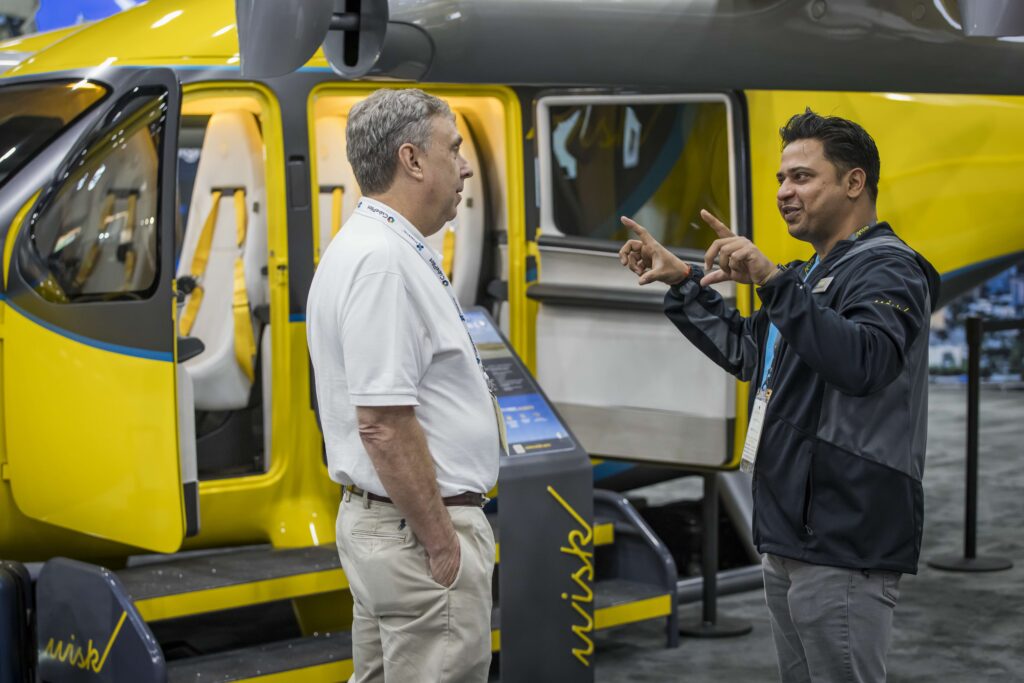
Tripathi co-authored the Wisk–Boeing and Wisk–Skyports Concepts of Operations for autonomous air mobility. These have become foundational references across the international AAM standards and policy community, informing efforts at NASA, FAA, and ICAO, and shaping how the industry integrates uncrewed aircraft into the airspace. He has also published research with multiple NASA divisions.
He also gives generously to the profession – serving on the Transportation Research Board’s aviation economics committee, advising ICAO’s AAM Study Group, reviewing articles for leading aerospace journals, judging the CES Innovation and Global AAM Awards, and authoring a case study for a University of Washington competition (350+ students), alongside several U.S. patent applications in autonomous flight.
Colleagues and supervisors say that what distinguishes Tripathi is range: he turns market demand into engineering requirements, financial cases, and operational concepts that others now build upon. He is a leader both today and in the future and his blend of technical depth and commercial impact continue to make an impact.