


Spurred by the fatal collision of a fire truck and passenger plane at LaGuardia Airport in March, engineers at the MIT Lincoln Laboratory are developing a way to warn airport ground vehicle drivers when a collision is imminent. Keith Button spoke to the project leader about the work ahead.
On March 22, a CRJ-900 passenger jet landing at LaGuardia Airport in New York collided with a fire truck crossing in front of it on the runway, killing the plane’s pilot and first officer and seriously injuring six other people.
The airport has radars, sensors and transponders designed to detect nearby aircraft and vehicles and display them on screens in the air traffic control tower, but this ground surveillance system “did not issue an aural or visual alert” of the truck on the controllers’ displays, according to the preliminary report issued by the National Transportation Safety Board.
The event was a stark reminder of gaps in existing runway safety systems, says Wes Olson, leader of the MIT Lincoln Laboratory’s transportation safety and resilience group. Specifically, many ground vehicles do not carry transponders that would broadcast their positions to air traffic controllers, a more precise method than relying on surface radar.
“We identified, even before this accident, [ground] vehicles as one of the issues with protection,” says Olson, whose group has designed various runway stoplight systems for large airports and plane-tracking technology for small airports. “The LaGuardia accident crystallized that and highlighted to us the need to do something for vehicles.”
Airport safety experts told me such collisions are relatively rare, but not unheard of. Last year, a Boeing 737 MAX 8 starting its takeoff from the Rio de Janeiro airport sheared off the top of a pickup truck parked on the runway; no one was injured. In 2022, a 737 had to abort its landing at Toronto Pearson International Airport to avoid a maintenance truck that an air traffic controller spotted crossing in front of it.
The LaGuardia accident was notable because of the fatalities.
“It was a terrible tragedy, and it should not have happened,” says Hassan Shahidi, chief executive officer of the Flight Safety Foundation, a Virginia nonprofit that tracks aviation incidents and advocates for new safety standards. “Many lessons learned are coming from that, certainly.”
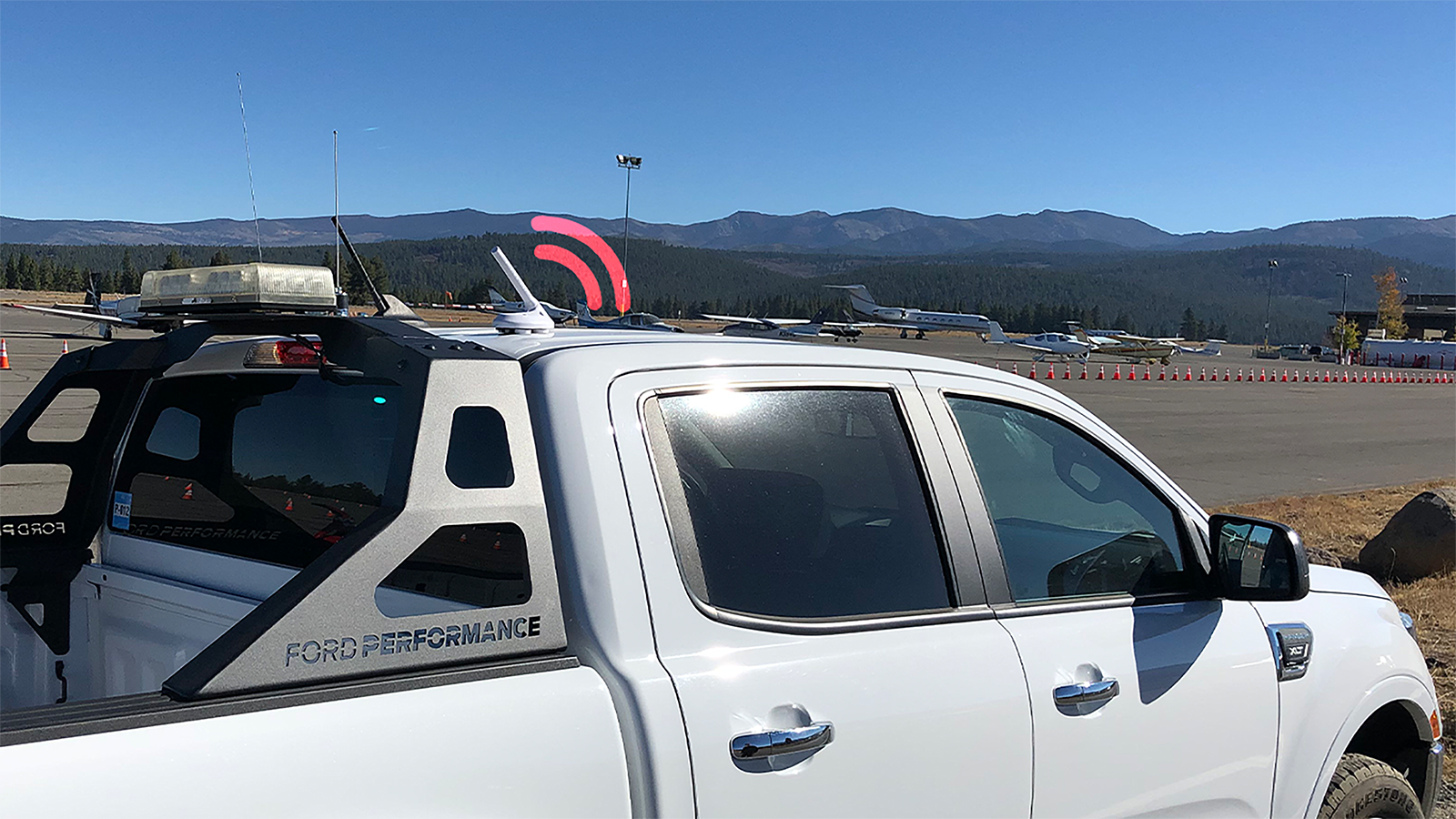
According to the NTSB report, the LaGuardia truck wasn’t equipped with a Vehicle Movement Area Transponder, or VMAT, a device developed in 2012 to broadcast a ground vehicle’s location, velocity and call sign — just as an ADS-B Out transponder does for an aircraft.
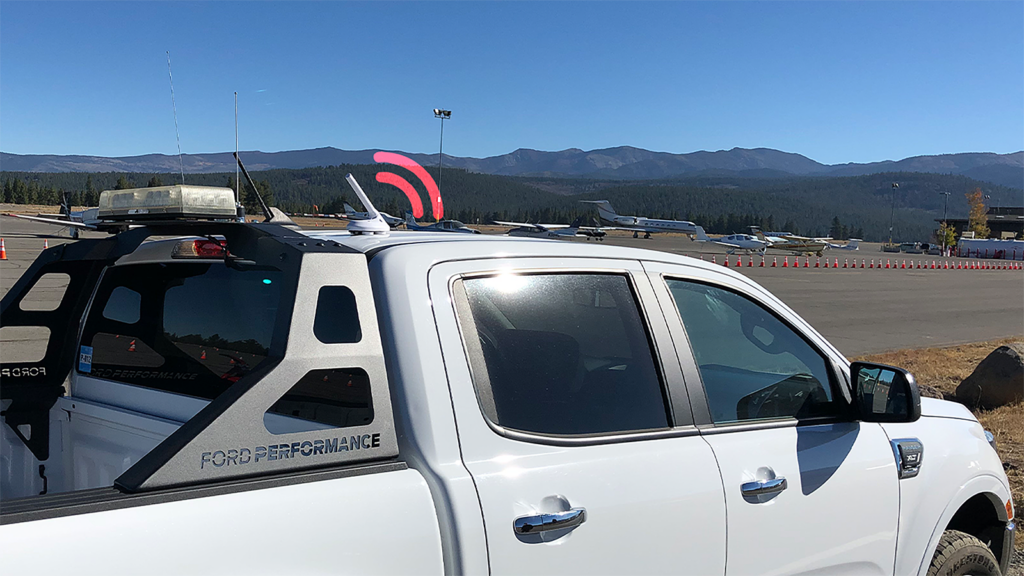
The devices are not required, but partly because of the accident, orders for VMATs by airports have surged, according to executives at PASSUR Aerospace and uAvionix, the two largest sellers. The event also prompted FAA in May to accelerate plans to spend $16.5 million equipping 1,900 vehicles across 44 airports. Currently, an estimated 50 to 60 airports have at least some VMAT-equipped vehicles, says Chris Zanardi, PASSUR vice president of commercial operations.
A new warning device
Although installing more vehicles with VMATs could improve situational awareness for air traffic controllers, that information wouldn’t be available to ground vehicle drivers.
That’s what Lincoln Lab is seeking to rectify, Olson says, by developing an in-cab warning device for fire trucks, snow plows and other airport vehicles that traverse runways and taxiways.
The plan is to have a prototype within 12 months for demonstration at a major airport, he says. In parallel, engineers will conduct trials at the Hanscom Field airport in Bedford, Massachusetts, to collect more data and validate the prototype design.
uAvionix plans to release its own in-cab alert system for ground vehicles in October, says Cyriel Kronenburg, the company’s vice president of airports and air traffic management. This Surface Ops app, designed for tablets or smartphones, displays a digital map of an airport’s runways and taxiways marked with the locations of ground vehicles and aircraft that are taxiing, taking off or landing.
Runways on the digital display will turn red when an aircraft is rolling for takeoff or inbound on final approach, he says, and loud, increasingly urgent beeps will sound with “Traffic final” or “Traffic runway” messages flashing on the screen if the ground vehicle is on that runway.
ADS-B Out and VMAT transponders will provide location information for the aircraft and ground vehicles, respectively.
Kronenburg says uAvionix spent three months beta testing the app at seven U.S. airports. Five airports are scheduled to deploy the app starting in October, including Savannah/Hilton Head International Airport in Georgia and Tampa International Airport in Florida, he adds.
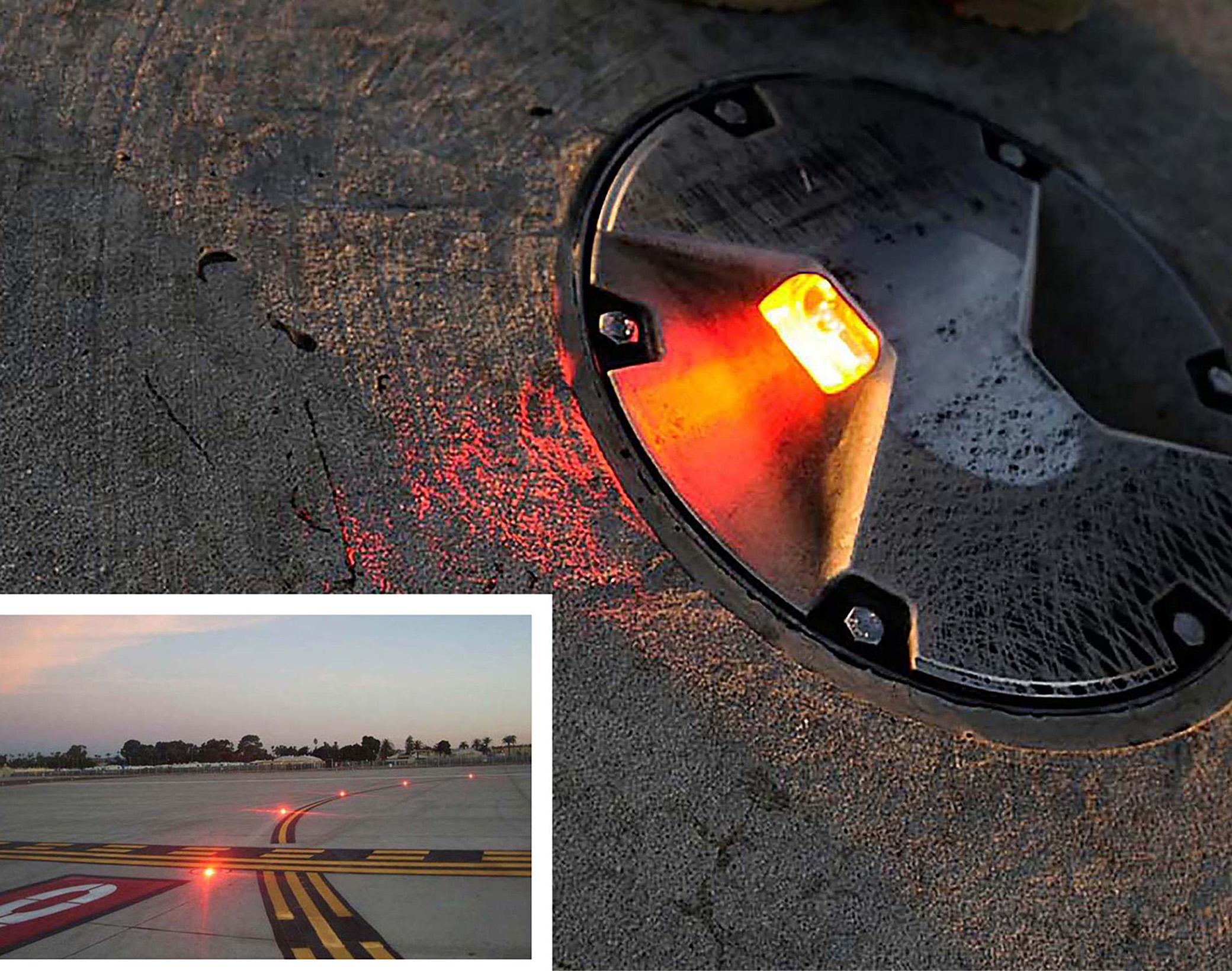
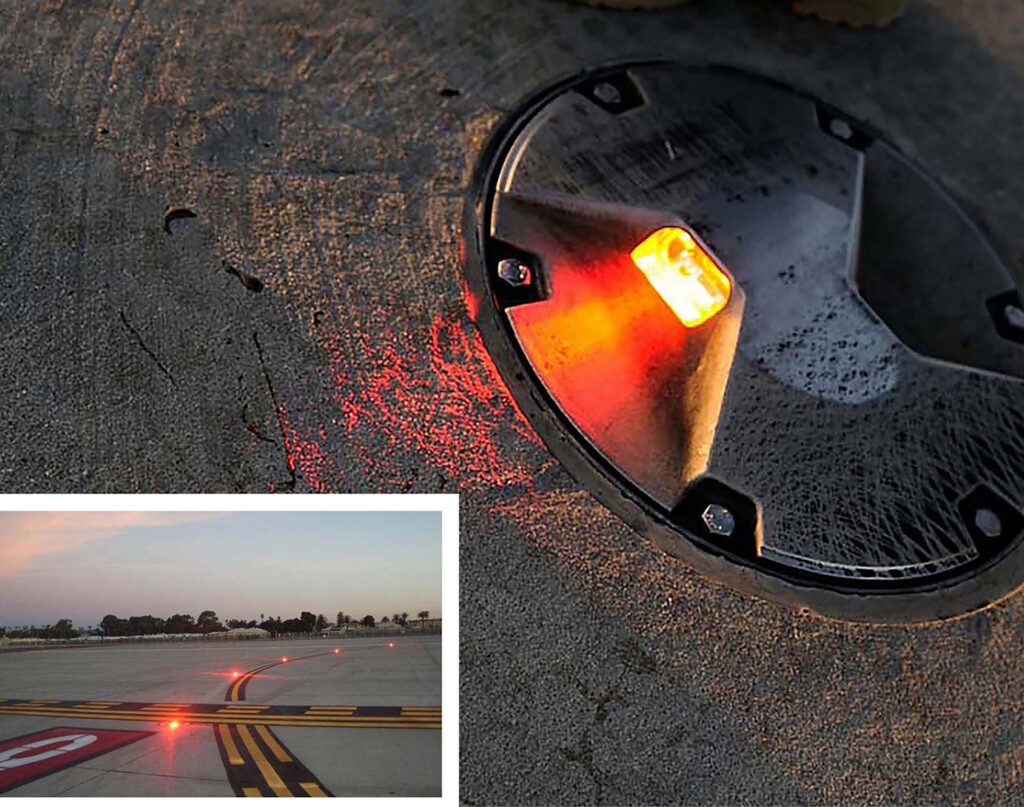
For the Lincoln Lab device, Olson says the idea is to piggyback on the warning logic its engineers previously developed for different collision-avoidance technologies. These include algorithms that turn on and off stoplights located at runway crossings at the largest U.S. airports. The engineers will modify those algorithms to run on an airport computer server, so they can be fed transponder tracking information for ground vehicles and any aircraft landing, taking off or taxiing.
The new ground vehicle warning system could use tracking information supplied by FAA-operated systems. Alternatively, an airport could build its own tracking system, Olson says, because the airport antennas and networking hardware needed to pick up ADS-B and VMAT signals are inexpensive. Each VMAT costs about $4,000, according to PASSUR and uAvionix executives.
If the collision avoidance algorithms determine a runway is not safe for a ground vehicle to cross, a warning would pop up on the in-cab device, Olson says.
Lincoln Lab is still refining the device’s design, but among the possibilities is having the unsafe runway lit up in red on a dashboard-mounted digital map, paired with an audible alert tone or a spoken “Unsafe, stop” warning to the driver.
“You could feed a display right in the vehicle itself,” he says. That would shorten the current alert sequence, in which air traffic controllers must first see a potential collision on their own displays or be alerted to it by the runway safety system, then convey the warning to the driver.
“Simply adding an aural alert, a tone, would make it much more obvious to the operators, having something right in front of them instead of looking out at runways and taxiways, at lights,” Olson notes.
To adapt the algorithms to alert ground vehicles, the engineers must modify the logic that determines whether the stoplights at the runway and taxiway crossings should be activated. The stoplights’ logic calculates when an aircraft will be traversing specific intersections on a runway, but the in-cab warning logic will potentially need to calculate when that plane would travel past any point where a ground vehicle could drive on the runway from the grass, he says.
The goal is to develop software that is device-agnostic and capable of being loaded onto a tablet, phone or other device of whichever operator Lincoln Lab transfers the technology to. The lab plans to develop and demonstrate the software on a device, and perhaps build a prototype, but not build or operate devices for customers.
The testing ahead
The engineers began building the software prototype in July. Initial tests will be conducted with a digital tool that simulates runway scenarios based on recorded operations from actual airports, Olson says. The tool allows them to see how the software would generate alerts with the recorded air traffic or with simulated traffic to create unusual situations, such as aborted takeoffs or landings that suddenly switch to a parallel runway.
Engineers can employ the tool to watch individual scenarios unfold on a digital map, or to conduct randomized Monte Carlo simulations for thousands or millions of runway encounters. These simulations can incorporate varying vehicle speed and location, for example, or vary how vehicle operators might respond.
“We’ll use the data to do a lot of modeling and simulation, pre-evaluations of performance, before we put anything in a vehicle,” he says.
Once the software has proven itself in simulations, the engineers plan to test it in a ground vehicle, driving and parking on taxiways as planes land and depart at Hanscom Field, where Lincoln Lab has a hangar.
Initially, the vehicle will be operated in “shadow mode,” Olson says, with a certified airport driver in the driver’s seat and an observer in the backseat, who will watch to make sure the alerting is operating accurately and not making too many false alarms.
Depending on which operator Lincoln Lab partners with, engineers may conduct another airport demo at the same time as the Hanscom testing.
The initial customers for the devices are major U.S. airports, Olson says, but the tech could be adapted for any airport runway configuration.
Based on future discussions with FAA and airports, Lincoln Lab could also add more features. For instance, snowplow operators may appreciate a countdown alert to give them time to move off a runway, Olson says, or there might be ways to warn drivers of a wider range of situations.
“For surface vehicles, there are other alerts, because you have more flexibility to turn a truck to jump off the runway,” he notes.
For airports that handle small aircraft that don’t carry ADS-B Out transponders, the alerting system might also incorporate cameras to track runway traffic, he adds.
Additionally, the alerting logic could be extended to the runway collision warnings that sound off inside cockpits, which would require a much higher standard for certification and safety, he says.
“The hope would be that whatever we develop for surface vehicles could perhaps transition to maybe aircraft at some point,” Olson says. “We felt strongly that if we could demonstrate and close gaps with surface vehicles, that would be important and a stepping stone to something broader.”