Castelion readies for U.S. Army, Navy demos of its hypersonic missiles


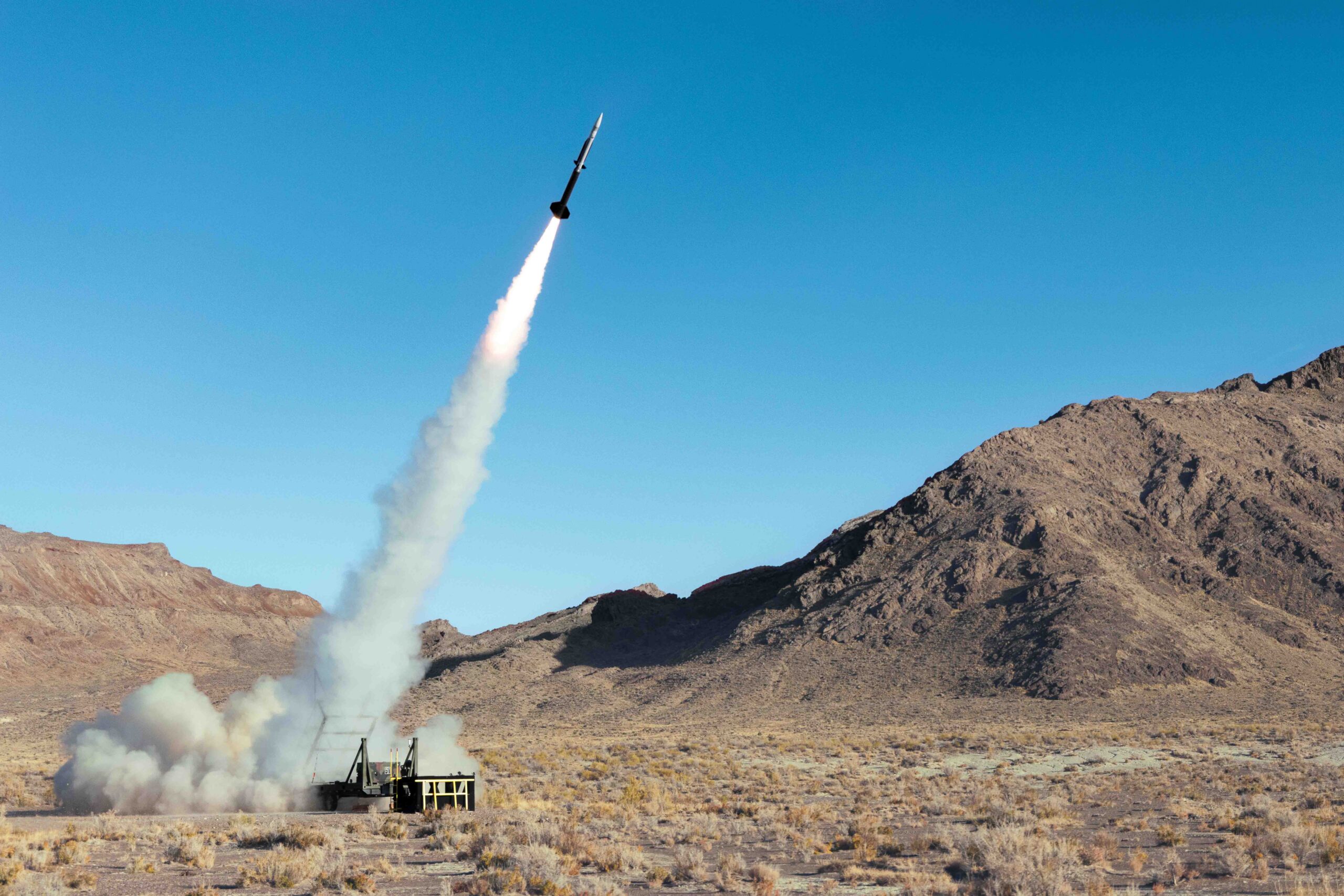
California startup Castelion, seeking to build a low-cost hypersonic missile that can be manufactured by the thousands, is readying for its first integration tests on Army and Navy platforms later this year.
Hypersonic missiles — meaning maneuverable designs that reach at least five times the speed of sound, or Mach 5 — “have historically for the United States been a prohibitively high-cost munition,” said Philip Sheers, a defense analyst with the Center for a New American Security. “The idea that you could reduce cost and [increase] scale is a compelling idea, but a challenging one to achieve in practice.”
Sean Pitt, one of Castelion’s three founders and its chief operations officer, said the company’s effort to create low-cost, mass-produced missiles began in 2022 with its founding.
In March 2024, Castelion conducted its first fight test of a prototype hypersonic vehicle in the Mojave Desert. By October 2025, it had been awarded contracts to integrate its flagship missile, dubbed Blackbeard, with the Army’s HIMARS ground launcher and the Navy’s F/A-18 Hornet.
And this year, the Navy awarded Castelion $155 million for integration work and placed its first production order: 50 Blackbeards at a cost of about $468,000 per unit, with the first delivery expected in mid-2027.
Pitt said Castelion was able to move faster by ground testing prototypes early and often through self-funded launches, as well as vertically integrating key components.
“Instead of waiting to design a perfect end-to-end missile test, we got into tests with major subsystems” then increased the testing complexity over time, Pitt said. Castelion also bought military surplus hardware and “basically made a containerized launcher system for the Blackbeard development flight test, such that we can roll up on the range, fire and leave the same day.”
During the 18 months of Blackbeard’s development, Castelion said it conducted 25 launches and is now targeting a test launch every two weeks. Compared to such company-controlled launches, Pitt described the upcoming service demos as a “major shift.”
Additionally, “we make our own solid rocket motors, control actuation systems, flight computer [and] seeker,” Pitt said. As a result, “we make a number of design decisions that are prioritizing the cost and manufacturability of the [missile subsystems] over absolute performance.”
According to Jerry McGinn, who heads the Center for Strategic and International Studies’ industrial base research, most munitions in use today “weren’t designed to be built at scale” but rather “focused on performance above all else.”
Indeed, early hypersonic missile developers were often “looking to get every inch of performance out of these things,” said Greg Scofield, the director of Purdue University’s Hypersonics Laboratory, which has conducted research for Castelion.
Pushing performance from 99% to 99.9% “is a huge amount in cost to get every decimal place,” he added, and the per-unit cost of such exquisite missiles fell in the range of $50 million each.
According to McGinn, the goal of today’s low-cost munitions programs “is not to build cheap imitations, but to build essentially the next generation of munitions that are more producible, manufacturable at scale.”