Upgraded hypersonic weapon test facility, an elemental explosion in a droplet and a low-shock stage separation system
 By Cat Hofacker
 By Cat Hofacker
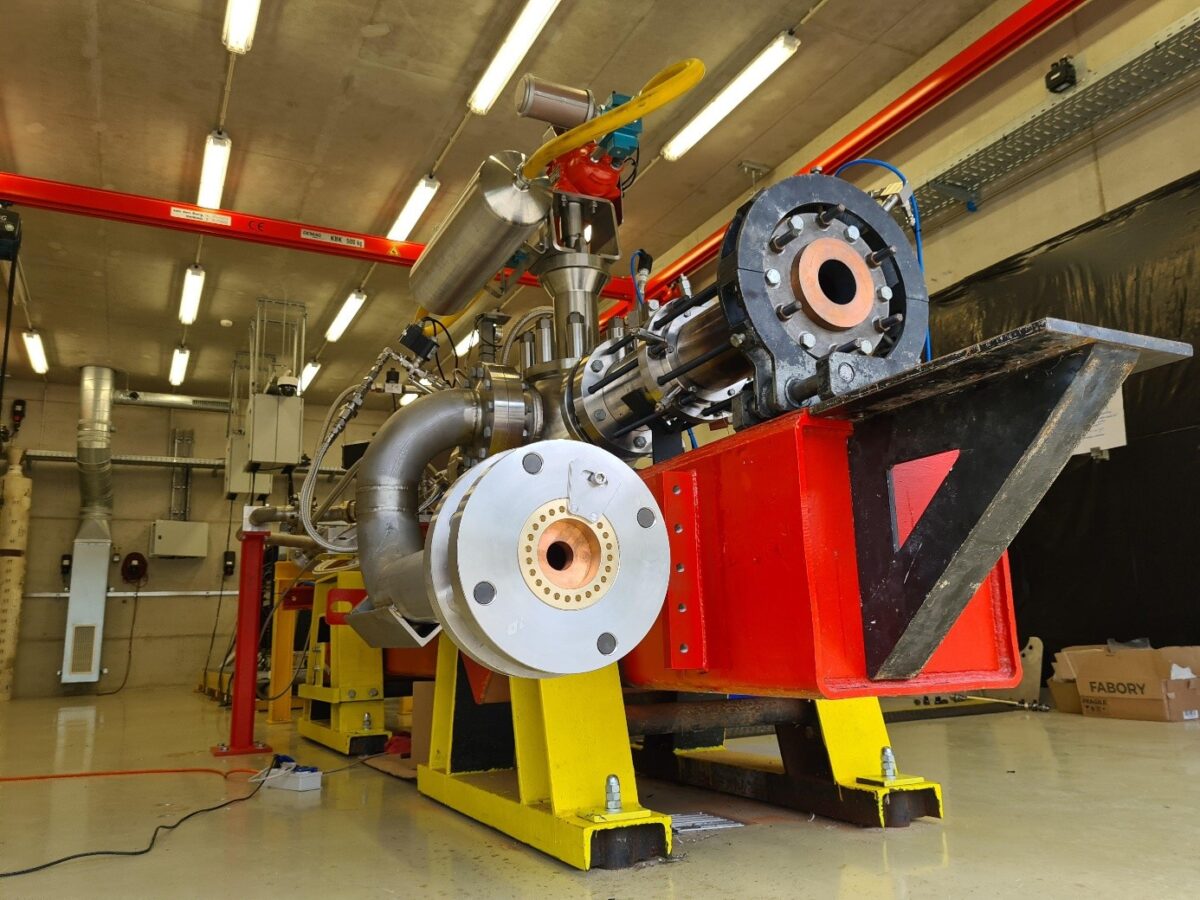
In September, The Netherlands Organization for Applied Scientific Research (TNO) approved an investment proposal for an extensive upgrade of the current Aeropropulsion Test Facility at its Ypenburg location. The upgraded facility is to be called HyWAY: test facility for Hypersonic Weapon Assessment Ypenburg. The current facility, which can duplicate flight conditions of supersonic projectiles and missiles up to Mach 4.5 and 25 kilometers in altitude, was developed mainly in support of the TNO Solid Fuel Ramjet propulsion technology development.
HyWAY will be able to duplicate flight conditions up to Mach 7 and 40 kilometers in altitude, allowing for direct-connect and freejet hypersonic technology development testing and model validation related to aeroheating, performance of advanced propulsion systems (for instance, ramjet, scramjet and rotating detonation engines) and behaviour of (cooled) structures and materials. As of November, the design and commissioning of HyWAY was underway, with execution to occur in three phases with a total duration of 4 years.
Researchers at Texas Tech University in May made groundbreaking measurements of the heat of combustion for metal fuel particles. At 58 kilojoules per gram, boron has a high energy density compared to traditional fuels. Joseph Micus, a graduate student in the mechanical engineering department, demonstrated a clever technique to suspend boron powder in a bomb calorimeter and simulate dust cloud combustion. He showed that isolating boron particles embedded in a dry, porous, hydrocarbon matrix enables their burning at the theoretical maximum energy available. If particles are too close together, their agglomeration quenches reactivity.
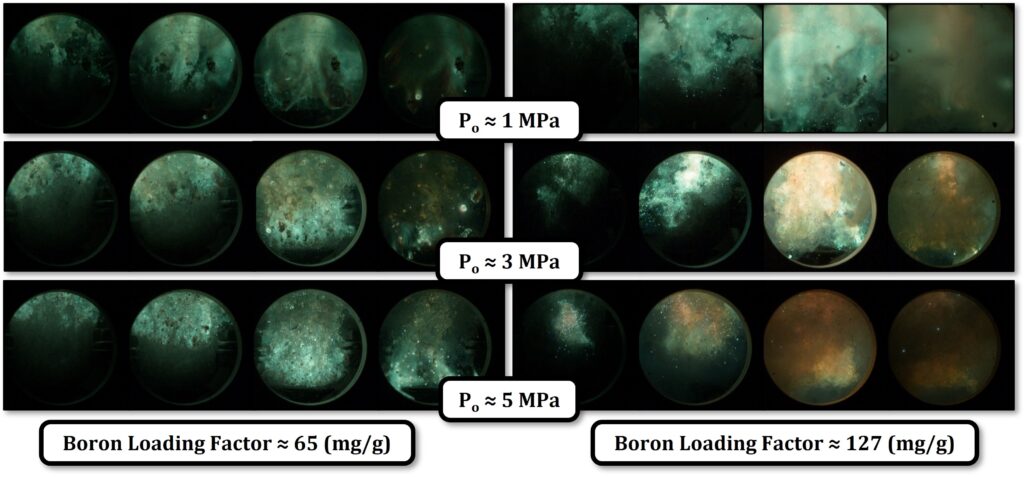
Kallista Kunzler, another mechanical engineering graduate student, adapted a propellant strand burner to operate at bomb calorimeter conditions and provide a visual window of the boron oxidation event. The team used the combined diagnostics to probe energy conversion processes that are important for applications ranging from ordnance systems to hypersonics. Unlike aluminum and magnesium, new results show that boron can deposit nearly all of its chemical oxidation energy into the gas phase, making boron ideal for applications that require power from gas generating reactions, like propulsion technologies.
In April, Karman Space & Defense completed a key design review for the Low-Shock Stage Separation (LS3) System in support of United Launch Alliance’s future plans to recover and refly components of its Vulcan Centaur rockets. Karman leveraged over a decade of successful launch vehicle stage separation expertise to modify its existing LS3 system for Vulcan reuse. LS3 is a patented, low shock, hot-gas-generated stage separation system that will be used to separate the Vulcan booster structure aft of the fuel tank, enabling ULA’s Sensible Modular Autonomous Return Technology (SMART) recovery of the thrust structure. Karman is designing, testing, and producing this LS3 system in its Mukilteo, Washington facility.
At 5.6 meters, the Vulcan Rocket Reuse LS3 Stage Separation System is the largest diameter Karman has designed and produced to date. In July, the Karman team completed the test readiness review. As of November, design verification testing was underway, with qualification and production to follow.
Contributors: Ronald Veraar, Michelle Pantoya and Renee Frohnert
Opener image: A direct-connect solid fuel ramjet test setup in the TNO Aeropropulsion Test Facility, pictured in 2024. Credit: TNO