
NASA orbits within the danger zone
 By Cat Hofacker
 By Cat Hofacker
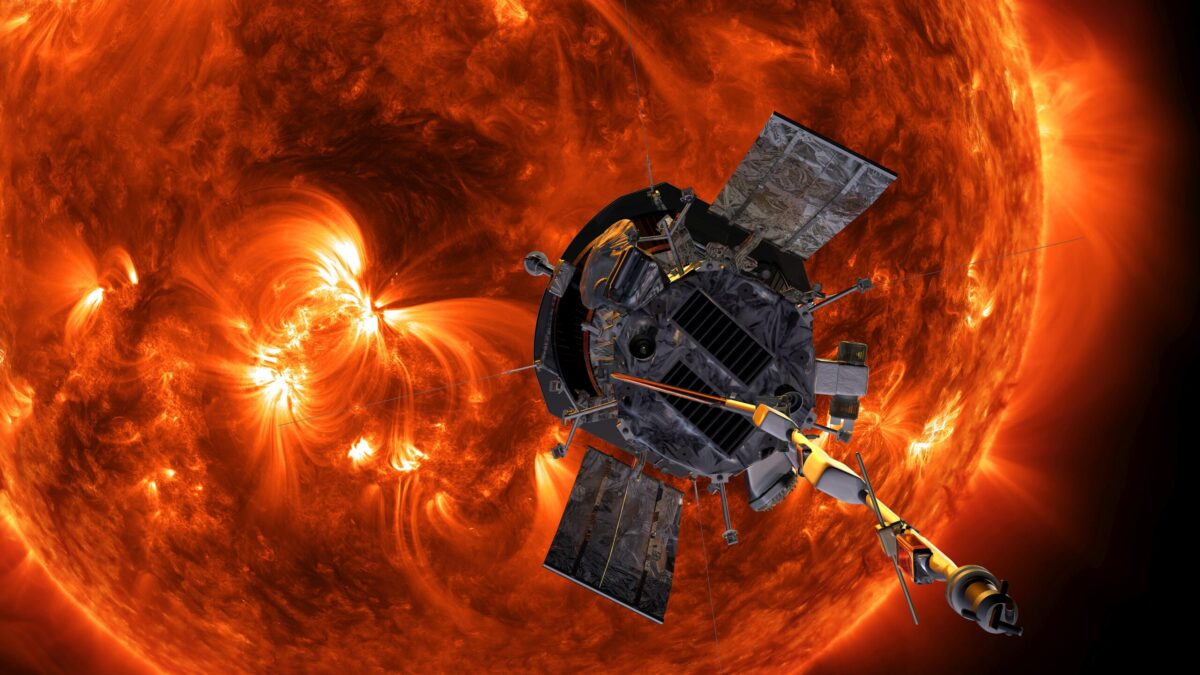
For a spacecraft, the most dangerous place in our solar system is near the sun because of its extreme heat, radiation, coronal mass ejections and many other physical effects. NASA’s Parker Solar Probe holds the record for flying closer to the sun than any other spacecraft, coming within 6.1 million kilometers of the corona in December 2024. At its closest approach, it also set the record for the fastest spacecraft ever built, reaching a speed of 192 kilometers per second.
NASA announced in January that after many close passes by the sun, Parker downloaded its images and science data for analysis. Using the Wide-Field Imager for Solar Probe (WISPR), a visible light sensor, NASA obtained close-up video of the sun’s corona and solar winds. WISPR observed the boundary in the sun’s atmosphere, known as the heliospheric current sheet, that divides the sun’s magnetic field direction from north to south, as well as high-resolution imagery of collisions between coronal mass ejections.
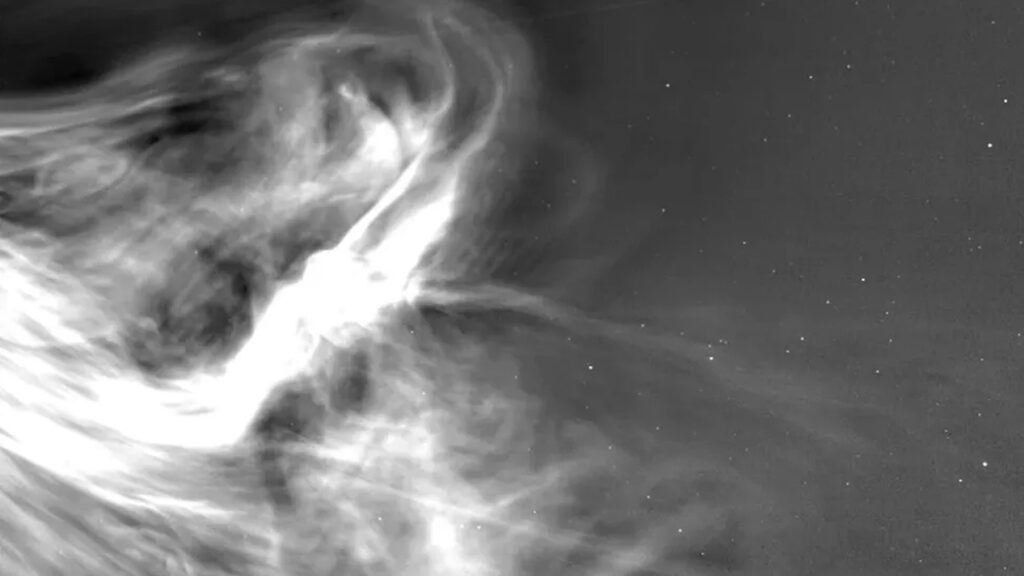
These unprecedented events happened at the same time because the spacecraft is on a highly elliptical orbit where speeds are highest when nearest the sun and slowest at the farthest point away. This elongated orbit was chosen so that the spacecraft spends most of its time farther away from the sun, reaching well past the orbit of Mercury, to minimize the destructive effects of the sun’s heat and radiation during most of each revolution.
Jupiter is also a strong source of radiation that can negatively influence and cause malfunctions with electronics and other systems. Just like the Parker Solar Probe, NASA’s Europa Clipper spacecraft that was launched in 2024 is also to use a highly elliptical orbit to spend most of its time well away from Jupiter, which produces the most powerful planetary radiation belts in the solar system. In March, the Europa Clipper did a flyby maneuver within 884 km of Mars to adjust its speed for a later flyby of Earth on its way to Jupiter, as part of an outer solar system tour, with a planned arrival in 2030.
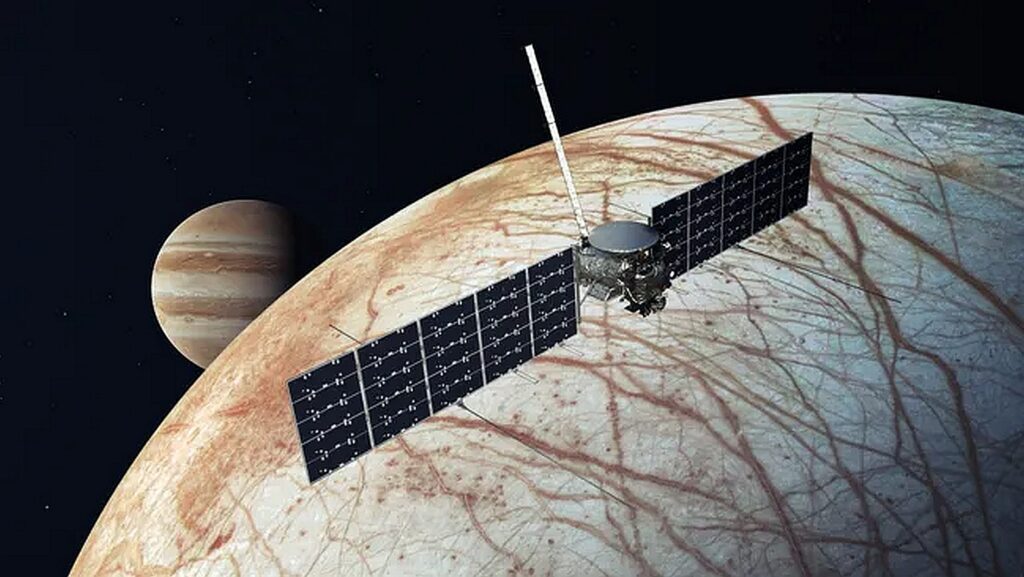
During the flyby, NASA tested the radars that are to penetrate the icy surface of Jupiter’s moon Europa to search for signs of a liquid saltwater ocean below the outer layer. The goal of the mission is to determine if the environment of Europa could have the necessary conditions to form and sustain life.
Europa Clipper’s radar system, Radar for Europa Assessment and Sounding: Ocean to Near-surface (REASON), was tested during the March flyby and performed flawlessly while operating in the space environment. REASON produced a detailed radar map of the Martian surface, generating roughly 60 gigabytes of topological data. Based on this success, Clipper appears ready to perform its primary mission using a carefully designed elliptical orbit around Jupiter to complete at least 49 planned close passes to study Europa at various latitudes.
In November, NASA’s twin ESCAPADE spacecraft (Escape and Plasma Acceleration and Dynamics Explorers) were launched by a Blue Origin New Glenn rocket. Though their ultimate destination is Mars, the ESCAPADE craft will first travel to a unique parking orbit, located around the Sun-Earth Lagrange Point 2. The pair of small spacecraft will remain in this relatively safe, low-radiation region of space until the planetary alignment is optimal in late 2026 to begin their 10-month journey to Mars after executing a final Earth flyby. The ESCAPADE spacecraft are to study how the magnetic environment of Mars is impacted by the sun, and these observations could help NASA prepare for future human exploration of the red planet.
Opener image: An artist’s impression of NASA’s Parker Solar Probe appear near the sun. Credit: NASA/Johns Hopkins APL/Steve Gribben