Landings and test flights mark an eventful year
 By Cat Hofacker
 By Cat Hofacker
In January, Boom Supersonic’s XB-1 demonstrator broke the sound barrier, reaching a top speed of Mach 1.12 — the first privately developed aircraft to do so. Data collected during supersonic test flights, which concluded in February, showed no audible sonic boom. These tests validated sonic boom models and paved the way for the development of Boom’s proposed commercial airliner, Overture.
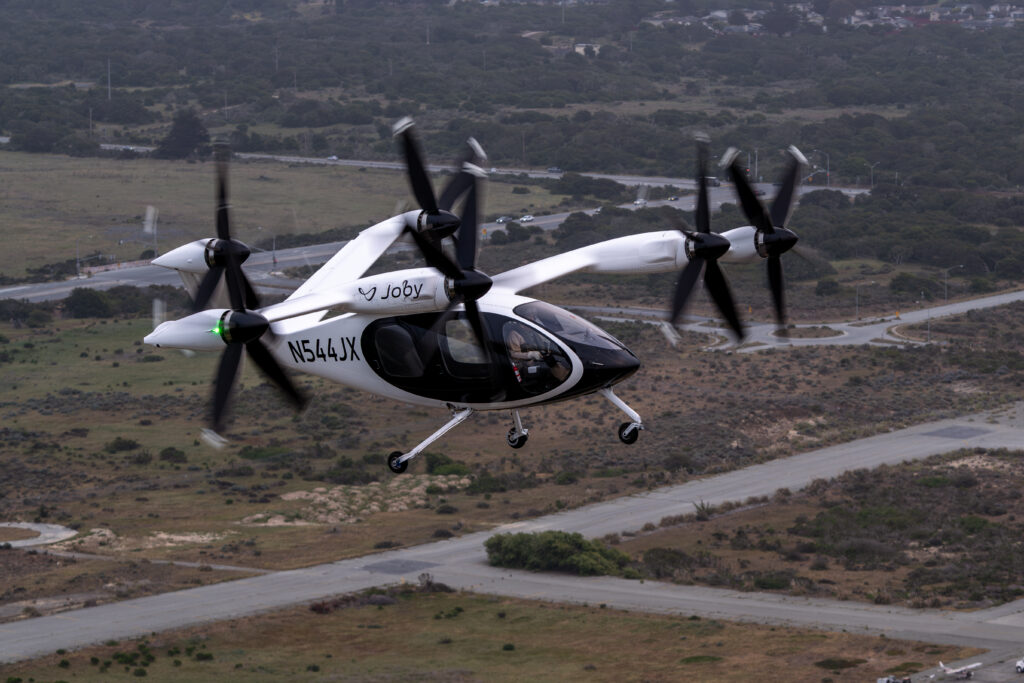
In April, Joby Aviation conducted failure injection testing with one of its S4 air taxi prototypes at Edwards Air Force Base in California, intentionally disabling motors, actuators and batteries midflight. These tests led to the design’s first full, piloted transition flight at Marina Airport, California. Joby followed up with hot weather testing in Dubai in July, with ambient temperatures nearing 43.3 degrees Celsius. The flights provided critical data on thermal management system performance for the aircraft, including battery packs, actuators and electric motors. Joby pilots assessed the S4’s responsiveness and handling and confirmed that the aircraft handled as predicted.
Also in April, German startup Atmos Space Cargo flew its Phoenix 1 reentry vehicle as part of SpaceX’s Bandwagon-3 rideshare mission. Phoenix 1 tested the Atmos inflatable heat shield. Although the original flight plan called for a reentry in the Indian Ocean, a change in trajectory from SpaceX led to the vehicle reentering and splashing down in the Atlantic Ocean 2,000 kilometers off the coast of Brazil. Atmos considered the mission a success, paving the way for its Phoenix 2 mission, slated to launch in 2026.
In June, Varda Space Industries’ W-4 capsule was launched aboard a SpaceX Falcon 9 from Vandenberg Space Force Base in California. This was the first time an entry vehicle was launched via a vehicle operator license under FAA Part 450, a regulatory framework introduced in 2021 designed to streamline commercial authorizations. Varda has a five-year license for unlimited landings at the Koonibba Test Range in South Australia.
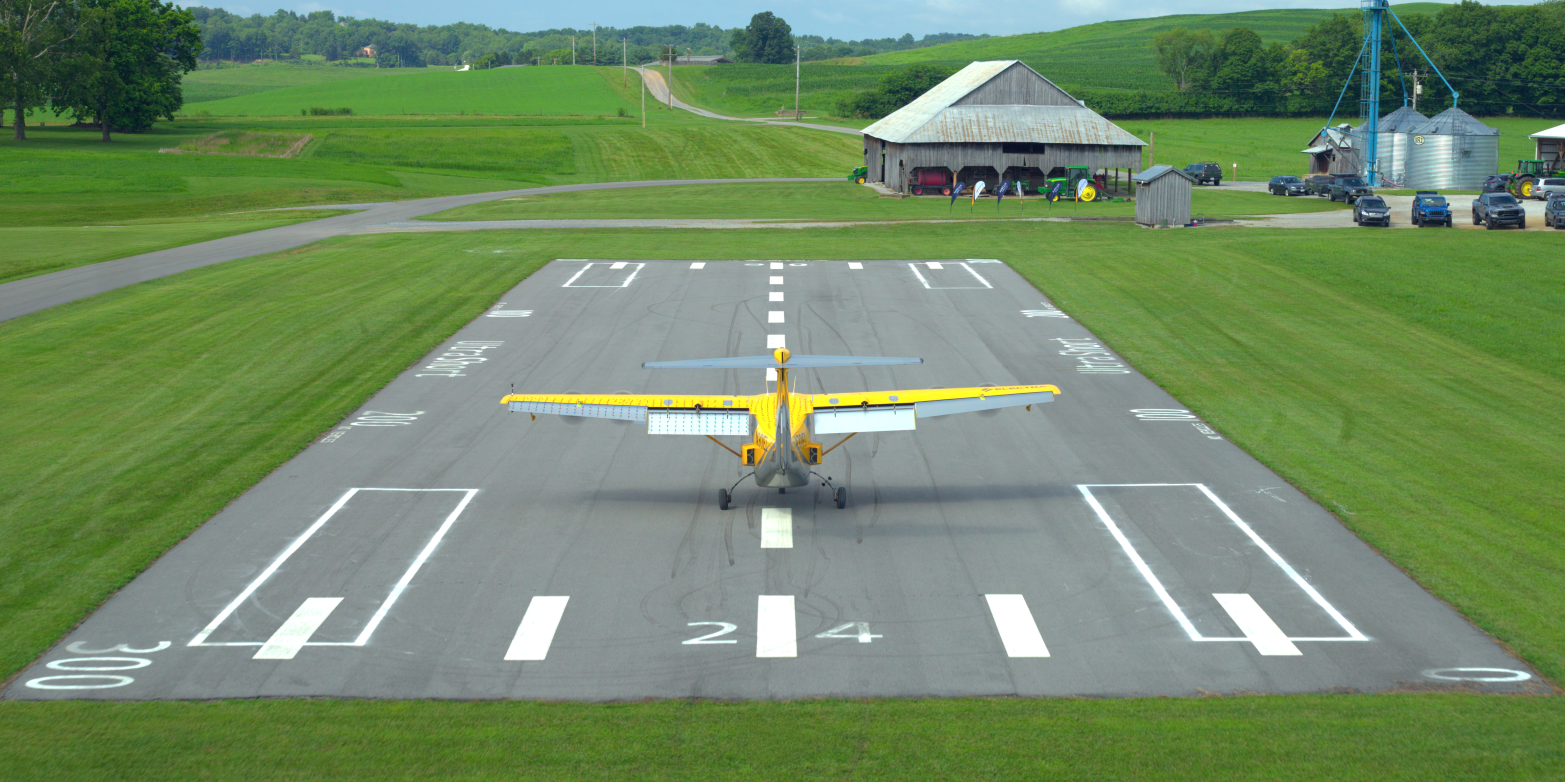
In August, Electra, in partnership with Surf Air Mobility and Virginia Tech, conducted flight tests of its EL2 technology demonstrator. Using hybrid-electric propulsion and blown lift, the EL2 demonstrated takeoffs and landings on a 91-meter runway. This work contributes to the development of Electra’s EL9, a nine-passenger aircraft slated to enter service in 2029.
In September, Vertical Aerospace completed Phase 3 flight testing, with an accumulative 400 kilometers miles of flight and over 22 billion data points. This stage saw vertical piloted sorties with speeds up to 120 knots and 209 meters outside the boundaries of the company’s flight test center. Also completed in September was Europe’s first piloted flight of a winged electric vertical takeoff and landing aircraft. Vertical expects type certification in 2028.
The U.S. Army Research Laboratory at Aberdeen Proving Ground in Maryland continued the full digitization of its historic aeroballistic spark ranges. The small caliber Aerodynamics Experimental Facility and the Transonic Experimental Facility capture orthogonal shadowgraph images of aerospace vehicles in free flight and are considered the gold standard for aerodynamic characterization. The small caliber Aerodynamics Experimental Facility and the Transonic Experimental Facility capture orthogonal shadowgraph images of aerospace vehicles in free flight and are considered the gold standard for aerodynamic characterization. In 2025, the wet film cameras were replaced with digital ones, and legacy spark triggering and timing circuits were replaced with state-of-the-art digital systems. New methods to align the cameras and calibrate the range using lasers are currently being developed, and operations are expected to resume in early 2026.
Contributors: Bradley Burchett and Ramin Norouzi
Opener image: Electra and Surf Mobility in August 2025 demonstrated takeoffs of less than 150 feet (45 meters) with Electra’s EL2 demonstrator. Credit: Electra