From concept to capability: emerging research in pressure gain combustion
 By Cat Hofacker
 By Cat Hofacker
Pressure gain combustion gained interest for its potential to boost efficiency in applications like gas turbines, aerospace propulsion and power generation.
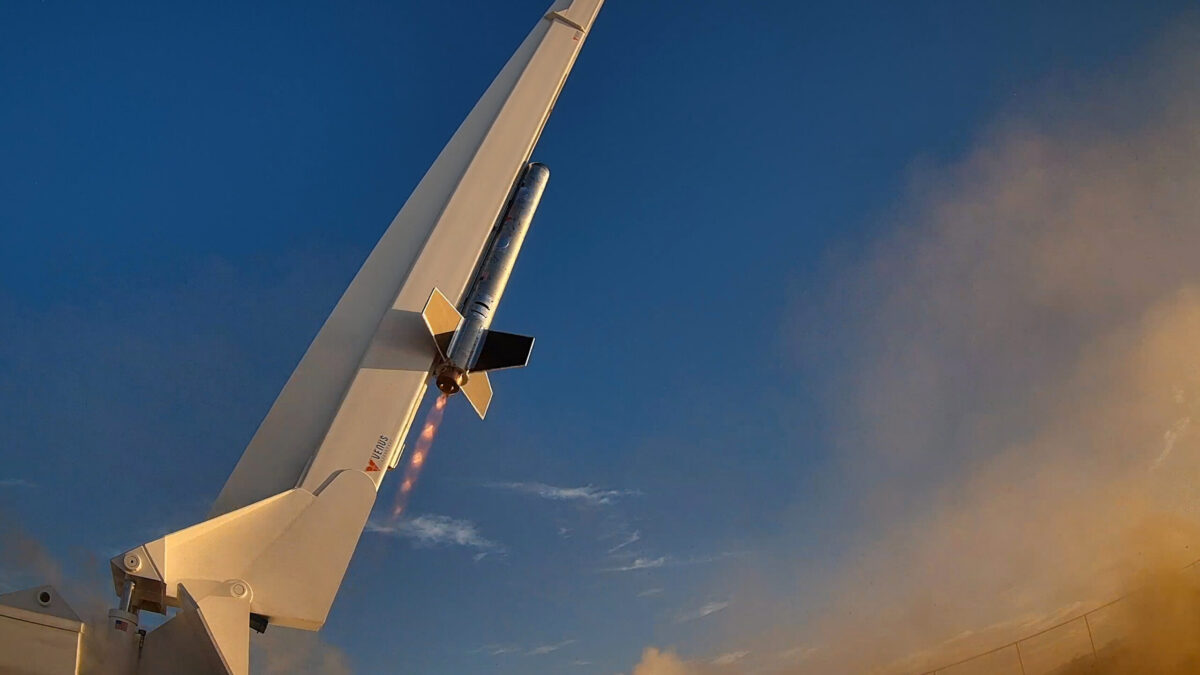
In May, Venus Aerospace completed the first high-thrust flight test of its rotating detonation rocket engine (RDRE). The 4-g acceleration, 7 seconds of powered flight and more than 1,200-meter climb demonstrated the design’s growing maturity. Juno Propulsion also demonstrated stable detonation, throttling and vacuum ignition of its 10-lbf nontoxic RDE thruster, the smallest of its kind. Awarded the NASA TechLeap Prize in July, Juno plans an on-orbit demonstration as early as mid-2026.
HyperComp Inc. in April advanced state-of-the-art modeling of liquid-fueled RDEs, improving predictive capabilities and capturing key physics more accurately. In January, RTX — with its Pratt & Whitney and Raytheon businesses and RTX Technology Research Center — collaborated with the U.S. Air Force Research Laboratory to complete the development and testing of an air‑breathing RDE. Slated for next‑generation military effectors, this compact, cost‑efficient design promises increased range and space for additional fuel, sensors and payload.
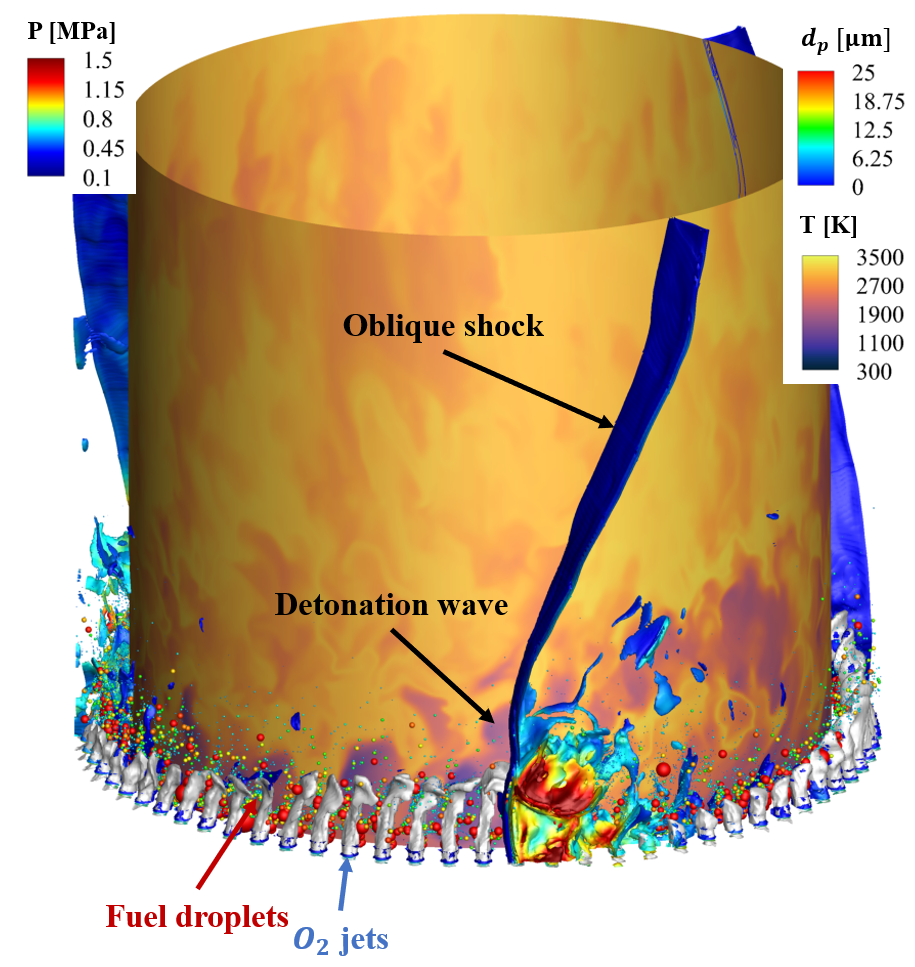
Swansea University in May advanced RDE understanding with high-fidelity simulations and experimental-informed modeling, studying wall thermal effects and developing a cryogenic detonation model. Argonne National Laboratory researchers between July and August conducted high-fidelity reacting large eddy simulation (LES) of the National Energy Technology Laboratory’s (NETL) hydrogen-air RDC, uncovering parasitic combustion in the fill region and nitrogen oxide formation, mainly behind detonation waves. KTH Royal Institute of Technology in Stockholm in January used LES to simulate supersonic flow and acoustics in a 3D aerospike nozzle exhausting RDE, identifying a strong tonal component matching the frequency of the rotating oblique shock. NETL investigated limit cycle oscillations in RDEs, identifying them as quasi-steady wave modes occurring at specific equivalence ratios and linked to lower velocities than equally spaced wave modes.

The University of Southern Queensland tested a hydrogen-fueled RDE ramjet in a hypersonic wind tunnel at conditions representative of Mach 4 flight and 15 kilometers in altitude, achieving detonative operation under started inlet conditions for a wide range of equivalence ratios. The German Aerospace Center (DLR) Lampoldshausen in May visualized the structure of an H2-O2 detonation wave in a small-scale RDC through a quartz ring at 180,000 frames per second. The Warsaw Lukasiewicz Institute of Aviation between January and March investigated heat transfer in a water-cooled air-kerosene RDE, conducting approximately 1-minute-long stable detonation experiments and estimating heat flux to the walls.
In a program funded by the U.S. Energy Department, Purdue University researchers developed an air-cooled RDE for open-loop integration with a Rolls-Royce M250 gas turbine engine. Stable operation at thermal steady-state was demonstrated in February, with run times up to 110 seconds. The University of Florence studied film cooling effects in a micro-RDE using infrared thermography, revealing a direct link between cooling parameters and combustion behavior. H2POWRD, the European Union’s research program on RDE gas turbine integration, officially kicked off. The Technical University of Berlin coordinated a consortium of 22 partner institutions across nine countries. Experimental and numerical work is planned to advance combustor, cooling and turbine designs.
The Naval Postgraduate School in California explored the use of optically based temperature measurements for detecting chamber temperature fluctuations at rates up to 1 Megahertz. The University of Alabama experimentally demonstrated a novel rapid-to-gradual nozzle to improve RDE exit flow and yield higher pressure gain. Nagoya University, the Muroran Institute of Technology, Keio University, Shizuoka University, Sojo University, the University of Tokyo and the Japan Aerospace Exploration Agency (JAXA) developed a pressurized liquid-fueled RDRE that is scheduled to be launched in November 2027. In February, the Detonation Engine and Space Propulsion Engineering Innovation Research Site was selected as an SX Research and Development Site as part of the JAXA Space Strategy Fund.
Contributors: Venkat Athmanathan, John W. Bennewitz, Jason Burr
Opener image: Venus Aerospace in May 2025 conducted the first high-thrust flight test of its rotating detonation rocket engine. Credit: Venus Aerospace