
Artificial intelligence, cybersecurity and quantum computing enable 2025 innovations
 By Cat Hofacker
 By Cat Hofacker
The aerospace industry is undergoing a significant transformation, driven by the need for advanced software systems to support the design, development and operation of complex aerospace systems. Software engineering technologies are advancing rapidly, with innovations in artificial intelligence, machine learning, cybersecurity and quantum computing playing a critical role in the development of next-generation technologies.
AI continued to play a major role in the software industry, with breakthroughs in areas for autonomy and predictive maintenance. In September, GE Aerospace announced a partnership with Merlin Labs to add AI capabilities to GE avionics used in military aircraft. Their first targets are the formal competition for a KC-135 tanker upgrade, expected in early 2026, and an autonomous C-130J currently undergoing proof of concept with Lockheed Martin.
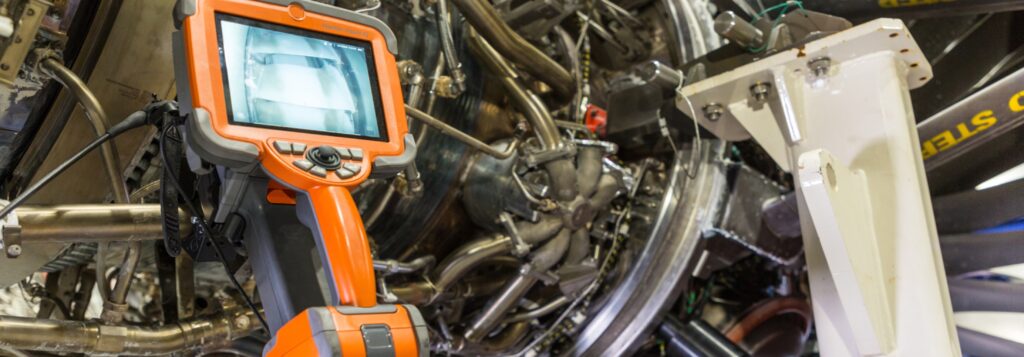
Rolls-Royce in February published details on its improved Intelligent Borescope method, highlighting how the enhanced method, developed in collaboration with Waygate Technologies and Rhinestahl, uses AI-powered algorithms to quickly analyze high-resolution images of engine parts for wear and tear.
“Our new Intelligent Borescope capability brings together cutting-edge technology and AI in a way that has never been used in the aviation industry before,” said Adriano Pulisciano, a Rolls-Royce imaging and computer vision specialist, in a post on the company’s website. “This technology will not only speed up inspection times but also transform many aspects of our business through the capture and analysis of high quality standardized data from all of our engines.”
In August, the international committee SAE G-34/EUROCAE WG114 AI in Aviation released a draft of ARP-6983/ED-324 for open consultation. The draft addressed how to clearly define the “machine learning part” of an avionics system, how it connects with the rest of the aircraft systems, and what kind of evidence is needed to show it is safe and reliable. At the same time, the work was aligned with new regulatory efforts in Europe. Taken together, these steps moved the standard from theory into a practical standard that the aerospace community can start preparing to use.
As software systems become more complex and interconnected, cybersecurity is becoming an even more critical concern. The aerospace industry is experiencing a sharp increase in attacks, with Thales in June reporting a 600% year-on-year increase in ransomware attacks in the aviation sector. Major cybersecurity incidents include a denial-of-service (DDoS) attack on Los Angeles International Airport in March, which caused operational disruptions, and a September cyberattack on Collins Aerospace, which disrupted check-in and boarding systems at several European airports.
In the wake of these increased cybersecurity breaches, innovative solutions like Palo Alto’s Zero Trust Architecture are playing a major role in combatting cyberattacks. In May, Harness launched Traceable Cloud Web Application and API Protection. This platform unifies web application protection, API security, bot mitigation and DDoS defense into a single offering, demonstrating a deeper integration of application and API security.
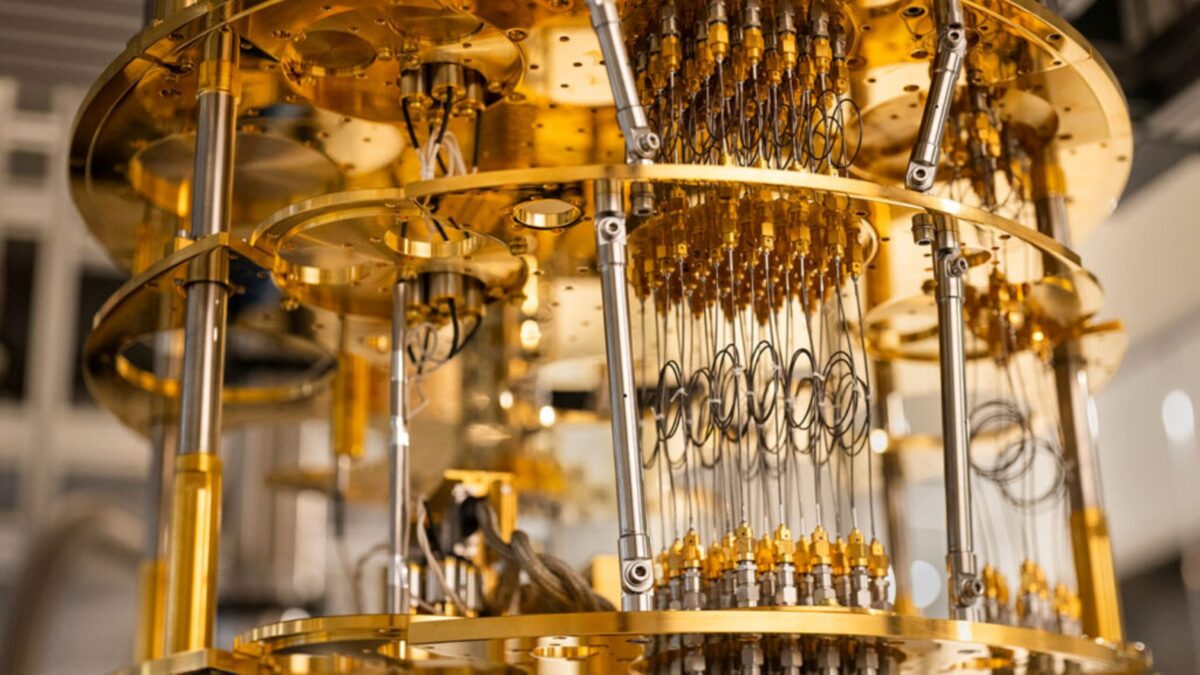
Quantum computing started making a significant impact on the software industry, with innovations toward developing more advanced quantum computers. In February, Microsoft announced the Majorana 1 chip, the first quantum processor with a topological core architecture. Fujitsu and the Japanese research institute RIKEN in April announced a new 256-qubit superconducting quantum computer, and in September, Harvard researchers demonstrated a continuously operating system with more than 3,000 quantum bits.
By leveraging AI, cybersecurity and quantum computing, the aerospace industry can create more efficient, safer and more capable systems, and continue to push the boundaries of what is possible.
Contributor: Umut Durak
Opener image: Microsoft in February 2025 announced its Majorana 1 quantum chip, which the company says was designed to create more inherently stable qubits that reduce the overhead required for error correction. Credit: Microsoft