
A new era for the U.S. airspace, drones, and space vehicles
 By Cat Hofacker
 By Cat Hofacker
The aviation industry stands at the precipice of a new era, marked by significant strides in drone operations, commercial space integration, and air traffic control modernization. 2025 saw the laying of crucial groundwork for a more efficient, safer, and ultimately more accessible airspace for all users.
In August, the FAA and the Transportation Security Administration released a notice of proposed rulemaking for routine drone flights for drones beyond visual line of sight (BVLOS). This rule, set to become Part 108 of the Federal Aviation Regulations, sets the stage to unlock the full commercial potential of drones, from package delivery to vital infrastructure inspection. Part 108 would introduce a risk-based, performance-driven framework that, despite some industry concerns, has been largely well-received.
Complementing Part 108 and the draft rule, regulation Part 146 outlines requirements for automated data service providers. This is a critical step toward establishing uncrewed traffic management services, an essential component for enabling large-scale drone operations and ensuring their safe integration into the national airspace.
One program leading the charge in BVLOS operations was Vantis, North Dakota’s advanced uncrewed aerial system (UAS) statewide network. Administered by the Northern Plains UAS Test Site in partnership with Thales, Vantis is the first large-scale system in the U.S. designed to support BVLOS applications across agriculture, energy, public safety and transportation. Vantis operates more than 7 billion square meters in western North Dakota and expanded operations to eastern North Dakota in April with a new radar site. Vantis’ key milestones this year include participation in the FAA Radar Data Pathfinder Program and owning the first system approved under the FAA’s Near-Term Approval Process. Vantis has successful use cases in reducing power recovery time, detecting invasive weeds, and training fire department staff.
The commercial space industry continued its exponential growth. With 101 FAA-licensed launches in the first half of 2025, which is comparable to the number conducted in all of 2023, 117, the challenge of integrating these operations into existing air traffic control systems is more pressing than ever. In August, U.S. President Donald Trump signed Executive Order 14335, “Enabling Competition in the Commercial Space Industry,” signaling a commitment to streamlining regulations and further accelerating the pace of operations.
Efforts to modernize the Notices to Airmen (NOTAM) system also moved forward. Recognizing the current system’s vulnerabilities and its nonadherence to the International Civil Aviation Organization’s machine-readability standards, a consortium including CGI Federal, Google Public Sector, NG Aviation, and Mosaic ATM delivered the new NOTAM core capability in July. This updated system, built on a scalable and secure cloud architecture from Google, was delivered in September, with the legacy systems due to be decommissioned in February 2026. This modernization is crucial to seamlessly integrate new airspace users like drones and space vehicles.
Also in July, Trump’s signature tax and spending legislation package was passed, allocating $12.5 billion in supplemental appropriations for air traffic control modernization. Although this amount dwarfs the annual funding the FAA usually receives for these improvements, it is largely earmarked for replacing critical infrastructure, consolidating facilities, and extending existing capabilities. A notable exception is the $50 million dedicated to remote tower technology at uncontrolled airports, a technology still awaiting certification in the U.S. FAA also released the request for solutions for the Brand New Air Traffic Control System (BNATCS) in August, signaling a forward-looking approach to future air traffic management. The agency in December announced it had awarded the “prime integrator” contract to Virginia-based Peraton.
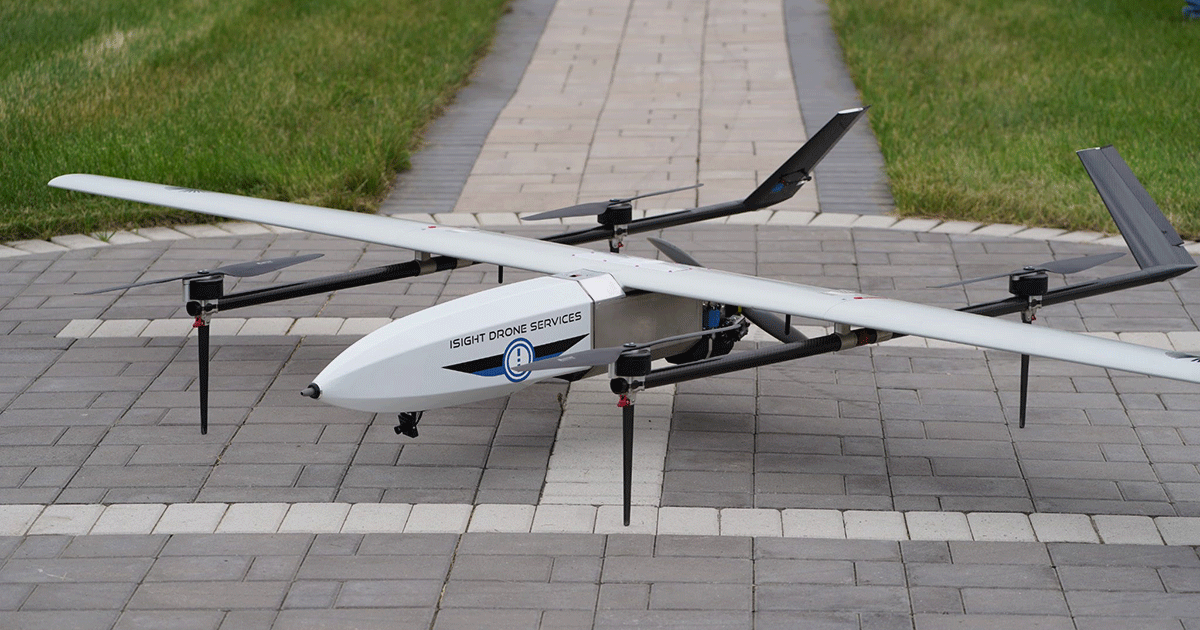
Opener image: An iSight Drone Services drone in July 2025 flew beyond visual line of sight of operators to delivery medical supplies 80 miles away. Credit: Northern Plains UAS Test Site