
‘Space gun’ startup hopes to offer U.S. military an affordable way to test hypersonic weapons


Editor’s note: An earlier version of this story misspelled Mark Bigham’s name.
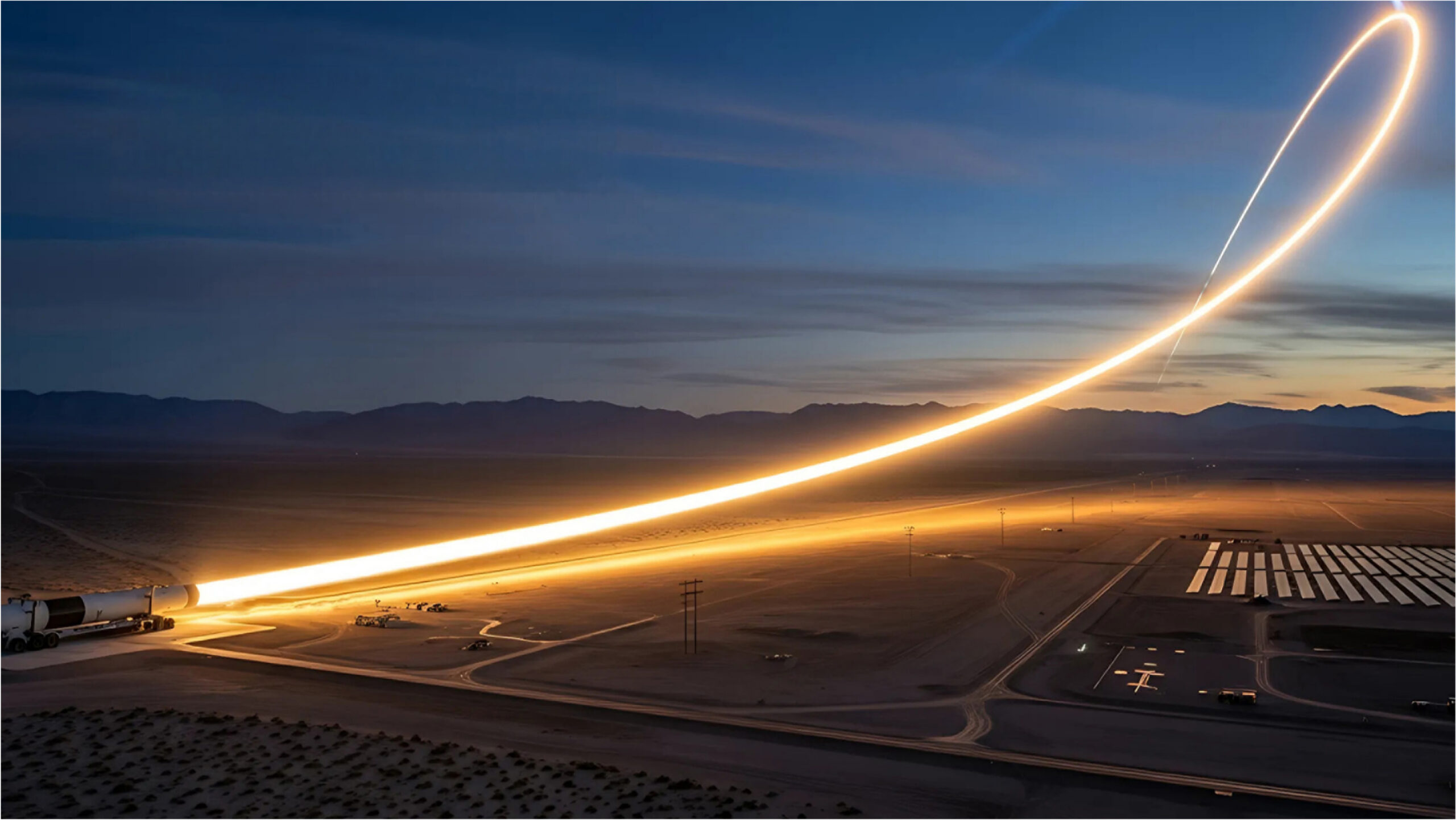
Executives at Longshot Space Technologies typically pitch the company as an alternative launch provider building a “space gun” to shoot payloads into orbit. However, upcoming tests of its launcher will further a different application: hypersonics testing.
“Just imagine an absolutely gigantic potato gun,” said Mark Bigham, the California company’s vice president of defense programs. “That’s essentially what we’re working on.”
Longshot plans to build increasingly large multi-injection guns, or light gas guns. Depending on the size of these tube-shaped launchers, payloads could be fired at hypersonic speeds for military target practice or — theoretically — at high enough speeds to reach low-Earth orbit.
“We use multiple injections of gas down the length of the system,” said Nato Saicheck, Longshot’s chief technology officer, “which means that we can distribute the acceleration rather than having one gigantic spike of acceleration.” This allows the launcher to “bring more delicate payloads up to those high speeds.”
So far, the company has built a prototype launcher that’s roughly 15 centimeters wide by 23 meters long, and the first section of a larger version that is to measure 74 cm by 500 m when fully assembled.
Although the prototype has been fired over 100 times with payloads reaching speeds up to Mach 4, “up till this point we’ve been using inert gases, nitrogen and helium,” Saicheck said.
The company is now preparing for a test campaign, slated to begin in September, that is to include the first launches with hydrogen. The company intends to use this as the main fuel source for any operational versions of the launcher. Over roughly a month, the team plans to fire the smallest launcher between 12 and 20 times in the Mojave Desert, Saichek said.
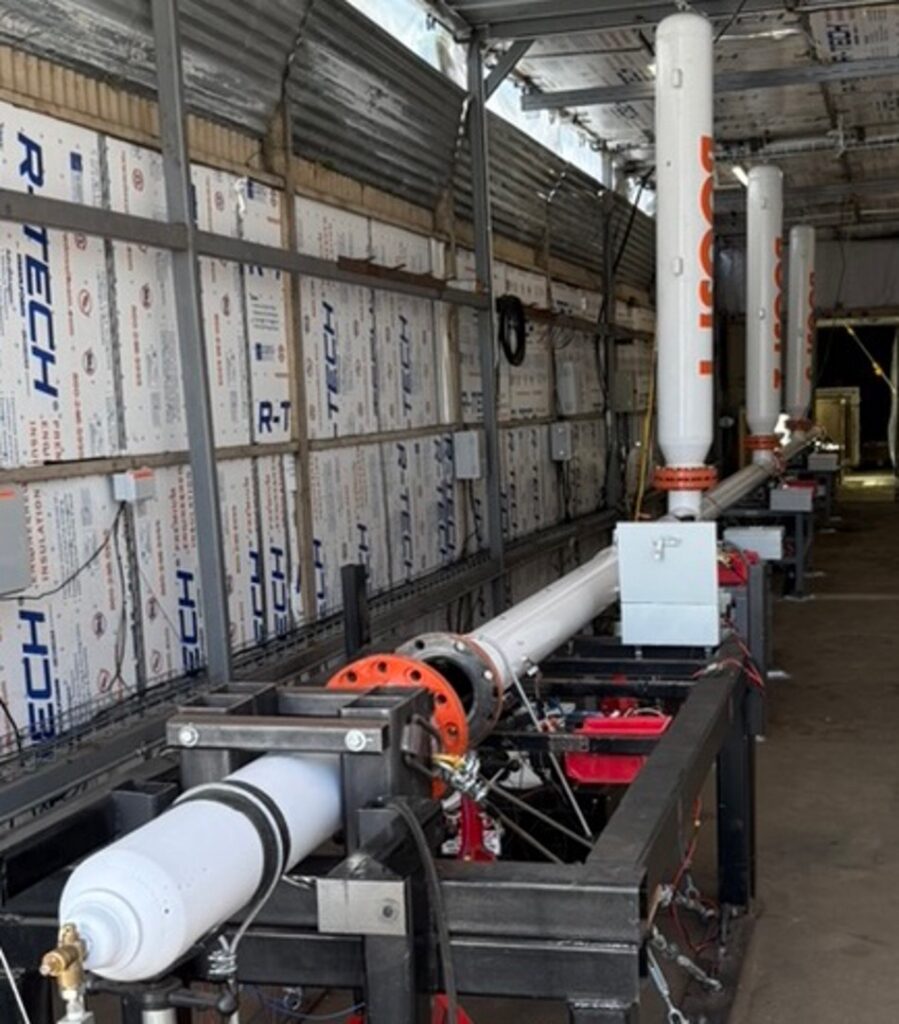
The initial shots will use inert gases to ensure the launcher’s new hydrogen management system and automated processes run safely before swapping in hydrogen for the later shots. If all goes as planned, payloads up to 2 kilograms will fly about 10 m before hitting nylon carpet buffer and surrounding berm.
“We think we’ll be able to get Mach 5 handily, and maybe even a bit higher,” Saichek said.
Matt Palumbo, the company’s director of business development, said the desert location will yield “intangible” lessons, in addition to validating the launcher concept and the company’s prediction models of how the device will perform.
“We’re going to figure out all the challenges that go along with that [environment] — weather, heat, sand — because eventually we’re going to have to build all of our big systems out in the middle of the desert,” he said, due to the anticipated size of future launchers and necessary safety zones.
Ultimately, the upcoming tests will help shape how the company builds the first operational-scale launcher, which is to be capable of firing payloads of up to 100 kg at speeds of Mach 5 to 7.
The launcher is partially funded by a $1.9 million award from the U.S. Air Force that Longshot received in 2024. The resulting launcher, according to the award notice, “would be a hypersonic testbed able to perform one launch per week” at a cost of $250,000 per launch and be open to government or commercial customers.
The company is funding the rest of the launcher development, which Saichek estimates will cost an additional $6 million to $8 million.
As a testing platform, Saichek said the launcher would be “in between rockets and artillery” in its gentleness and cost. “We think it’ll be really useful for subsystem testing” and as a “hypersonic skeet shooting-type system.”
According to Bigham, for both space launch and hypersonics testing, “we’re never going to replace rockets, but we think we’re a great complement.”