

Introduction
In the world of aerospace, designing a groundbreaking technology is just the first step; proving it works is where the real challenge lies. This distinction is crucial as we pursue advancements like hypersonic flight, cutting-edge propulsion systems, and autonomous aircraft. These innovations demand not just brilliant minds and sophisticated modeling but also specialized facilities that can replicate the extreme conditions these new systems will face.
A 2021 report from the Government Accountability Office (GAO) highlighted a pressing issue in hypersonic testing – our wind tunnels are aging, and the limited availability of these resources can slow down development programs. Professionals working in this area know this issue all too well. When researchers struggle to secure testing time, they’re faced with tough choices: delay their experiments, rely more on computer simulations, or conduct more flight tests than necessary. This situation raises a broader concern. While the United States has poured significant investment into aerospace research, the infrastructure needed to verify and validate that research hasn’t kept pace. If a wind tunnel’s schedule is full, you can’t just squeeze in another experiment. Similarly, adapting a propulsion test stand for a new engine configuration isn’t as simple as it sounds. And once specialized testing expertise is lost, it can take years to rebuild.
This is a challenge that policymakers need to address as we move into FY27. It’s not about replacing every aging federal facility. It is about ensuring we make the right investments and management decisions to sustain our critical research capabilities and prepare for the future.
The Real Issue: Capacity Over Age
America’s aerospace research and test infrastructure has been built over decades, thanks to investments from NASA, the Pentagon, universities, and private industry. Many facilities may be older, but they still hold immense value, with some even offering unique capabilities that are costly to replicate. However, age becomes a pressing issue when facilities can’t meet new demands, when their instruments become outdated, or when maintenance limits access. Hypersonic testing, for example, requires ground facilities to recreate extreme aerodynamic and thermal environments, while flight testing needs specific locations, airspace and extensive coordination. Expanding these facilities isn’t a quick fix, and limited testing availability can disrupt development timelines.
These challenges extend beyond military applications. The commercial aviation sector is increasingly relying on unconventional aircraft designs and propulsion systems, while spacecraft developers need to test materials and systems in rigorous conditions. Smaller companies and universities often lack the resources to build such specialized facilities but still require access to them to innovate.
What’s crucial is not that every aerospace program faces the same limitations but that we recognize the need for a national research enterprise that can adapt to increasingly advanced technologies. We need to identify where testing capacity is adequate, where it falls short, and where new capabilities are necessary.
Evolving Testing to Match Technology
With the rise of computational modeling, simulation, and artificial intelligence, the landscape of aerospace design has changed dramatically. Engineers can now predict performance and flag potential issues before a prototype is even built. However, this increased computational power does not replace the need for hands-on experimental research. Models are built on assumptions that need to be validated with real-world data. As engineers push the boundaries of innovation further, reliable experimental evidence becomes even more critical. Modernization must reinforce the connection between physical testing and digital engineering. Investing in advanced instruments, high-performance computing, and secure data systems should go hand in hand with improving experimental facilities. We also need to rethink how testing is organized. A 2025 GAO report found that the Pentagon’s testing policies weren’t fully utilizing best practices like early tester involvement and continuous feedback. To truly modernize, we need to evolve both our infrastructure and our institutional practices.
Making Thoughtful Investment Decisions
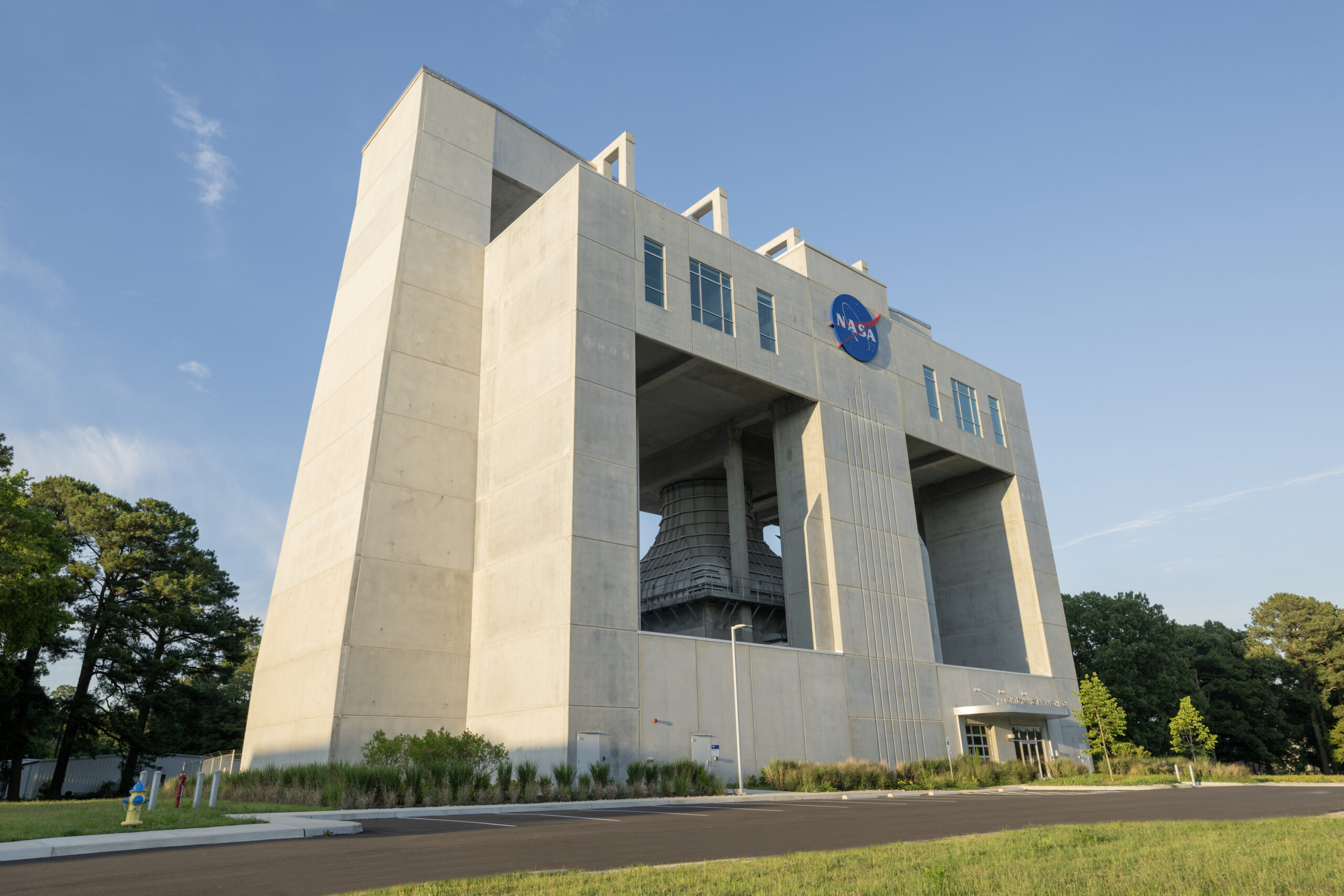
NASA’s new Flight Dynamics Research Facility at Langley Research Center, which opened in July 2026, is a new wind tunnel that brings together and improves on capabilities from two older facilities, focusing on aircraft stability and future aerospace vehicles. It’s a clear example that modernization doesn’t mean you have to keep every building standing but rather, it can be about consolidating and upgrading to provide greater technical value. Making such decisions requires careful consideration and advanced planning. Some facilities, though they may serve a smaller number of users, provide critical capabilities for national security or scientific research. Simply evaluating them based on how often they’re used or their operating costs might overlook the significant impacts of losing a resource that’s hard to replace.
On the other hand, some aging facilities may no longer warrant continued investment. Responsible management means recognizing which infrastructure is strategically crucial and which can be transitioned elsewhere for better efficiency. For decision-makers in the administration and Congress, having reliable information is essential to guide these investments before deterioration or unexpected closures push us into more costly alternatives.
Industry is also helping address gaps in national testing capacity. In Titusville, FL, Draper is developing its Strategic Enhanced Ground Test Facility to support the U.S. Navy’s strategic systems mission and other potential defense and space applications. Expected to become fully operational in 2028, the facility will incorporate a specialized centrifuge and environmental testing capabilities to evaluate guidance, navigation, and control technologies under demanding operating conditions. The project illustrates how private investment, in partnership with government, can expand specialized testing capabilities without requiring every facility to be federally owned.
This approach deserves greater consideration as policymakers evaluate future infrastructure needs. Federal agencies need not own or operate every facility that supports a national mission. Industry and universities can help fill capability gaps, introduce specialized expertise, and share the burden of developing expensive infrastructure. The question is whether these partnerships provide reliable access, meet documented technical requirements, and deliver other lasting value to government. If they are properly structured, they can strengthen the national research enterprise while preserving federal responsibility for essential capabilities.
Why We Can’t Afford to Wait
As we continue the FY27 budget discussions, we’re reminded of the fierce international competition in aerospace and advanced defense technologies. With nations like China advancing their military and aerospace capabilities, it’s more important than ever for the United States to maintain its edge in developing and validating new systems. Yet competition alone isn’t enough to dictate which facilities need funding; we must rely on documented technical needs. We must also remember that building research infrastructure takes time. Specialized facilities require careful planning, construction, and skilled personnel. Delaying investment decisions now could mean our research programs lack essential capabilities down the line. The ripple effects of these investments are also crucial. Aerospace companies, especially smaller firms, rely on testing facilities to showcase new technologies and gain customers. Universities need these resources to conduct vital research and train the next generation of engineers. States benefit when federal research installations support local manufacturers, technical institutions, and specialized suppliers.
Federal investment should recognize these interconnections while prioritizing the core mission of our national research facilities. By fostering partnerships, we can broaden access and enhance regional capabilities, ensuring we keep security, safety, and proprietary information at the forefront.
The Right Agenda for FY27
There are three key actions we can take to foster a disciplined national investment strategy that reflects our real concerns and aspirations.
• First, let’s take a close look at our aerospace research and testing capabilities. We need to assess the current state of our facilities, their capacity, and future demands. This isn’t just a task for one agency; collaboration among NASA, the Pentagon, and other federal research organizations is crucial. By examining the condition of our facilities and identifying which capabilities are irreplaceable, we can uncover opportunities to share resources across agencies, universities, and industries. Congress should use the insights from this assessment to guide funding and oversight decisions. Fortunately, we don’t need to create a new federal commission; we can utilize existing structures to achieve this goal.
• Second, we should prioritize modernization based on the technical needs and national significance. When making investment decisions, it’s essential to consider not just the state of our facilities but also the demand for research, replacement costs, and the potential impact on our missions. Congress should back realistic multiyear plans for major projects and hold agencies accountable for demonstrating improvements in technical capabilities. Our modernization efforts should include not only physical upgrades but also enhancements in computational tools, instrumentation, and data systems.
• Third, strengthen industry investment, institutional partnerships, and the workforce that makes these facilities productive. Federal agencies should identify opportunities for industry to develop, modernize, and operate specialized testing capabilities that complement government infrastructure. Partnerships should be structured around documented mission requirements, dependable access, and appropriate safeguards for national security and proprietary information. States and universities can contribute through research partnerships, supporting infrastructure, and technical education. Attention should be given to the engineers, technicians, and instrumentation specialists whose expertise is essential to operating complex facilities. The objective should be to expand national testing capacity through a combination of public and private investment, rather than assuming every capability must be financed and operated exclusively by the federal government.
• Fourth, we must nurture the workforce and partnerships that keep these facilities thriving. Collaboration with states, universities, and industries can enhance federal investments through robust technical education and cooperative research. We need to focus especially on engineers, technicians, and specialists whose skills are crucial for operating complex systems. Investing in infrastructure is important, but if we don’t ensure continuity in our workforce, we risk having state-of-the-art equipment without the expertise to utilize it effectively.
However, none of these actions come without tough budgetary decisions. Maintaining specialized facilities can be costly, and not every proposed project deserves federal backing. This is why we need to base our national priorities on thorough assessments rather than reactive decisions that arise only when problems surface. The incredible progress of America’s aerospace research has been fueled by consistent public and private investment over the years, enabling us to tackle challenging engineering questions and validate our solutions. Sustaining this capability requires more than just faith in the brilliance of American researchers; it calls for a strategic approach to our investments.
AIAA advocates for ongoing, strategically prioritized, and sustained funding for laboratories, wind tunnels, propulsion facilities, test ranges, computational resources, and the technical workforce essential for pioneering future aerospace technologies.
Ultimately, the true measure of our investment shouldn’t just be the preservation of facilities or the dollar amounts allocated. Instead, we should focus on whether the United States can continue to tackle the increasingly complex challenges that will not only shape our aerospace future but position us to maintain leadership in aerospace and defense technologies. Let’s ensure we’re building not just for today, but for the innovations of tomorrow.
References
- U.S. Government Accountability Office. (2021). Hypersonic Weapons: DOD Should Clarify Roles and Responsibilities to Ensure Coordination Across Development Efforts (GAO-21-378).
- U.S. Government Accountability Office. (2025). Weapon Systems Testing: DOD Needs to Update Policies to Better Support Modernization Efforts (GAO-26-107009).
- National Aeronautics and Space Administration. (2026, June 29). NASA’s Newest Wind Tunnel Builds on Legacy of Innovation.
- Draper (2024, July 30). Draper Team Completes Critical Design Review Phase of Strategic Enhanced Ground Test Facility. https://www.draper.com/media-center/news-releases/detail/26553/draper-team-completes-critical-design-review-phase-of-strategic-enhanced-ground-test-facility
- National Aeronautics and Space Administration. (2023). Aeronautics Strategic Implementation Plan.
- U.S. Government Accountability Office. (2022). Defense Infrastructure: DOD Should Better Manage Risks Posed by Deferred Facility Maintenance (GAO-22-104481).
- U.S. Government Accountability Office. (2023). Installation Management: DOD Needs Better Data, Stronger Oversight, and Increased Transparency to Address Significant Infrastructure and Environmental Challenges (GAO-23-106725).