

Washington, DC – The FAA’s approval process for regulating space launches is steadily improving due to recent streamlining efforts, but it must continue to evolve to sustain the dynamic ramp-up in activity in the coming years, government and industry leaders told ASCEND 2026.
The demand for space launches is expanding exponentially: Of the 1,050 space launches over the past four decades, roughly half took place in the last four years.
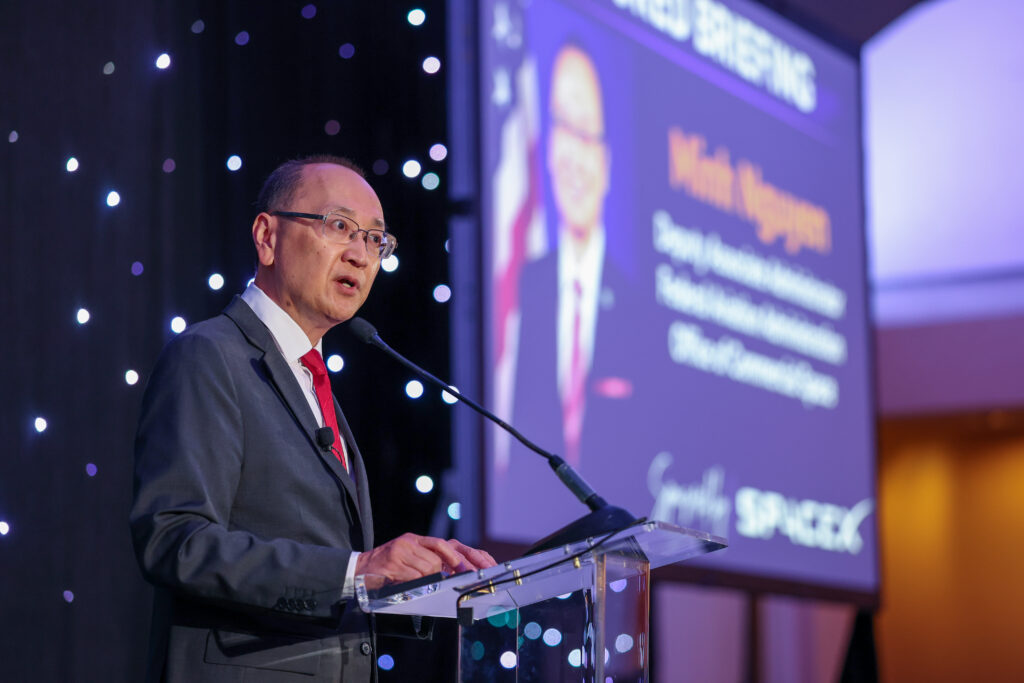
“That’s how fast we’re moving,” Minh Nguyen, the FAA’s Deputy Associate Administrator for the Office of Commercial Space Transportation, said in remarks on May 19. “At this rate, we are looking at another 1,000 launches and reentries, likely in the next four or five years. And we need to be prepared for that.”
He cited the executive order issued by President Donald Trump in 2025, “Enabling Competition in the Commercial Space Industry,” which was designed to reduce regulatory barriers, eliminate duplication, and expedite reviews of space launch applications, while still ensuring public and environmental safety.
“The FAA is well on the way in implementing the order and you will hear more from us soon,” Nguyen added.
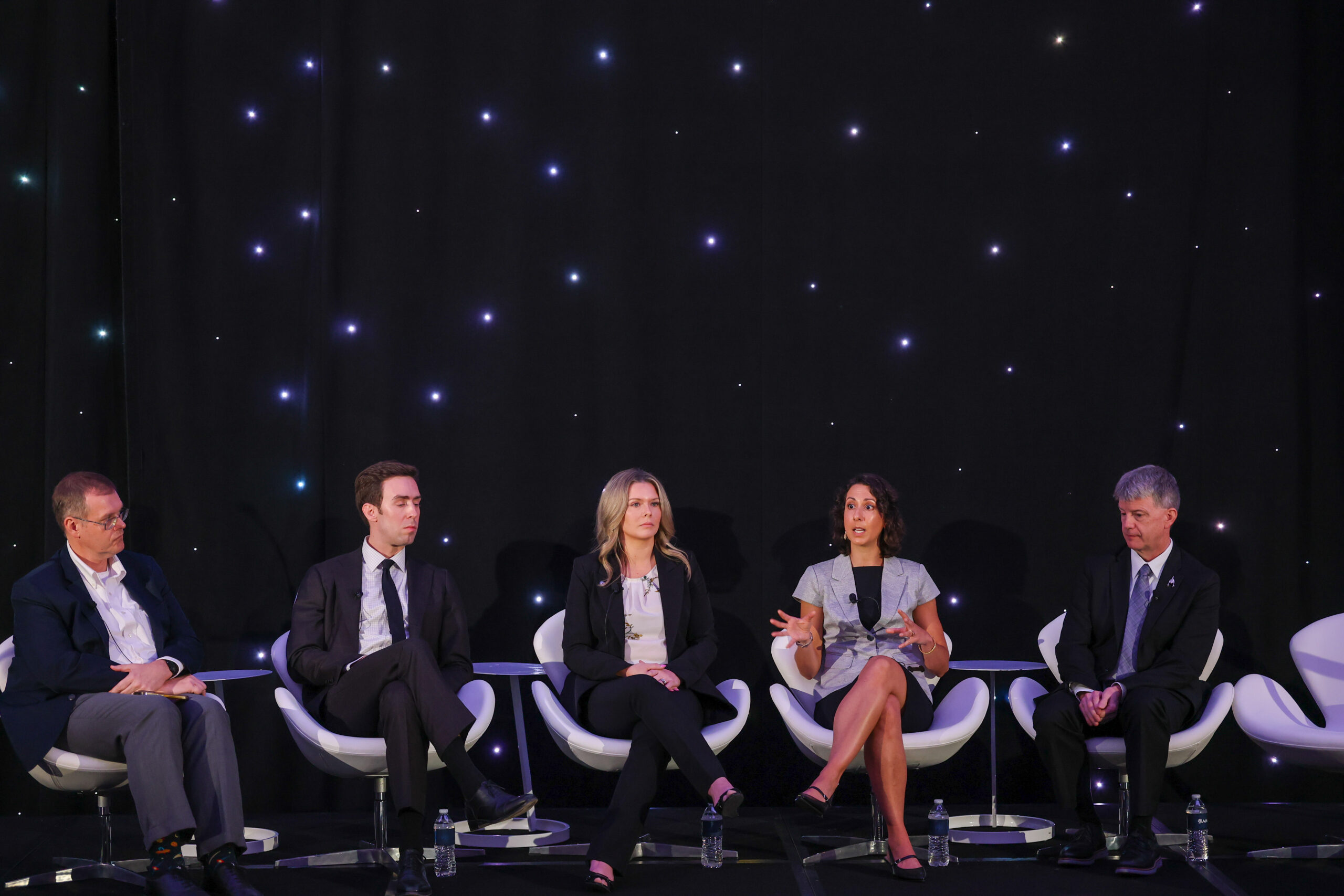
But the historic number of space launches presents a “pressure test” for companies, government launch facilities, commercial spaceports, and regulatory oversight, said Jeff Foust, a senior editor at SpaceNews, who moderated a panel titled “The Road to 1,000 Launches,” which was sponsored by SpaceX as part of the Space Policy Summit hosted by Commercial Space Federation.
It was only a few short years ago that space industry executives complained to Congress that the FAA licensing process was broken and the agency needed significantly more resources. Now, government regulators and top industry launch providers who participated on the panel agreed, the agency’s licensing process for rocket launches is much improved.
One factor has been the FAA’s so-called Part 450 rule, which the agency recently streamlined to consolidate four previous rulemaking processes, including expanding the scope of individual licenses to cover multiple launches.
Katie Cranor, Executive Director of the Office of Operational Safety in the FAA Office of Commercial Space Transportation, said the changes have allowed for “maximum flexibility.”
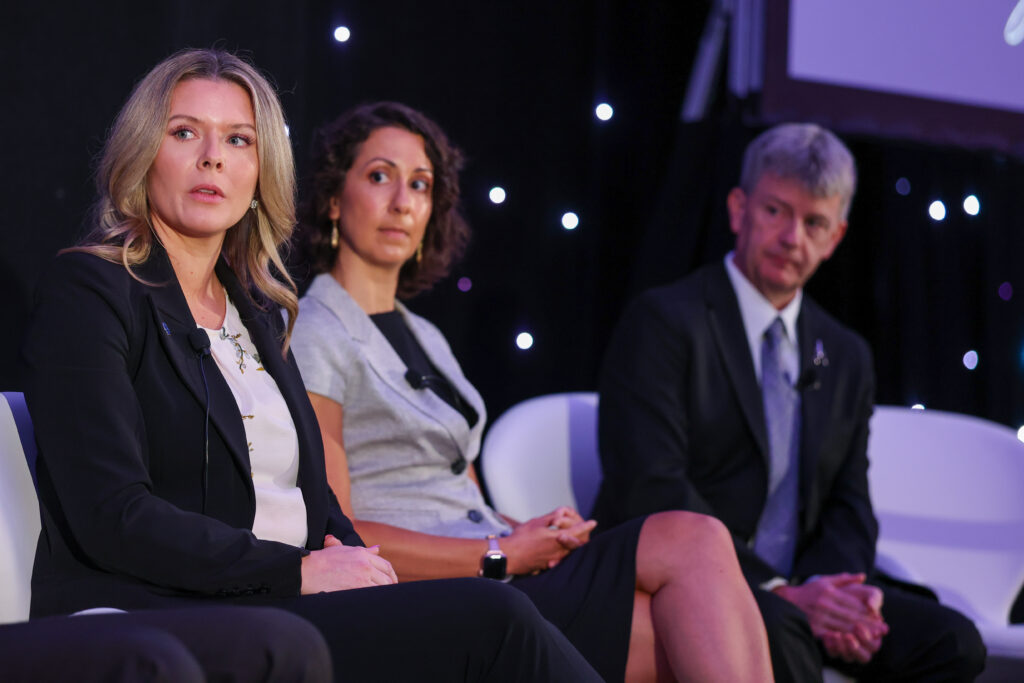
“It’s really about thinking through not just what you want to do on your next launch, but your 10th launch, your hundredth launch, your thousandth launch,” she said during the panel discussion. “The way that we certainly can go faster is very clear, concise, repeatable, safety cases. If you can apply those more rapidly, and not just for one operator, but multiple operators, now our job becomes really much more efficient and we’re not kind of driving a new path through the regulation each time.”
FAA officials also cited the agency’s License Electronic Application Portal, or LEAP, which Nguyen described as “a web-based tool that is equipped to handle complex application management throughout the life cycle of a license.” He noted that major testing has been completed and the new portal has received “good feedback” from testers.
Sabrina Jawed, the FAA’s Acting Deputy Assistant Chief Counsel for Regulations, also said the agency’s authority to issue waivers to speed up the approval process is “one tool you can use if you are not able to meet the regulations.”
“You have to just show that your operation or waiving the particular regulation is not going to jeopardize public health or safety, national security, or foreign policy, and that it’s in the public interest,” she said. “And we work really closely with operators.”
The space industry participants on the panel also lauded the recent changes, particularly the modifications to the 450 rule.
“We like that flexibility,” noted Mike Moses, President of Virgin Galactic Spaceline, which is preparing to resume launches from its suborbital spaceplane. “It’s a good path forward.”
Relativity Space, which used the approval process for its Terran 1 rocket and is now using it for the Terran R, has found the updated regulations “very positive,” said Matts Wilcoxen, the company’s director of strategy.
But to accommodate what could be hundreds of launches per year, the panelists agreed the FAA’s Office of Commercial Space Transportation will also require still more resources and better coordination at all levels to clear bottlenecks in launch vehicle and pad inspections, as well as other steps in the application and licensing approval process.
“There is good direction from the top,” Moses said. “There is good alignment down at the bottom. It’s in that middle that right now I think things are starting to get a little gummed up.”
He cited, for example, added bureaucracy to go from license to launch, including the equities of other government agencies such as the FCC’s responsibility for approving electromagnetic spectrum allocations for satellites and other spacecraft. He also cited the challenge of access to a limited number of launch pads and airspace constraints on federal ranges.
“I think 450 will be a good basis for the future,” Virgin’s Moses said. “I think everybody is committed to making this a learning environment. We need to keep evolving.”
“We’re in a learning period, we absolutely are,” the FAA’s Jawed agreed. “And that learning period means that we’re building up those tools. And as we get better at building those tools and gathering them, I think we’re going to see things move a lot more quickly.”
“There’s no question that the FAA is working hard to quickly license and work through all this,” said Relativity’s Wilcoxen.
Nguyen vowed: “We’ll keep refining and streamlining our regulations as industry needs evolve into new missions and new destinies.”