

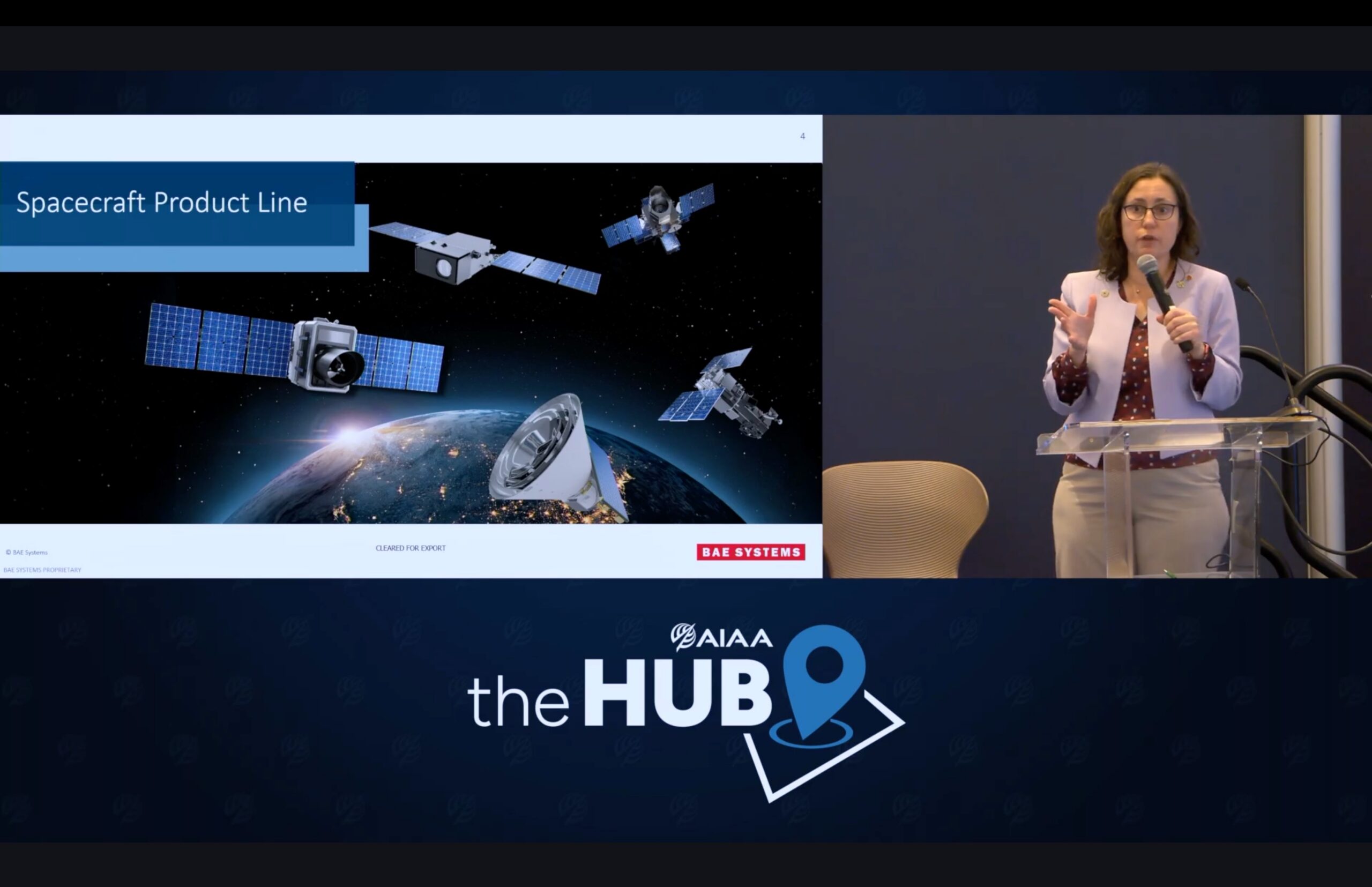
In the arena of space exploration, the “Valley of Death” – the chasm between technology development and operational deployment – is a graveyard for many promising innovations. Speaking at AIAA SciTech Forum 2026 in Orlando, Jeanette Domber, Senior Manager for Technical Solutions and Strategic Pursuits at BAE Systems’ Space and Mission Systems division, detailed how her team successfully navigated this gap to deliver critical hardware for NASA’s most ambitious astrophysics missions.
The team standardized its approach with buses like Summit, Trek, and Ascent. These weren’t just prototypes; they were already flying on the Space Weather Follow On mission and preparing for Spherex, showing that heritage technology could be rapidly transitioned into reliable hardware for both government and commercial clients.
But the real test lay in the precision required for future orbiting telescopes. Domber recalled the work on the James Webb Space Telescope, where her team had constructed the cryo-electronics and hexapod actuators that aligned 18 mirror segments to nanometer precision. That was a start: The Habitable Worlds Observatory (HWO) needed stability a thousand times greater – alignment at the picometer level.
“If we scaled a one-meter mirror to the size of the continental United States,” Domber said, “we’d need that surface flat within 10 millimeters, held steady to the width of a single red blood cell.”
It sounded impossible, but by transitioning their nanometer-control actuators into the NASA-funded “Ultra” program, they had demonstrated picometer-level control, a breakthrough recently patented and ready to fly.
Additionally, Domber described that the company maintains underlying IP from IRAD investments while granting government contracts the necessary rights for application. This approach allows proprietary innovations to be deployed on public missions without hindering future commercial potential.