
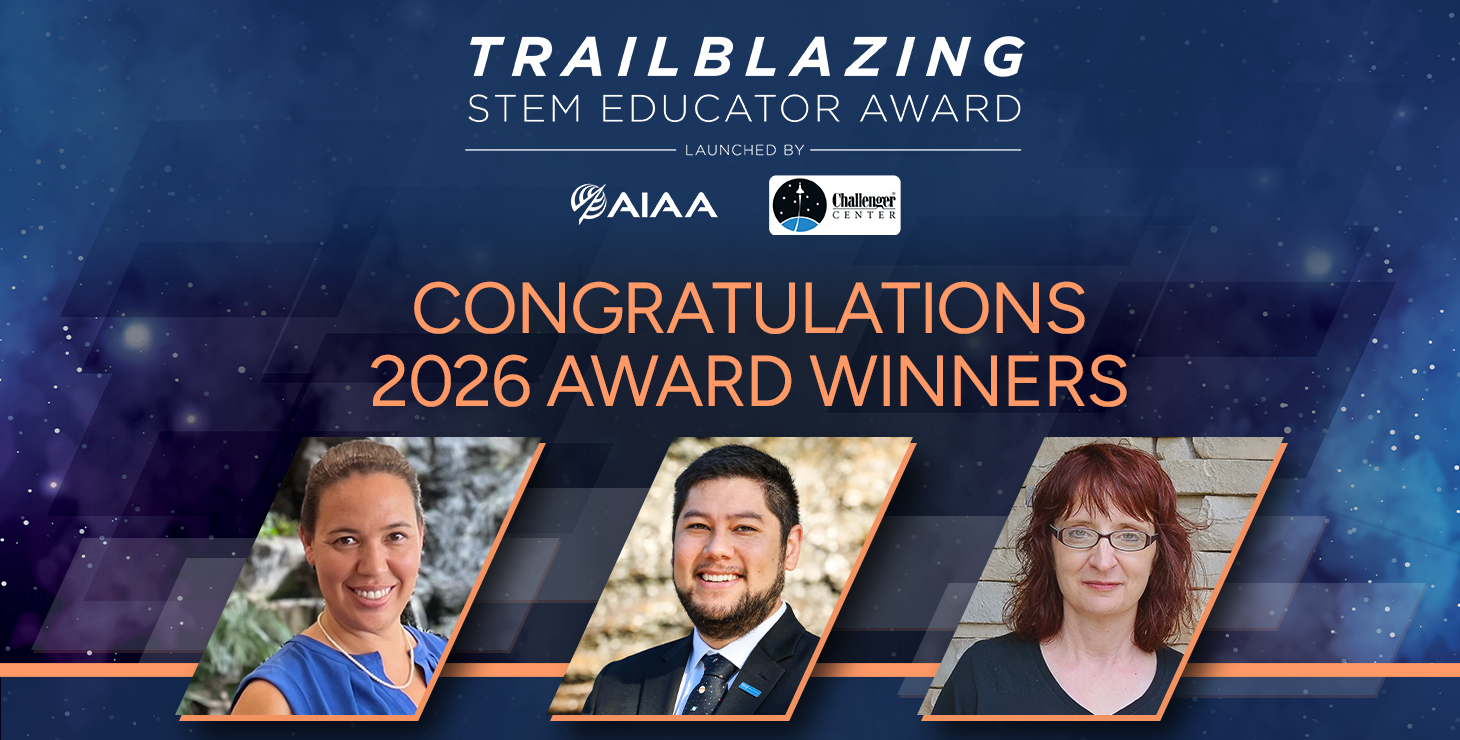
This year marks the fifth anniversary of the Trailblazing STEM Educator Award. AIAA and Challenger Center launched this prestigious award to celebrate K-12 educators who go above and beyond to inspire the next generation of explorers and innovators in science, technology, engineering, and mathematics.
MEET THE 2026 TRAILBLAZING STEM EDUCATOR AWARD WINNERS!
Laurie Hamzik, Saint Ambrose Catholic School, Brunswick, Ohio
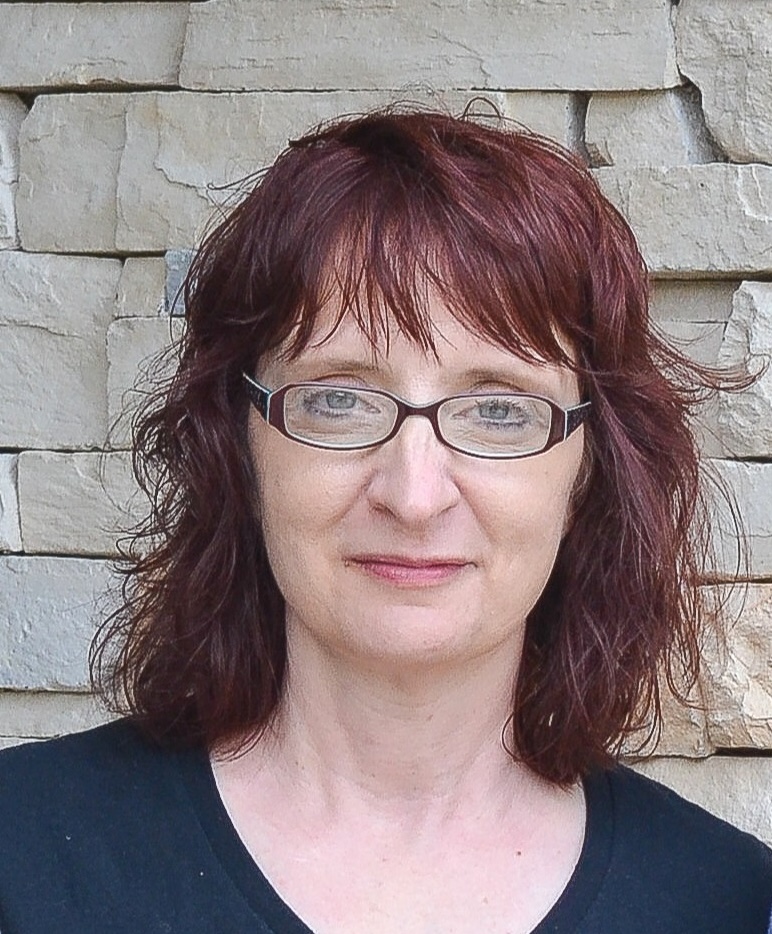
For over 35 years, Laurie Hamzik, a middle school science teacher at St. Ambrose Catholic School, has helped her students gain experience beyond the classroom and served as a bridge between students, parents, educators, engineers, and other STEAM professionals.
Since 2011, many of her young students discovered aerospace careers and developed a passion for space exploration by participating in Young Astronaut Day, an event co-sponsored by AIAA Northern Ohio Section and NASA Glenn Research Center. She has organized and accompanied her students on tours of aerospace facilities at NASA Glenn and has provided valuable insight to the NASA Glenn Office of STEM Engagement by providing feedback on NASA’s “Sound Off Engineering Design Challenge” before NASA made this activity available to students nationwide in 2023.
She regularly provides opportunities for her students to perform experiments and present the results at St. Ambrose School science fairs, the Northeast Ohio Science and Engineering Fair, and the Ohio Science Days events. Hamzik was recognized in 2015 with the Cleveland Plain Dealer’s Crystal Apple Award and the 2024 Ohio Academy of Science’s The Governor’s Thomas Edison Award for Science, Technology, Engineering and Math (STEM) Education and Student Research.
Hamzik has mentored early-career teachers and helped her school to receive STEAM designations from the Ohio STEM Learning Network by serving on the St. Ambrose School STEAM Committee.
Kenji Nomura, Virginia Space Flight Academy, Wallops Island, Virginia

Kenji Nomura is a STEM educator and program leader committed to expanding access to hands-on, high-quality STEM learning. With experience teaching mathematics, astronomy, robotics, computer science, and engineering, he has helped students engage deeply with STEM through interactive, project-based experiences that build curiosity, confidence, and problem-solving skills.
Throughout his career, Nomura has developed makerspaces, designed innovative STEM programming, and secured funding to expand opportunities for students. As an Albert Einstein Distinguished Educator Fellow supporting NASA Science Activation, he has contributed to efforts that connect students and educators with meaningful, real-world STEM learning experiences. He is especially passionate about helping young people see themselves as explorers, creators, and future innovators.
His work has included creating authentic engineering experiences that connect STEM learning to real-world application, including projects in which students build data loggers, launch rockets, and analyze their own flight data. Currently, Nomura is focused on assisting students through career and technical education, helping create pathways that connect classroom learning with future opportunities. By blending aerospace, engineering, and data analysis with hands-on learning, he creates engaging experiences that encourage students to think critically, solve problems, and see STEM as a field where they can belong and thrive.
Lillian Reynolds, Voyager Public Charter School, Honolulu, Hawaii
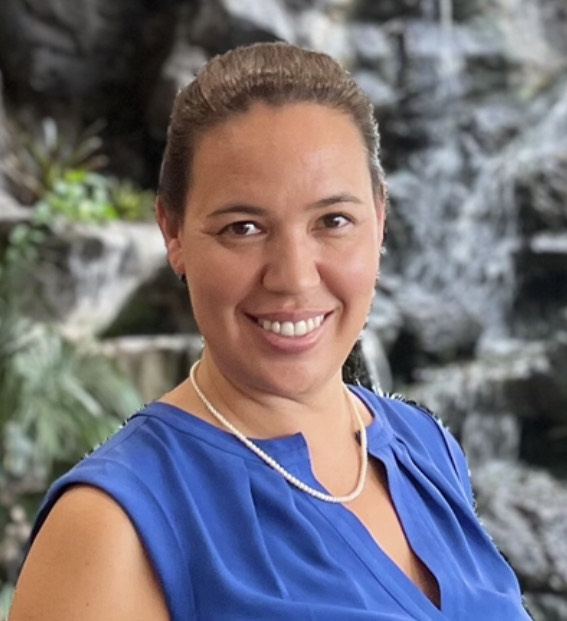
Lillian Reynolds introduces students to STEM careers and connects classroom lessons to current and future ambitions for space exploration and aerospace innovation by using current events and research. Reynolds designs her units based on current events that students can then use to apply science concepts. Live launches, broadcasts, and articles are frequently the starting point of developing a lesson or unit.
Some of the bigger projects Reynolds has worked on over the years with her students include five Challenger Center of Hawaii missions, the International Astronomical Union Exoplanet Naming Campaign, conducting a hydroponics plant research project as if they were on the International Space Station, MarsTrek (researching & ranking the best landing sites on Mars given weather and terrain concerns), solar panel design for Earth and space, rover design, and design thinking for radiation concerns in space.
Reynolds promotes active learning and encourages students to think critically by facilitating these open-ended projects where students must come up with a design that allows them to use their creativity while actively engaging with concepts of human survival on the moon or in space.
Reynolds works hard to motivate and excite students by using a variety of instructional techniques She uses a balanced mix of teacher-to-class teaching, peer-to-peer collaboration, and independent learning. Reynolds frequently reminds her students that the moon and Mars missions are happening now, and they don’t have to leave Earth to be part of it.