

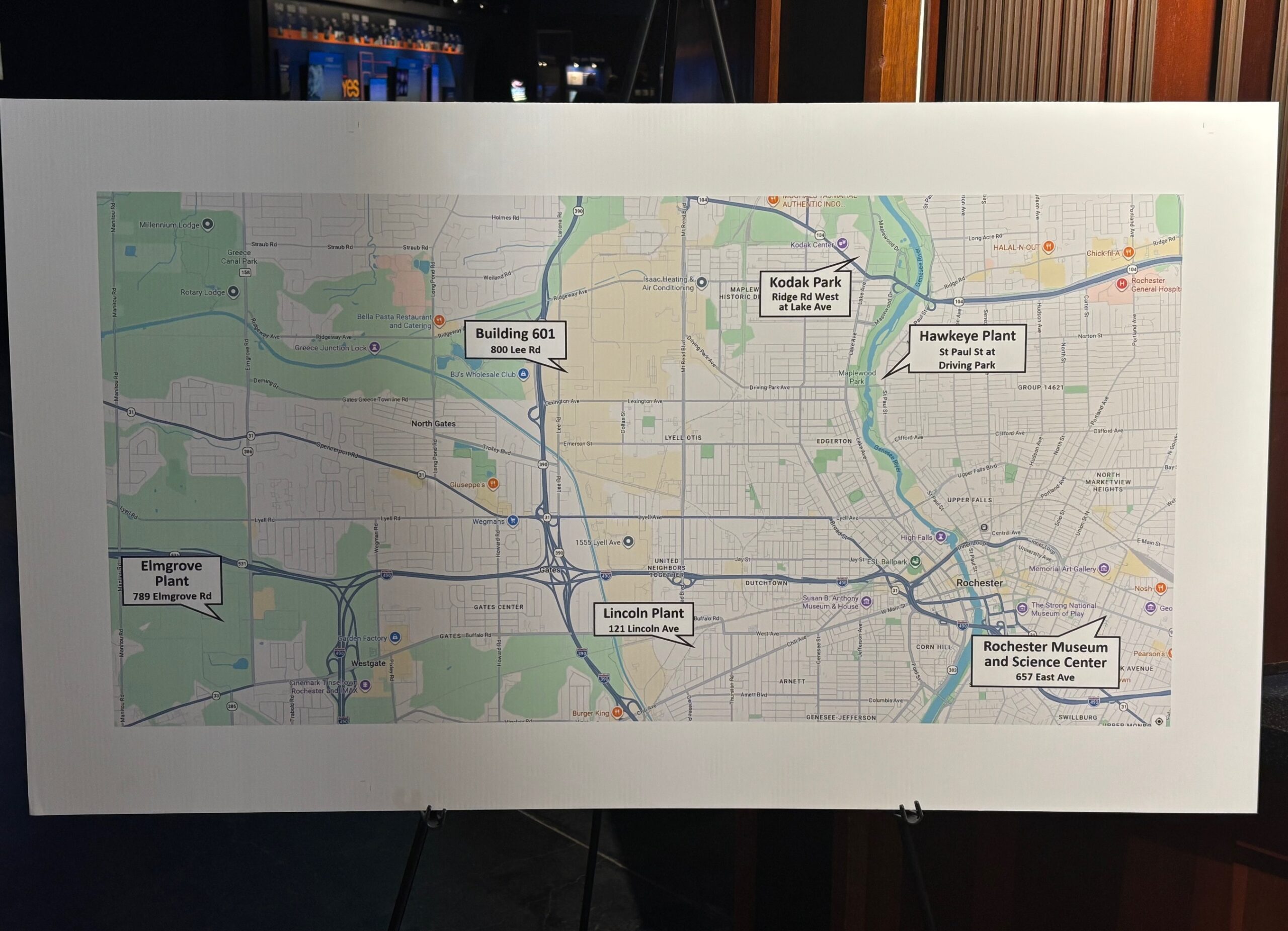
On 21 October, AIAA recognized Eastman Kodak facilities in Rochester, NY, as an Historic Aerospace Site, honoring a legacy of innovation that has shaped aerospace, national security, Earth observation, and space exploration for generations. The designation, “Rochester: Kodak’s Aerospace Legacy,” encompasses Kodak Park, Hawkeye Works, Lincoln Plant, Building 601, and Elmgrove Plant.

“The achievements recognized demonstrate how world-changing aerospace advances often begin with breakthroughs in science, engineering, and imaging technology developed by dedicated professionals,” said Jim Sherman, Senior Director, Aeronautics, AIAA. He added, “This historic aerospace site illustrates how aerospace progress depends on collaboration across industry, government, and academia, a tradition that continues today through organizations such as L3Harris, the University of Rochester, and RIT.”
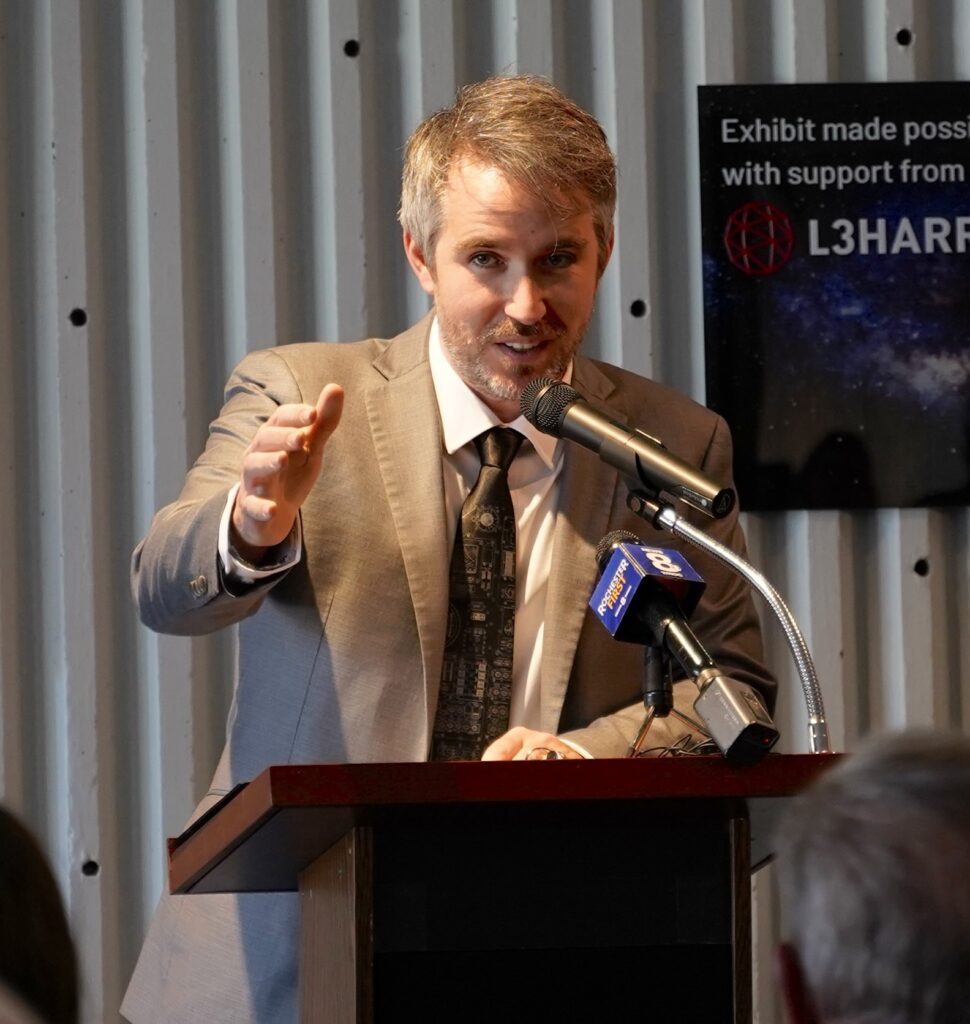
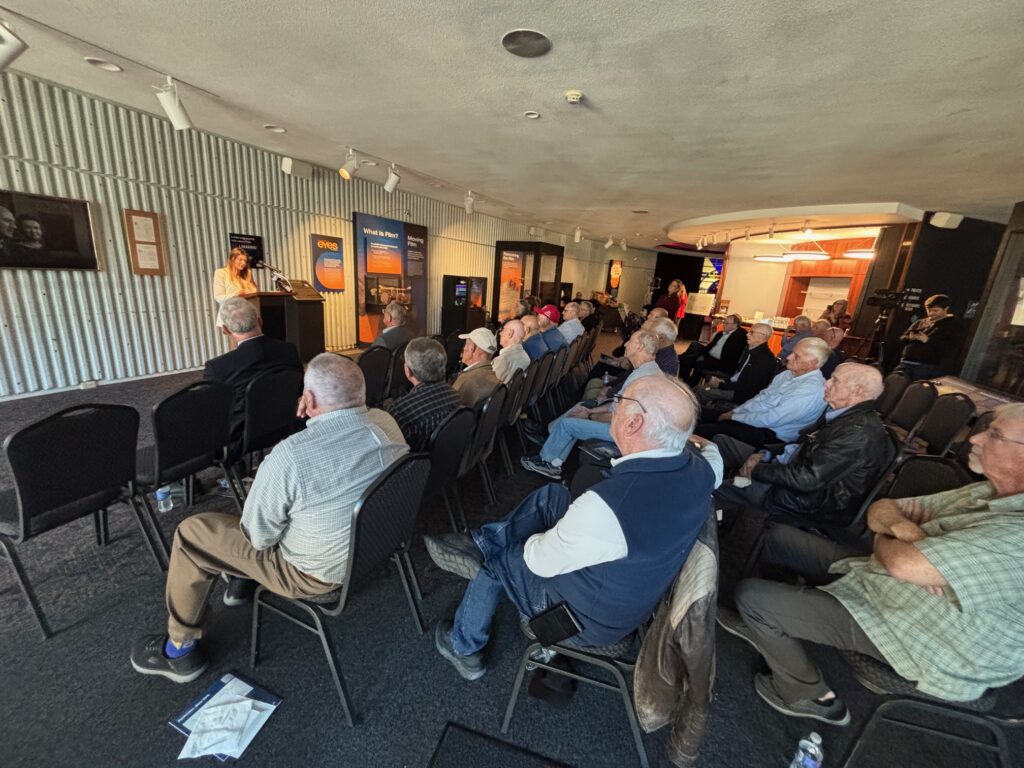
At the dedication event, Jim Bader, director of the Rochester Museum & Science Center’s Strasenburgh Planetarium and emcee of the event, noted “The Strasenburgh Planetarium has always been a place where our community looks up at the cosmos in awe.” He said that the museum was “honored to house this historic plaque, celebrating how Rochester’s groundbreaking optical innovations helped unlock the mysteries of space.”
The plaque highlights Eastman Kodak’s critical role in aerial photography, reconnaissance systems, and intelligence capabilities that supported the nation through two World Wars and the Cold War. Innovations developed in Rochester also transformed our understanding of Earth and space, from supporting Apollo lunar mapping to enabling landmark observatories and advanced space telescopes.
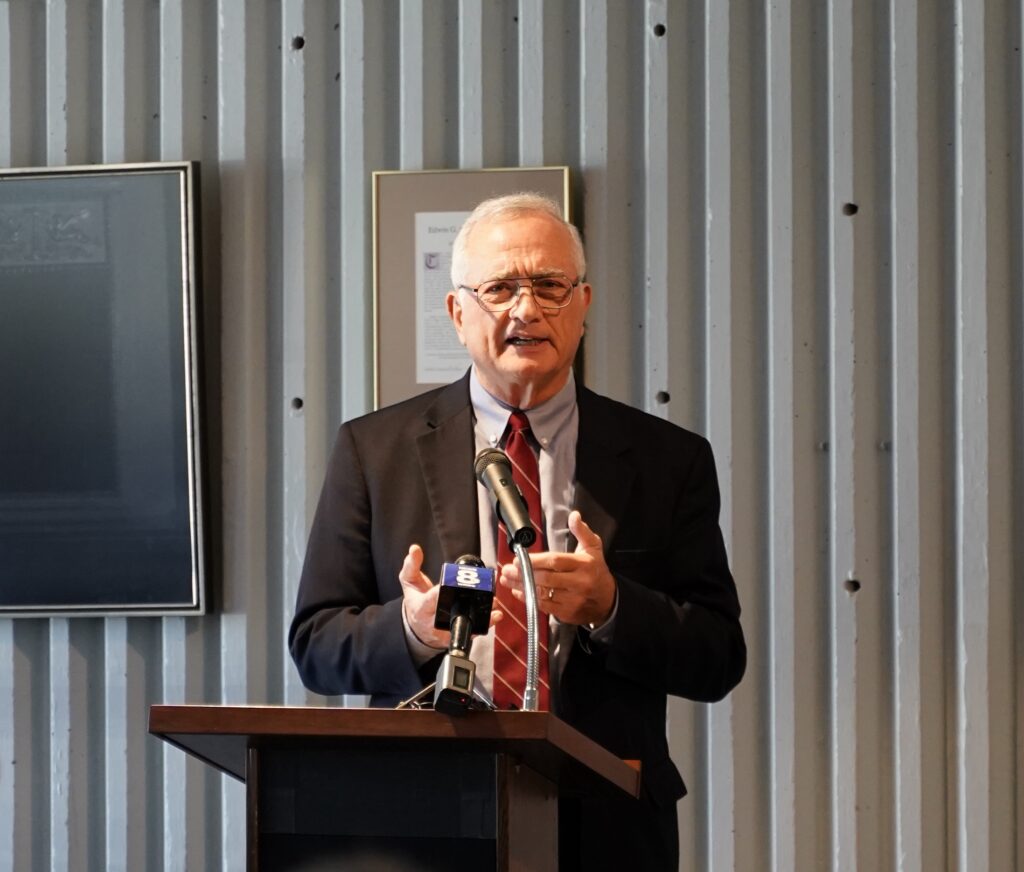
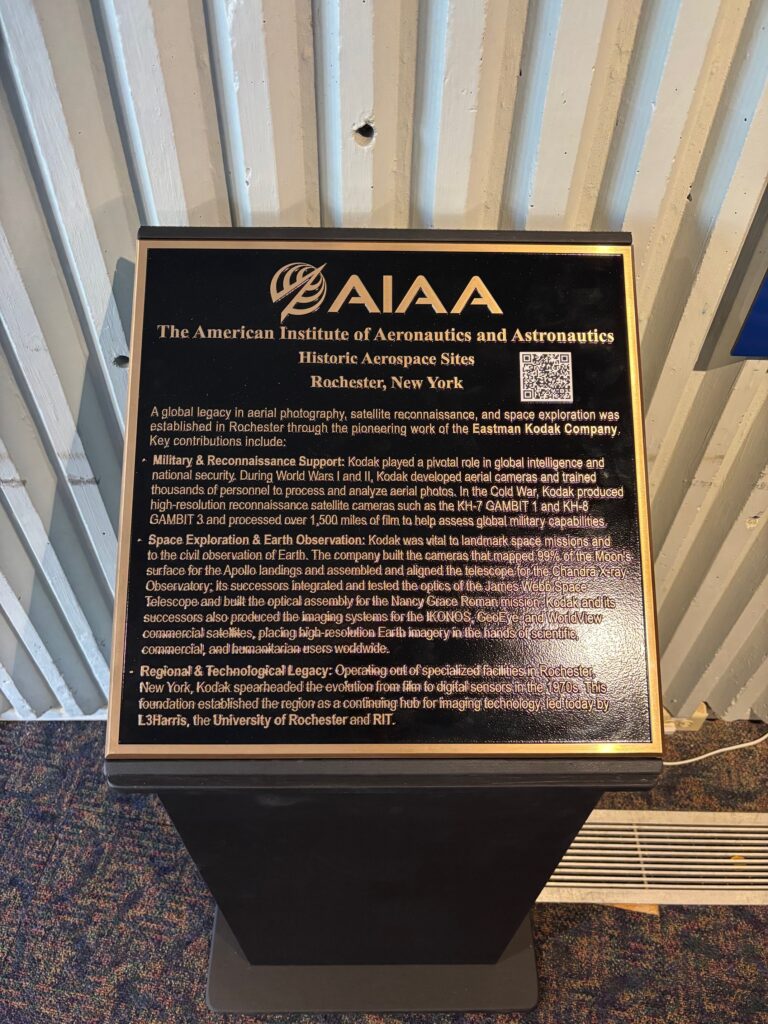
Walter Gordon, chair of the AIAA Niagara Frontier Section, remarked, “For more than half a century the people of Rochester quietly built the cameras, films and optics that let humanity see the Earth, the moon and the distant universe. This designation honors the Kodak locations that made that possible and recognizes the generations of engineers, scientists and technicians who worked there – many of whom could not speak publicly about their achievements for decades.”
AIAA’s Historic Aerospace Sites Program honors places associated with significant aerospace achievements, programs, and individuals, helping preserve the industry’s heritage through commemorative plaques, dedication ceremonies, and historical documentation.
Eastman Kodak joins a growing list of significant sites recognized by AIAA, including the Filton Site and Airfield near Bristol, United Kingdom; Mia Mia, Australia, where the first Australian-designed and home-built powered aircraft flew; and Hammondsport, New York, closely associated with aviation pioneer Glenn Curtiss and early American flight development.
Thank you to Walter Gordon and the entire AIAA History Committee for their tireless efforts to protect, preserve, and promote Historic Aerospace Sites here and around the world.