

Anduril Industries Talks Autonomy, Fury’s History-Making Flight and What Comes Next
ORLANDO — Chuck Yeager predicted that autonomous aircraft would someday dominate the future of air combat.
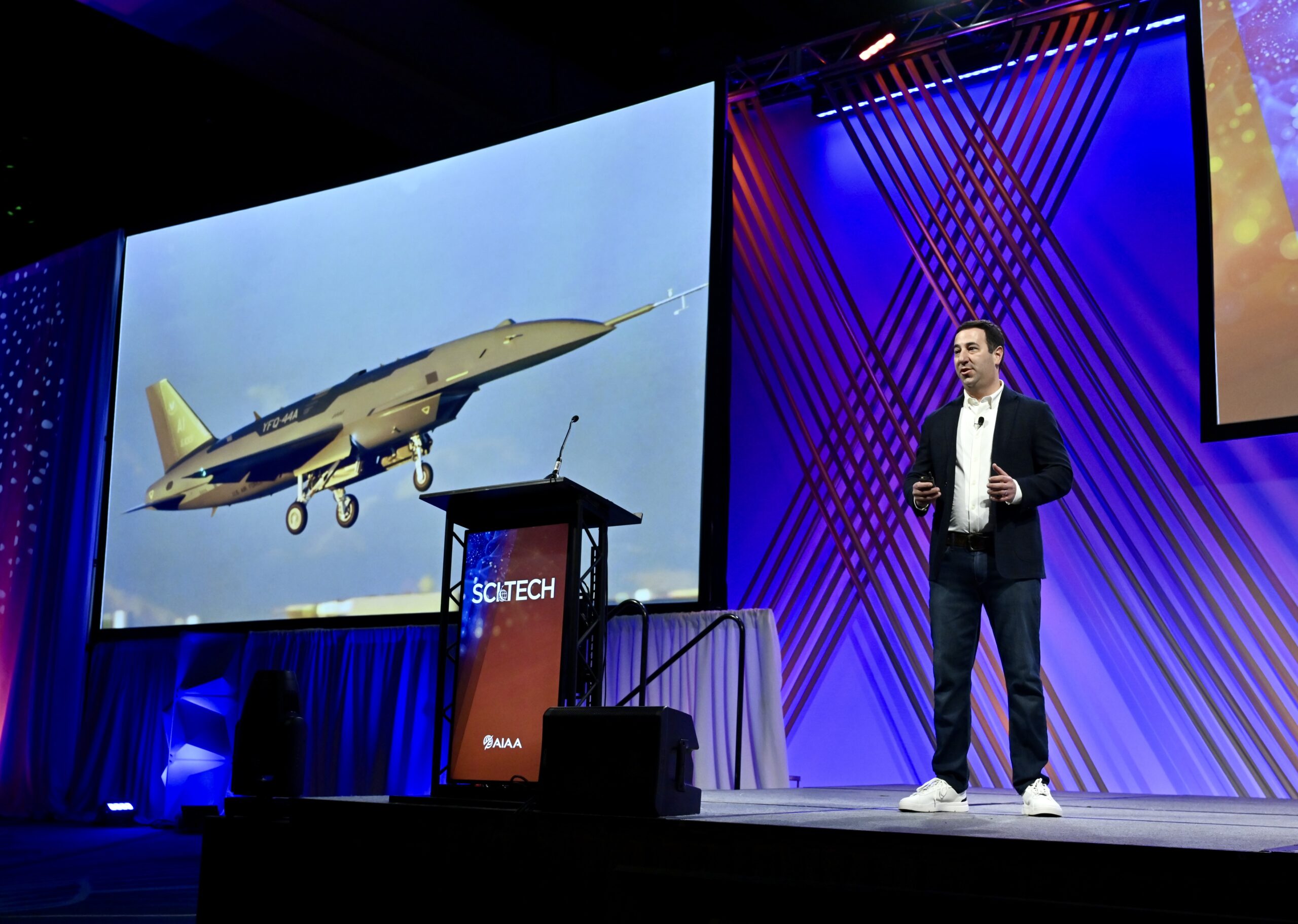
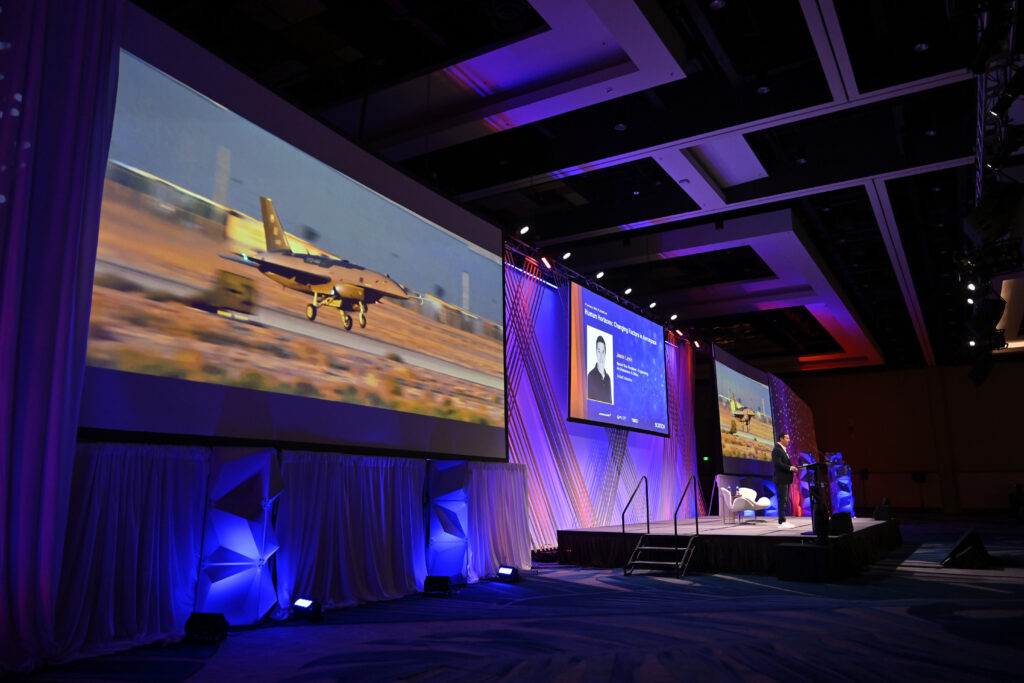
Last October, Yeager’s vision was realized when Anduril Industries’ YFQ-44A Fury became the first next-gen autonomous fighter jet to fly its full mission profile without direct human intervention.
Anduril was participating in the U.S. Air Force’s Collaborative Combat Aircraft (CCA) program, designed to introduce thousands of advanced, cost-effective, and autonomous aircraft to augment crewed forces.
“With a single push of a button, Fury took off, flew its mission, and came back and landed all on its own,” recalled Jason Levin, Anduril’s senior vice president of Engineering for Air Dominance & Strike, speaking Thursday at AIAA SciTech Forum in Orlando.
The Tough Reality of Today’s Air-Superiority Race
While today, Anduril is an autonomy trailblazer with a $30 billion valuation, in 2017, it was a startup with a strong conviction to address a big defense problem: America’s air dominance that met the counterterrorism threats post-9/11 were no match in today’s highly contested, high-risk environment dominated by near-peer rivals like China.
“The capabilities that we used to build and field around the world were insufficient for today’s threats,” said Levin, noting that adversaries were striving to outmatch the United States both from a technology, capacity, and mass standpoint, “with the U.S. aircraft inventory now the oldest, smallest, and least ready in history.”
“Anduril was founded to rediscover America’s competitive edge,” explained the engineering leader.
In Anduril’s view, the sector was stuck in the past, “prioritizing shareholder dividends over advanced technology,” and “putting bureaucracy over breakthrough,” and the best engineers, technologists and software developers were not working in national security space, but in Silicon Valley at companies like Meta and Google.
From the start, Anduril considered itself an autonomy company: “Our first pitch deck actually included autonomous fighter jets. To say it was a moonshot was an understatement,” Levin recalled.
Anduril’s ambitions didn’t happen overnight; Levin recalled the firm’s first attempt to build autonomous aircraft in 2020 “didn’t go so well.”
“The real starting gun was when the Air Force announced the CCA,” he said.
In January 2024, Anduril was selected as one of five initial vendors for the first increment of the project. The Air Force planned to field thousands of affordable, advanced, and autonomous aircraft designed to team with crewed fighters and expand American airpower. The CCA program builds on lessons from previous uncrewed programs – such as Skyborg – and addresses the urgent need for combat mass, flexibility, and high-speed production to meet next-generation threats.
The Battle to Win CCA
Levin detailed the challenges Anduril faced, from the initial skepticism of competing against established primes. “We were dead last out of five companies competing for CCA,” recalled Levin. “We didn’t have an airplane; we just had the idea of an airplane.”
Then Anduril met a small firm, Blue Force Technologies, which Levin noted had an outline of an airplane, but lacked the software or the scale to take it to the next level – it was a natural fit.
Anduril teamed and then bought the startup. With the acquisition of Blue Force, Anduril gained an aircraft design and combined it with the firm’s advanced autonomy and began its rapid climb through the CCA program’s ranks.
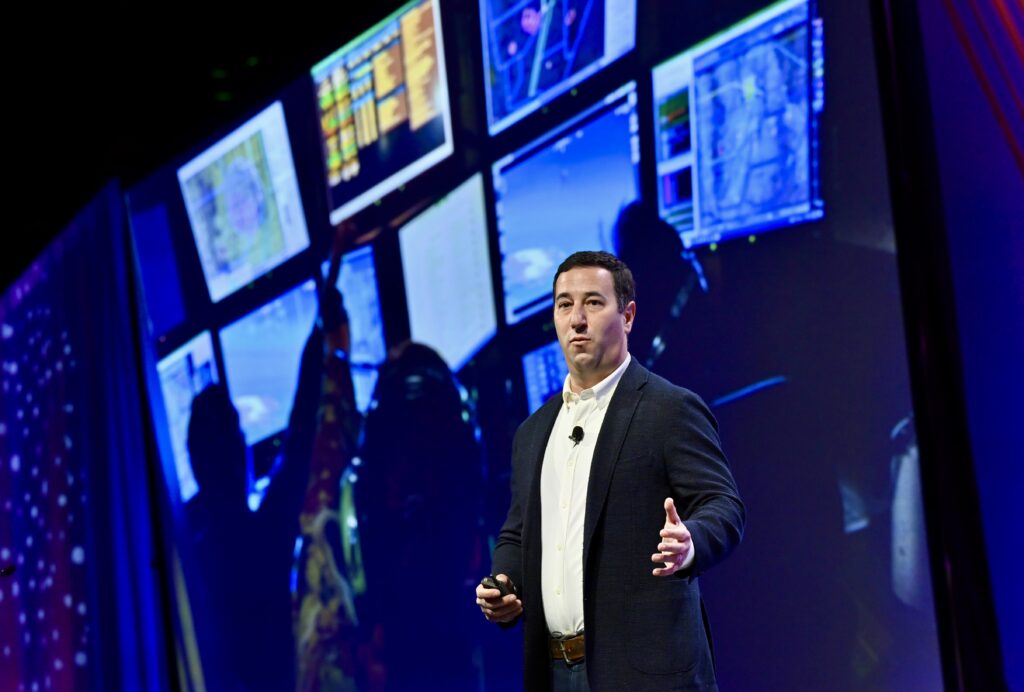
Levin said the team was driven by the conviction that its solution was what the United States needed to project air power, and by their desire to show that a new company could compete with traditional primes.
In April 2024, Anduril was downselected to continue with the detailed design, manufacture, and testing of production-representative test aircraft alongside General Atomics, leading to its historic test flight in October 2025.
The successful test flight was a testament to Anduril’s agile engineering culture and willingness to push technical boundaries, as well as the close-knit collaboration with the U.S. Air Force that continues today with Air Force personnel embedded with Anduril engineers at Anduril’s facility in Southern California.
The Big 3 Lessons
Levin shared three key lessons the team learned that have guided its approach to innovation, risk-taking, and rapid development:
- Identify the Right Problem: Success begins with recognizing and tackling significant challenges that are essential for the customer and vital for national defense.
- The Importance of Conviction: Having the courage to pursue ambitious, sometimes “moonshot” goals requires strong belief in the problem, the team, and the solution, even when success isn’t guaranteed.
- Embrace the Unknown: Progress demands more than expertise – it requires the willpower to act despite uncertainty and discomfort, to move into the unknown until the problem is truly solved.
Plans for 2026
Levin said since the historic flight, Anduril is continuing to fly Fury on a regular basis. “The next year is just epic for the (CCA) program,” he said. “We’re going to move Fury into our hyperscale production facility in Columbus, Ohio, later this year. YFQ-44A is going to perform live weapon shots (and) multi-ship flights, flying alongside crew teammates and operate outside test locations.”
Levin said these milestones are critical steps in advancing the CCA program, expanding its operational capabilities, and preparing for large-scale deployment..
Human on the Loop
During audience Q&A, Levin was asked how Anduril plans to ensure that autonomous fighters don’t attack friendly targets, since crewed aircraft is still prevalent.
“There’s a lot of concern on where the autonomy will live and so we’re doing a lot of work to make sure that there’s a human on the loop aspect to all the autonomy so the human can make final decisions on which targets to engage, what to do, and things like that.”
Another audience member asked how Anduril plans to address maintenance and sustainment given that the CCA program calls for a large number of aircraft to be fielded globally.
“We’ve designed Fury to basically require no maintenance so that…you can deploy it with 18-year-olds in that all they have to do is load a weapon and refuel the jet. All the other health checks are done autonomously. It knows what service needs to be done. The service intervals are very long in between. We really thought about reducing the footprint.”
“It was interesting to hear Anduril’s perspective and how they integrated Fury into first flight,” said JD McFarlan III, vice president, Air Vehicle Engineering at Lockheed Martin Aeronautics. “I liked Jason’s discussion on the process they used and how they formed a team – a mixture of traditional engineers who had developed fighters before, and folks from Google or other companies who may not have done this work before.”
“The way Anduril places manufacturers next to their design engineers is rare in the manufacturing technology industry,” said Mary Cecile Neville, director, Strategic Partnerships & Industry Relations for AMT – The Association For Manufacturing Technology and its biannual trade event, IMTS – The International Manufacturing Trade Show. “Putting those two groups together makes it possible for Anduril to build something truly transformative. The two groups can bring their best thinking to solve challenges to design the best possible aircraft.”