
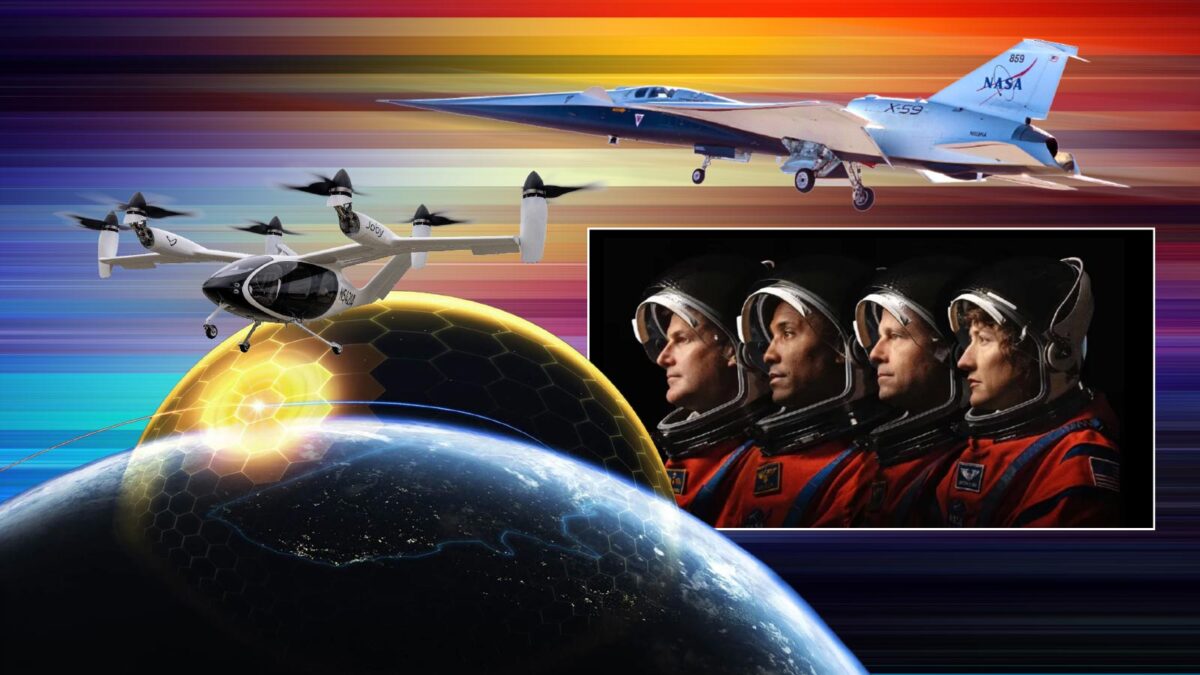
2025 was a groundbreaking year for aerospace. U.S. President Donald Trump unveiled the ambitious Golden Dome missile defense effort that is slated to cost at least $175 billion, while NASA readied for its Artemis II flight that will send four astronauts around the moon.
Those developments make clear 2026 is likely to be even more newsworthy. In this column, we detail what to watch on these issues — and others.
Building Golden Dome
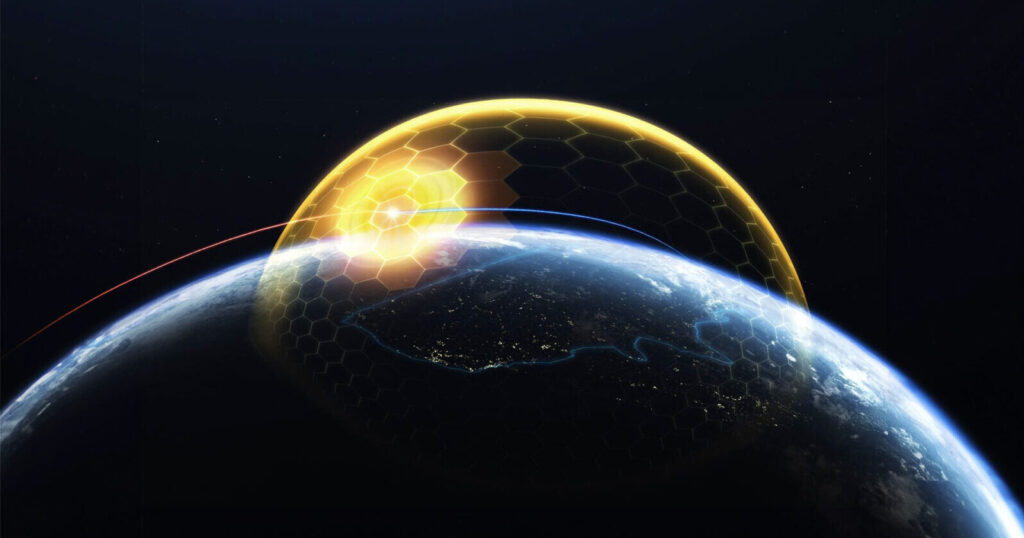
In 2025, Trump shared his plans for a missile defense shield akin to Israel’s Iron Dome that he said would be operational before the end of his term. Analysts say 2026 should shed light on the scope of the program’s architecture and make clear the major players.
“2026 is when they’re going to actually start taking actions, start awarding some contracts,” said Todd Harrison of the American Enterprise Institute. “They have all this money; they’ve got to spend it. And the architecture will start to take shape in 2026 — it will have to if they’re going to achieve anything at all by the time the president leaves office.”
The sprawling legislative package Trump signed in July included nearly $25 billion for Golden Dome.
“The most important things that will signal that Golden Dome is advancing and will be durable are the following: widespread bipartisan understanding of what it’s about and the threats and the concept that it is tailored against, and then likewise the rapid and numerous release of RFPs and, most importantly, putting things on contract,” said Tom Karako of the Center for Strategic and International Studies.
He added: “Unless and until things are put on contract and code starts getting written and metal begins to get bent, this is going to remain in the domain of the very interesting, but not especially effectual PowerPoint slide.”
Harrison noted the fast pace of the project, the price tag set by Trump and the scope he detailed are likely not all feasible.
“The expectations were set in a way that is entirely unrealistic,” he said. “So maybe 2026 is the year when those expectations get normalized and grounded in reality.”
Race to the moon
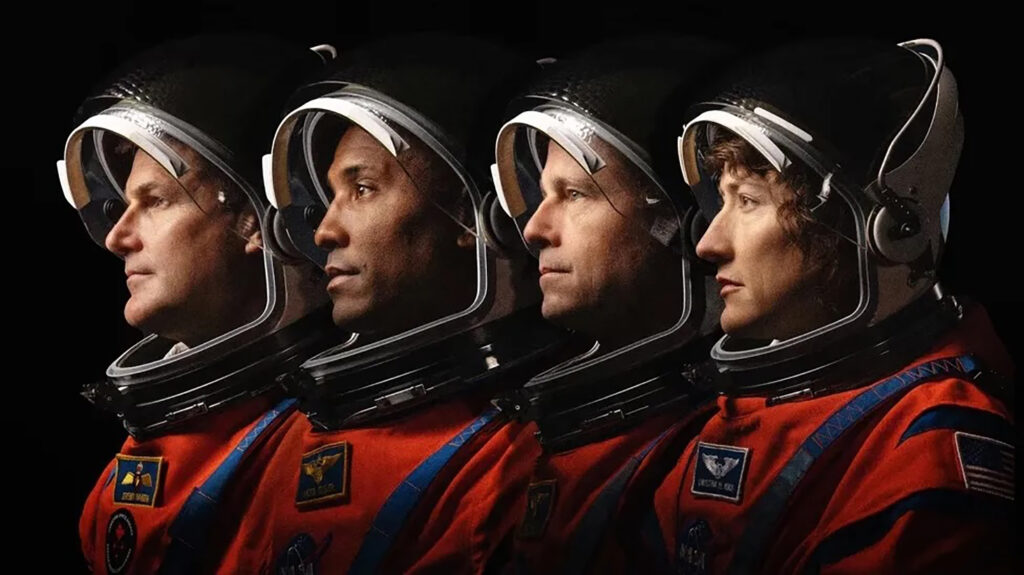
After a turbulent year of funding uncertainty and workforce reductions, all eyes are on NASA as it attempts to send humans beyond low-Earth orbit for the first time since 1972.
The stakes couldn’t be higher for Artemis II, said analyst Laura Forczyk of Astralytical. At a technical level, the mission serves as “proof of concept” for much of the technology needed for the Artemis III landing. More broadly, the outcome could help NASA Administrator Jared Isaacman weigh the distinct long-term architectures favored by the White House and Congress.
“I do think that by” late 2026, “we’ll have a much better picture of how Artemis is going to go,” said Chris Combs, associate dean of research in UT San Antonio’s mechanical engineering department.
Perhaps the biggest near-term decision is whether to change the Artemis III lander, and the answer could hinge on how much progress SpaceX demonstrates with Starship. This year’s planned milestones include the debut of the V3 design and the first in-orbit propellant transfer between two Starships.
After most of the 2025 flights ended in explosions, the pressure’s on, said Forczyk. “2026 could be a comeback year for Starship, or it could be another slog toward an unknown finish line.”
It could also be a banner year for Blue Origin as the company prepares to launch its first lunar lander, the cargo Blue Moon Mk 1. A successful landing “would be a surprise victory” because “they had been seen as the slower player, the turtle in the race,” said Forczyk.
X-59 goes supersonic
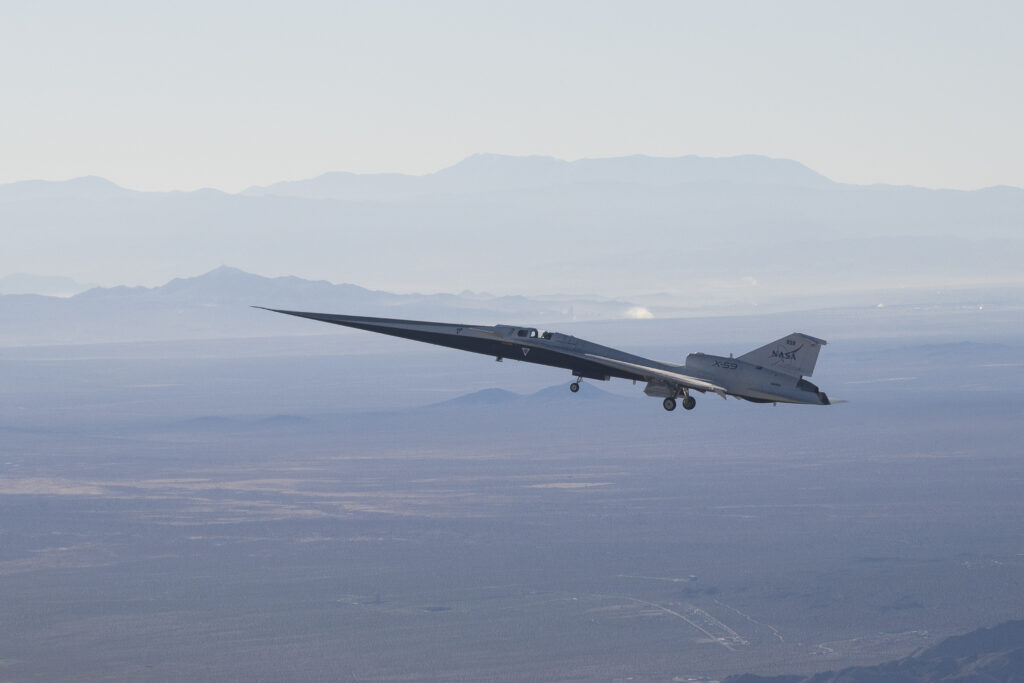
Boom Supersonic made headlines last year with its demonstration of one method for quiet supersonic flight. Now, NASA is poised to demonstrate another with the X-59 research craft that debuted last year.
The agency hasn’t announced a target for the first supersonic flight, but the hope is to prove sonic booms can be prevented through clever shaping of the airframe. So instead of ear-splitting cracks when X-59 breaks the sound barrier, NASA hopes to produce gentle “thumps” no louder than the slamming of a car door.
“This would be a long-term sustainable way to mitigate sonic booms,” said Combs. By contrast, Boom’s “Boomless Cruise” concept relies on keeping the aircraft at a speed and altitude where the majority of the sound waves refract off the atmosphere, and those that reach the ground are inaudible.
Beginning air taxi service
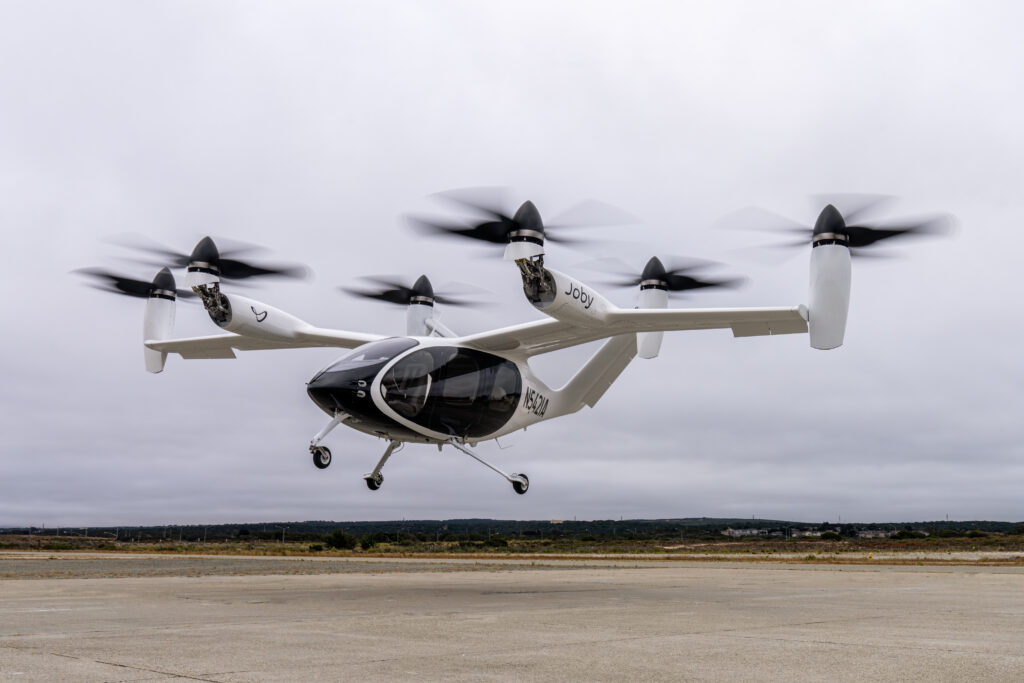
The electric air taxi industry hopes this is the year that passenger operations begin.
Archer Aviation and Joby Aviation are advancing plans to begin service in the United Arab Emirates, though industry watchers believe these flights could be limited to demonstrations in which the aircraft ferry VIPs, said analyst Sergio Cecutta of SMG Consulting. And in the U.S., several companies plan to conduct limited commercial flights under the Department of Transportation’s eIPP, or Electric Vertical Takeoff and Landing and Advanced Air Mobility Aircraft Integration Pilot Program.
Widespread ticketed service in the UAE and elsewhere will likely have to wait until the companies receive FAA type certification, Cecutta said — the first of which could come this year. As of December, Archer and Joby were preparing for Type Inspection Authorization flights, the final stage of FAA flight testing.