Airbus sticks with airliner delivery target as it looks to ‘create scale’ in space business


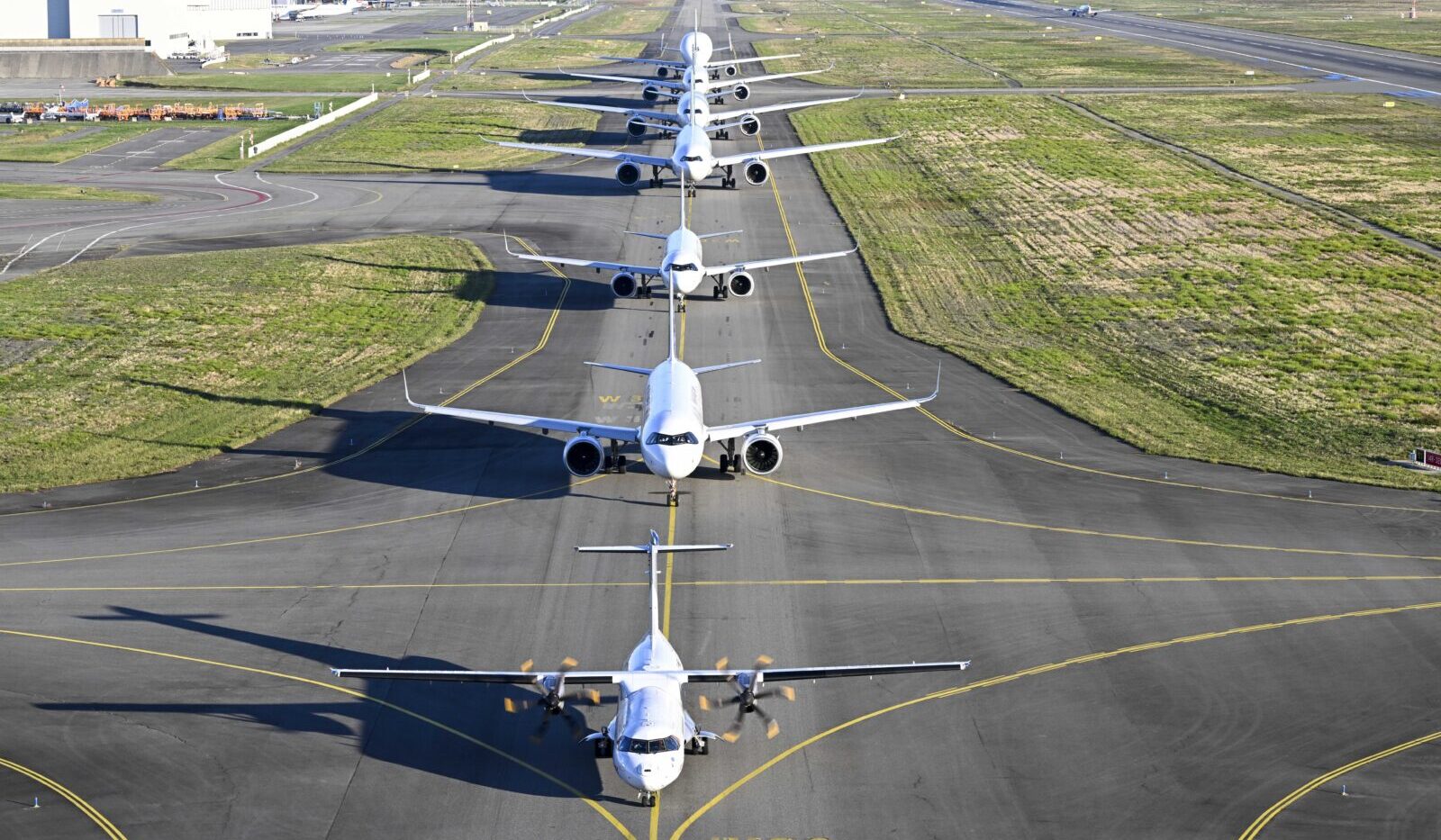
Airbus opted to maintain its previous target for jet deliveries this year as it moves forward with a plan to consolidate its space business with rivals Thales and Leonardo.
In a Wednesday call, executives said the company’s results for the first nine months of 2025 reflect higher aircraft deliveries than the previous year and a strong performance in the Airbus Defence and Space and Airbus Helicopter divisions. Indeed, the commercial aircraft and space businesses were the main focus of the Wednesday discussion, as the company aims to meet its aircraft delivery goal and finalize a planned merger intended to create scale in the space business.
The company delivered 507 jets through September, CEO Guillaume Faury said, compared with 497 in the same period last year. This was despite ongoing challenges with engine deliveries, as Franco-American manufacturer CFM International and U.S.-based Pratt & Whitney are facing parts shortages and balancing new deliveries with repairing existing engines.
“Deliveries remain backloaded, actually very backloaded,” Faury said. “The supply chain challenges for the year have not changed.” However, he noted, “the engine situation is showing signs of recovery and we continue to work closely with the manufacturers to deliver on our 2025 commitments.”
Airbus left its overall 2025 guidance unchanged, which executives said already included the likely impact of applicable tariffs, as well as the partial integration of Spirit AeroSystems. That deal is expected to close sometime before the end of the year.
The company expects to deliver about 820 jets in 2025, compared to 766 last year. For the quarter spanning July-September, revenue was 17.8 billion euros ($20.7 billion), up from 15.7 billion euros ($18.2 billion) during the same period in 2024.
The other big focus for the aircraft manufacturer is a plan to combine its space business with those of Leonardo and Thales, creating a joint venture to strengthen Europe’s presence in the sector and compete with U.S. companies, including Elon Musk’s SpaceX. Airbus will contribute its Space Systems and Space Digital businesses to the venture, granting it a 35% stake versus 32.5% for each of the other two companies.
Airbus anticipates that the new company — which is yet to be named — will be more efficient and profitable than Airbus’ current space business, executives said.
“When it comes to space, I believe we really need to create scale,” Faury said. “Scale is a very important driver of speed of innovation, of ability to invest and to compete with bigger players outside of Europe.’’
Europe has fallen behind in the space race, as SpaceX and other U.S. companies have proven more nimble and have expanded rapidly. The new company will be focused on developing a wide range of technologies from infrastructure to space services. Airbus intends to hold onto its launch business.
The new company is to employ around 25,000 people across Europe, Airbus said last week.