
Small satellite missions continue to grow in number and impact
 By Cat Hofacker
 By Cat Hofacker
Small satellites continue to be critical platforms for national, commercial, and educational missions. The missions featured highlight the breadth and scope of small-satellite contributions in 2025.
In January, Pixxel of Bengaluru, India, launched three Firefly satellites on the SpaceX Transporter-12 mission. With three more spacecraft launched in August aboard the SpaceX NAOS Falcon 9 mission, they completed the first phase of the world’s first commercial 5-meter hyperspectral imaging constellation.
In February, the Intuitive Machines IM-2 lander was launched on a SpaceX Falcon 9, carrying with it three small satellites as secondary payloads: AstroForge of California’s Odin, NASA’s Lunar Trailblazer, and Epic Aerospace’s Chimera GEO-1. These missions illustrated that low-Earth orbit is no longer the default domain for small satellites.
In May, CrunchLabs of California announced that its SAT GUS satellite was available for “selfies” from space. Built by Terran Orbital and launched on the SpaceX Transporter-12 mission, this STEM education mission allows the public to submit photos for display on the satellite with the Earth in the background.
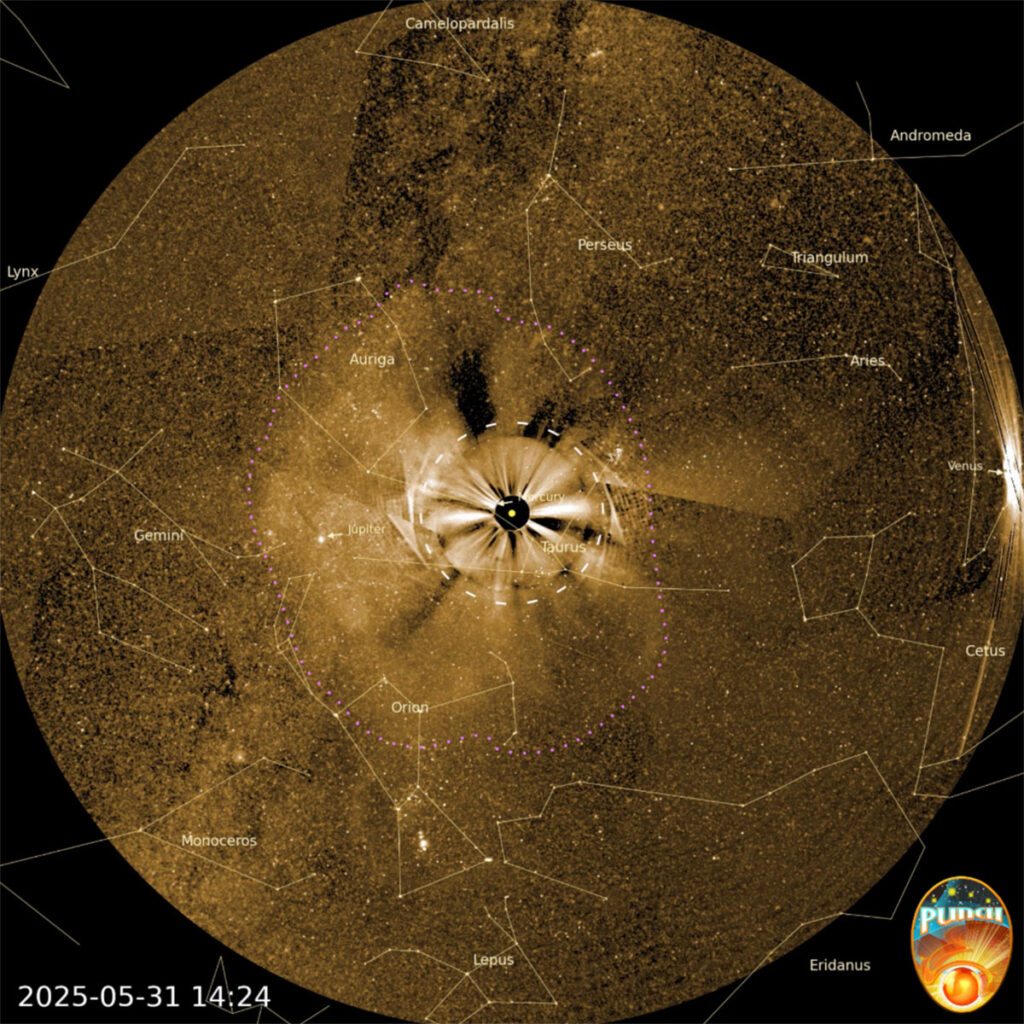
Also in May, the Southwest Research Institute announced that the NASA Small Explorer PUNCH mission demonstrated the first-ever continuous tracking of an Earth-directed coronal mass ejection across the inner solar system. PUNCH consists of four 63-kilogram spacecraft operating in a sun-synchronous orbit.
With the ability to carry multiple small spacecraft on Falcon 9 and Rocket Lab Electron launch vehicles, the number of small satellites deployed in 2025 continued prior-year trends: nearly 400 small satellites flew on 30 launches, an average of 13 per launch. However, in July, NASA’s Launch Services Program notified participants in its CubeSat Launch Initiative that its 2024 Partnership Opportunity would have no awards, and there would be no opportunity released in 2025. Furthermore, citing the federal budget uncertainties, LSP also canceled future manifesting of already selected cubesat missions until further notice. CSLI-sponsored flights of university and NASA cubesats average more than a dozen per year, so although this announcement did not affect missions in 2025, the impact will be significant from 2026 onward.
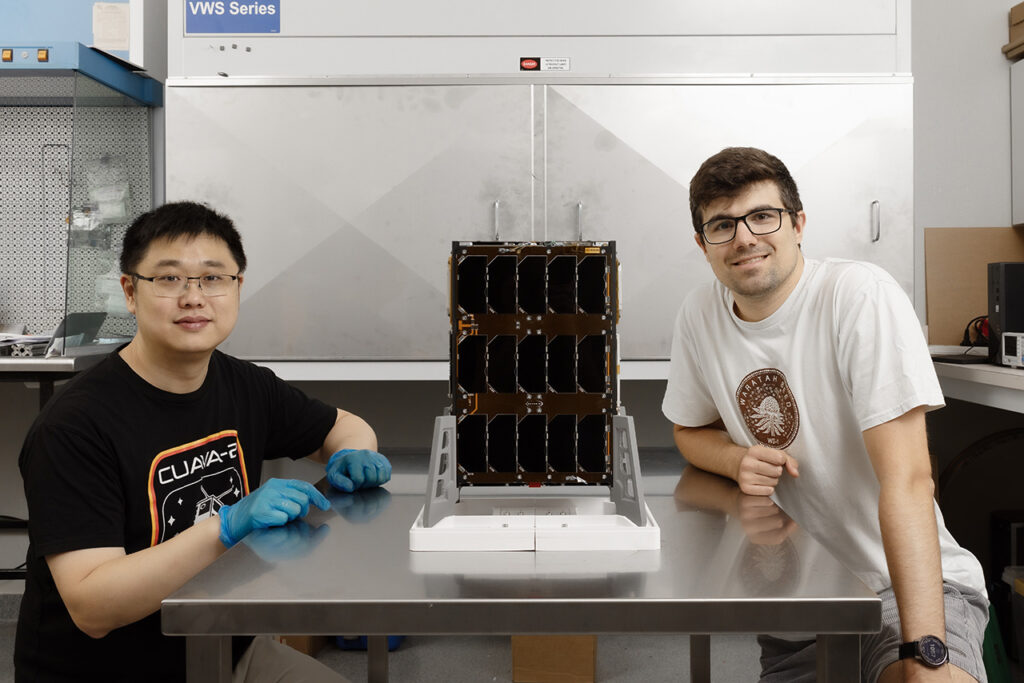
In August, this committee announced two awards. The 2025 Small Satellite Mission of the Year went to the Waratah Seed-1 mission. Developed by the Waratah Seed Consortium, the 6-unit cubesat is Australia’s first commercial ride-share satellite. It carries nine payloads from five startups and three universities, including technologies like perovskite solar cells, edge computing, electrical-permanent magnetorquers, and biodegradable testing materials. In addition, the 2025 Rookie of the Year award went to CroCube. Launched aboard SpaceX’s Bandwagon-2 mission, CroCube is Croatia’s first spacecraft, developed by Društvo EVO to promote STEM education and amateur radio activities in Croatia.
In September, the U.S. Space Development Agency launched 21 spacecraft for the Proliferated Warfighter Space Architecture constellation on a Falcon 9 rocket from Vandenberg Space Force Base in California. Built by York Space Systems of Colorado, these spacecraft are the first set of 126 space vehicles in the Tranche 1 data Transport Layer, scheduled to be fully operational in 2027.
Also in September, the European Space Agency announced that the Kuva Space W-Cube satellite made the first successful transmission of a W-band (75 gigaHertz) signal from space to ground. The beacon was first decoded by prime contractor Joanneum Research in Graz, Austria. The W-Cube mission will be used to assess the feasibility of using this band for satellite communications.
Finally, small satellites continue to be an effective means for organizations and nations to access space. In addition to Croatia’s CroCube, more than 24 government agencies, universities, and private companies put their first-ever spacecraft into orbit in 2025. With the launch of Al-Munther in March, Bahrain became the 82nd nation to fly its own spacecraft.
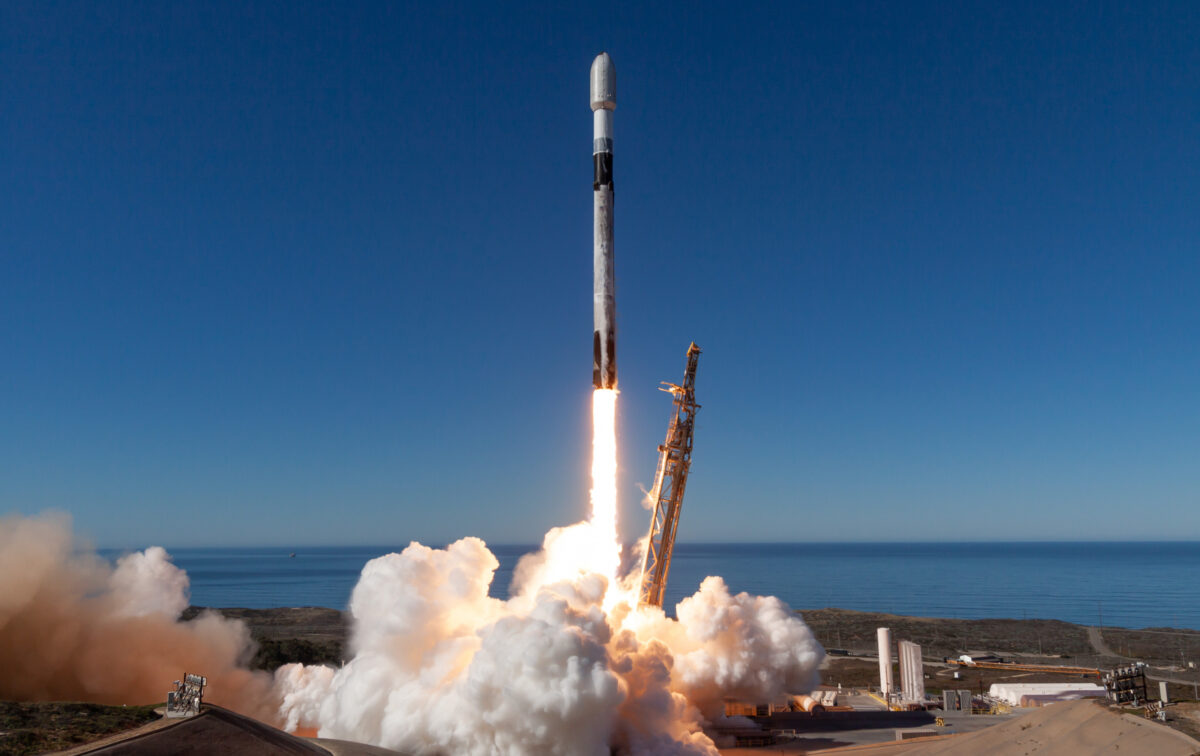
Opener image: SpaceX’s Transporter-12 lofted 131 small satellites to orbit in January 2025. Credit: SpaceX