Focus on engine durability continues to improve air travel
 By Cat Hofacker
 By Cat Hofacker
In February, GE Aerospace announced that the Catalyst turboprop engine received FAA certification after more than 8,000 hours of engine testing of some 190 components involving 23 engines. GE Aerospace developed and manufactured the engine at sites across Europe, including extensive additive manufacturing technology to reduce part count and maintenance. The Catalyst will power the Beechcraft Denali single-engine aircraft as its first general aviation application.
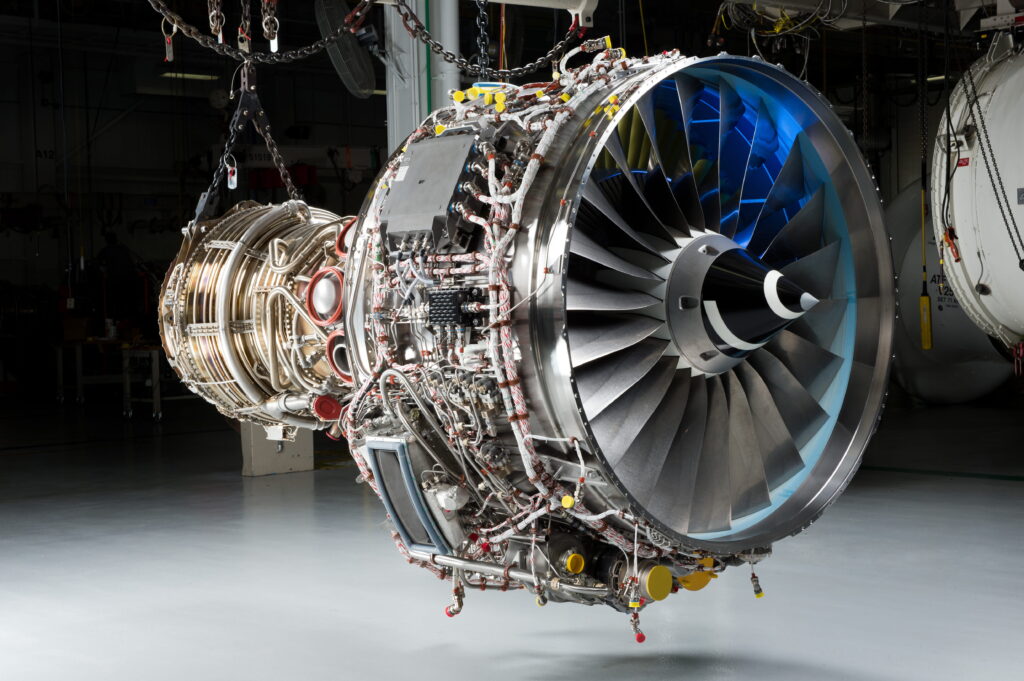
Also in February, Pratt & Whitney announced FAA certification of the Geared Turbofan (GTF) Advantage engine for the Airbus A320neo aircraft and European Union Aviation Safety Agency (EASA) certification of the GTF PW1100G-JM for the A321XLR long-range aircraft. In May, Rolls-Royce announced completion of most certification tests for the new Pearl 10X engine that will power the Dassault Falcon 10X. Rolls-Royce completed testing — including bird strike, crosswind and emissions — during 3,400 test hours.
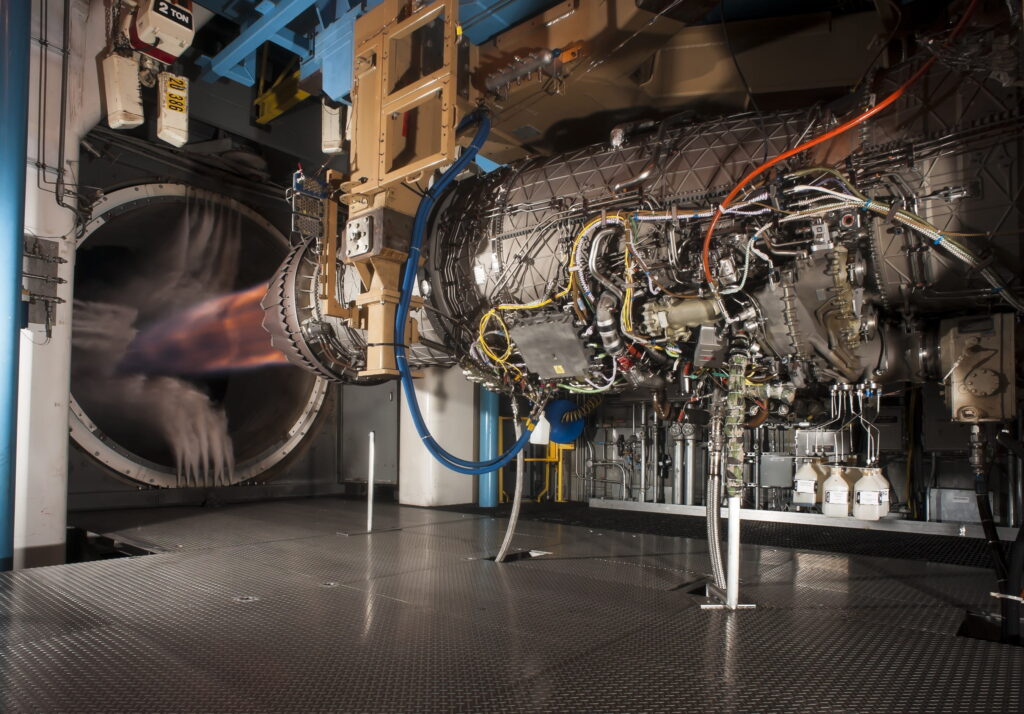
In March, Pratt & Whitney announced that the F135 engine had achieved over 1 million flight hours powering the F-35 fighter aircraft. In April, IAE International Aero Engines AG, a multinational consortium headquartered in Connecticut, announced that the V2500 engine surpassed 300 million flight hours. The V2500 engine powers approximately 2,800 passenger and cargo aircraft such as the Airbus A320ceo and A321F. In May, Rolls-Royce produced its 9,000th engine at the Dahlewitz, Germany, site, delivering a Pearl 700 engine that powers the Gulfstream G700. In July, Pratt & Whitney celebrated 100 years in the aircraft engine business, which began with the R-1340 Wasp radial engine in 1925.
In the field of maintenance, repair, and overhaul (MRO), in February, GE Aerospace deployed an AI-enabled tool to over a dozen MRO facilities to improve time on wing for narrow-body aircraft engines by improving inspection accuracy and consistency. Technicians employ the tool to assist in the selection of inspection images of turbine blades that will be reviewed. In April, Pratt & Whitney announced the development of an additive manufacturing repair process for GTF engine components at its North American Technology Accelerator location in Florida. The Pratt & Whitney MRO team improved turnaround and reduced cost and complexity, with process time expected to drop by more than 60% through efficiency in machining and heat treatment. Over five years, additive repairs are expected to recover $100 million worth of components.
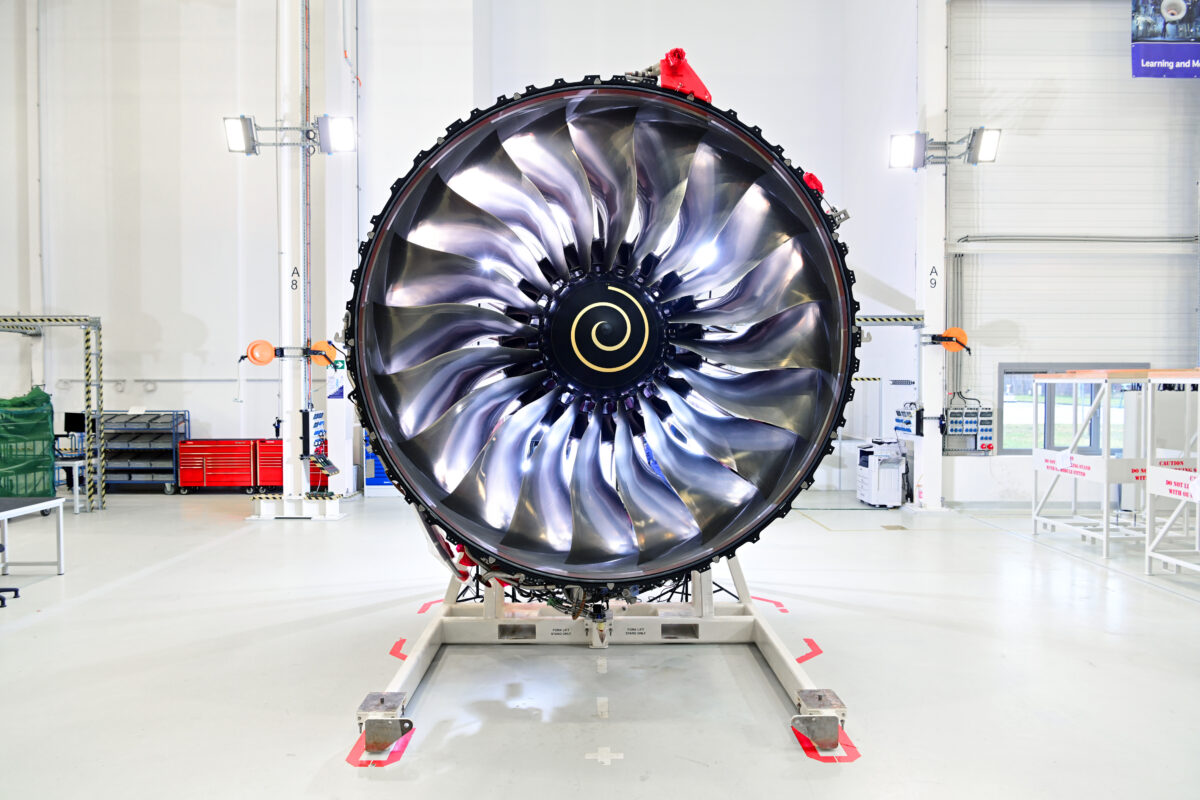
In June, Pratt & Whitney announced the introduction of hot-section upgrades to double time on wing for the GTF engine that powers the Airbus A320neo. The durability improvements, derived from Pratt & Whitney’s GTF Advantage engine product line, included changes to turbine airfoil designs and coatings as well as cooling hole optimizations in both the turbine and combustor. Also in June, Rolls-Royce launched an enhancement package expected to double the scheduled maintenance interval for the Trent 1000 engines that power the Boeing 787 Dreamliner. Rolls-Royce began installation of the packages on new engines in January, and in-service engines will be retrofitted with the durability enhancements at global maintenance facilities. Rolls-Royce expects to complete upgrades to all Trent 1000 engines within two years.
In March, researchers at the University of Central Florida in Orlando safely operated a toroidal jet-stirred reactor, a combustor used for studying combustion characteristics and model validation, on an ammonia-hydrogen fuel. Additional lean blow-out testing was conducted in July to quantify fuel mixtures required for operation with engine-relevant combustion residence times. Under a NASA grant, researchers are considering liquid ammonia as an alternative fuel for decarbonization and emissions reduction. A fraction of the ammonia can be cracked to release hydrogen for combustion while remaining ammonia catalytically reduces nitrogen oxide emissions, unlocking the fuel benefits of clean-burning hydrogen without supercooling or complex cryogenics.
Opener image: A Rolls-Royce Trent 1000 engine that powers the Boeing 787 Dreamliner is shown at the Dahlewitz, Germany, site. The engine’s first maintenance, repair, and overhaul visit began in January 2025. Credit: Rolls-Royce