Flight testing pushes speed, autonomy and mobility frontiers
 By Cat Hofacker
 By Cat Hofacker
Flight testing in 2025 spanned the spectrum from commercial supersonic jets to advanced drones and short-field mobility aircraft.
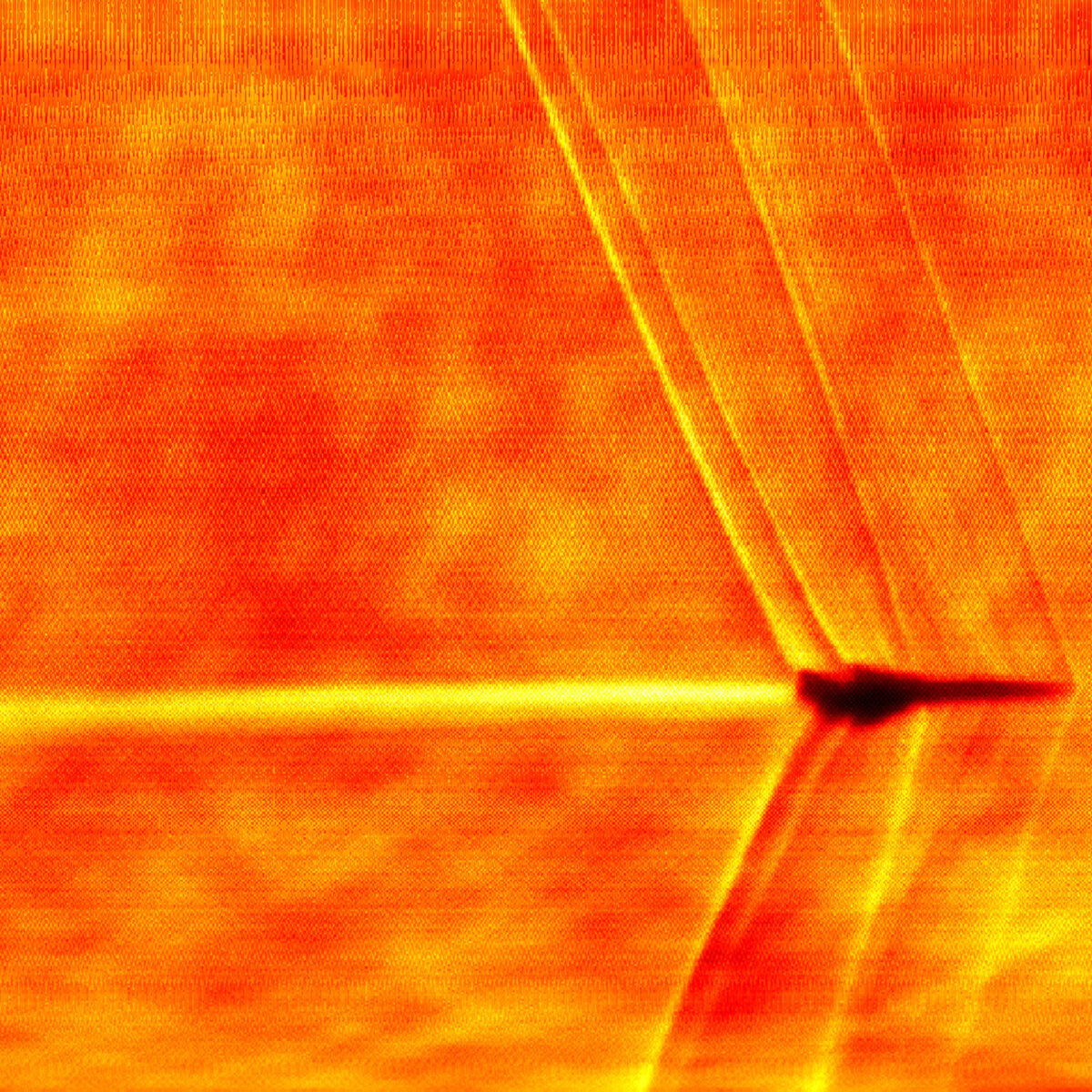
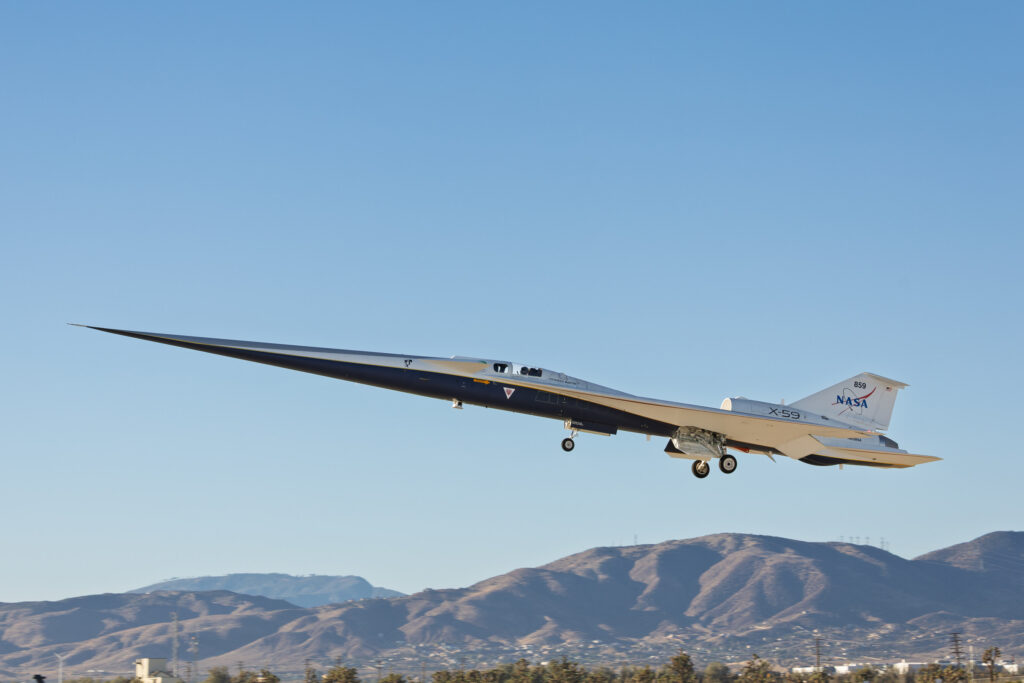
Over California’s Mojave Desert in January, Boom Supersonic’s XB-1 demonstrator exceeded Mach 1.1 without producing sonic booms that were audible on the ground. Chief test pilot Tristan Brandenburg flew the milestone sortie, followed in February by a second and final supersonic flight. Data from both informed Boom’s “Boomless Cruise” concept, while U.S. President Donald Trump’s June executive order opened new potential for high-speed travel by directing FAA to repeal the U.S. overland supersonic flight ban. Supersonic progress continued in October when the Lockheed Martin-NASA X-59 completed its first subsonic flight from Air Force Plant 42 in Palmdale, California, initiating evaluation of quiet-boom acoustic signatures.
Advanced air mobility progressed as Electra and Surf Air Mobility demonstrated an ultra-short-takeoff-and-landing aircraft in August at Virginia Tech where the EL-2 prototype completed takeoffs and landings under 150 feet (~45 meters). Meanwhile, Archer Aviation expanded testing of its Midnight electric vertical-takeoff-and-landing aircraft from its flight test facilities in Salinas, California, and Abu Dhabi in the United Arab Emirates, transitioning to piloted operations in May and by July demonstrating performance in high heat and dust, reaching 2,100-meter altitude, 201 kph and an 88-kilometer (55-mile) range.
Space access testing continued globally. SpaceX advanced its Starship program from Starbase, Texas, collecting data from multiple launches and achieving splashdown of both stages on its 10th flight in August. Blue Origin’s New Glenn flew twice from Cape Canaveral in 2025, including its January debut and a November launch that sent NASA’s twin ESCAPADE spacecraft to orbit. Japan’s Honda and China’s Space Epoch tested reusable-launch demonstrators in Taiki Town, Japan, in June and China in May.
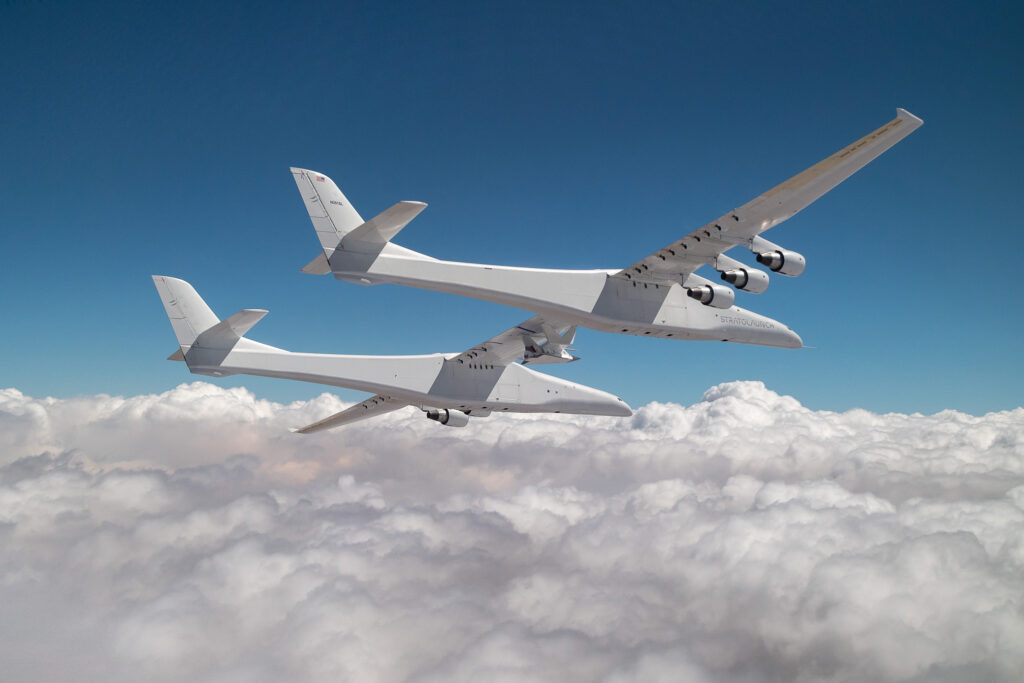
Hypersonic research accelerated in May, when California-based Stratolaunch flew its Talon-A2 beyond Mach 5. Released from the twin-fuselage Roc carrier aircraft, Talon autonomously landed at Vandenberg, California, completing the company’s first fully recovered hypersonic mission. That same month, Hermeus flew its Quarterhorse MK 1 over Edwards Air Force Base’s lakebed, collecting data to inform the supersonic Mk 2 vehicle in development.

In January, Lockheed Martin reported progress toward integrating crewed and autonomous aircraft, including efforts to enable F-35 and F-22 pilots to command autonomous systems directly from their cockpits as part of its Integrated Air Dominance initiative. This followed a late-2024 Lockheed Martin Skunk Works-University of Iowa’s Operator Performance Laboratory flight test, in which a human battle manager aboard an L-39 Albatros assigned targets to two AI-controlled L-29 Delfin jets.
Autonomous combat aviation advanced in August when General Atomics Aeronautical Systems and the U.S. Air Force flew the YFQ-42 from Gray Butte, California. The jet-powered, semiautonomous prototype represents the Air Force’s Collaborative Combat Aircraft (CCA) vision for AI-enabled wingmen operating with crewed fighters. Development built on the XQ-67 demonstrator, first flown in 2024, which validated a modular “genus-species” airframe concept and helped compress the YFQ-42 schedule. In October, Anduril’s YFQ-44 began flight tests in California, adding a second prototype to the Air Force’s expanding CCA development portfolio.
Strategic command modernization also progressed. In August, Sierra Nevada Corp. conducted the first flight of the E-4C Survivable Airborne Operations Center (SAOC) from Dayton, Ohio, beginning tests for the hardened airborne command center aircraft to replace the aging E-4B Nightwatch fleet.
Closer to the ground, the Garrison Flight Research Laboratory at the University of Kansas conducted 18 crewed-uncrewed encounters pairing a 4.5-kilogram (10-pound) fixed-wing drone with a Cessna 172. The team verified FAA right-of-way and well-clear standards to enable autonomous avoidance maneuvers and guide integration rules for uncrewed aircraft.
The year’s flight tests — showcasing hypersonic speed, urban mobility, collaborative combat, and command resilience — ensured steady progress toward a more autonomous, connected and capable aerospace future.
Contributor: Shawn Keshmiri
Opener image: Boom Supersonic partnered with NASA to capture specialized photography of its XB-1 demonstrator. During the aircraft’s second supersonic flight in February 2025, NASA teams on the ground used Schlieren photography to visualize the shock waves resulting from XB-1 pushing through the air at supersonic speeds. Credit: Boom Supersonic