NASA rethinks Artemis path forward, accelerating launch cadence and adding 2027 mission


NASA on Friday announced an overhaul of its Artemis lunar program, adding a 2027 mission to test in-space docking techniques that officials said would increase the odds of successfully returning astronauts to the lunar surface in 2028.
Artemis III, the previous designation for that inaugural landing, will now be a crewed flight to low-Earth orbit in which the Orion spacecraft tests rendezvous and docking with one or more of the commercial lunar landers in development: SpaceX’s Starship and Blue Origin’s Blue Moon.
In a Friday press conference, Administrator Jared Isaacman cast this change as “taking down risk for the eventual landing” in 2028 — now the Artemis IV mission. The agency is also tentatively aiming for conducting a second lunar landing, Artemis V, later that year.
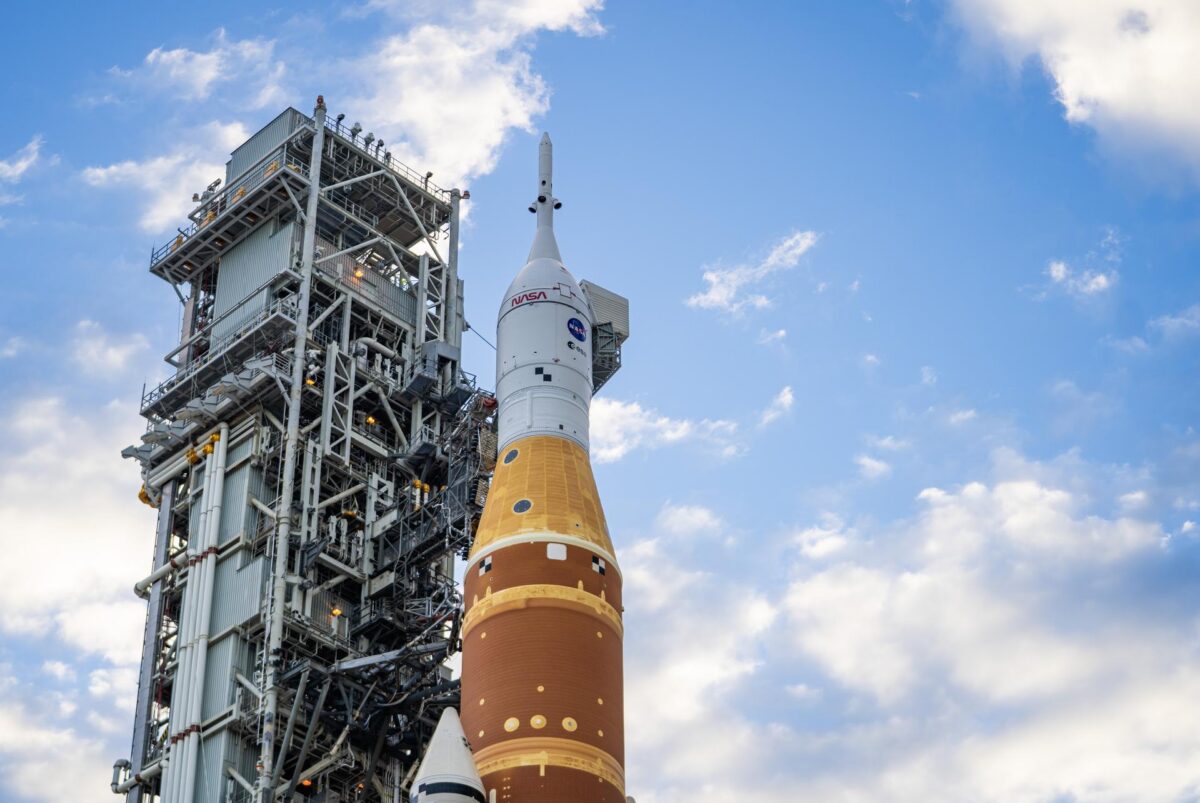
The announcement comes after a series of technical issues with the SLS that is to launch four astronauts around the moon in the Artemis II flight. The agency encountered hydrogen leaks in pre-launch fueling tests with the rocket’s core stage and issues with the flow of helium to its upper stage, challenges that were also encountered in the lead-up to the Artemis I uncrewed demonstration in 2022. The SLS for Artemis II is now back inside the Vehicle Assembly Building for repairs, and the pace of that work will determine whether an early April launch for Artemis II remains feasible.
Three years between SLS flights is too long, Isaacman told reporters. “We need less needless complexity, less distraction, more launches, more operational muscle memory and extreme focus on the mission.”
The new mission cadence is similar to the step-by-step approach NASA employed for Apollo, he said. “We didn’t go right to Apollo 11,” he said during a press conference. “We had a whole Mercury Program, Gemini — lots of Apollo missions before we ultimately landed.”
The new target for Artemis III is mid-2027, which reflects NASA’s desire to increase the cadence of launches with its SLS rockets.
To help achieve this goal, Isaacman said NASA will tap into the additional $10 billion in funding allocated for the agency in President Donald Trump’s signature tax-and-spending package, signed last year. NASA also plans to “standardize” SLS production by foregoing a planned upgrade to the larger, more powerful Block 1B and Block 2 variants that had required a new upper stage.
“We’d like to announce a mission, tell you the objectives and then fly it inside of a year,” he said, “kind of how it worked in the 1960s. We’re going to try and get back to that now.”