
NASA and contractors accelerate mobile launcher refurbishment, Artemis III hardware to meet new schedule


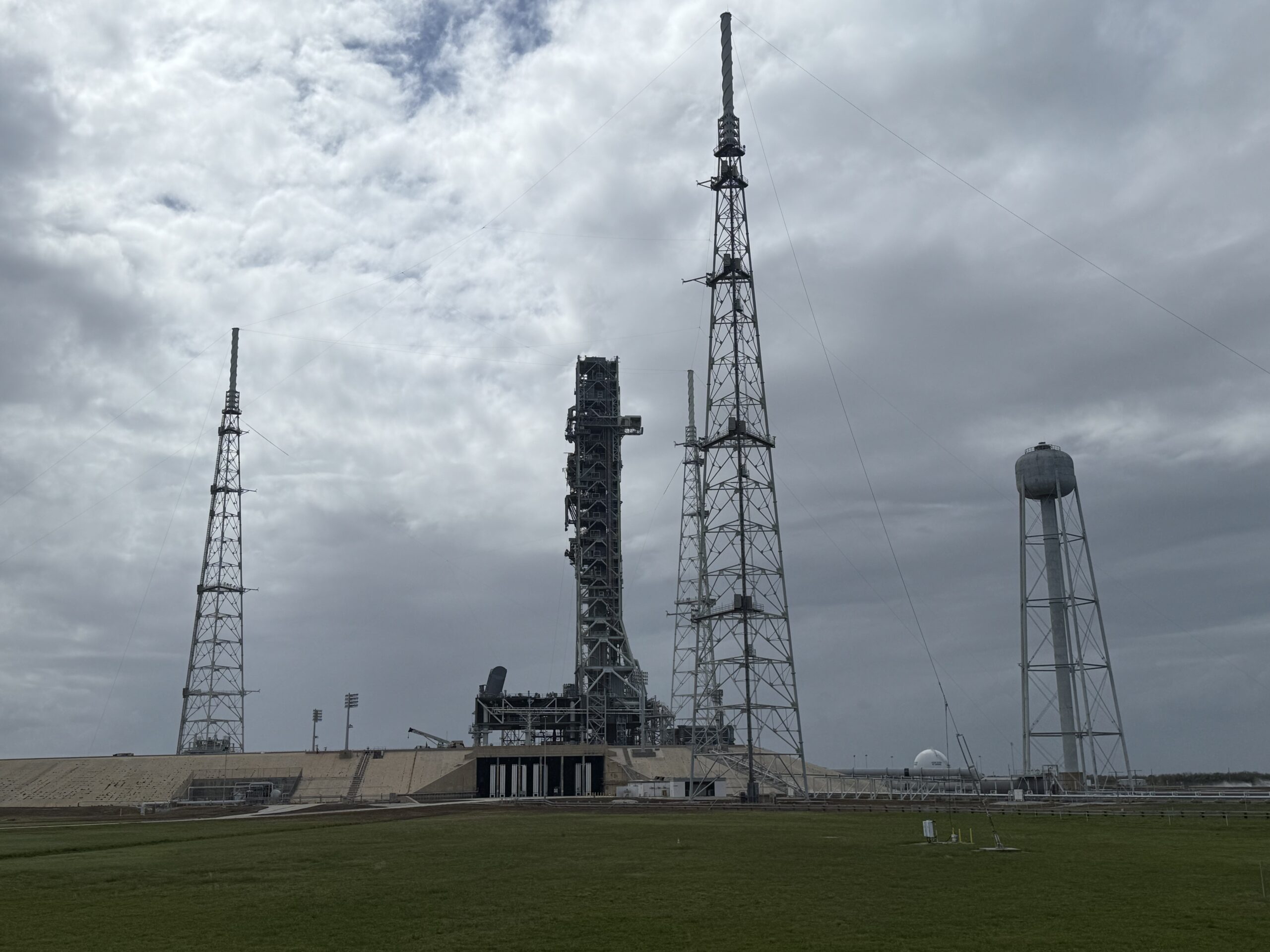
KENNEDY SPACE CENTER, Fla. — Even before the Artemis II lunar flyby had concluded, NASA and its contractors were preparing for the next flight.
Slated for mid-2027, that Artemis III mission will test in-space docking to set up lunar landings in 2028 with the Artemis IV and V missions. NASA then wants to transition to annual lunar landings — a noticeable acceleration from the three years between the Artemis I uncrewed demo and Artemis II, which culminated Friday evening when the four astronauts splashed down in the Pacific Ocean in their Orion capsule.
“The path to the lunar surface is open, but the work ahead is greater than the work behind us,” Associate Administrator Amit Kshatriya said Friday during the post-splashdown press conference.
The agency’s first step, in late March, was to move up delivery of the SLS rocket’s two solid rocket boosters, or SRBs. These five-segmented boosters, installed on either side of the rocket’s core stage, provide the majority of the thrust at takeoff then separate 2 minutes into flight.
“We immediately called Northrop [Grumman] in Utah and said, ‘Get those boosters out here now,’” Cliff Lanham, NASA deputy manager for the Exploration Ground Systems program, told me during an April 9 interview at Launch Pad 39B. “They were due here in May, and we were talking to them already on the phone about getting them on the train. But we said, ‘We’re accelerating the whole program, immediately.’”
During my visit, the space center’s parking lots — frequently empty in the years following the end of the space shuttle program — were crammed with cars from engineers and technicians, many of whom are already working on Artemis III hardware. The first two segments of each SRB had arrived and were about to be processed — meaning prepared for assembly — at the nearby Rotation Processing and Surge Facility. It’s important the boosters arrive early, Lanham said, because they’re up first in the multi-step stacking process that culminates in placing the Orion crew capsule atop the rocket.
The Orion and core stage hardware won’t be far behind, Lanham said. The liquid hydrogen fuel tank that comprises the majority of the core stage is slated to arrive April 28 via barge from New Orleans. Meanwhile, various components of the Orion capsules for Artemis III and IV are under construction at the Operations & Checkout Building nearby.
The agency is targeting August to stack the SRBs and October to stack the core stage. But first, teams of NASA welders and engineers working with contractor Amentum must inspect, clean and repair the 112-meter-tall, 5-million-kilogram steel mobile launcher to be ready for another liftoff. This movable platform that carries and services the 30-story-tall rocket bore the brunt of the liftoff on April 1, when an SLS blasted off the pad to send the Artemis II Orion and crew to orbit.
NASA plans to roll the launcher back inside the Vehicle Assembly Building later this week.
After inspection, which is done in hazmat suits, the launcher has to be power-washed clean of corrosive residue produced by the SRBs during launch, said Eric Weaver, Amentum’s director of engineering. In contrast to the SLS core stage engines that are powered by liquid hydrogen and liquid oxygen, the boosters’ propellant is a composite of ammonium perchlorate and aluminum powder, with a polymer binder.
“They literally have guys with basically fire hoses, and they’re trying to wash off every cranny they can because the aluminum chlorate residue is the most corrosive thing,” Weaver said.
Next is welding to repair any structural damage from the superheated exhaust that shot out of the rocket’s nozzles. Despite the use of cooling water jets to protect the launcher during engine ignition and liftoff, parts of the structure were still warped by the heat of the exhaust, which reached 3,315 degrees Celsius (6,000 Fahrenheit).
The mobile launcher did not sustain quite as much damage this time around, compared to Artemis I, Weaver said, but some reconstruction is still required. This includes fixing two or three elevator doors that were partly damaged.
That welding must be complete before parts of the boosters are stacked on the launcher, he added, because of the highly flammable nature of their solid fuel.
The launch contractors work in three shifts, but the third shift overnight is currently a skeletal crew to keep watch and monitor systems, he said. That is likely to change when NASA starts more intensive work inside the VAB.
With Artemis III targeted for a little over a year away, Weaver and Lanham said they anticipate hiring additional personnel at some point to stay on schedule, but right now cannot estimate how many jobs would be listed.
“The fact that we’re already starting the processing again, and that we’re going to be launching more really excites all of us,” Lanham said.