

This article was originally published by Rice University’s Department of Mechanical Engineering and is shared with permission.
The Department of Mechanical Engineering in the George R. Brown School of Engineering and Computing at Rice University hosted the 2026 AIAA Region IV Student Conference, 27–29 March.
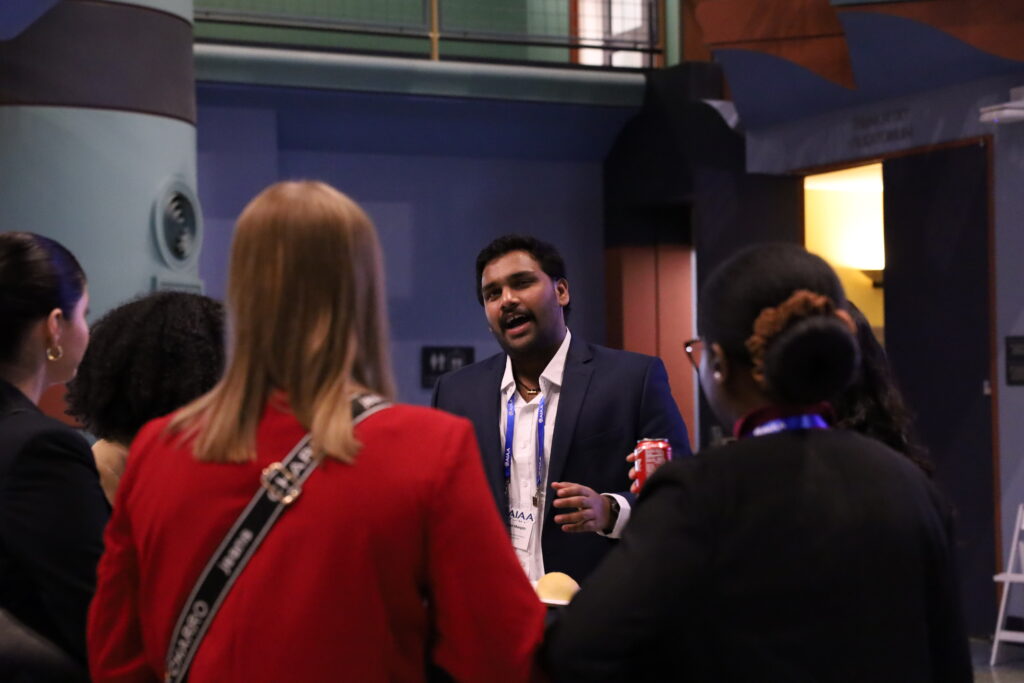
More than 200 high school, undergraduate, and graduate students from Arkansas, Oklahoma, New Mexico, and Texas to present original research, exchange ideas, and connect with peers and professionals in aerospace. The two-day program featured 58 paper and poster presentations spanning aeronautics, astronautics, and aerospace engineering. Participants competed for cash prizes and built connections across institutions and disciplines. High school and undergraduate students presented on Saturday, while Sunday was dedicated to graduate-level research.
“Hosting the AIAA student conference at Rice was a real pleasure,” said Marcia O’Malley, chair of the Department of Mechanical Engineering and Thomas Michael Panos Family Professor in Mechanical Engineering at Rice University. “The energy these students bring is inspiring, and being here in Houston, where our long partnerships with NASA have shaped so much of Rice’s activity in this domain, makes it an especially fitting place to gather the next generation of aerospace leaders.”
Keynotes Explore Human Spaceflight and Aerospace Innovation
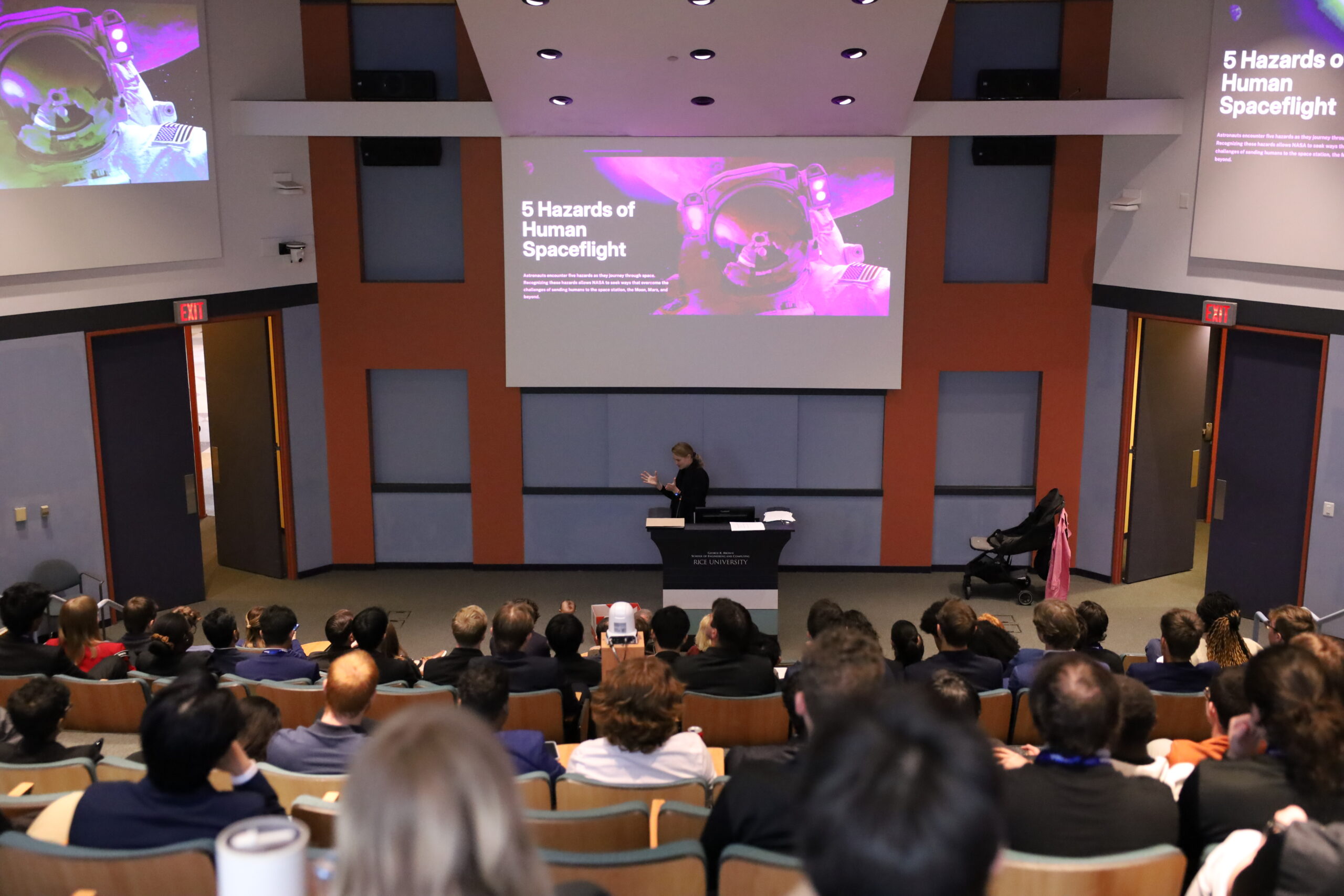
Ekaterina Kostioukhina, founder of the Hiberia Project, opened the keynote program with a talk on human hypo-metabolic states and their applications to long-duration spaceflight. Framing the human body as a complex composite material, she explored how induced hibernation could help address key challenges NASA identified for deep space missions, including reducing food consumption, minimizing waste, lowering psychological risks, and decreasing the resources needed for transit.
On the second day, Julie Strickland, founder of Strawberry Innovation and a veteran spacesuit engineer, delivered a keynote on innovation and the patent life cycle. Using lunar regolith as a case study, she outlined a practical framework for turning an engineering problem into a patentable solution. She also presented her own patent, the Astronaut Integral Rescue System (AIRS), a spacesuit-integrated stretcher designed in partnership with junior engineers to enable astronaut rescue under extreme conditions.
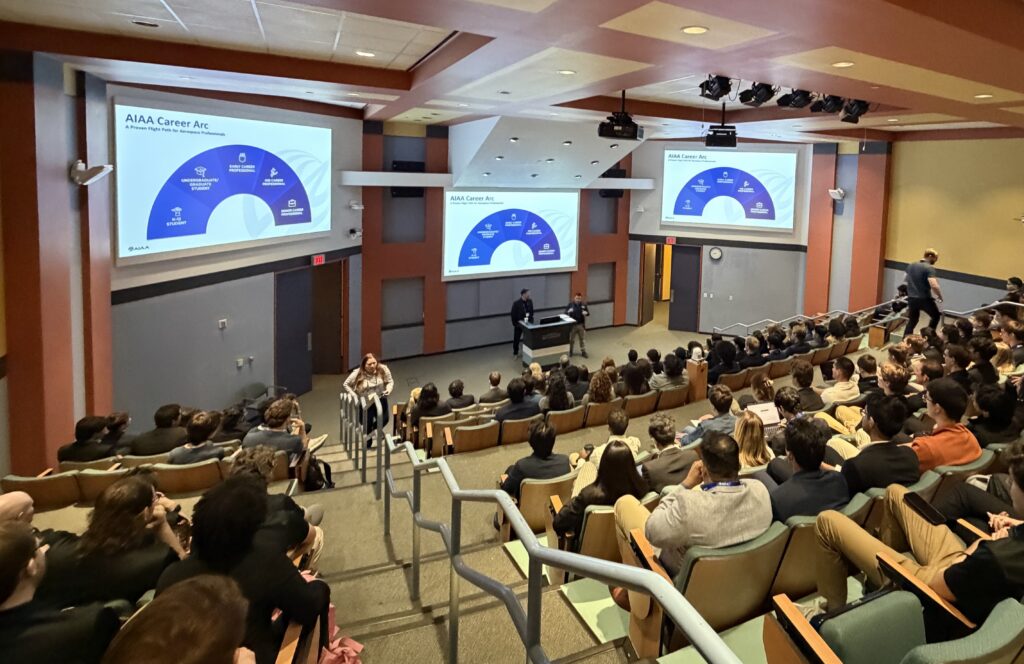
The conference marked the South Central Region’s first student conference in a two-day format, organized by Rice’s AIAA student branch. In addition to technical sessions, the program included a MathWorks workshop on AI applications in aerospace.
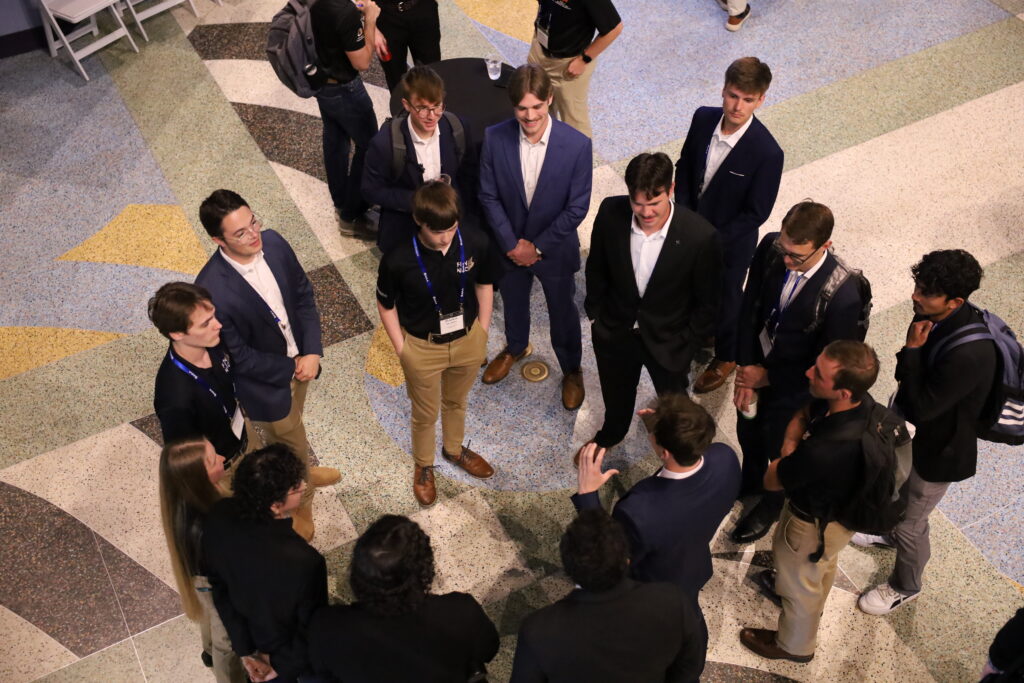
“We extend our deepest gratitude to the students who organized the conference, led by Ryan Mattana, Rice University mechanical engineering student and Aerodynamics Lead of the Rice AIAA student branch, and to the faculty, staff and sponsors MathWorks, Venus Aerospace, and Intuitive Machines, whose generous support made this conference possible,” said Humberto Silva III, AIAA Associate Fellow and member of the organizing committee.
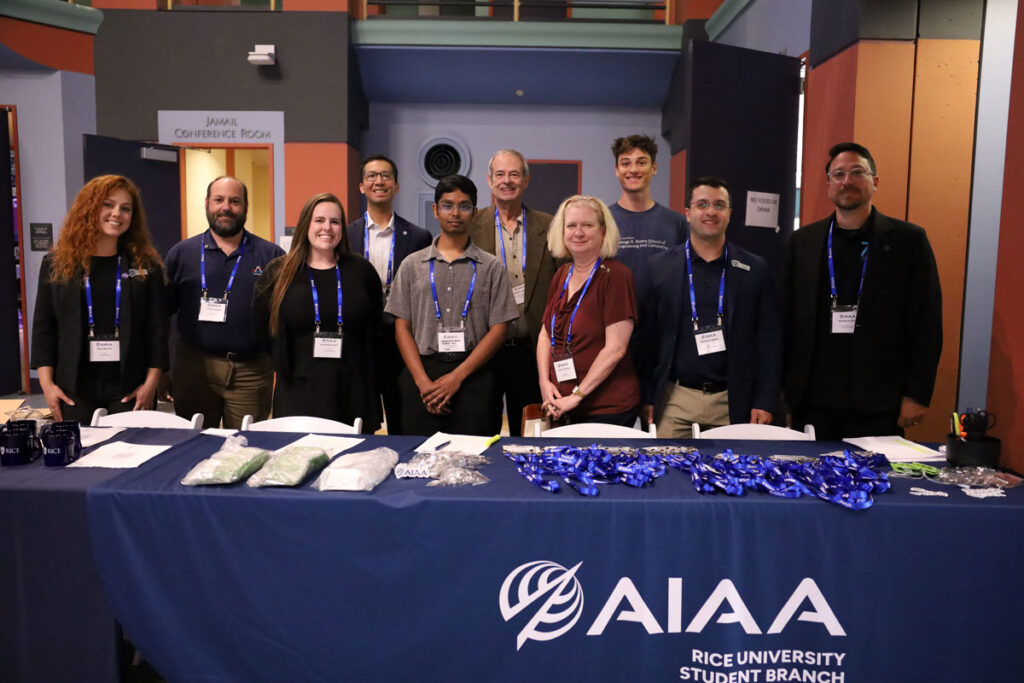
Region IV Winners
High School Category
- First Place: “Feasbility of Oblique Wings in Aircraft Design and Efficiency,” Maximus Pongkorung, Atascocita High School (Humble, TX)
- Second Place: “Analyzing Lift Generation in a Modified Magnus Cylinder-Integrated Airfoil for Short Take-Off and Landing,” Ajinkya Joshi, Marzia Cescon, Daniel Floryan, John Foster Dulles High School (Sugar Land, TX)
- Third Place: “Velocity and Angle Compensated Turret Aiming for Simultaneous Shooting and Motion,” Arka Rebbapragada, Arun Rebbapragada, Wanni Zhu, and Stuart Otten, Newman Smith High School (Carrollton, TX)
Undergraduate Category
- First Place: “Characterization of Mack Mode Instabilities in Mach 7 Flow,” Smruthi Shashidhar and Mackenzie Vargas-Lebron, University of Texas at San Antonio (San Antonio, TX)
- Second Place: “Experimental Evaluation of Counter-Rotating Co-Axial Propellers with Variable Spacing and Dissimilar Shaft Speeds,” Gage Nold and Nathan Revor, Oklahoma State University (Stillwater, OK)
- Third Place: “Image Processing and Time of Flight Analysis of Propagating Shocks,” Richard Otano, University of Texas – Arlington (Arlington, TX)
Graduate Category
- First Place: “Configuration Aerodynamics Methodology for Conceptual Design of Hypersonic Vehicles,” Stephen Atkins, University of Texas at Arlington (Arlington, TX)
- Second Place: “Design and LPV Modeling of Deployable Integrated Tensegrity Torus–Cable Domes,” Weizhi Cao, University of Houston (Houston, TX)
- Third Place: “Markov Chain Monte Carlo Estimation of Satellite Ballistic Coefficients for Re-entry Prediction,” Caden Matthews, University of Oklahoma (Norman, OK)
Team Category
- First Place: “FSO Communications with Liquid Crystal Spatial Light Modulators for Hypersonic and Re-entry Vehicles,” Ashlan Benson, Ruben Ooms, and Austin Eckert, Tarleton State University (Stephenville, TX)
- Second Place: “”Jinx”: High Thrust-to-Weight Ratio Design for Collegiate Bi-Propellant Liquid Rocket Development,” Grace Zimmer, Haven Russell, and Emilio Mayorga, University of Texas at San Antonio (San Antonio, TX)
- Third Place: “Concentration of Ozone and Cosmic Radiation in the Stratosphere,” Evan Sie, Deborah Luo, Advaith Madala, Janani Arunpraksh, and Afreeda Hossain, University of Texas at Dallas (Richardson, TX)