


“We need to know not just where a satellite is, but also what it is doing, who owns it, and whether its maneuvers constitute a threat.”
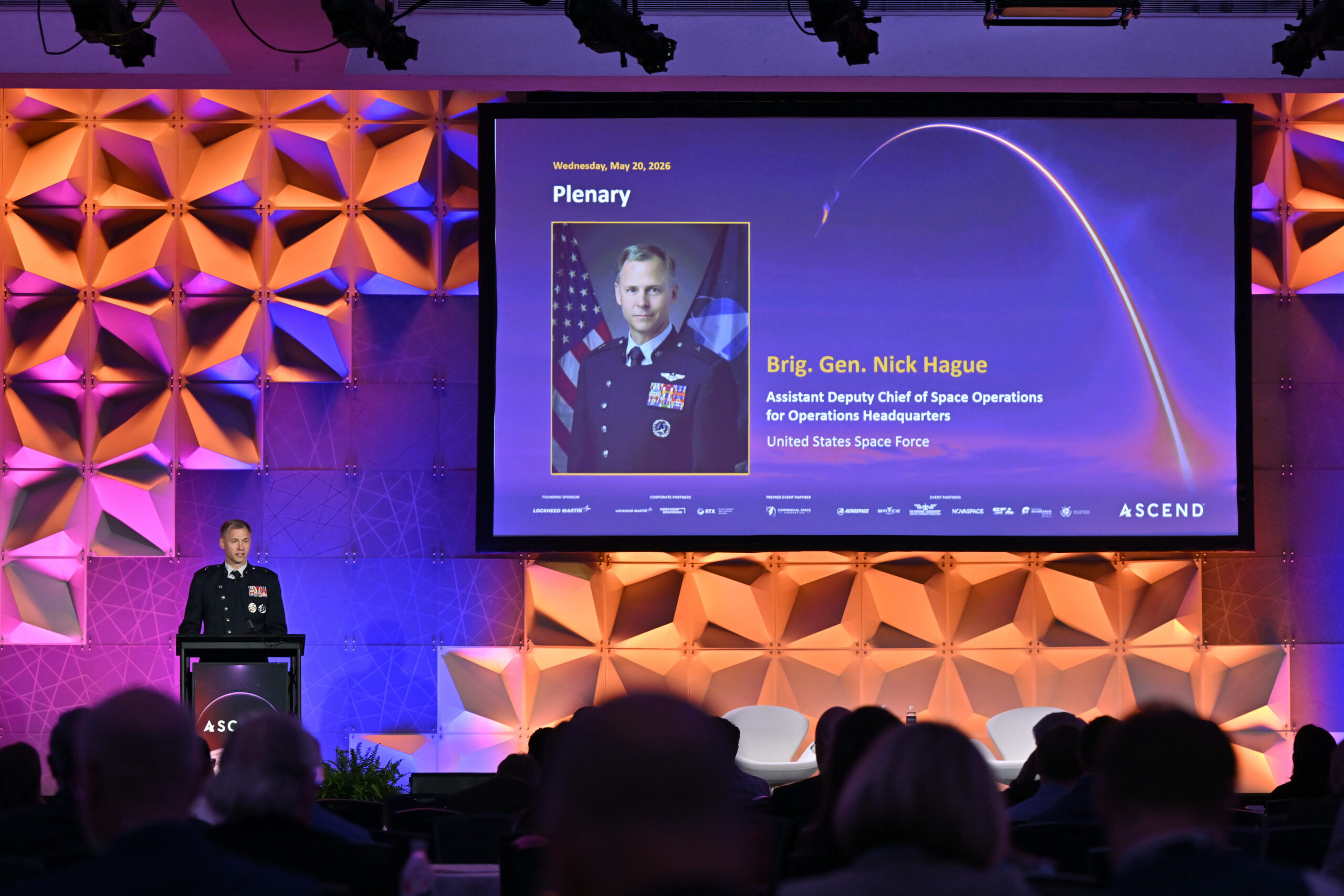
The Space Force, which is anticipating its biggest budget ever, must improve its “space domain awareness” as low Earth orbit becomes more crowded and adversaries pursue greater means to attack satellites and other assets, a top Space Force general told the ASCEND 2026 audience.
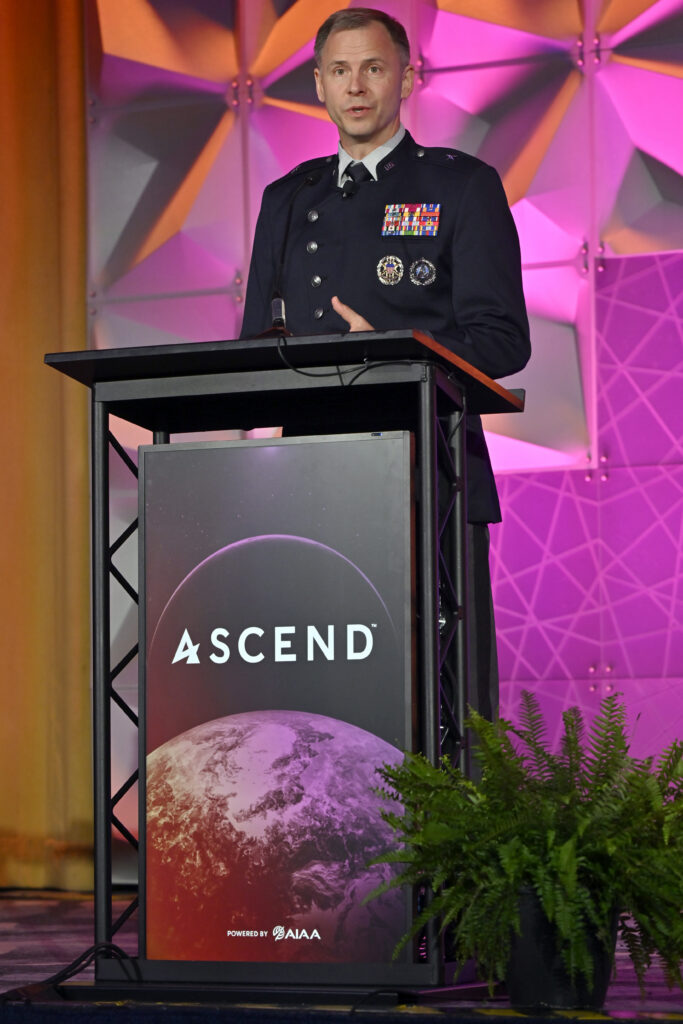
And it is seeking additional help from industry to identify new solutions far more quickly, according to Brig. Gen. Nick Hague, assistant deputy chief of staff for space operations. “For decades the United States has operated in space under the assumption it was a benign sanctuary,” said the former NASA astronaut. “We built exquisite, highly capable, and extremely expensive satellites. We launched them into orbit, and then we assumed that they’d be able to operate unchallenged. Those days are over.”
Indeed, the threats are growing as the military – and society at large – depends on space as never before.
“The joint force relies on space for global communication, precision navigation, missile warning, intelligence, surveillance, reconnaissance,” Hague said. “Every ship at sea, every aircraft in flight, and every squad on the ground relies on signals coming overhead. Without space, our military reverts to analogue capabilities in a digital age.”
U.S. adversaries have been steadily developing ways to thwart American dominance. “Our strategic competitors have also recognized this dependency,” Hague noted, “and they have spent the last two decades developing a means to deny us that advantage.”
He outlined a “spectrum of counter-space capabilities” that are growing in number and intensity. “Our adversaries have tested and deployed direct ascent, antisatellite missiles,” he explained, as well as “satellites designed to maneuver near our assets with hostile intent.” He also cited potential GPS jamming and spoofing to “directed energy weapons designed to dazzle or blind our sensors.”
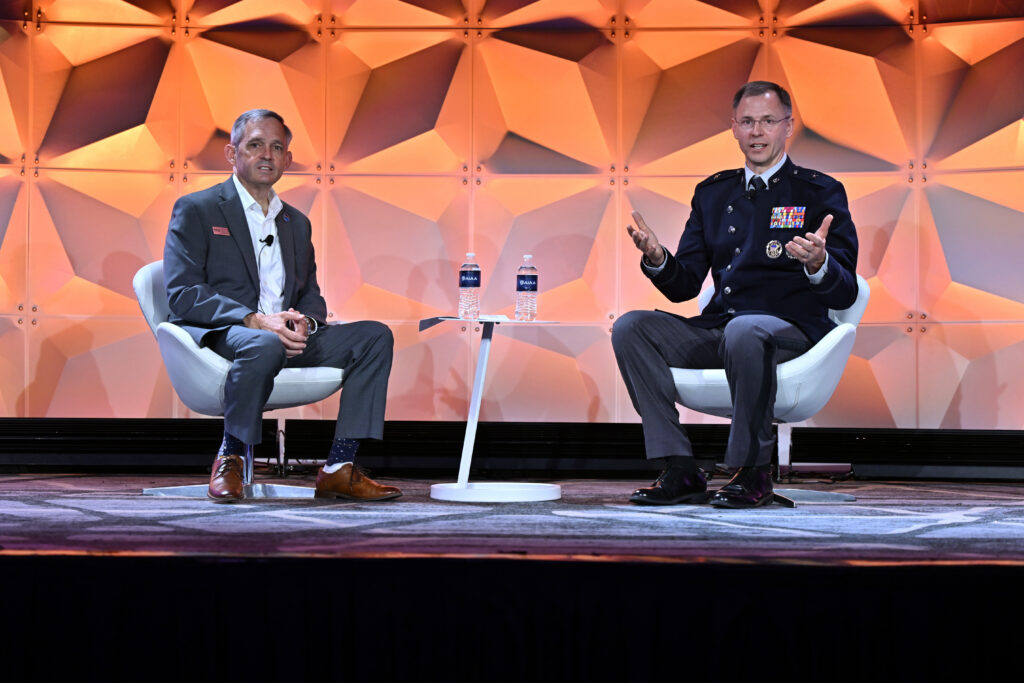
Assistant Deputy Chief of Space Operations for Operations, Headquarters United States Space Force.
That means space domain awareness is no longer just about cataloguing what’s up there to avoid collisions. “Today, space domain awareness is about understanding intent,” Hague said. “It is the transition from traffic management mindset to a warfighting, intelligence mindset. We need to know not just where a satellite is, but also what it is doing, who owns it, and whether its maneuvers constitute a threat.”
The Trump administration has requested $71.1 billion for the Space Force in Fiscal Year 2027, compared to $39.5 billion this year. If approved by Congress, that major growth increase would also help to fund another expansion of the ranks, adding another 2,800 Guardians to the current force of about 10,000.
But the newest military branch needs more help from industry, Hague said. “Many of you in this room are building the capabilities to track objects in space with incredible precision,” Hague told attendees. “And the Space Force does not need to build everything in house. In fact, our goal is to ingest, fuse, and act upon the best data that’s available, regardless of whether it comes from a military or a commercial sensor.”
That means more partnerships with the commercial space industry and academia, he said. “We need your ideas. We need your technology. We need your speed.”
The growing threats also mean “pivoting our space architecture,” Hague added, “so that the U.S. military is relying on more dispersed space assets.”
“We are complicating the adversary targeting calculus,” he explained. “If an adversary knows that destroying one, or 10, or even 50 satellites will not degrade our operational capability, then the incentive to attack is drastically reduced.”
But the approach to acquiring new assets must match the times. “The traditional defense acquisition system was built for the Cold War, designed to buy aircraft carriers and fighter jets over decades,” Hague stated. “But the space domain moves at the speed of software. To that end, we’re moving away from systems with long, drawn out acquisition and testing campaigns.”
“If we truly want to go fast,” he added, “we must embrace incremental delivery and continuous tests. This means fundamentally changing our philosophy. We must prioritize the delivery of core capabilities at speed, and plan for iterations of subsequent improvement that deliver on what our objective force ultimately demands. Speed rarely comes for free.”