

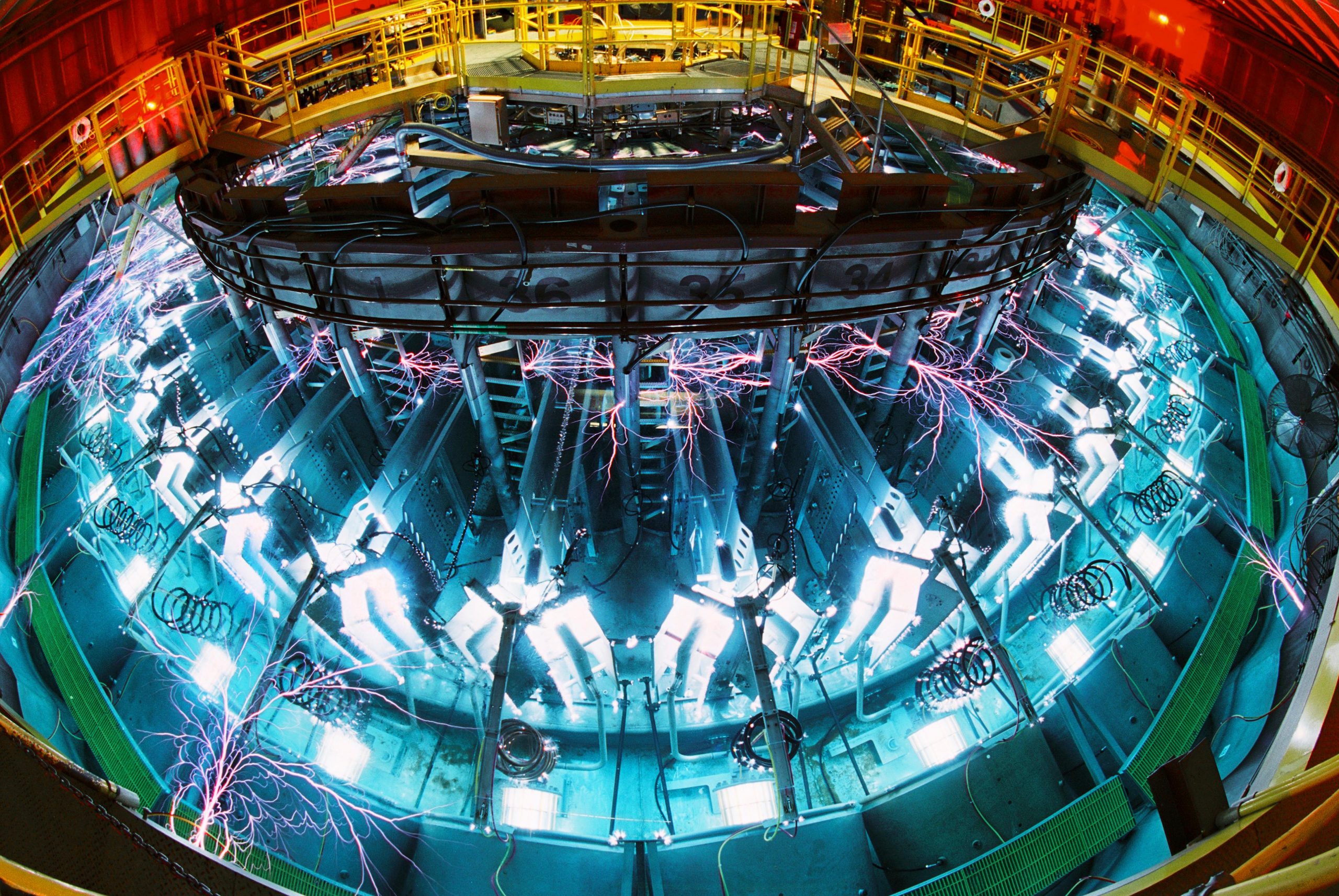
The leadership of the U.S. aerospace and defense sectors relies not solely on strategic documents but also on the tangible environments where concepts are validated, calibrated, qualified, stress-tested, and made repeatable. These include laboratories, wind tunnels, anechoic chambers, propulsion test stands, materials testing facilities, space-environment simulators, spectrum testbeds, and instrumentation-rich ranges that transform prototypes into operational systems.
For members of AIAA who are engineers, program leaders, researchers, testing professionals, and their affiliated companies and institutions, this infrastructure is the backbone of their work. It serves as the foundational layer that supports technology readiness, certification, and operational credibility. When this layer deteriorates, the consequences are predictable: extended timelines, increased rework, fewer testing repetitions, elevated safety risks, decreased throughput, and a growing divide between theoretical capabilities and actual performance in the field.
Congress has a vital role to play in turning this situation around. It’s crucial that our R&D laboratories and testing facilities are seen as national treasures, deserving stewardship and support throughout their lifecycle. Instead of being treated as a collection of competing line items, we must recognize their importance in ensuring the future of our national security and technological advancement. By investing in and prioritizing these assets, we can secure a stronger, more innovative future for America.
Evidence: Deferred Maintenance Escalates to Mission Risk
It’s becoming increasingly clear that the issue of deferred maintenance in our federal real estate portfolio poses a serious risk to our mission and objectives. The Government Accountability Office (GAO) has flagged this as a high-risk concern, especially as the reported backlog for maintenance and repairs in places like the Pentagon and various federal civilian agencies has skyrocketed from $171 billion to an astonishing $370 billion between FY2017 and FY2024. This isn’t just a matter of keeping buildings in shape; it’s directly affecting our ability to operate effectively, leading to premature replacements, disruptions, and unnecessary costs.
When we look at research and development (R&D), the stakes become even clearer. To maintain our global leadership in groundbreaking fields like artificial intelligence, quantum technology, and space systems, we need reliable and safe environments for measurement and testing. If our facilities are outdated or in disrepair, our ability to innovate is severely hampered.
The National Institute of Standards and Technology (NIST) has been particularly vocal about how deteriorating facilities impact its mission. In recent congressional testimony, leaders shared troubling examples of roof leaks that damage multimillion-dollar microscopes, power failures that jeopardize equipment during critical moments, and essential calibration services that become unavailable due to poor environmental controls. Alarmingly, a National Academies estimate revealed that about 63% of NIST’s research facilities fall short of federally mandated standards for acceptable conditions.
The challenges don’t stop there. The Pentagon’s testing and evaluation ecosystem is feeling similar pressures. A National Academies study on Pentagon ranges found that funding for maintenance and sustainability is alarmingly low, and as a result, the costs of deferred maintenance keep climbing. This lack of funding is tied to increased risks of failure and diminished capabilities, which lead to scheduling conflicts and less realistic operational testing.
Take hypersonics as a prime example of why we need robust testing infrastructure. According to the GAO’s review of the Pentagon’s hypersonic weapons initiatives, specialized facilities such as wind tunnels and test tracks are critical. Yet, when testing capabilities are limited or instrumentation is outdated, we create a false sense of “speed,” which ultimately adds uncertainty to the process and leading to costly overruns, production delays, and setbacks in deployment.
On a broader scale, the White House’s National Science and Technology Council (NSTC) has identified modernizing federal R&D infrastructure as vital for maintaining our scientific leadership and ensuring national and economic security. The Council’s report emphasizes that investing in modernized, resilient designs can greatly enhance the functionality and effectiveness of our laboratories. For instance, the Department of Energy’s Office of Science has consistently poured over $300 million each year into upgrading essential infrastructure at its national laboratories. The crucial takeaway here is that while one size doesn’t fit all, we should make intentional recapitalization programs the norm, rather than treating them as an exception.
The Policy Challenge: Balancing Immediate Needs with Long-Term Investment
If you’ve ever worked in an aging lab, you’ve likely seen this pattern: immediate operational funding overshadows the critical need for capital investments. As a result, upgrades get pushed to the back burner, and maintenance becomes an afterthought. Unfortunately, this neglect leads to breakdowns, costing much more in the long run. The GAO warns that if we don’t change course, our federal assets will deteriorate, resulting in the need for premature replacements that are often far more expensive than timely repairs.
R&D infrastructure faces unique challenges because it’s both essential to our missions and costly to maintain. It often requires specialized conditions – vibration isolation, clean energy, cryogenics, RF shielding, advanced safety systems, high-temperature materials, and precision measurements. When these standards aren’t met, the repercussions are serious – invalid data, compromised calibrations, limited testing conditions, and ultimately, reduced reproducibility can hinder scientific progress.
What Congress Should Do: Emphasize Lifelong Care for R&D Infrastructure
AIAA advocates for a more sensible approach. Congress doesn’t need to micromanage every facility. Instead, it should create incentives and frameworks that empower agencies to effectively plan, upgrade, and maintain R&D infrastructure.
First, Congress should enforce credible, mission-driven capital planning that it can monitor. The GAO has highlighted the importance of agencies clearly articulating their repair and maintenance needs in a way that connects these costs to mission objectives. For R&D and testing infrastructure, agencies should develop multiyear plans that align facility conditions and modernization efforts with specific mission outcomes, such as testing capacity and data quality. This shift in focus from simply asking “what was spent?” to “what capabilities have been restored or improved?” will greatly enhance oversight.
Second, funding for modernization and upkeep needs to be viewed as a continuous process, not just a series of sporadic fixes. The NSTC emphasizes the need for dedicated modernization programs, citing the Department of Energy’s consistent investment strategy as a model. Congress can support this by endorsing stable capital funding for laboratories and testing facilities, ensuring that sustaining operations doesn’t come at the cost of modernization.
Third, we need to recognize that test capacity and instrumentation upgrades are essential for successful acquisitions. The National Academies have warned about the implications of inadequate funding for the Pentagon’s testing ranges and their effects on cost and capability. If our labs can’t meet modern testing requirements, programs face the difficult choice of either settling for less effective tests or incurring higher costs down the line. Congress should push for earlier integration of testing requirements into acquisition planning to ensure investments in testing capabilities are made before timelines tighten and options shrink.
Fourth, we should enhance access to facilities through structured public-private partnerships while ensuring safety, security, and integrity. Many sectors already rely on shared facilities and testbeds, so a rational aim is to increase their utilization while minimizing overlap. Congress can facilitate this by allowing agencies to establish modern partnership agreements for testing infrastructure, complete with clear guidelines on cybersecurity, export controls, and data rights. Our goal isn’t privatization; it’s about smarter resource management and modernization.
Finally, we must prioritize the essential elements that allow R&D facilities to run smoothly: reliable power, effective environmental controls, robust networks, and safety systems. The testimony from NIST highlights how routine facility failures can damage costly instruments and halt research. If Congress wants to maximize the return on federal R&D investments, it must recognize these foundational elements as critical to mission success, rather than just overhead costs.
By approaching these challenges with a fresh perspective, we can ensure that our R&D infrastructure thrives, ultimately benefiting our nation’s scientific and technological advancements.
The Outcome: Congress Should Demand Measurable Capability Rather Than Theoretical Plans
Congress needs to focus on real, measurable outcomes instead of just theoretical plans. AIAA isn’t asking for preferential treatment; we simply want to emphasize the importance of accountability in a field where results can be clearly quantified.
It’s crucial for Congress to require agencies to provide transparent reports on whether their modernization investments are making a tangible difference. Are we seeing an increase in testing throughput? Is critical downtime being reduced? Are we restoring calibration availability and improving environmental stability? Have we seen a decrease in safety incidents and an expansion of testing conditions? These metrics matter because they’re directly tied to faster, more cost-effective learning and the creation of reliable operational systems.
The reasoning behind this is simple. For the United States to lead in innovation, we must be able to conduct extensive testing. It’s in our labs and testing infrastructures that we manage risk effectively. When these systems begin to fail, we don’t eliminate risks; we merely push them down the road, eventually leading to cost overruns and vulnerabilities in our operations.
If Congress truly wants to strengthen America’s aerospace and defense capabilities, it should start by revitalizing the essential environments where we test and validate what truly works. Let’s focus on building a solid foundation for the future.
1. U.S. Government Accountability Office (GAO). Federal Real Property: Disposing of Unneeded Facilities Could Help Reduce Maintenance Backlog. GAO-25-108400. April 9, 2025.
https://www.gao.gov/products/gao-25-108400
GAO found that deferred maintenance and repair backlogs for federal buildings more than doubled from $171 billion to $370 billion between FY2017 and FY2024.
2. U.S. Government Accountability Office (GAO). Federal Real Property: Disposing of Unneeded Facilities Could Help Reduce Maintenance Backlog — Full Report.
https://files.gao.gov/reports/GAO-25-108400/index.html
3. U.S. Government Accountability Office (GAO). Testimony: Federal Property Repair Backlogs and Disposal of Unneeded Buildings. April 9, 2025.
https://www.gao.gov/video/testimony-federal-property-repair-backlogs-and-disposal-unneeded-buildings
4. U.S. Government Accountability Office (GAO). Federal Real Property: Reducing the Government’s Fiscal Exposure by Better Managing Federal Real Property. GAO-25-108159.
https://www.gao.gov/products/gao-25-108159
5. National Academies of Sciences, Engineering, and Medicine. Necessary DoD Range Capabilities to Ensure Operational Superiority of U.S. Defense Systems.
https://nap.nationalacademies.org/catalog/26181/necessary-dod-range-capabilities-to-ensure-operational-superiority-of-us-defense-systems
6. National Science and Technology Council (NSTC), Executive Office of the President. Critical and Emerging Technologies List – 2024 Update.
https://bidenwhitehouse.archives.gov/wp-content/uploads/2024/02/Critical-and-Emerging-Technologies-List-2024-Update.pdf
7. National Science Foundation – National Center for Science and Engineering Statistics (NCSES). Critical and Emerging Technologies by U.S. Businesses: Use and R&D Funding and Performance. NSF 25-307.
https://ncses.nsf.gov/pubs/nsf25307
8. White House Office of Science and Technology Policy (OSTP). National Strategy on Microelectronics Research.
https://www.whitehouse.gov/wp-content/uploads/2025/03/Amended-National-Strategy-on-Microelectronics-Research.pdf