

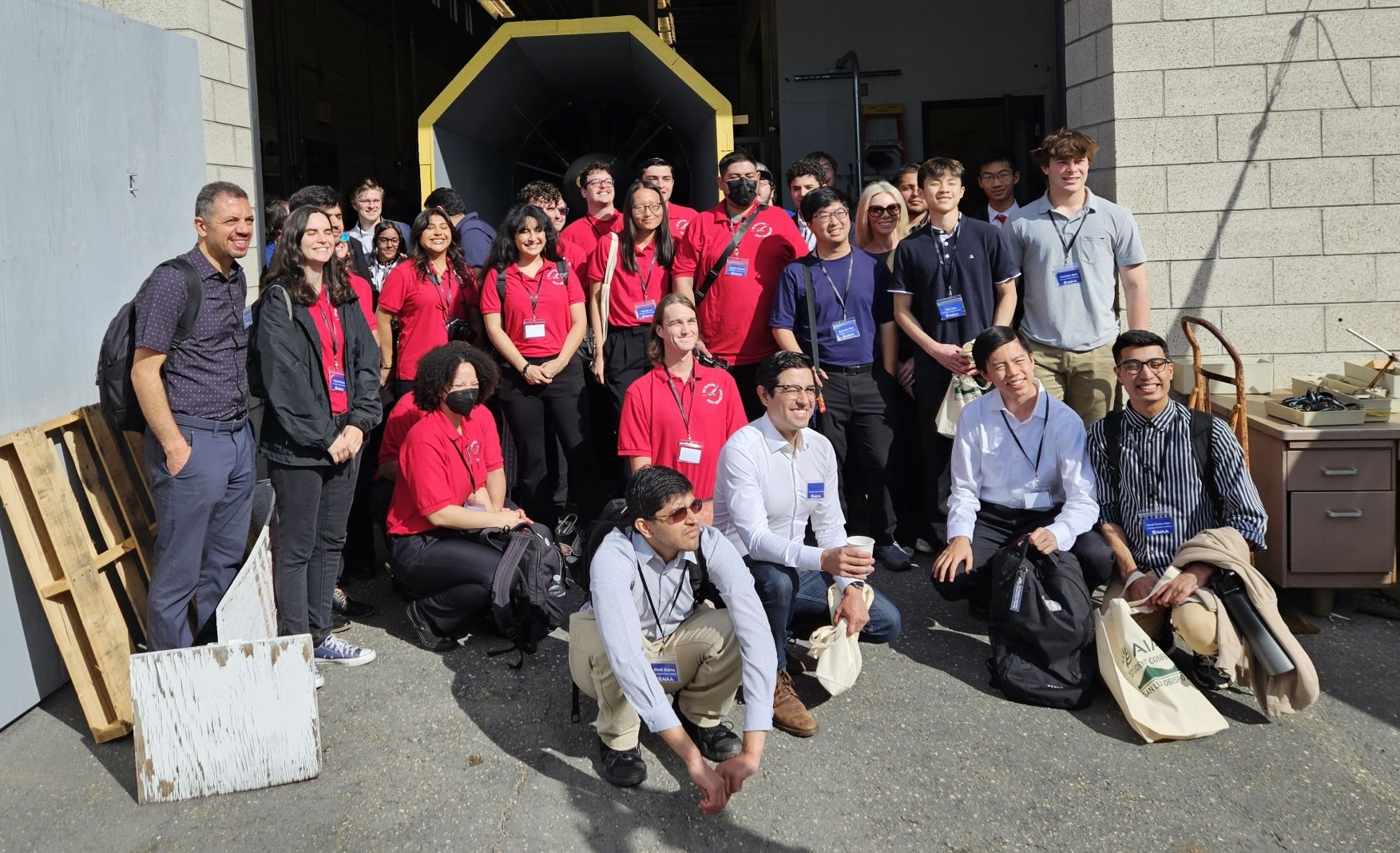
The 2026 AIAA Region VI Student Conference was held 21–22 March at California Polytechnic State University, San Luis Obispo. The event brought together nearly 150 attendees from 31 universities and high schools, representing a broad range of AIAA student branches. Participants delivered 53 presentations across high school, team, undergraduate, and graduate categories, highlighting impressive talent and innovation in aerospace.
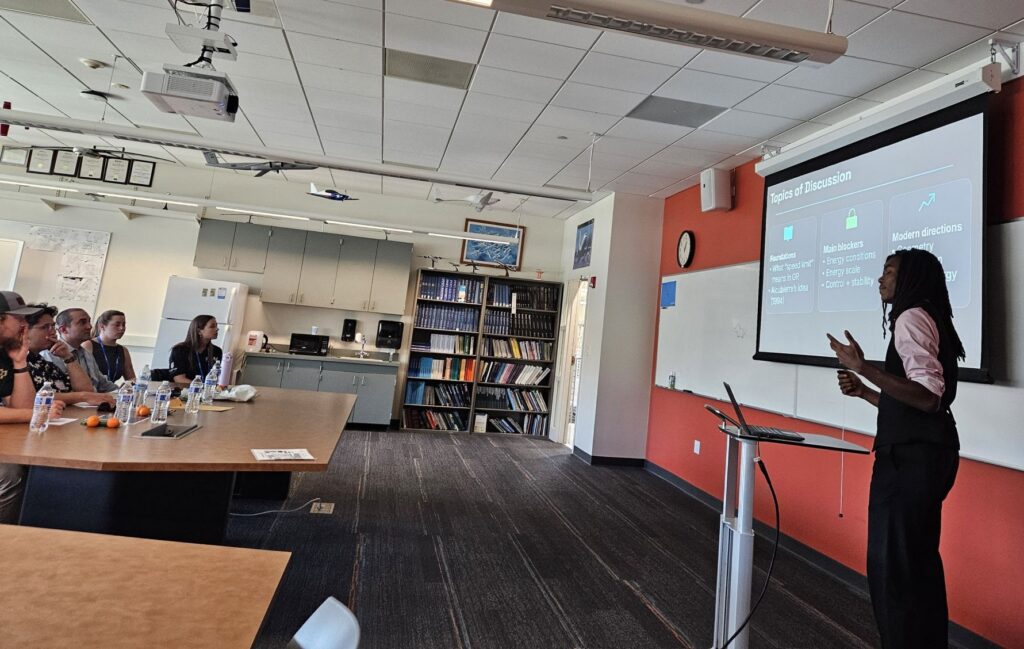
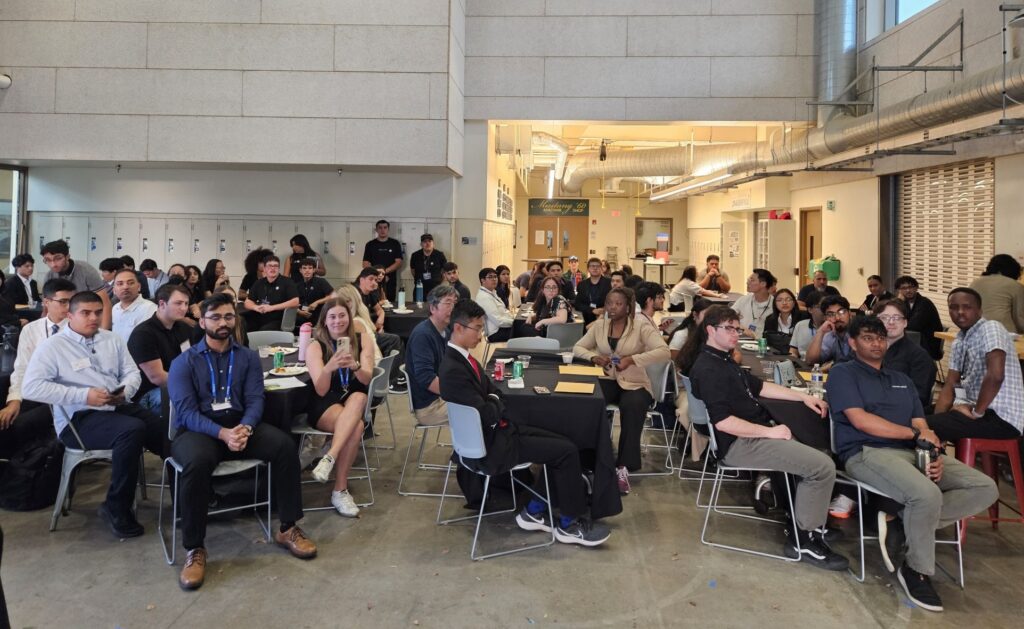
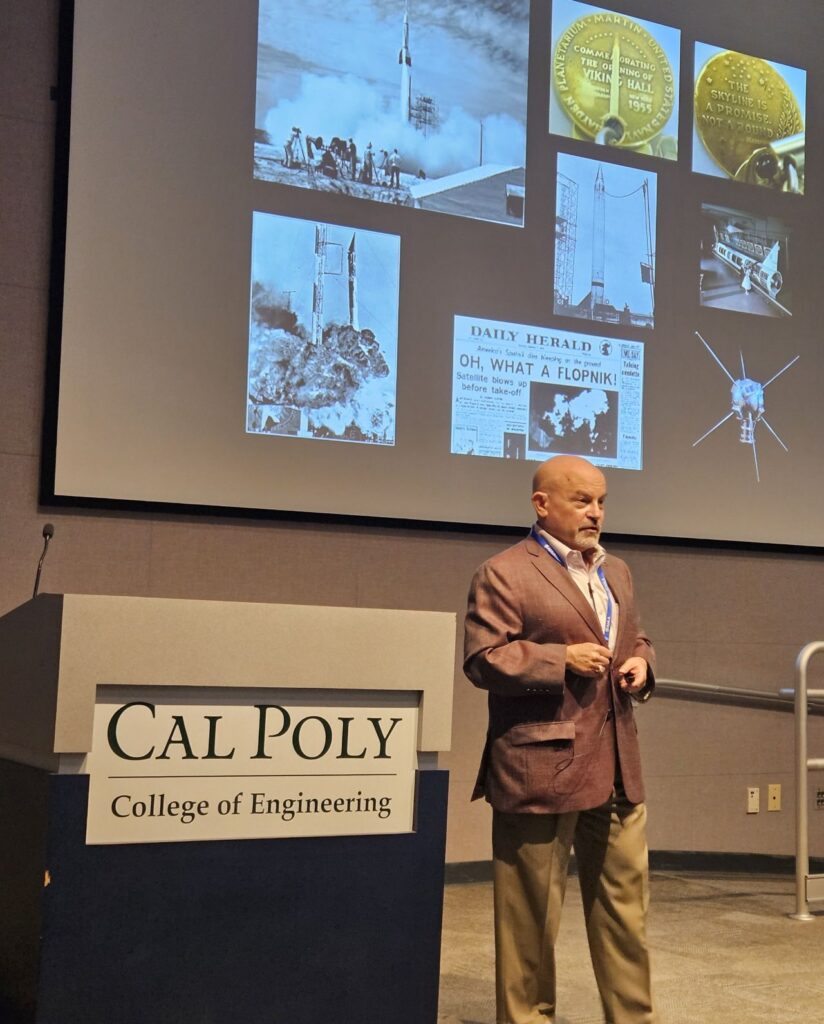
Attendees heard from an engaging keynote speakers including David Smith, CEO of the Mojave Air and Space Port, who spoke about his career, from first joining the Air Force in 1982, though his experiences becoming a master navigator with over 3,000 flying hours, and his service as a Brigadier General in the California Guard. He described how the Mojave Air and Space Port has over 60 companies engaged in light industrial to highly advanced aerospace design, production, flight test and research to heavy rail industrial operations, and the positive economic impact the port has on the surrounding area and its residents.
Jon Arenberg, Fellow at Northrop Grumman, shared his journey that led him to be passionate about science and exploration, and eventually led him to become Chief Mission Architect, Science & Robotic Missions at Northrop Grumman. He engaged the audience with stories of his time leading the creation and successful deployment of the James Webb Space Telescope.
Tours
Tours were a central part of the conference, offering attendees a closer look at Cal Poly’s Aerospace Engineering facilities and the nearby San Luis Obispo County Airport hangars.
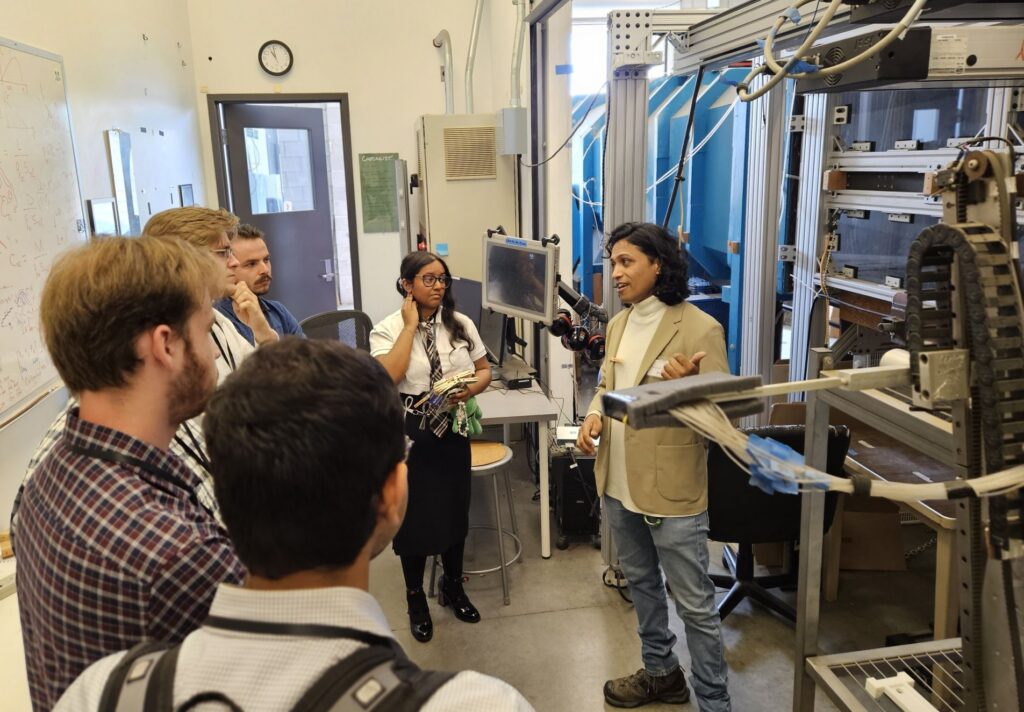
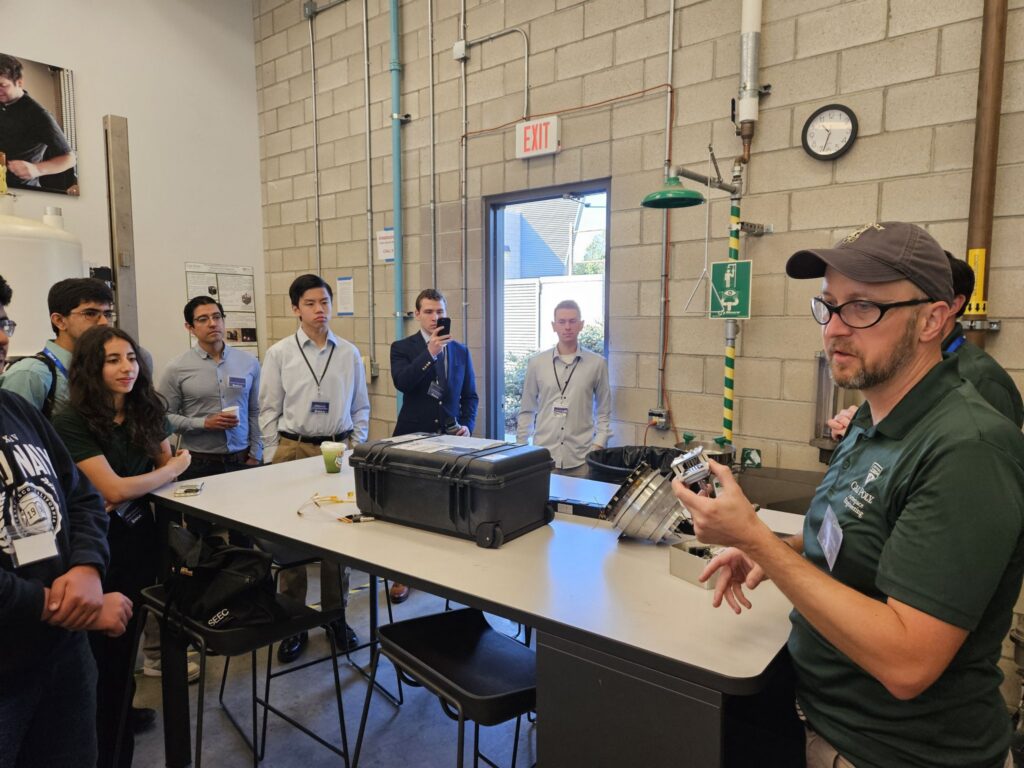
At Cal Poly, attendees visited several advanced laboratories, including the Low-Speed Wind Tunnel and the Thermal Vacuum Chamber (TVAC) in the Space Environments Laboratory. The wind tunnel supports both coursework and independent student projects, providing hands-on experience with industry-relevant testing methods. The TVAC, donated by MDA US Systems, allows students to test spacecraft components under simulated space conditions, giving them practical experience with extreme thermal and vacuum environments.
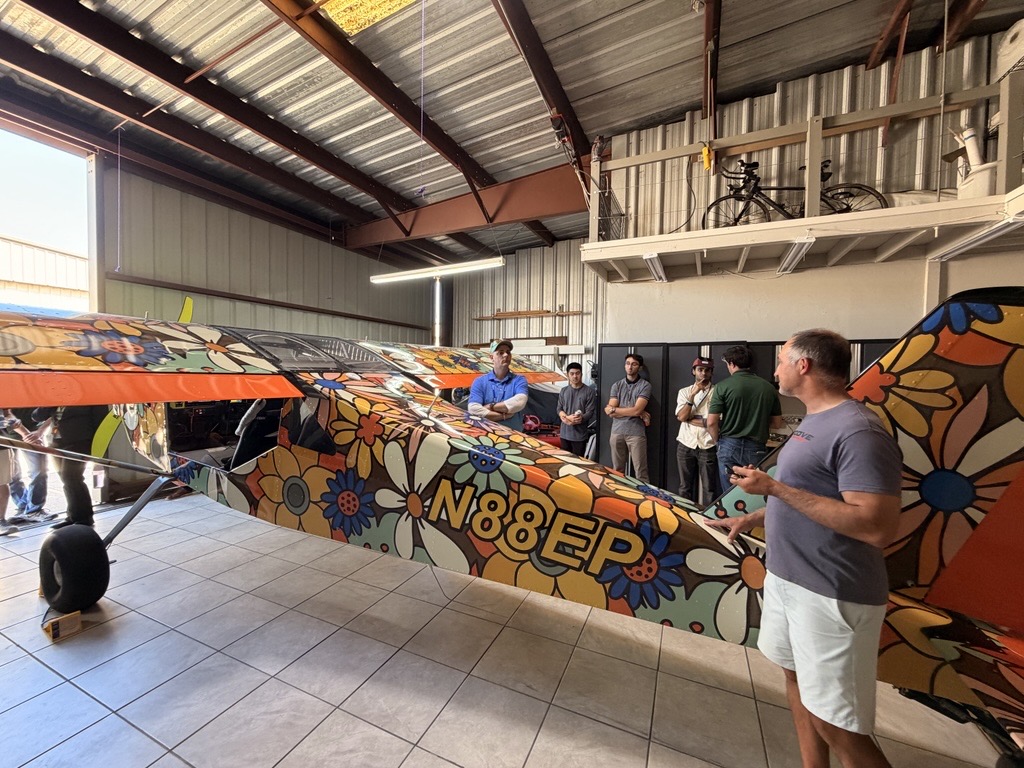
On 22 March, 41 attendees toured the San Luis Obispo County Airport hangars. They viewed student-supported aircraft, including the Carbon Cub UL—recently setting new altitude records—and a Rans S-21 Outbound kit plane completed by students. The tour was led by Eric Paton and Neil Paton, who mentor students in AERO 471, a hands-on aircraft construction course currently building a Vans RV-12. The program provides valuable, real-world experience in aircraft assembly.
Teamwork Made the Event a Success
The conference was made possible through the support of Space Information Labs and Northrop Grumman, along with contributions from the AIAA Foundation, AIAA Region VI, and the AIAA Central Coast of California Section. Additional support came from the Cal Poly Foundation, including the Aerospace Engineering Department, the College of Engineering, and Associated Students, Inc. (ASI).
Special thanks to student organizers Clara Greenberg, Denis Gonzalez-Reyes, Blake Shaffer, and Javi Cruz, along with faculty advisor Nandeesh Hiremath. Appreciation is also extended to Region VI Deputy Director of Education Jeff Puschell, Head Judge Ramuhalli Krishna, and the many judges who contributed to the event’s success.
Region VI Winners
High School Category
- First Place: “A Heuristic Load-Balancing Algorithm for Multi-Mesh Simulations on GPUs,” Leo Sitaraman, Homestead High School (Cupertino, CA)
- Second Place: “Passive Flow Control with Turbulators on the ROAMX-0201 Airfoil at Low Reynolds Numbers,” Daniel Guo, The Bishop’s School (La Jolla, CA)
- Third Place: “A Novel Method for Reorienting CubeSats Using Non-Commutative Internal Movements,” Gregory Shechter, Palos Verdes High School (Palos Verdes Estates, CA)
Undergraduate Category
- First Place: “Residual Learning of Universal-Variable Corrections for Fast Lambert Transfers,” Drew Stannard-Stockton, California Polytechnic State University San Luis Obispo (San Luis Obispo, CA)
- Second Place: “GPU Acceleration of 2D Panel Methods for Rapid Aerodynamic Prediction,” Gisselle Frisby, California State University, Long Beach (Long Beach, CA)
- Third Place: “Two-Mode Adaptable Camber Wing Design for Subsonic Cruise Efficiency,” Samuel Thomas Joseph, San José State University (San Jose, CA)
Graduate Category
- First Place: “SpaceOTTER – Space Optically Tracked Testbed for Experiments and Research,” Alexander DeBartolo, California Polytechnic State University San Luis Obispo (San Luis Obispo, CA)
- Second Place: “Development of a 3 Degree of Freedom Manipulator for Use on a Planar Microgravity Testbed,” Jackson Cordova, California Polytechnic State University San Luis Obispo (San Luis Obispo, CA)
- Third Place: “Design and Optimization of Repeat Ground Track Constellation for Discontinuous Regional Coverage,” Paige Jewell, California Polytechnic State University San Luis Obispo (San Luis Obispo, CA)
Team Category
- First Place: “Development and Testing of an Autonomous Guided Parafoil for Small Suborbital Payload Recovery,” Nicholas Lototsky and Andrew Lana, University of Southern California (Los Angeles, CA)
- Second Place: “Particulate Contamination Detection and Targeted Removal for Telescope Optics,” Jack Clark and Alisa Higuchi, University of Southern California (Los Angeles, CA)
- Third Place: “Design and Construction of Water Electrolysis Propulsion System,” Nathan Huynh and JC Garcia, University of Southern California (Los Angeles, CA)