

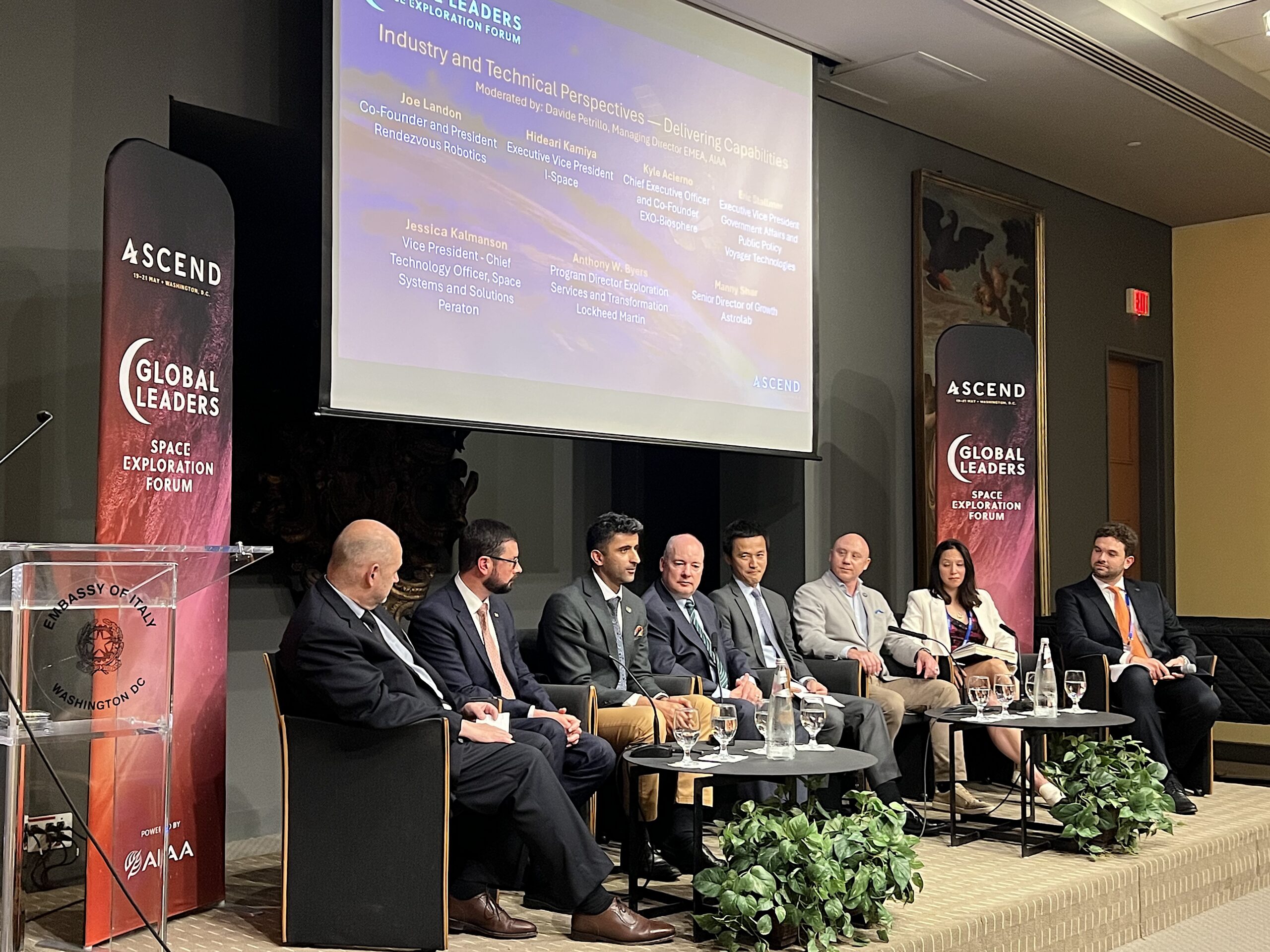
AIAA hosted about 75 space leaders for the inaugural Global Leaders Space Exploration Forum to advance the technical, operational, and policy dialogue needed to ensure that humanity’s expanding presence in space is prosperous, safe, and sustainable. The half-day event during ASCEND 2026 was held at the Embassy of Italy in Washington, D.C., together with the Lunar Policy Platform (LPP).
Invited attendees were senior leaders from government space agencies, commercial space enterprises, and international delegations. The gathering reflected a shared recognition that the window to establish durable frameworks for interoperability, safety, and long-term sustainability in low Earth orbit (LEO) and the cislunar domain is open now – and that it requires candid, high-level exchange among those who are designing, operating, and supporting these systems.
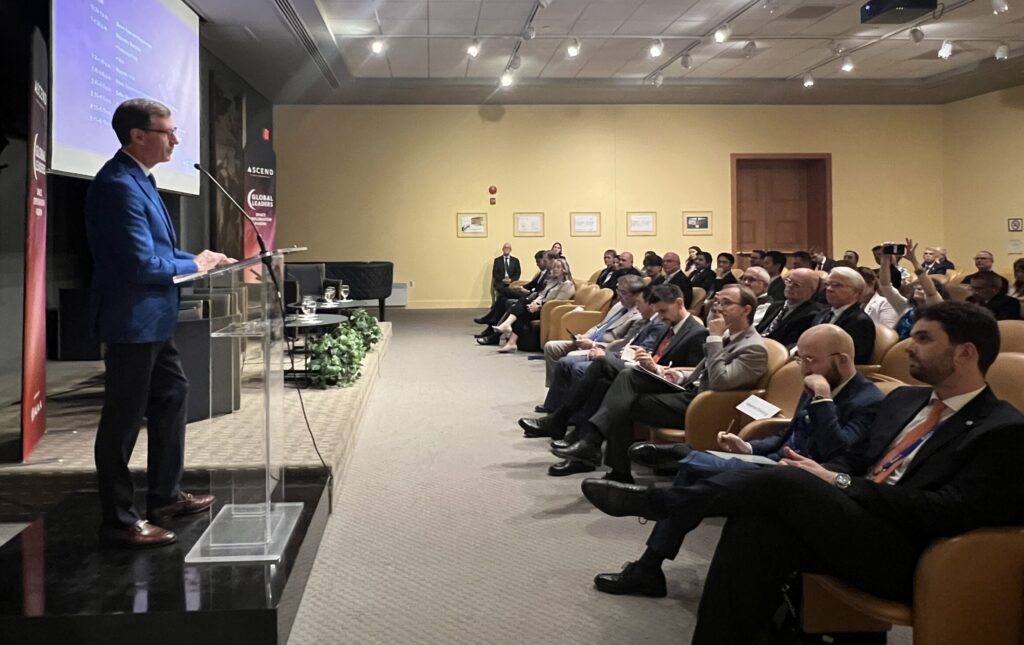
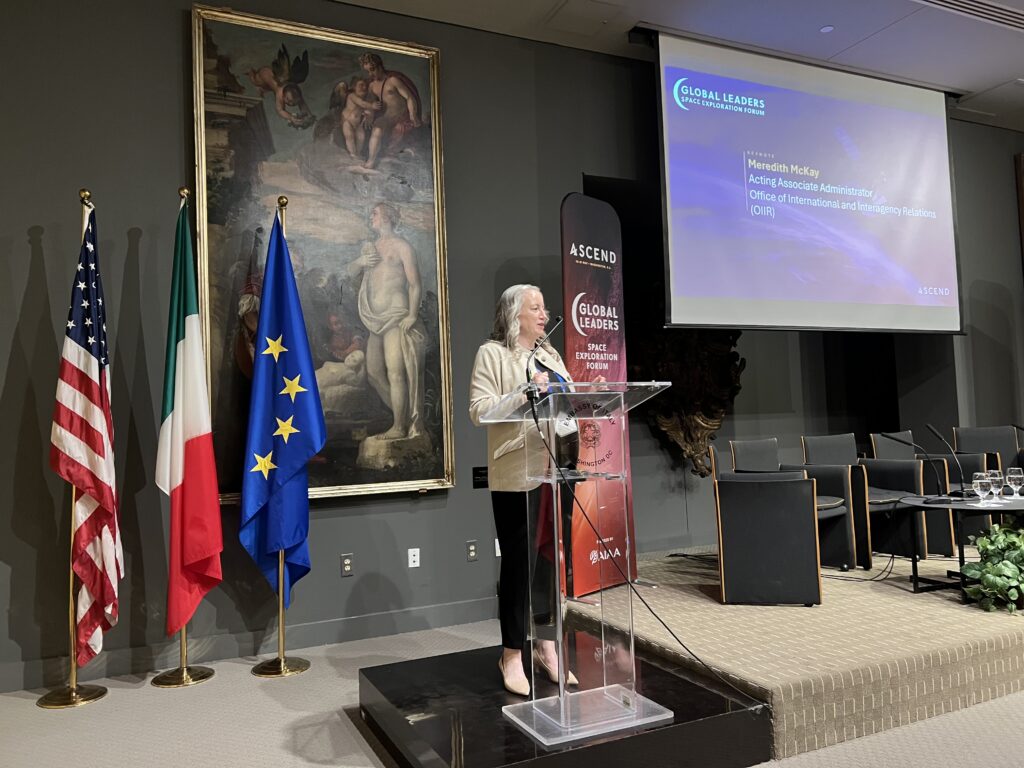
Meredith McKay, NASA Acting Administrator for International and Interagency Relations (OIIR), delivered the opening keynote address. McKay addressed the contours of a new era of space exploration taking shape under NASA’s recently announced IGNITION program, introduced by NASA Administrator Jared Isaacman, setting an ambitious and forward-looking tone for the conversations that followed.
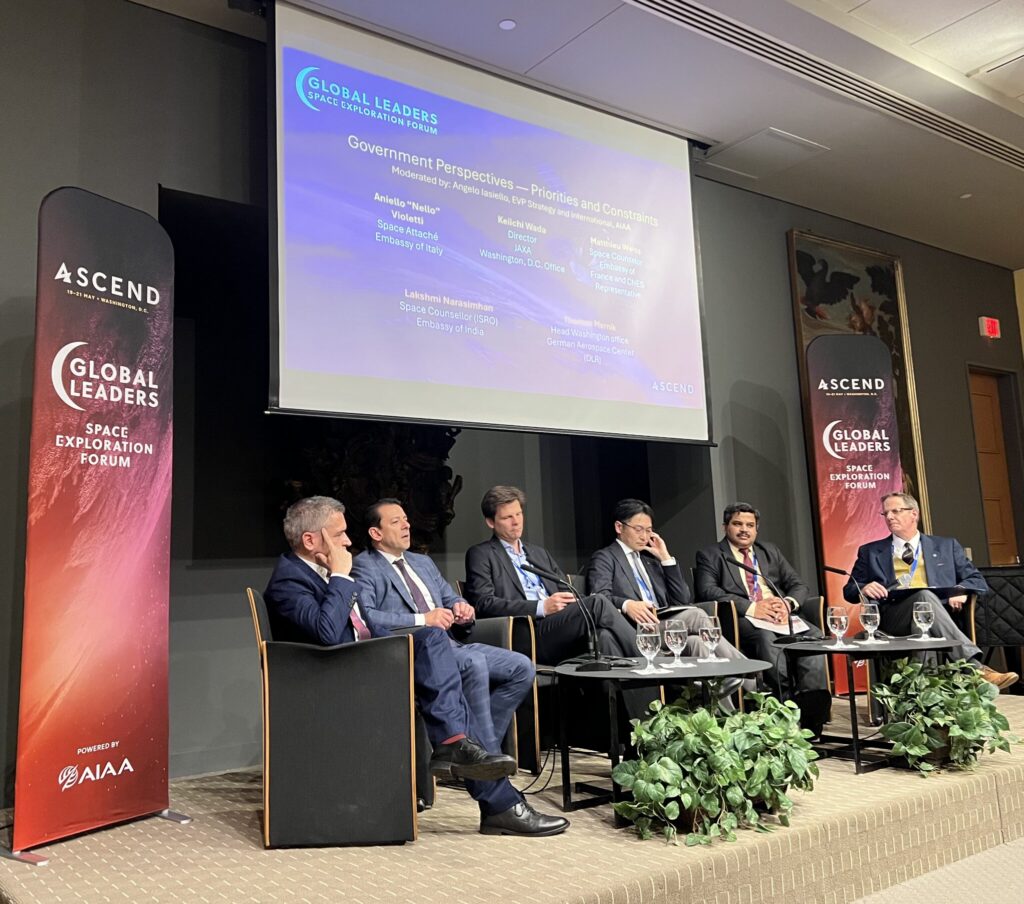
The first panel convened national representatives from Italy, France, Germany, India, and Japan to map their shared priorities and surface the constraints each country faces as the space sector enters a more complex, multi-actor phase of activity. The discussion was structured to identify where international collaboration can be most meaningfully deepened – and where divergent interests or capacity gaps present real challenges that coordination alone cannot resolve.
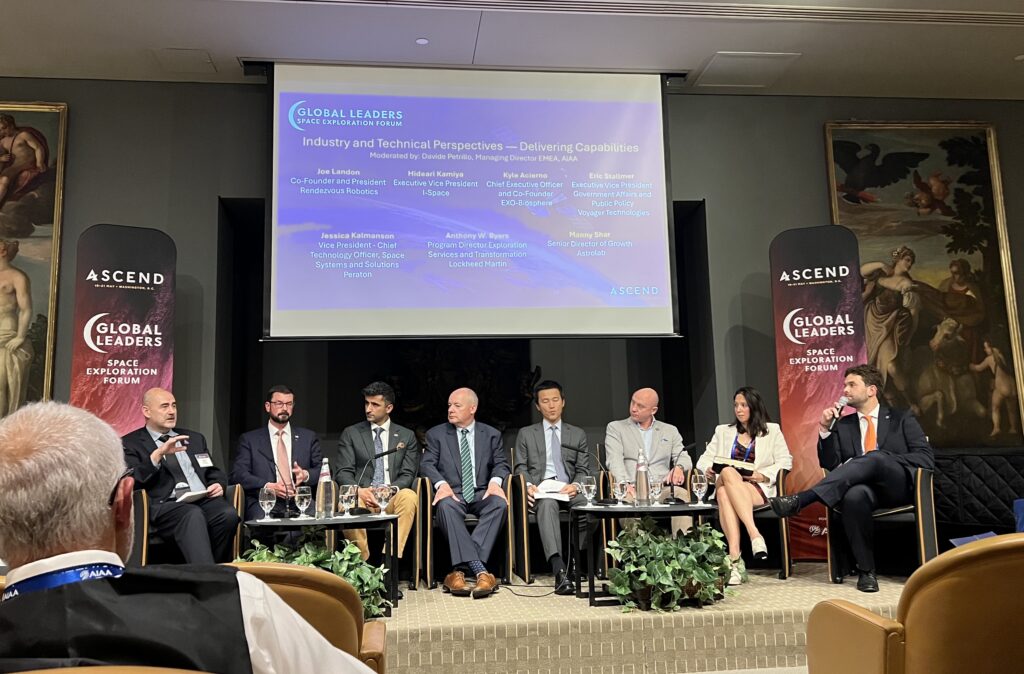
A second panel shifted focus to the commercial sector, featuring thought leaders grappling with the practical challenges of building and sustaining infrastructure in LEO, cislunar space, and on the lunar surface itself. Participants examined both the opportunities and the hard limits of what commercial providers can deliver and where government partnership remains essential to underwrite long-term capability development.
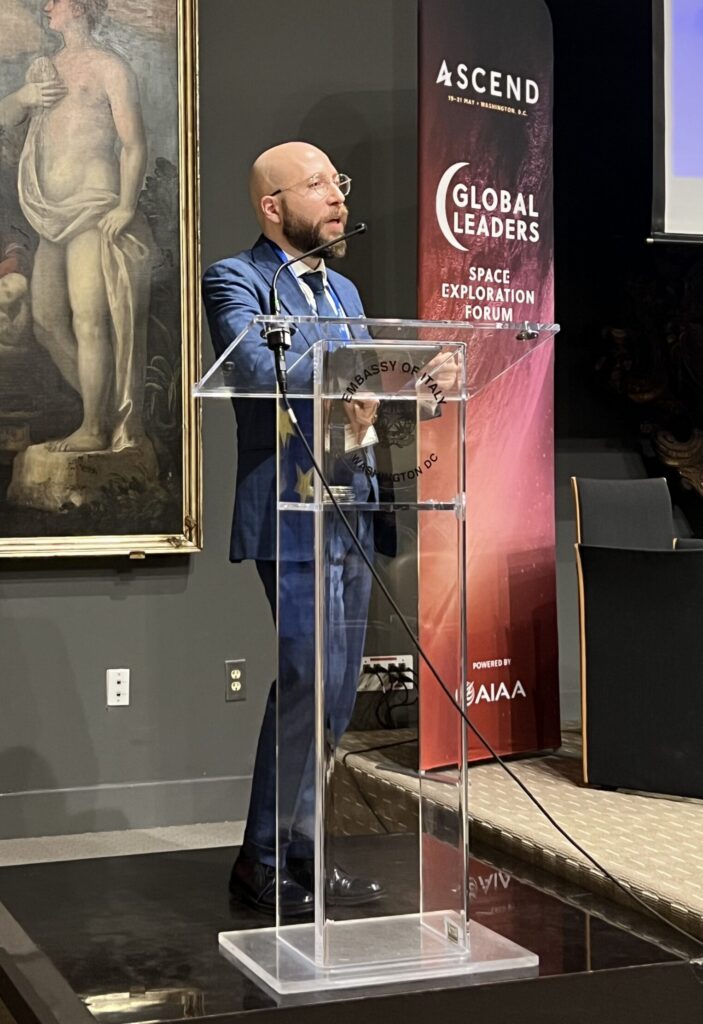
The forum concluded with an interactive roundtable that drew threads from the day’s earlier discussions into a structured effort to identify common ground, surface key disagreements, identify technical gaps, and clarify where the strongest opportunities for international partnership lie. Participants weighed in on which technical and operational capabilities are most urgently needed, which regulatory and economic barriers are most critical to address, and how different actors can coordinate without losing competitive or strategic flexibility.
The forum was conducted under Chatham House Rules, preserving the candor that makes gatherings of this kind genuinely productive. An anonymized report summarizing key takeaways will be prepared, intended to inform implementation steps and sustain the dialogue at future events.