
AIAA has identified 30 exceptional young professionals who are advancing aerospace through technical achievement, innovation, and leadership. The 30/30 Program highlights individuals in their 30s who are driving breakthrough research, advancing next-generation technologies, leading impactful programs and teams, and accelerating innovation across aerospace. They are presented in seven different technical categories. Meet the winners in our Propulsion and Energy Category below. And learn about the full list of 30 exceptional individuals at aiaa.org/get-involved/honors-awards/awards/30-30-recognition-program.
Propulsion and Energy

Daniel Castro Ortega
Senior Propulsion Engineer
Lockheed Martin Corporation
Daniel Castro is known to his colleagues for his balance of propulsion defense innovation and proactive aerospace community leadership. Castro joined Lockheed Martin Aeronautics in 2018, and is currently excelling as the engine mechanical and systems engineering integrator for a major SkunkWorks® program. In this role, he manages the vital bridge between complex hardware and vehicle architecture. Castro has steered his team to deliver critical milestones under compressed timelines, securing a 15% program cost reduction and positioning the platform for further funding.
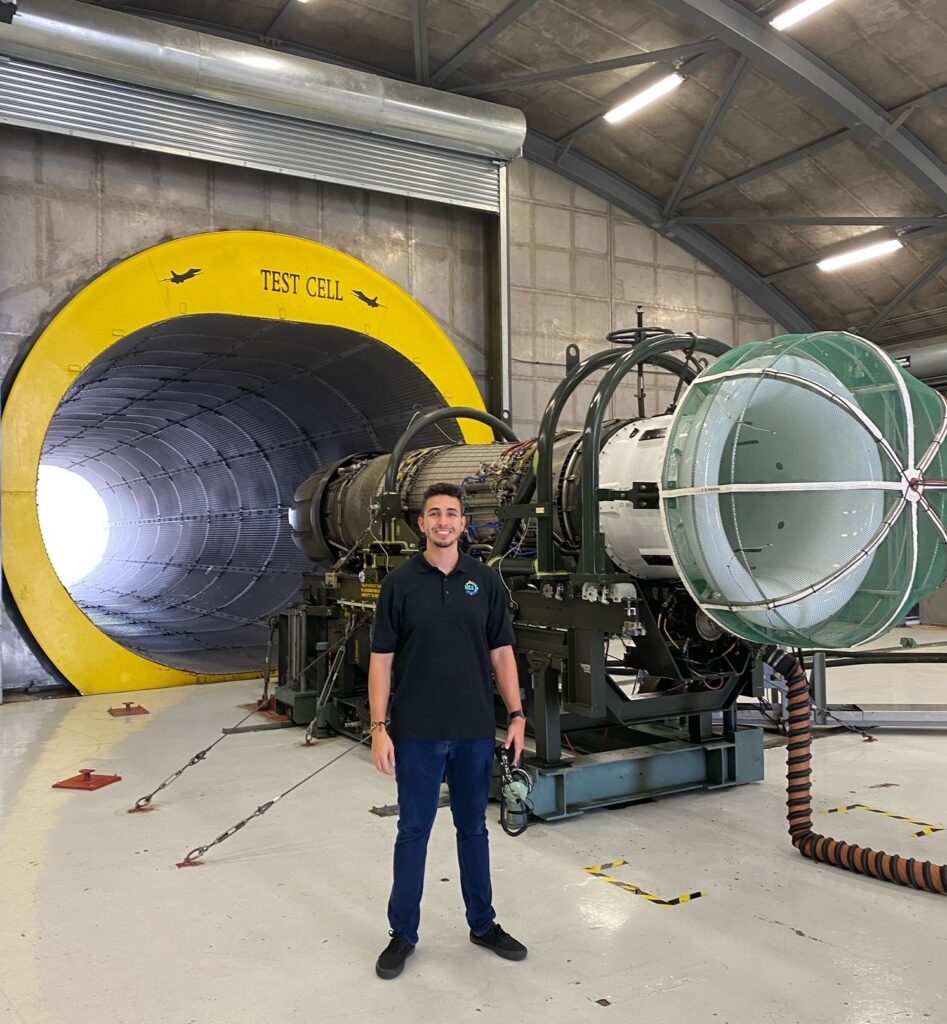
Castro’s technical contributions significantly advance propulsion systems and engine integration. Born in Columbia and with Bachelor and Master of Science degrees in Aerospace Engineering from UCF and UCLA, he leads Skunk Works® projects focused on engine development and model-based systems engineering (MBSE). Castro recently led and moderated the LM Inlet Systems Symposium, an internal event that gathered inlet practitioners across the corporation for a one-day exchange of technical projects. He is the AIAA INPSI (Inlet Nozzle Propulsion Systems Integration) Deputy TDC (Technical Discipline Chair) for AIAA SciTech Forum 2027, overseeing the selection of INPSI papers to be presented during the forum and coordinating the logistics.
Castro is leaving a permanent mark by rewriting the blueprint for early-career engagement. As project manager for the AIAA AVIATION Forum 2024 RECAP initiative, he restored the strategic framework to revitalize early-career conference participation by securing company budget, orchestrating logistics, and providing direct mentorship. Within Lockheed Martin, he actively fosters a collaborative culture that empowers junior engineers. Castro is already establishing the professional infrastructure and human talent necessary to sustain the future of aviation.
Oliver Jia-Richards
Assistant Professor, Aerospace Engineering
University of Michigan
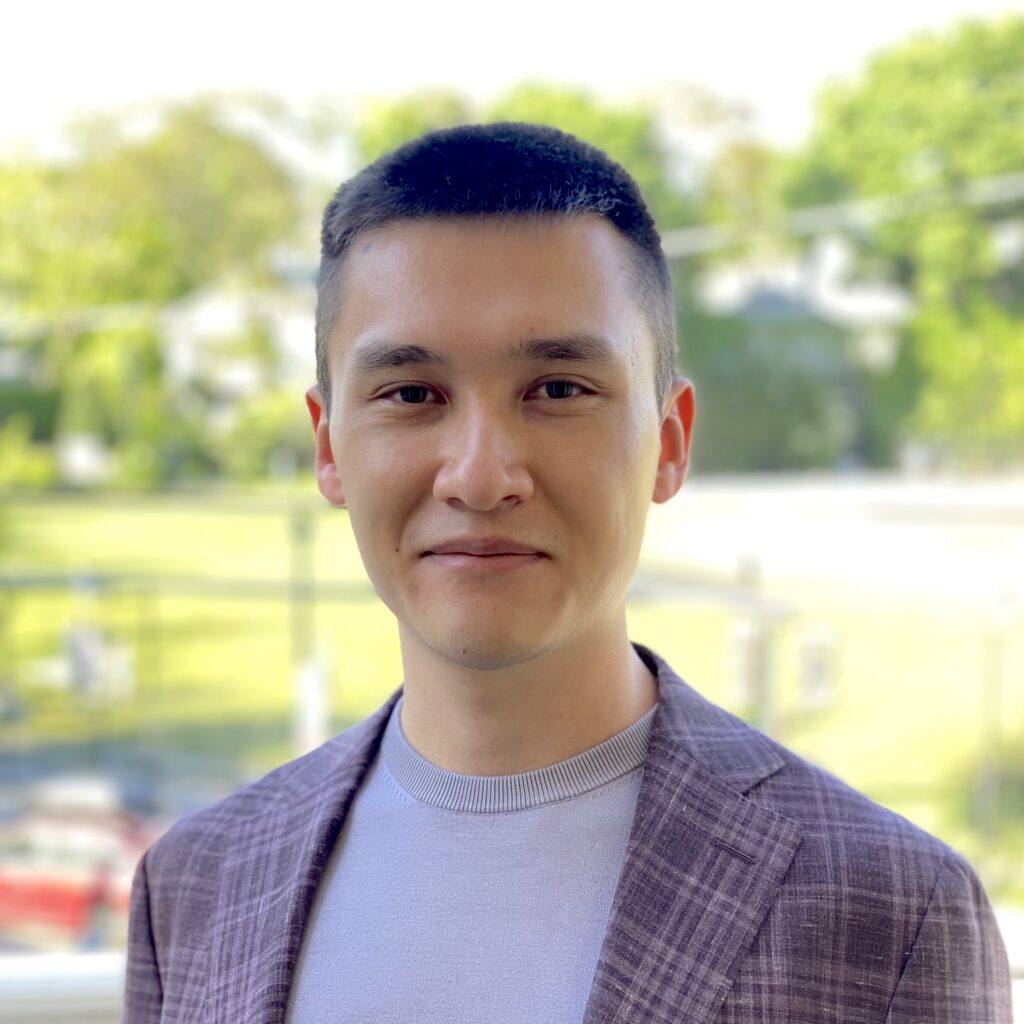
Oliver Jia-Richards’ research group has made several contributions in the area of space mobility, studying both the physics of in-space propulsion systems and their applications to spaceflight mechanics. Notable contributions include collaborating on the first end-to-end performance analysis of an iodine-based electric micropropulsion system using in-space flight data. The resulting publication is currently among the top 1% of most-downloaded papers from the Journal of Propulsion and Power. He has also made several contributions to the modeling and understanding of electrospray thrusters. Since starting his doctorate in 2019 he has published 16 journal articles, many in AIAA journals.
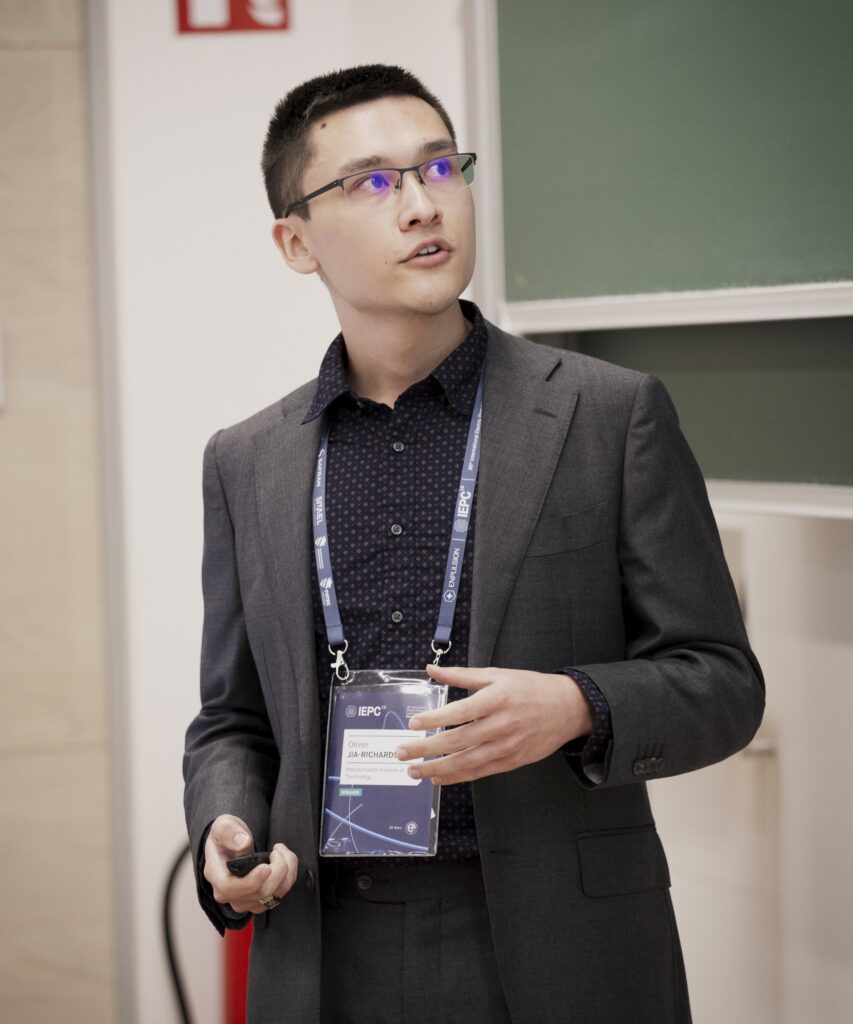
Jia-Richards has also made significant contributions to student mentorship and teaching. He has taught spacecraft attitude dynamics and astrodynamics to a total of 660 undergraduate and graduate students during his first four years at U-M, consistently receiving very high student evaluations. He co-developed a new problem solving initiative course on space debris remediation in collaboration with the U-M Law School. He has also mentored several students through U-M’s Undergraduate Research Opportunities Program and Summer Undergraduate Research in Engineering program, and is an active member of his department’s Undergraduate Committee
For AIAA he is a member of both the Electric Propulsion and Space Systems technical committees; previously was the Deputy Director, STEM K-12 for AIAA Region III; assists in running the AIAA Middle School Essay Contest; and is newly serving as a University Chair for the AIAA Michigan Section.
Suo Yang
Associate Professor, Mechanical Engineering
University of Minnesota
Suo Yang is a visionary leader in aerospace propulsion whose work bridges the gap between fundamental multi-physics modeling and actionable technologies for high-speed, high-efficiency, low-emission, and low-noise flights. As a tenured Associate Professor at the University of Minnesota, his trajectory is marked by an elite “Triple Crown” of Young Investigator/Faculty awards from DARPA, ONR, and AFOSR—a distinction that cements his status as one of the nation’s premier young pioneers in defense and commercial aerospace research.
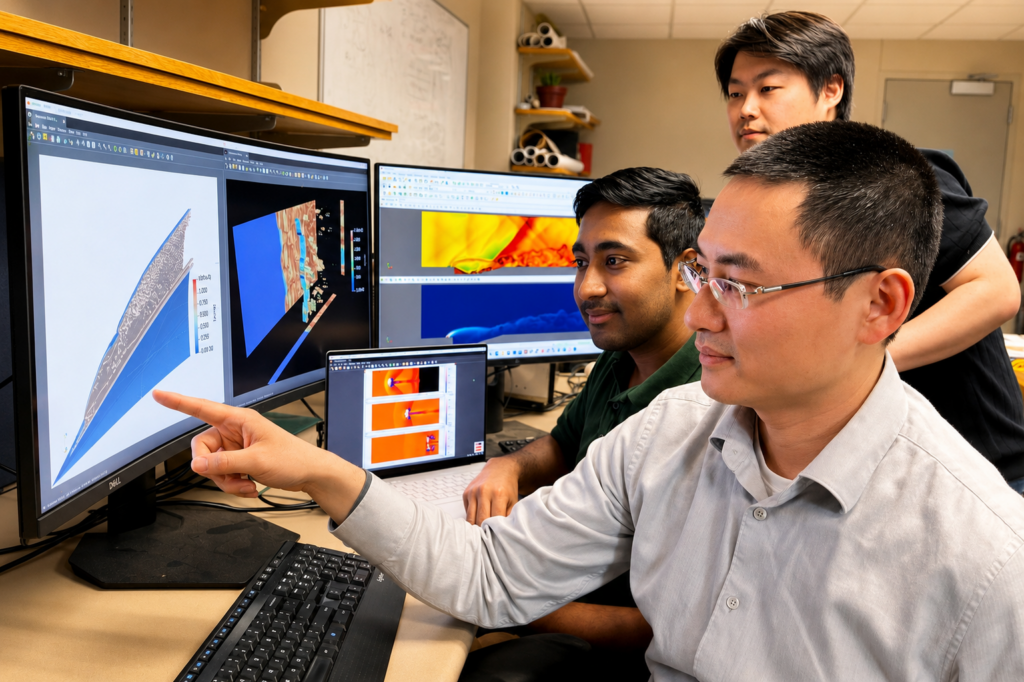
Yang is leaving his mark by solving critical bottlenecks in aerospace propulsion through high-fidelity numerical simulation. His breakthroughs include pioneering 3D simulation capability for turbulent plasma-assisted ignition in scramjets, first-principled phase change modeling for hypersonic shock-droplet interaction in multiphase detonation, simulation-based propulsion control, and discovering the micro-jet structures that govern oblique detonation stability (a discovery that is transitioning into Mach 9+ flight testing). His predictive models and accelerated robust algorithms have been directly adopted by industry titans like Rolls-Royce and Mitsubishi Heavy Industries to optimize next-generation engines.
Beyond technical mastery, Yang is a sustained technical steward within AIAA. Currently serving as the High-Speed Air-Breathing Propulsion (HSABP) Technical Discipline Chair for both AIAA SciTech Forums 2026 and 2027, he is actively shaping the community’s future by organizing high-impact panels and mentoring students toward prestigious global honors like the AIAA Martin Summerfield Propellants and Combustion Graduate Award. Yang is not merely participating in the aerospace field; he is fundamentally architecting the computational tools and leading the professional communities that will define the next era of aerospace excellence.