Aircraft manufacturers weigh the return of the superjumbos


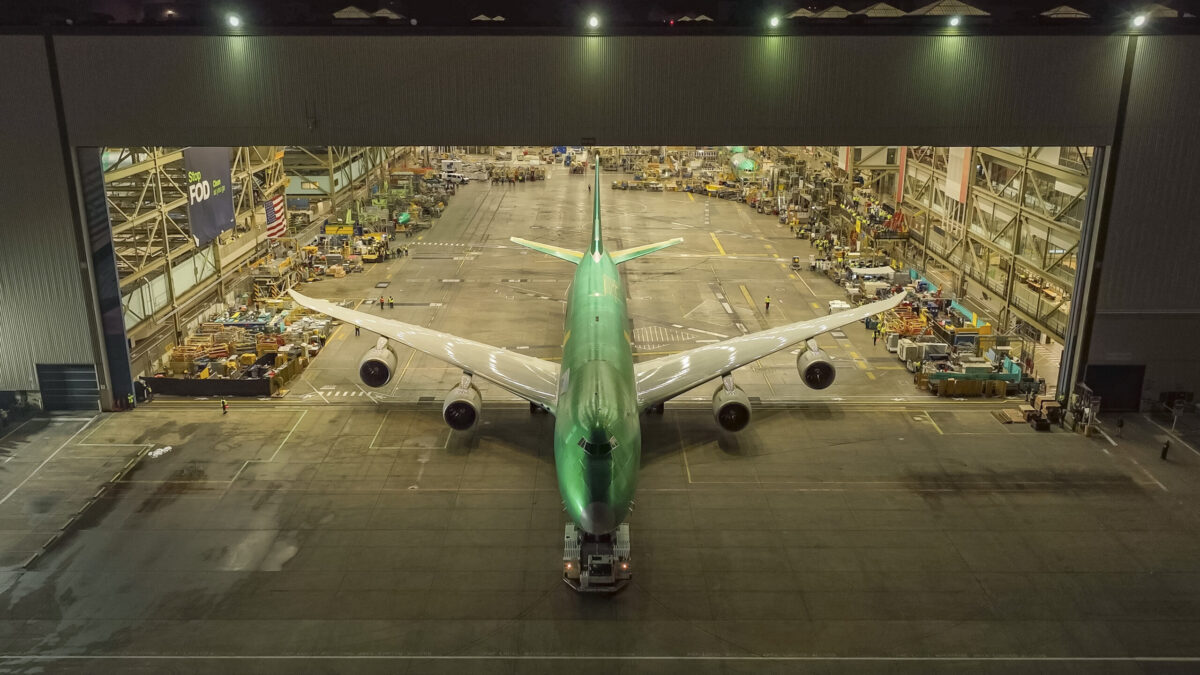
When the final 747 rolled out of Boeing’s Everett, Washington factory in December 2022, it marked the end of an era.
The decision to end production, announced two years earlier, came after years of declining popularity for the superjumbo jet as passenger airlines moved to smaller, more fuel-efficient models. The 2020 downturn in flying prompted by the COVID-19 pandemic sealed the fate of this four-engined design, sometimes referred to as “Queen of the Skies” for its sheer size and distinctive “hump” atop the fuselage.
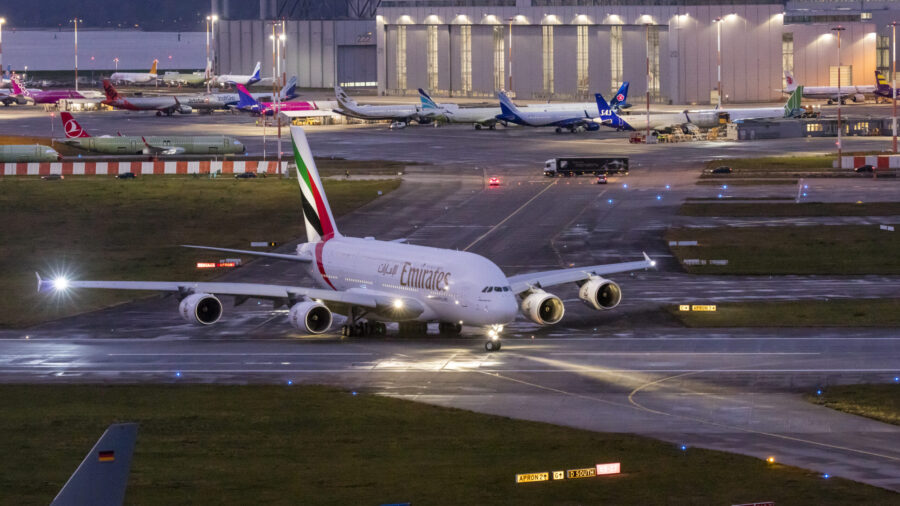
Airbus’ iconic A380 faced a similar fate in 2021, after the final aircraft was delivered to Emirates. Despite its reported popularity with passengers, the design never reached its sales targets. Airbus sold just over 250 aircraft versus an initial target of 700.
The biggest factor behind the demise of both planes was the shift in how people travel. When these massive jets were in development, the hub-and-spoke model — in which airlines flew passengers on large jets between major airports, before switching to smaller planes for the final destination — reigned supreme. Since the 1990s, the rise of budget airlines and improvements to aircraft engines have made point-to-point travel, or flying direct to your destination, more feasible. The economies of scale provided by larger aircraft are also no longer a given, with increased fuel efficiency on smaller jets and higher fuel costs hitting the bigger jets harder.
Even so, hundreds of superjumbos are still flying today. Cargo is the major business, but these airliners are still in use for passenger travel with airlines, namely Emirates, which built its business model around being a major aviation hub. About 300 747 freighters remain in service, versus around 100 passenger aircraft, and around 200 A380s, largely for passenger service as Airbus never launched a dedicated freighter.
Now, with the pandemic beginning to recede from travelers’ memories and air traffic soaring, there are signs the superjumbos could eventually make a comeback. Emirates has shown interest. The airline’s November order of 65 Boeing 777-9s, announced during the Dubai Airshow, also included a commitment from Boeing to undertake a feasibility study of a stretched variant, the 777-10.
“Emirates has been open about the fact that we are keen for manufacturers to build larger capacity aircraft, which are more efficient to operate especially with projected air traffic growth and increasing constraints at airports,” said Sheikh Ahmed bin Saeed Al Maktoum, chairman and CEO of the airline and its parent entity, Emirates Group, in a press release.
Emirates President Tim Clark is another executive pushing for new superjumbo designs. The airline is currently the largest operator of Airbus A380s, the biggest passenger jet in service today, and plans to grow its fleet, bringing more planes back out of storage. He’s also called for Airbus and Boeing to develop replacements.
During a media roundtable in Dubai, he told reporters the notional 777-10 is “the only one that’s going to come anywhere near the seat count we’d like” when Emirates decommissions its A380s toward the end of the next decade and into the early 2040s.
“That’s why we’re thinking that somewhere in the [20]30s, this aeroplane would be plugged into the fleet,” he said of a possible larger 777.
Also at the Dubai show, Christian Scherer, in his last public appearance as CEO of Airbus’ commercial aircraft business, said the manufacturer is looking at stretching the A350. That jet can seat up to 410 passengers in a mixed-class configuration and has a maximum range of 9,700 nautical miles for its ultra-long-range model, compared to over 600 passengers and a range of 8,000 nautical miles for the A380.
Customers are asking Airbus to “please look at stretching, because it could be a formidable solution for us as we grow. And that’s what we’re doing,” Scherer said, according to a transcript provided by Airbus.
But does a larger aircraft still make sense in today’s world? It’s worth considering why the superjumbos failed. According to Graham Simons, author of the 2014 book “The Airbus A380: A History,” the model was first conceived as a challenger to the 747, which debuted in 1968 at the Everett assembly building in front of the world’s press.
Airbus started developing this rival airliner in the 1990s, and market conditions appeared favorable. “Emirates were coming up with a concept of doing long-distance flights like Eastern Europe to Dubai, Dubai out to Singapore then Singapore out to Australia,” Simons said in an interview. “There looked like there was a market there for the A380s.”
But, according to Simons, this had shifted by the time the A380 began passenger service in 2007. The debut, delayed by a wiring problem, meant the aircraft landed in a market in which the big charter carriers were beginning to be outpaced by airlines like Ryanair, whose model relied on flying short-haul aircraft several times a day rather than filling a giant jet.
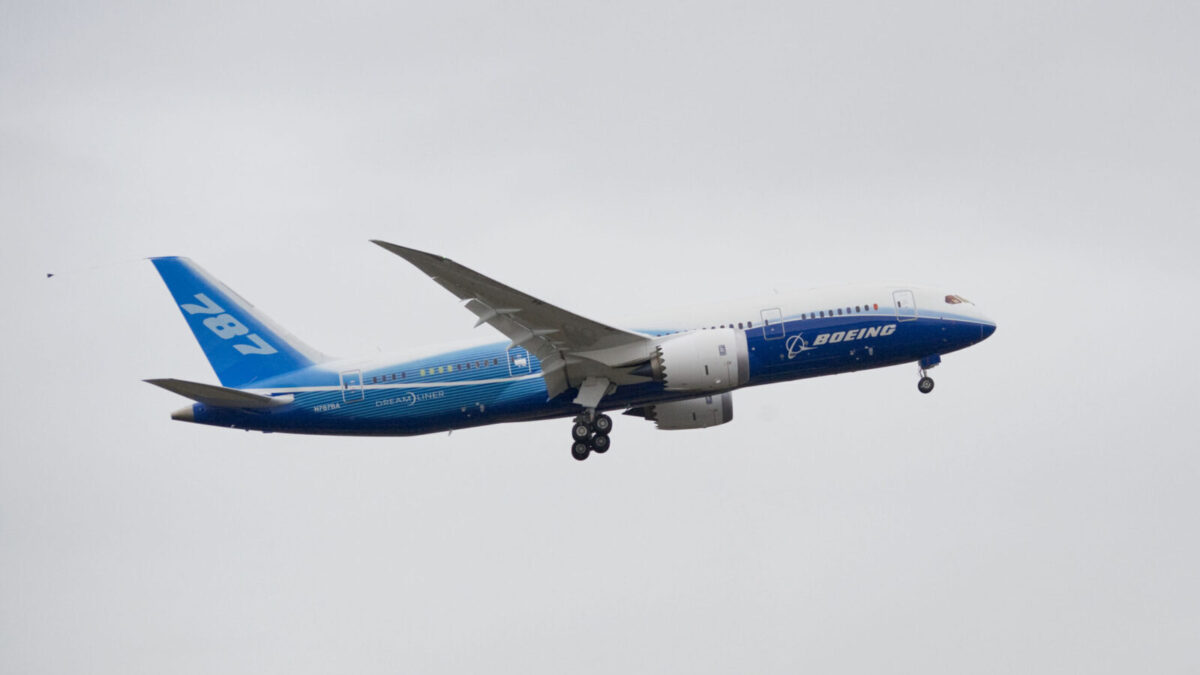
Compounding the challenge was Boeing’s announcement in 2003 that it would develop the 787 Dreamliner, featuring lightweight composites to reduce weight and a more fuel efficient engine than that of the A380. This jet first flew in 2011 and changed the economics for airlines, allowing them to be equally profitable with a smaller aircraft.
While the 787 racked up orders, the now 40-year old 747 began to look increasingly expensive by comparison. By 2022, it was officially the end of the superjumbos.
Today, the conditions favoring smaller jets are, if anything, more entrenched, with the ever-growing popularity of budget airlines and an increased focus on fuel efficiency as airlines seek to meet emission targets. But according to John Strickland, an independent analyst who formerly worked in route networks and planning, there are still reasons to support bringing back the superjumbos.
“I’ve always bought into the macroeconomic hypothesis of Tim Clark’s that if we look at growth, airport capacity is set to run out by the 2030s,” he said, referring to the lack of space to expand in many major airports. “If large aircraft are not available, what are they [airlines] going to do?”
The International Air Transport Association said in December it projects 7.3% growth in air traffic in the Asia-Pacific region in 2026, while the Middle East will increase by 6.1% and Latin America 6.6%. Overall passenger traffic is expected to increase by 4.9%.
While some countries are advancing plans for larger airports, including a planned expansion to Dubai’s Al Maktoum International Airport and the new Navi Mumbai Airport which opened in late 2025, others will have to make do with existing infrastructure. One way to do that while meeting passenger demand is with bigger jets.
On the manufacturing side, the emphasis in recent years has been on smaller widebodies — Airbus with the A350 and Boeing with the 787s — and large single aisles, like Airbus’ A320neo family. Clark has said the current crop of aircraft will not be sufficient to meet his capacity needs once the A380s are retired. It is getting harder to find replacement parts as the aircraft get older, and Emirates plans to phase them out by the 2040s, though it has repeatedly pushed this timeline back.
They would leave a gap in the carrier’s fleet, with the 787 and the A350 only able to seat a maximum of around 400 passengers in a mixed-class configuration, compared to the roughly 600 possible with the A380s.
At the Dubai show, Darren Hulst, Boeing’s head of commercial marketing, said the potential replacement market for 350+ seat jets could be up to 1,000 aircraft over the next 15 years. This compares to annual deliveries of more than 400 aircraft for Boeing’s 737 Max.
In Strickland’s view, Boeing may need to give additional consideration to Clark’s desire for a 777-10, after his push for the 777-300ER ultimately led to a successful jet. That design, debuted in 2004, combined the range of the prior model with a larger capacity to provide a range of more than 6,500 nautical miles and fit up to 355 passengers. Approximately 840 were built over 20 years, making it the best-selling widebody design ever, until it was overtaken by the 787.
As far as enabling technologies, the current crop of engines could also allow for more fuel efficiency for a future superjumbo. Clark said in Dubai “the GE engine has growth in it,”suggesting the GE90 engine that powers the current generation of 777s could handle the increased thrust demands of a larger aircraft. On the other hand, he noted Emirates continues to have performance issues with the the Rolls-Royce Trent XWBs that power the A350s. The engine has had reliability issues, which Rolls has attributed to the hot, dusty conditions in Dubai and is working on addressing. Clark told reporters in Dubai the Rolls engine “does not have the capabilities under our conditions.”
Boeing, Emirates and GE declined to comment for this story. Rolls-Royce said it is working to double the life of the Trent XWB-97 in challenging environments, with the first two phases of improvements certified and “already delivering a 60% increase in time on wing.’’
For Boeing especially, there are additional factors that could influence whether to embark on a new superjumbo. Despite reporting a 30% increase in July-September sales compared to the same period in 2024, the company is dealing with persistent delays with the 777X and facing questions about when it will develop a successor to the 737 MAX.
The feasibility study will also be key in determining whether it makes sense to move ahead with a 777-10. Boeing plans to focus on takeoff performance, Aviation Week reported, to determine whether the aircraft could safely continue to take off and climb even if an engine fails.
Boeing is also looking at how factors such as the weight of the aircraft and how fast it can climb would be affected by a potential stretch, Justin Hale, head of customer for the 777X, told the publication.
Despite his enthusiasm for a 777-10, Clark knows it won’t be coming anytime soon. “Boeing has their hands full, and we all know that,” he said in Dubai.