Successful reentries and extreme temperatures: The year in thermodynamics
 By Cat Hofacker
 By Cat Hofacker
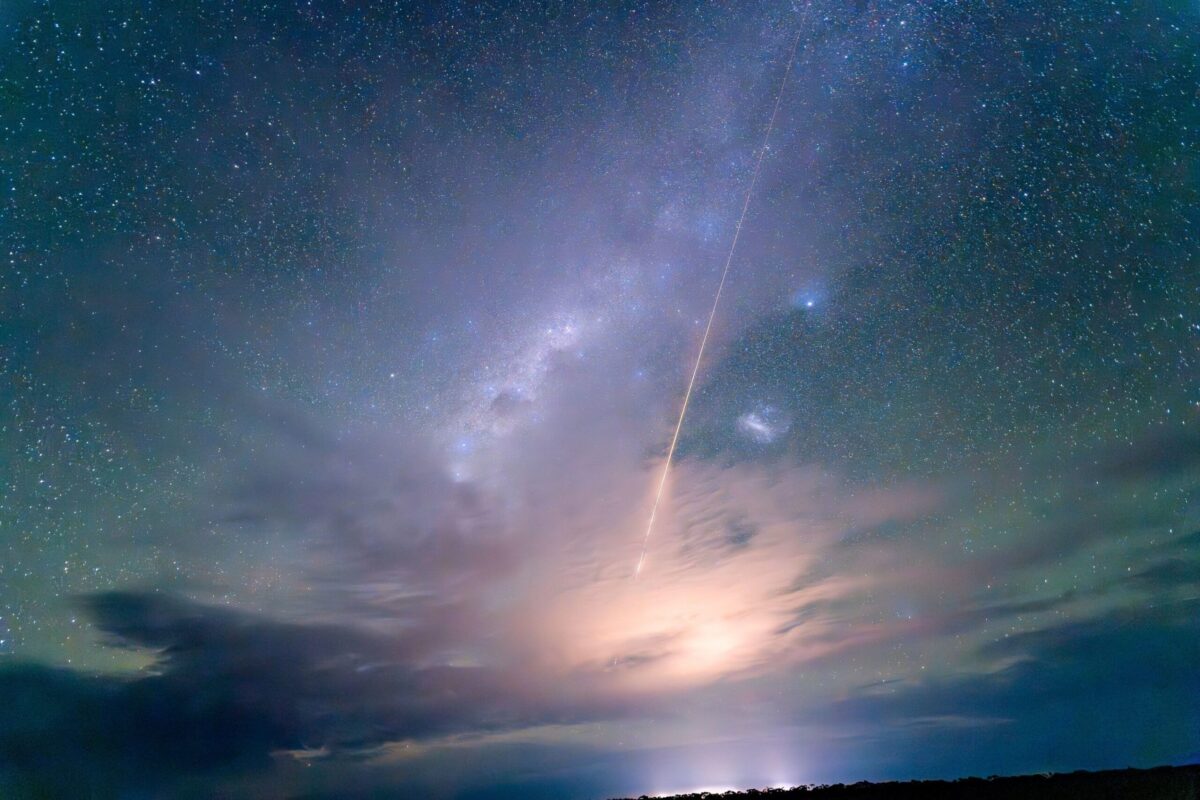
In February, the U.S. Air Force Research Laboratory executed the Optical Sensing of Plasmas in the ReEntry Environment (OSPREE) experiment. This groundbreaking research utilized Varda Space Industries’ W-2 hypersonic capsule to collect in situ shock layer radiative emission measurements during its reentry into Earth’s atmosphere at conditions ranging from Mach 29.5–15.0 and altitudes of 105-50 kilometers, respectively. During atmospheric reentry, vehicles traveling at near-orbital velocities generate strong bow shocks that compress and heat the surrounding air to temperatures exceeding 15,000 Kelvin. The W-2 capsule containing the OSPREE payload was launched in January aboard a SpaceX Falcon 9 as part of the Transporter-12 rideshare mission.
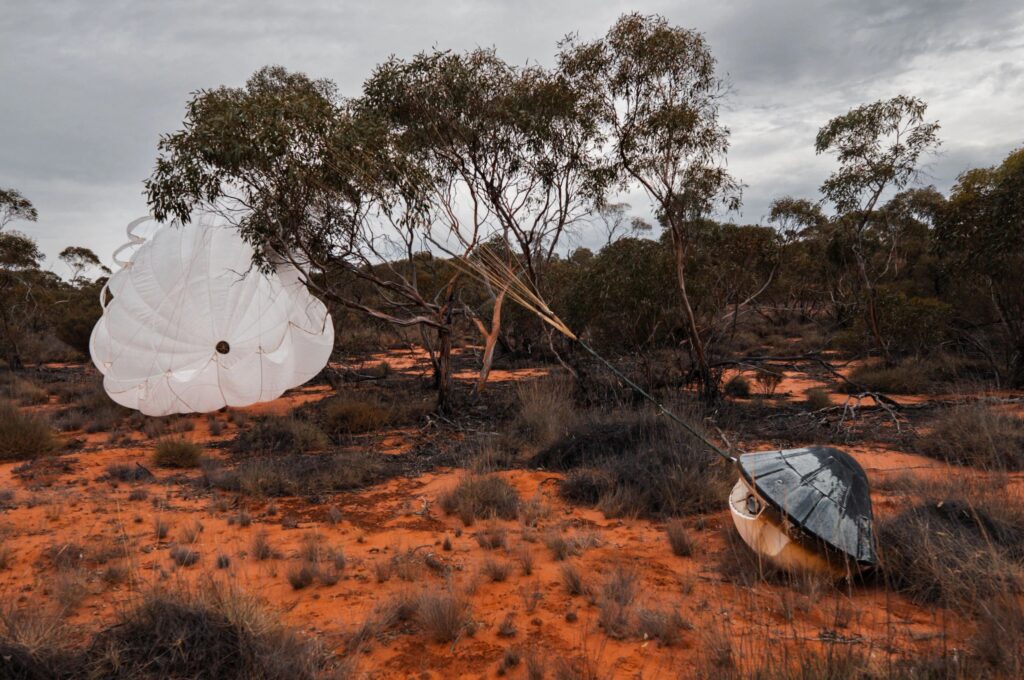
Although flowfield emissions have traditionally been studied via ground or airborne measurement platforms, the OSPREE experiment represented the first publicly available, high-resolution optical emission spectroscopy (OES) measurements collected from within a reentering spacecraft. These measurements provided unprecedented data on the real-time evolution of shock layer thermochemistry and complex interactions between the high-temperature flowfield and vehicle thermal protection system. The successful atmospheric reentry and recovery of W-2, along with the execution of the OSPREE experiment, yielded critical aerothermodynamic data that could significantly enhance fluid dynamics modeling capabilities for future reentry systems.
Building on the successes of the first phase of its Multi-Service Advanced Capability Hypersonics Test Bed (MACH-TB) program, the U.S. Defense Department in January launched MACH-TB 2.0, selecting Kratos Defense & Security Solutions as prime for systems engineering, integration and testing under a five-year, $1.45-billion contract. Kratos leads a team that includes Corvid Technologies, Leidos, Rocket Lab, Stratolaunch, Koda Technologies, Northwind, JRC and academic partners that include the University of Minnesota and Purdue University. Corvid Technologies contributes advanced modeling and simulation to guide flight trajectories, optimize instrumentation, and interpret hypersonic test data. MACH-TB 2.0 expands the architecture to both sub- and full-scale vehicles, higher flight rates, and multiple launch modalities. Together, these efforts establish MACH-TB as the nation’s enduring platform for reusable, data-rich hypersonic flight testing.
DOD launched MACH-TB in 2022 to provide a low-cost, high-cadence infrastructure for hypersonic experimentation. Unlike traditional single-use tests, MACH-TB emphasizes reusability and commercial partnerships, enabling rapid evaluation of critical technologies such as thermal protection systems, aerodynamic stability, ablation, guidance, navigation and control, and sensor survivability under extreme aerothermal loading.
Dynetics led the first phase, with contributions from partners including Kratos, Rocket Lab, Stratolaunch, and national laboratories. In June 2023, MACH-TB conducted its first suborbital launch from Rocket Lab’s Launch Complex 2 in Wallops, Virginia, using the Hypersonic Accelerator Suborbital Test Electron (HASTE) rocket from Rocket Lab to carry an experimental glide body. This flight validated the approach of leveraging commercial launch providers for affordable, relevant hypersonic trajectories. The program advanced further in December 2024, when the reusable uncrewed vehicle Talon-A2 of Stratolaunch achieved speeds preceding Mach 5 after release from their Roc carrier aircraft and successfully landed at Vandenberg Space Force Base. A second flight in March, only three months later, again surpassed Mach 5 and exceeded the December performance.
Contributors: Alessandro Turchi, Johathan Burt, Marat Kulakhmetov and Ashwin Rao
Opener image: Varda Space Industries’ W-2 capsule streaks through the sky in February 2025 during its reentry. Credit: NASA Ames Research Center