
Liquid propulsion in 2025: first flights and beyond
 By Cat Hofacker
 By Cat Hofacker
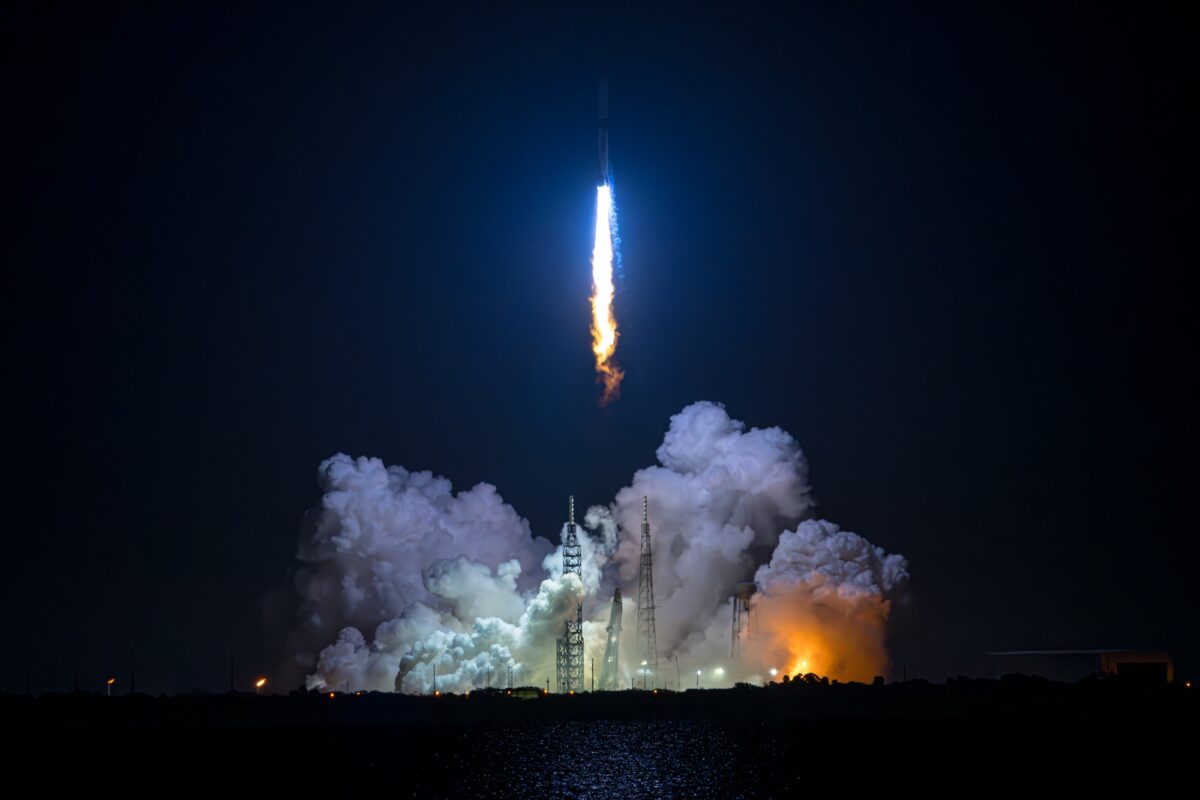
In January, Blue Origin’s launched its first New Glenn rocket from Launch Complex 36 at Cape Canaveral Space Force Station in Florida. The first stage was powered by seven reusable BE-4 liquid oxygen/natural gas–fueled, oxygen-rich, staged combustion engines generating about 2,450 kilonewton thrust each. The second stage had two restartable BE-3U liquid oxygen/liquid hydrogen engines generating up to 778 kN thrust in vacuum.
In February, Poland’s Łukasiewicz Institute of Aviation completed a second hot-fire test campaign for the Throttleable Liquid Propulsion Demonstrator rocket engine. The engine, developed within the European Space Agency’s Future Launchers Preparatory Programme, uses high-test peroxide and ethanol and produces up to 5 kN of thrust.
In March, Firefly Aerospace’s Blue Ghost lunar lander touched down on the moon’s Mare Crisium. The mission was funded under NASA’s Commercial Lunar Payload Services (CLPS) program. A few days later, Intuitive Machines completed its second CLPS lunar landing with the Athena lander. Also in March, the Spectrum launch vehicle of German start-up Isar Aerospace had its first liftoff at Andøya Spaceport in Norway. Although the flight was terminated after about 30 seconds, the attempt met expectations and provided valuable data. Spectrum has nine in-house developed propane/liquid oxygen Aquila engines in the first stage and one in the second stage.
In April, the U.S. Space Force awarded a combined $13.7 billion in launch contracts to SpaceX, United Launch Alliance and Blue Origin for 54 missions scheduled to occur between 2027 and 2032. Also in April, the Spanish government announced the funding of the MERLIn (Efficient and Reusable Engine for International Launchers) consortium, which focuses on development, manufacturing, and testing of the Pangea Aerospace 750 kN ARCOS aerospike engine.
In May, SpaceX gained attention for Starship’s ninth flight, which reflew the Super Heavy booster from Flight 7. Out of the 33 Raptor engines, 29 were already flight proven.
In June, NASA and L3Harris Technologies test-fired the first flight version of the new RS-25 rocket engine intended for the larger Block 1B variant of the Space Launch System rocket. The first four Artemis moon missions will use refurbished RS-25 engines from the space shuttle program. Also in June, European rocket builder ArianeGroup completed a series of Prometheus rocket engine test ignitions. The reusable 1 MN methalox engine developed under an ESA contract will power the Themis demonstrator and the two-stage Maia rocket.
Europe’s Ariane 6 heavy launcher completed its second and third flights from the Guiana Space Center in French Guiana in March and August, respectively. During the latter mission, the VINCI upper stage engine was ignited three times and the Auxiliary Power Unit two times, proving full operability and enabling deployment of the payload, followed by a deorbit burn.
In August, Colorado-based startup Agile Space Industries announced that German-French The Exploration Company will use its DS250 bipropellant rocket thrusters for the reusable Nyx capsule. Nyx shall transport cargo to and from the International Space Station under an ESA contract.
The test benches at German Aerospace Center (DLR) were used to capacity with VINCI tests and the Prometheus test campaign at P5 in the starting blocks. In November, DLR startup ISPTech was qualifying its HyNOx 4U CubeSat propulsion module.
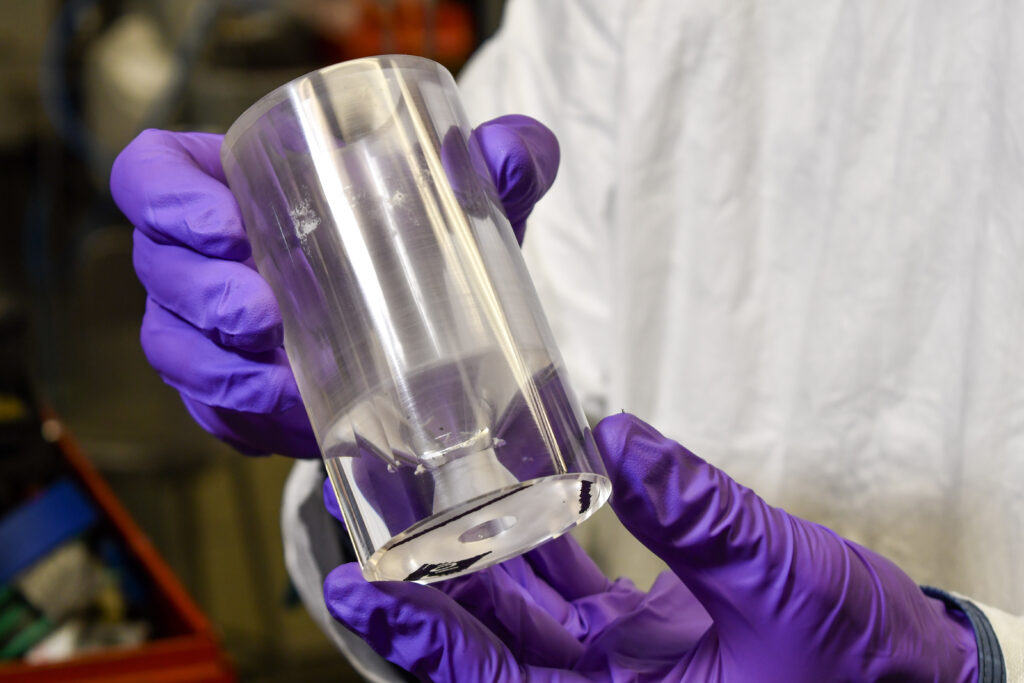
In July, aerospace engineering students at Purdue University designed, built, and tested functioning rocket engines using optically clear components in a hands-on propulsion course. During test-firing at the Maurice J. Zucrow Laboratories, anomalies became important learning moments: high-speed cameras showed a nitrogen bubble entering an oxidizer manifold, causing an observable instability. In another test, the crack in the sapphire combustion chamber validated a student’s prediction.
Contributors: Anne Lekeux, Alan M. Cesar, Timothee L. Pourpoint, Prashanth Bangalore Venkatesh, Sarah Dommers, Nathan F. Andrews
Opener image: Blue Origin’s first New Glenn rocket pictured during liftoff in January 2025. Credit: Blue Origin