From record-high specific impulse to hard landings, next-generation hybrid propulsion continues to make strides
 By Cat Hofacker
 By Cat Hofacker
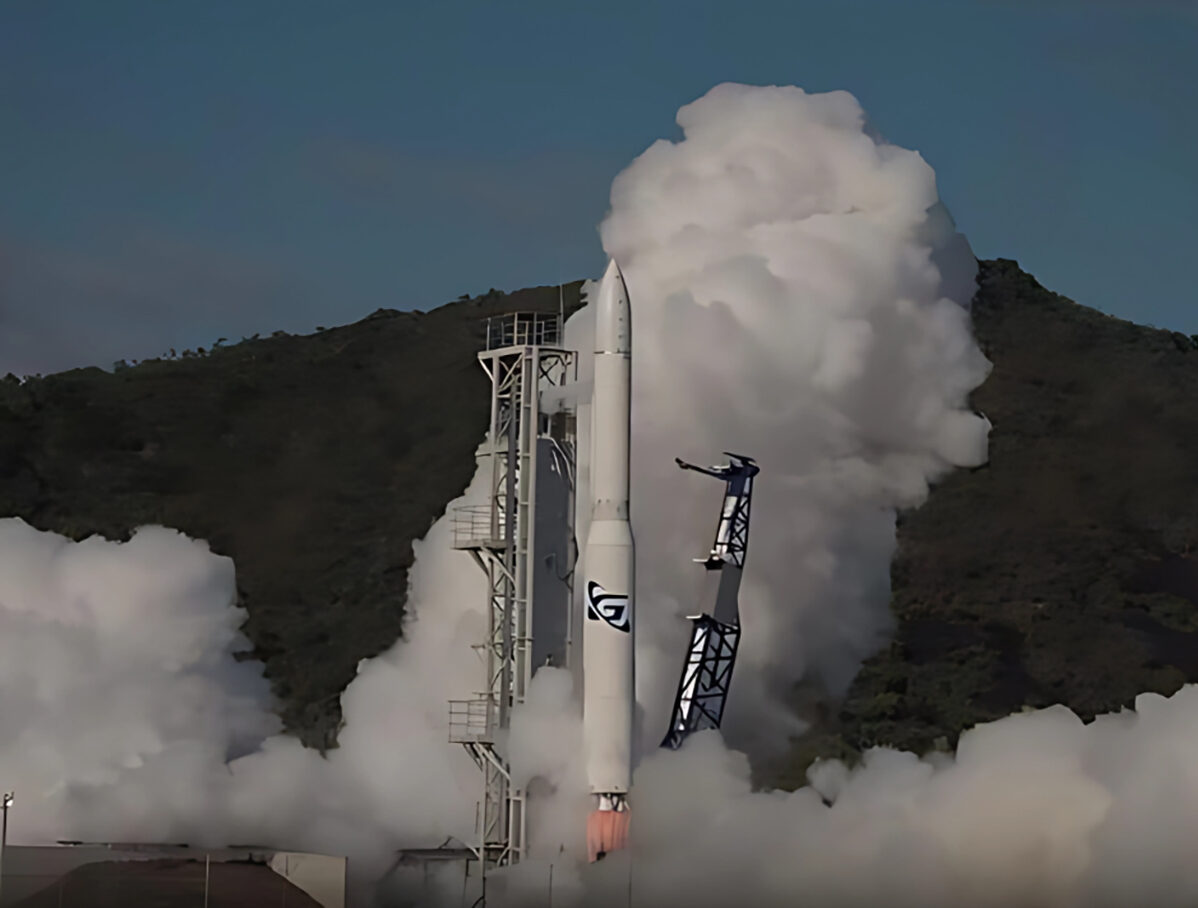
In July, Gilmour Space Technologies conducted its first orbital test flight from the Bowen Orbital Spaceport in North Queensland, Australia. Following an 18-month approval process, the Eris rocket lifted off and achieved 14 seconds of powered flight prior to falling safely within the designated zone. Though brief, this TestFlight1 mission marked a major milestone for Australia’s sovereign launch capability and provided valuable data from 23 seconds of full thrust hybrid engine performance. It also demonstrated the lower explosive risk of hybrid propulsion. As of mid-November, an investigation was underway and the company was conducting further engine tests to improve performance ahead of a planned 2026 launch.
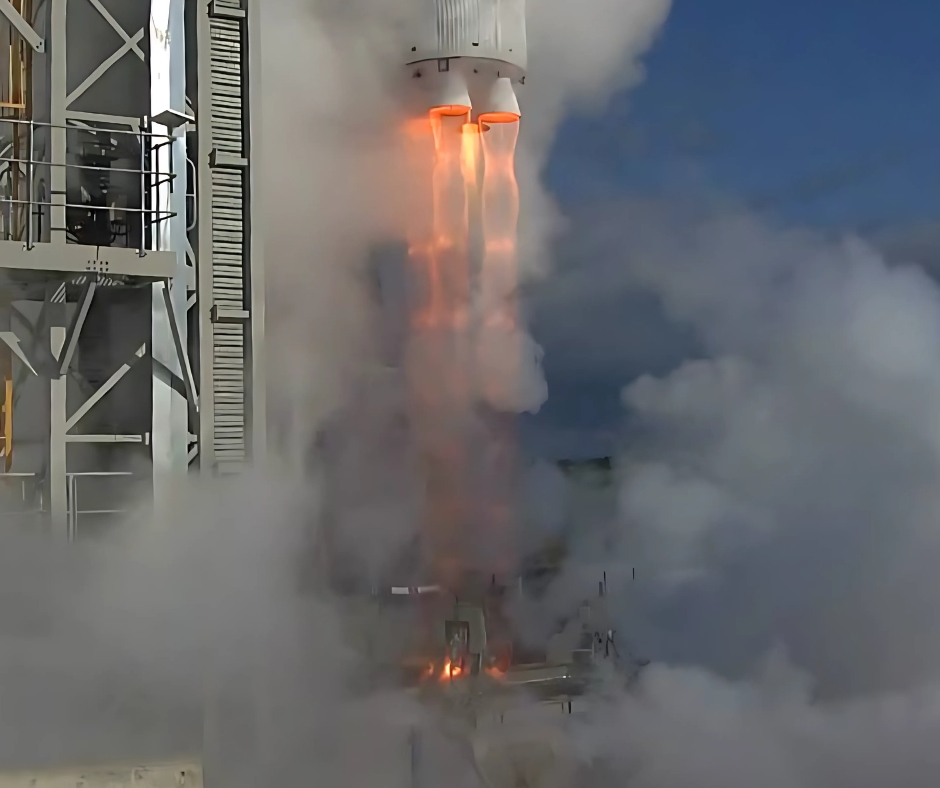
Also in Australia, TiSPACE Inc. plans to launch a sounding rocket from the Koonibba Test Range in South Australia to test recent proprietary propellant developments. The company conducted horizontal and vertical hot fire tests to enhance performance and qualify its hybrid rocket engines. Engines producing 1-10 tons of thrust were tested for burn times up to 110 seconds, achieving C-star values of approximately 1,550 m/s using nitrous oxide and rubber fuel with TiSPACE’s patented grain design.
Following the success of HyImpulse’s SR75 mission in 2024, the company completed preparation steps throughout the year toward launching the SR75-2 sounding rocket in 2026. This flight is to further validate the performance, safety, and reliability of HyImpulse’s hybrid propulsion system, which uses paraffin-based fuel and liquid oxygen for efficiency and environmental sustainability. Looking beyond suborbital flights, HyImpulse plans to debut its first orbital launcher, SL1, in 2027 to serve Europe’s expanding small satellite market. These launches will be supported by HyMOVE, an orbital transfer vehicle for precise payload delivery, broadening the company’s commercial and scientific services. With SR75-2, HyMOVE and SL1, HyImpulse is poised to augment Europe’s space access capabilities with safe, sustainable, and versatile launch solutions intended for global commercial and research needs.
In South Africa, the Aerospace Systems Research Institute (ASRI) at the University of KwaZulu-Natal redirected its hybrid propulsion projects into the commercial sector. The Phoenix series of high-altitude rockets now operate regularly with apogees of up to 60,000 feet (18,200 meters) using paraffin wax and nitrous oxide propellants. Phoenix provides an effective platform for science technology engineering and mathematics training and testing of novel avionics. ASRI in late 2024 commissioned a suborbital launch gantry at Overberg Test Range near Cape Agulhas in South Africa with two Phoenix launches. The facility supports solid and hybrid sounding rockets of up to 2,500 kilograms. In this context, ASRI and Mura Space agreed to commercialize the gantry as a step toward broader spaceport development. This partnership enables suborbital test launches under established safety and operational protocols, making it Africa’s only commercial suborbital facility. The first commercial operations are planned for 2026 as Mura Space builds a portfolio of advanced hybrid sounding rocket missions targeting the Kármán line.
In June, the Utah State University Propulsion Research Laboratory and NASA’s Marshall Space Flight Center conducted high-volume vacuum testing of a re-ignitable hybrid rocket system supporting NASA’s Human Landing System Plume Surface Interaction (PSI) program. In this process, a legacy 200-newton thrust chamber was modified as a high-enthalpy gas generator to simulate the bipropellant landing propulsion system.
Though not designed as an operational engine, the PSI hybrid gas-generator enabled extensive testing across varied ambient and vacuum conditions at three different test facilities. Using gaseous oxygen and 3D-printed ABS propellants, the system was optimized for maximum plume water content (simulating a liquid oxygen/ethane system) and optimal characteristic velocity. Even with a low-expansion nozzle, the vacuum-specific impulse exceeded 285 seconds, setting a new record for hybrids. The campaign included 50 ambient and 28 near-vacuum hot-fire tests, with up to 20 more planned at NASA’s Langley Research Center in Virginia.
Contributors: Michael Brooks, YenSen Chen, Michelle Gilmour, Mario Kobald, Stephen Whitmore
Opener image: Gilmour Space Technologies’ Eris rocket leaving the launchpad at Bowen Orbital Spaceport in Australia in a July 2025 launch. The rocket cleared the tower and fell in the safe zone. Credit: Gilmour Space Technologies