2025 simulations focus on emerging aircraft designs and crowded airspace
 By Cat Hofacker
 By Cat Hofacker
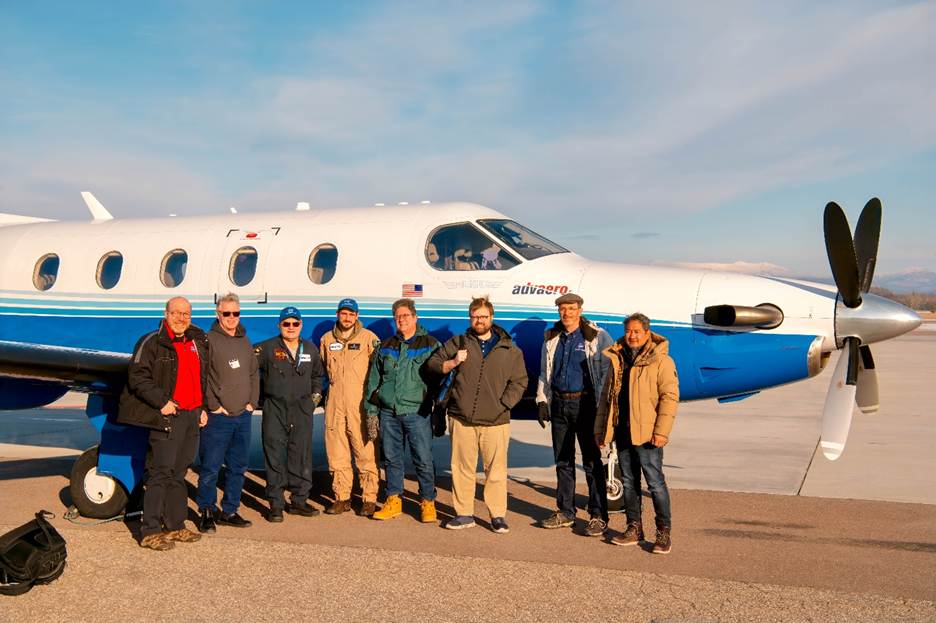
In January, Mosaic Aviation Technology and Management (Mosaic ATM) of Virginia conducted a flight trial to test a novel, rule-based system for managing aircraft sequencing and spacing at a shared waypoint, without centralized control. This was part of a NASA-sponsored project on digital flight, a concept under NASA’s Transformative Aeronautics Concepts Program. Digital flight aims to create a future of integrated, highly automated aviation systems that enhance efficiency, safety, and environmental performance.
The flight test demonstrated how aircraft could self-organize their approaches to a common waypoint, using a simple set of rules executed independently by each flight. These rules, developed by NASA’s Digital Flight team and Mosaic ATM, were first tested in simulations prior to being trialed in live airspace near Burlington, Vermont. This trial showcased how digital technologies could revolutionize flight planning, execution, and management.
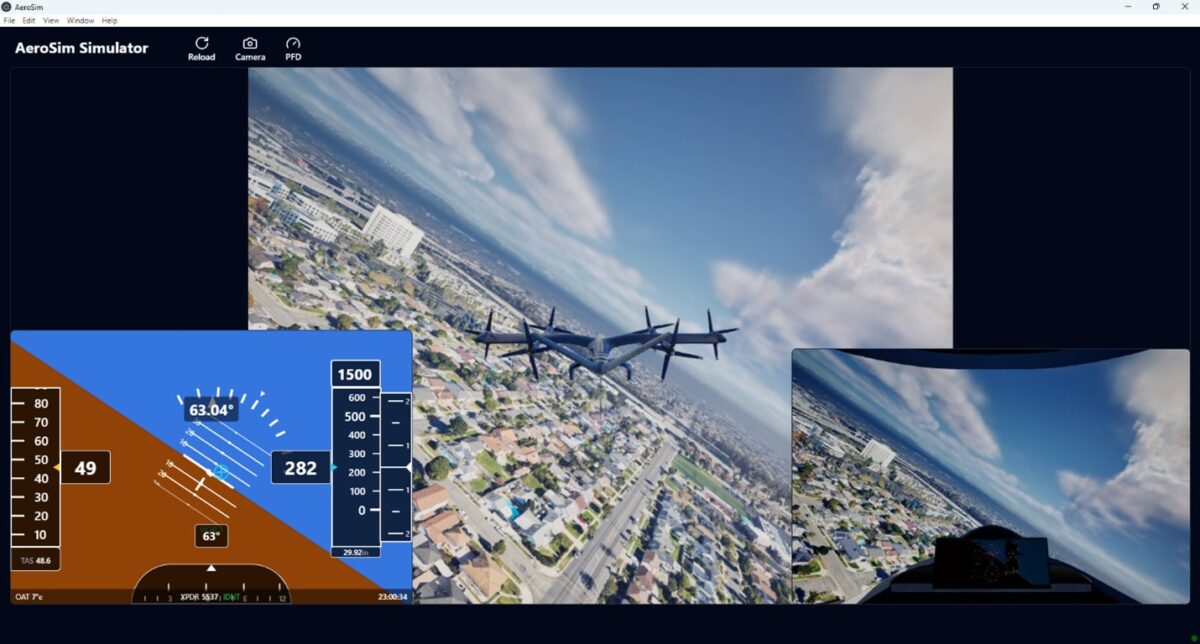
In July, AeroSim was released by the AeroSim foundation. This high-performance, open-source flight simulator supports modular integration, machine learning workflows and custom models via the Functional Mockup Interface. With middleware like Kafka or DDS, it ensures standardized data exchange. Its Python application programming interface enables both quick setup and advanced control.
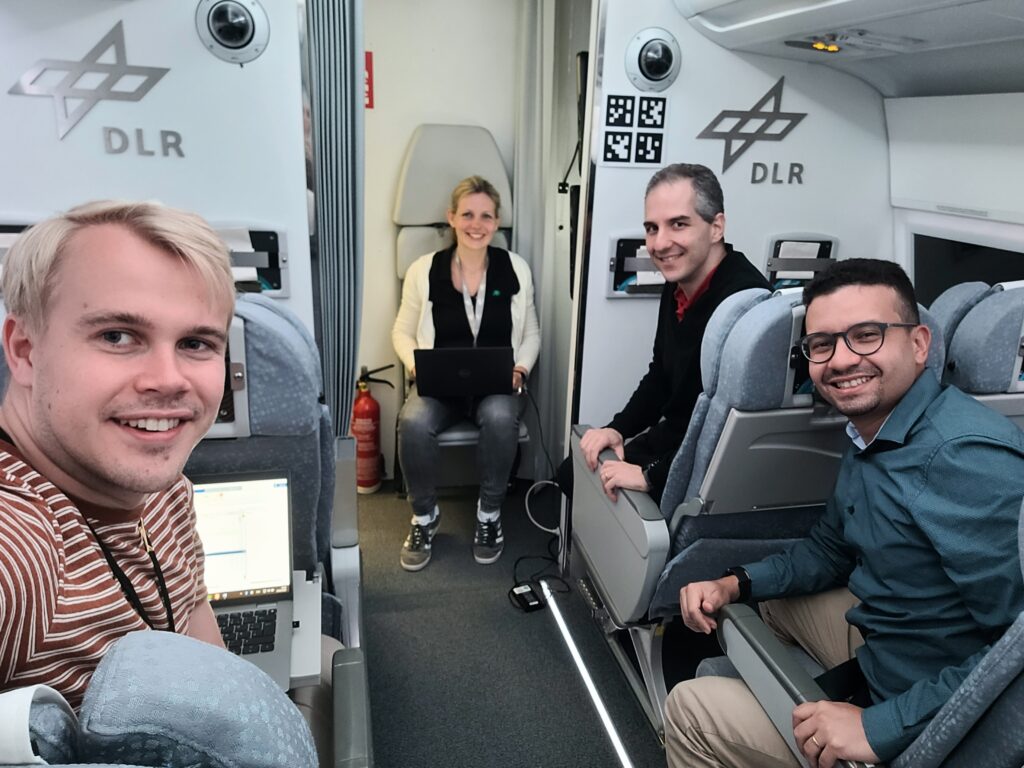
In May, the German Aerospace Center (DLR) and Embraer conducted a joint study on passenger comfort in flexible aircraft using DLR’s AVES full-motion simulator. The study aimed to understand the effects of aeroelastic flexibility on ride quality and derive criteria for the assessment of ride quality of flexible aircraft. Across 19 sessions, 150 participants in a 16-seat cabin evaluated comfort, motion sickness, fatigue and concentration during varied motion sequences. The findings are meant to support the design of future aircraft, where aeroelastic effects play an increasingly important role.
In May, the European Union Aviation Safety Agency published a paper proposing to update the regulations governing flight simulator training devices. The goal is to better incorporate new technologies like virtual reality and new training needs in a consistent and structured way.
NASA’s Air Mobility Pathfinders project, in collaboration with FAA and industry, is developing technologies to safely enable large-scale advanced air mobility (AAM) operations. In mid-2025, NASA and ANRA Technologies simulated flight planning and strategic conflict management over the Dallas-Fort Worth area. Using a federated service network, they tested digital data exchange for operation intent management, resource sharing, demand-capacity balancing and conformance monitoring. This simulation marks a key milestone toward more complex scenarios that will support safe, secure and scalable AAM integration into the National Airspace System.
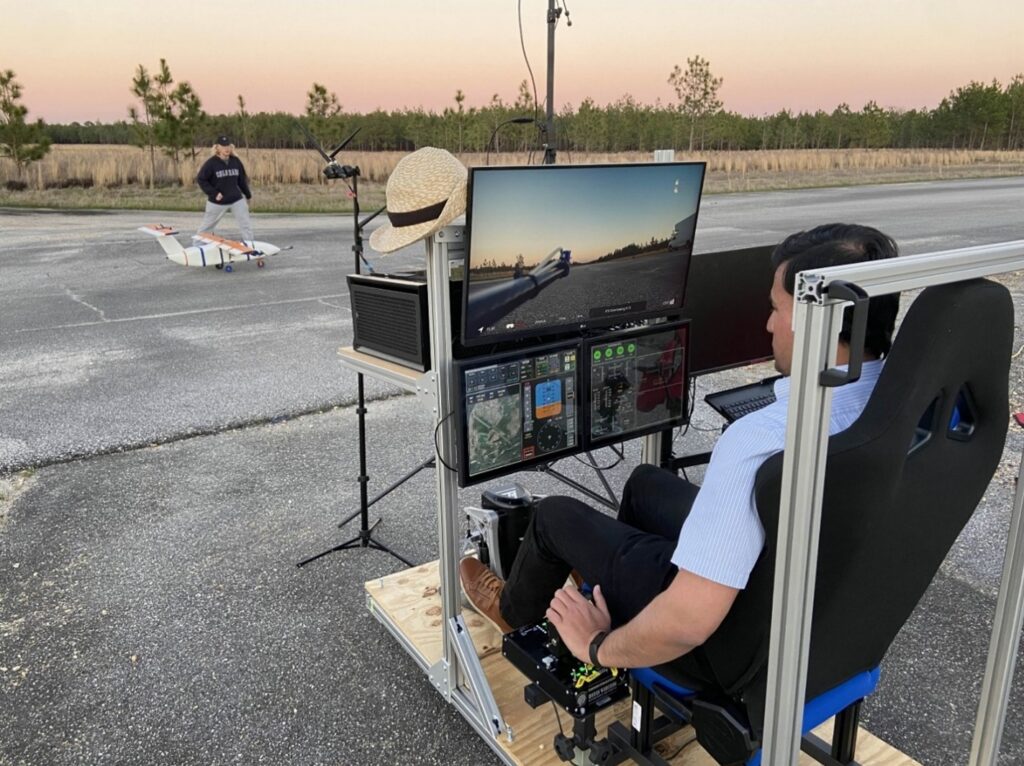
Since 2023, the Vehicle Systems, Dynamics, and Design Lab (VSDDL) at Auburn University has supported flight tests via telemetry and first-person view feeds and enables testing of novel simplified vehicle operations concepts. VSDDL developed a dual-purpose Ground Control Station (GCS) for subscale uncrewed aircraft, that in the lab, functions as a simulator that uses the Modular Aircraft Dynamics and Control Algorithm Simulation Platform to refine flight control laws. The GCS was demonstrated with a subscale tiltwing aircraft in simulation mode at AIAA’s AVIATION Forum in July, in collaboration with Transcend Air Corporation.
In March, a proof of concept for Ingolstadt, Germany, was added to the UAM-SUMO simulator, the first-ever integration of UAM within SUMO at city scale. UAM-SUMO is an open-source extension to the SUMO traffic simulator that models urban air mobility (UAM) at city scale, including electric vertical takeoff and landing taxi operations, hubs, and mode choice impacts. It uses a traffic control interface control layer to convert road trips into multimodal journeys — pedestrian, hub, air taxi — with detailed logs for analysis. Released on GitHub under an MIT license, it includes curated scenarios and documentation.
Contributors: Steven Roberts, Subodh Bhandari, Imon Chakraborty, Olaf Stroosma, Fred Wieland
Opener image: A generic vertical takeoff and landing aircraft model in the AeroSim AS-1, shown flying over an urban area. Credit: AeroSim Foundation