Q&A: U.S. House space subcommittee chair on extending ISS, fostering commercial LEO market


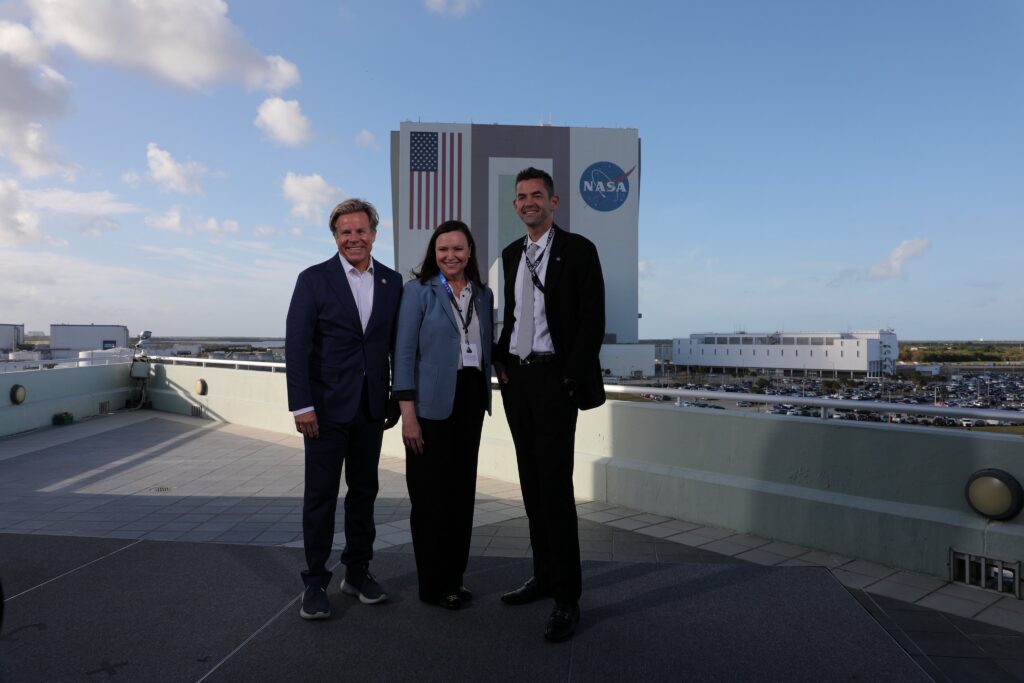
U.S. Rep. Mike Haridopolos, R-Fla., has a front-row seat to the growing commercial space presence along Florida’s space coast. In particular, he sees SpaceX Falcon 9 launches from Cape Canaveral so frequently from his home in nearby Indian Harbour Beach that they’ve become part of his regular routine.
“We don’t pay attention to the launch schedule as much as we used to because it’s so often — which is a wonderful problem to have,” he told me in an interview on March 31, the eve of the launch of NASA’s Artemis II crewed lunar flyby. “It’s a real welcome change after the challenges we faced after the shuttle went away.”
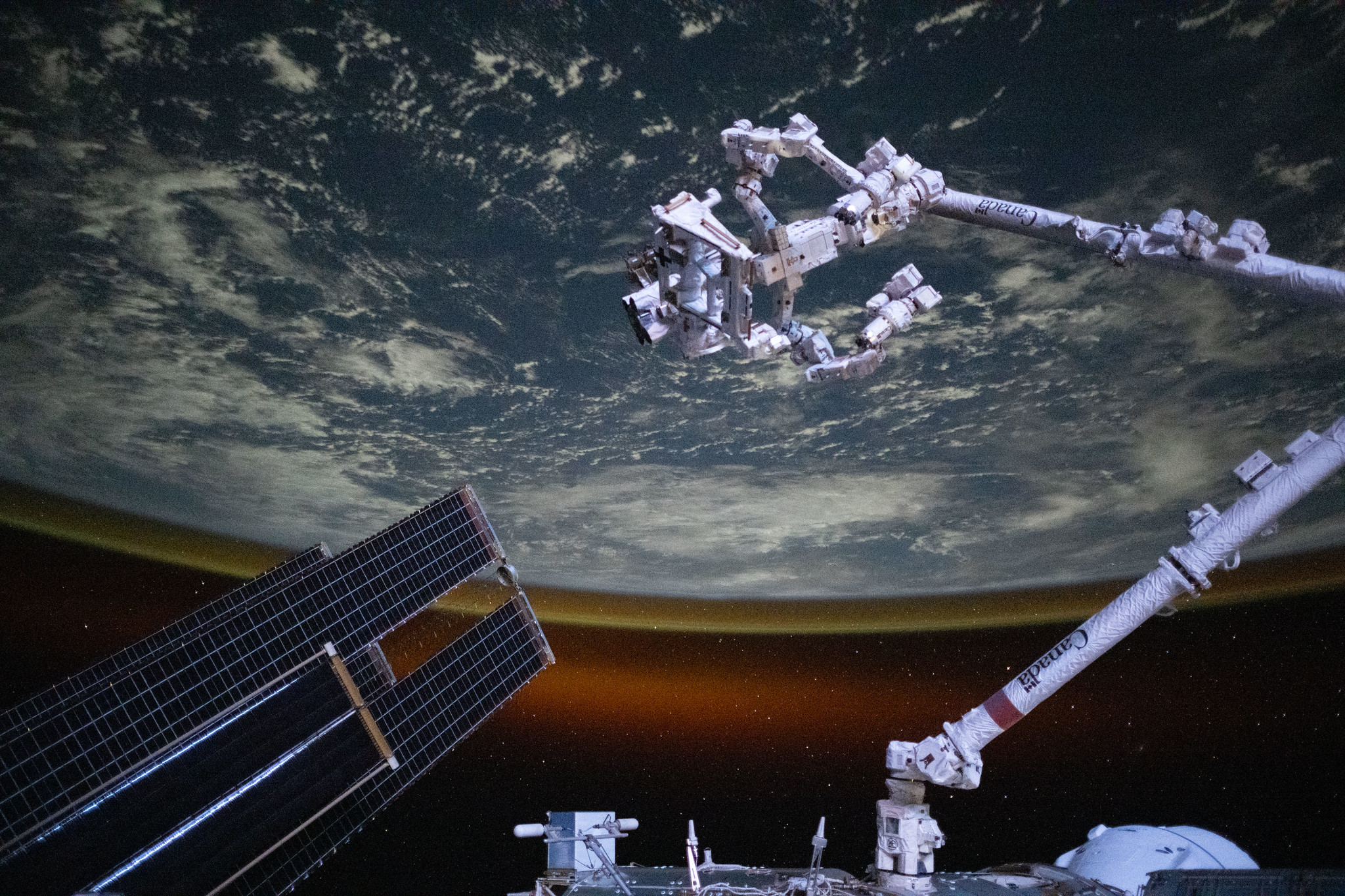
As chair of the House Space and Aeronautics Subcommittee, Haridopolos is in a position to influence future commercial growth and NASA’s long-term priorities. This subset of the House Committee on Science, Space and Technology, which oversees NASA, is often where discussions about the agency’s budget and broader U.S. space policy begin. Most recently, the subcommittee held a March 25 hearing about NASA’s plan to retire the International Space Station at the end of the decade and transition to privately owned and operated stations in low-Earth orbit.
NASA had planned to select at least two of the in-development stations for further funding, but officials said during a March 24 event at agency headquarters that there is only enough budget to fund one — a scenario that increases the risk of a U.S. gap in LEO if that station isn’t operational by the time ISS retires. So NASA is seeking industry feedback on an alternative approach: attaching a “core module” to ISS that companies could dock their hardware to during the station’s final years.
I spoke to Haridopolos about a range of topics, including the path forward for establishing commercial LEO stations and the probability of extending ISS beyond 2030. Here are selected excerpts, lightly edited for clarity.
A: I want to hear more from industry about that. But with ISS currently scheduled to come down in 2031, I think that could be pushed back a little bit more, so we can get more life out of it. The American portion of the ISS still seems very safe. We’re looking at different technologies to add to this station and maybe make some changes, but I think there’s still value there.
We need to determine if there is a marketplace beyond NASA for people to use the space station. We need to ask ourselves: What can we afford?
A: The Russian parts are important parts of the station. But they do not have the upkeep that we do. They do not have the same safety standards. So it is the weakest part of that station. It’s important that we understand the Russian component and what we might need to do.
Since 2019, Roscosmos has reported cracks in multiple of the Russian ISS segments through which air is escaping. NASA last year reported the leaks had stabilized, but the agency’s Aerospace Safety Advisory Panel has characterized the issue as a “significant long-term risk.” — PB
A: We have a lot of partners in the Artemis program. As you know, we have been really pushing the envelope, making sure we have great partners. We also recognize we’re in a competition with the Chinese, and we also recognize that Russia has not been exactly our best friend.
I think the more independent we can be from them would only be a smart decision in general. And if they’re not willing to put the resources in place in order to keep their portion of the space station fully operational, then we have to always look at different technological developments. Maybe we need to make some changes. I’m open to those, but let’s hope we can improve the relationship with Russia.
A: First of all, I’ll make such decisions in coordination with the leadership of the committee and consulting with [Administrator Jared] Isaacman. But when you talk about the ISS, I think we’ve all made the decision, and it makes a lot of sense, to keep it up there and not bring it down so quickly.
The NASA reauthorization bill passed by the House Science Committee in February includes language directing NASA to submit a report on “potential options and associated costs” for preventing a gap in U.S. presence in LEO, including “Supporting the operation of the ISS beyond 2030.” In March, the Senate Commerce Committee passed its version, which contains a provision that would extend ISS to 2032. — PB
It’s a lot less expensive to keep it up there than it is to take it down and put a new one up there. And we want to understand where the economics of this are on both sides — both the taxpayer costs and of course, is there enough of a market beyond NASA to do these experiments — and we have a little bit of time to figure that out.
And it seems to me that the main priority at this point is establishing this moon base in the future, which could propel us to do all types of things.
A: I think that’s the debate we’re still going to have. No one can question the intent and the purpose of Congress here where we funded NASA at over $24 billion, and we gave an additional almost $10 billion in the One Big Bill.
The sprawling tax and spending package President Donald Trump signed in July included $10 billion for various NASA programs, including a combined $1.5 billion for ISS operations through 2030 and the U.S. Deorbit Vehicle that NASA has contracted SpaceX to provide. — PB
There is a lot of infrastructure at NASA installations, not as sexy as Gateway or things out in outer space, that is antiquated. So we have to do a lot of infrastructure improvements on these facilities — those are essential and serious. I just don’t want to get too far in front of my skis.
A: I think that NASA has a platform for it to do a lot of this. The question is, once the ISS comes down, how big a facility should we build? We don’t have strong enough signals at this point to give a coherent answer, in my opinion. We’re going to need to make this decision in the next couple years, and that’s why you’re going to have these continuous hearings. I want to hear from the marketplace there. We’re hearing some positive signs and some negative signs.
I don’t want to dodge the issue, but I don’t want to make an investment and no one shows up. We want to see the private sector saying, we need this — whether it be for medical research, energy, you name it.