


Introduction
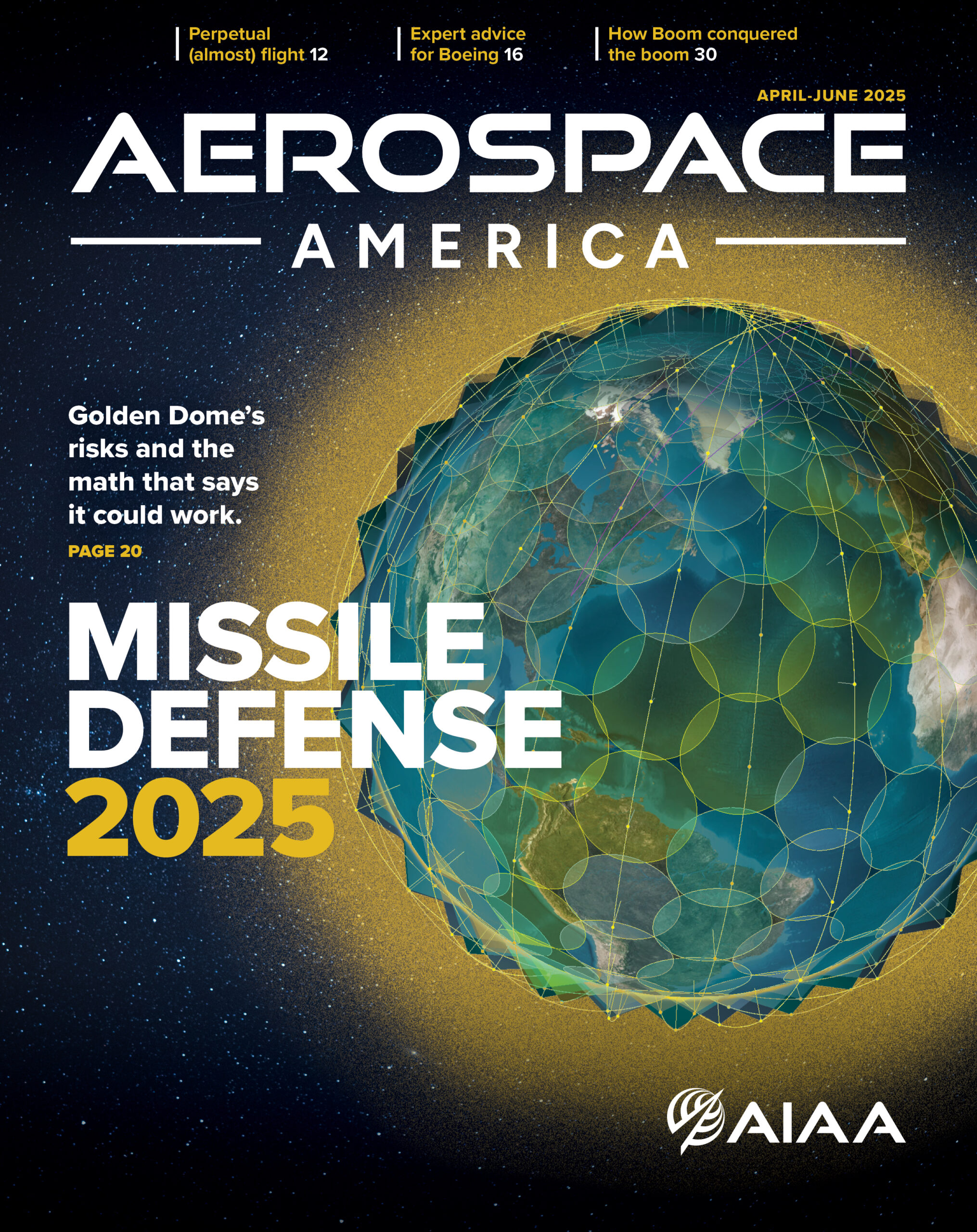
Golden Dome for America represents one of the most intricate homeland defense initiatives the Pentagon has contemplated since the conclusion of the Cold War.[1] Public discussions have understandably centered on the effectiveness of space-based sensors, space-based interceptors (SBIs), or layered terrestrial systems in defending against evolving missile threats. However, a possibly more pressing concern at this juncture is the necessity to articulate the applied research and development (R&D) strategy and approach.
As system requirements become more clearly defined, the R&D decisions necessary to establish a credible capability have gained heightened significance and urgency. Golden Dome is transitioning from a conceptual phase, marked by broad studies, to an implementation phase where R&D investments will solidify program realities. Historical evidence indicates that once design and manufacturing assumptions are integrated into program baselines and contracts making changes becomes expensive and disruptive.[2]
Initial R&D efforts are crucial not only for assessing technical feasibility but also for establishing production tolerances, supply chain dependencies, testing assumptions, and workforce requirements. When these aspects are postponed until later acquisition stages, the risks associated with execution increase. GAO assessments consistently reveal that programs advancing to later phases without mature designs or adequate production knowledge face greater cost overruns and schedule delays.[3] In practical terms, this results in delayed readiness, higher sustainment costs, and diminished inventory depth during times of heightened threat.
Transition of Golden Dome from Concept to Execution
The Pentagon has faced similar patterns in the past. The F-22 Raptor program focused on showcasing unparalleled air-dominance performance before optimizing manufacturing processes for production and sustainment, leading to significant unit cost increases and production cuts compared to initial estimates.[4] Likewise, aspects of the Ballistic Missile Defense System, especially the Ground-based Midcourse Defense (GMD) program, were deployed on accelerated timelines while the testing infrastructure and target realism lagged behind the system’s complexity. GAO identified considerable redesigns and reliability corrections that occurred following partial deployments and delayed full operational capability.[5] The rapid fielding of MQ-1 Predator and MQ-9 Reaper systems led to a demand for pilots, sensor operators, and maintainers that exceeded the capacity of training pipelines, resulting in long-term cost and readiness challenges that took years to address.[6]
These instances do not signify a deficiency in technical capability or industrial strength; rather, they highlight how a misalignment between early R&D priorities and long-term execution realities can have enduring repercussions.
SBI as an R&D Stress Test
The SBI concept provides a valuable perspective for understanding some of the broader R&D challenges facing Golden Dome. SBI has historical roots dating back to the Cold War, from the Kennedy administration’s Project BAMBI to the Strategic Defense Initiative of 1987, to “Brilliant Pebbles” and Kinetic Kill Vehicles (KKVs). This concept has appeared in various missile defense studies over the decades. Looking ahead, Congressional Budget Office analyses demonstrate how launch costs, constellation size, replenishment rates, and sustainment assumptions significantly impact feasibility and cost projections.[7]
The core question is not whether alignment between ambition and execution is achievable, but whether R&D structures are established early enough to facilitate that alignment. SBI serves as a stress test for how design assumptions affect long-term affordability and operational credibility.
Prototype-Driven R&D and Transition Risk
Prototype-driven R&D is a vital strategy for mitigating technical uncertainty.[8] Prototypes are designed to operate under controlled conditions to yield reliable and repeatable data essential for system maturation, making them indispensable from an engineering standpoint.
However, risks arise when the definition of prototype success is confined to performance metrics, neglecting transition criteria. If development efforts do not incorporate production knowledge and qualification considerations early on, systems that perform well in demonstrations may require substantial redesign before full-rate production. GAO has noted similar dynamics in broader acquisition contexts, frequently linked to the perilous “Valley of Death” between development and large-scale fielding.[9]
For Golden Dome, the aim is not to reduce prototyping but to expand R&D success criteria to encompass transition readiness alongside technical performance.
Test Infrastructure as an R&D Constraint
Testing is often sequenced after significant design decisions have already been made. For Golden Dome, such sequencing could be detrimental. System performance relies on the integrated behavior of sensors, interceptors, networks, and command systems. Validating that performance necessitates secure, adaptive validation environments capable of simulating realistic operational conditions.
The Pentagon’s Director of Operational Test and Evaluation has consistently pointed out the limitations in integrated test capacity for complex networked defense systems.[10] For a system-of-systems architecture like Golden Dome, inadequately aligned test infrastructure could hinder operational confidence even after hardware deployment.
To achieve the ambitious milestone targets outlined in the President’s Executive Order, early investments in integrated testbeds, digital engineering environments, and data architectures will be as essential as hardware and software development itself.
Workforce Implications of Early R&D Decisions
R&D decisions significantly influence workforce requirements. Design strategies that prioritize modularity, standard interfaces, and repeatable processes tend to facilitate scalable workforce development by enabling skill transfer and labor pooling.
The commercial space manufacturing sector offers a relevant precedent. The standardization and modular design in CubeSat production allowed for scalable mass production aligned with workforce training pipelines.[11] Golden Dome can benefit from similar insights by promoting design strategies that foster both innovation and skill transferability.
Workforce challenges are not merely labor-market issues; they are often shaped by upstream design assumptions. Research from the National Academies emphasizes the necessity of aligning technical system development with workforce pipeline realities.[12] Proactive identification of potential shortfalls and early collaboration among industry, academia, and government will be crucial for ensuring sustainment viability.
Aligning R&D, Qualification, and Production
R&D, qualification, and production are typically sequential phases in most acquisition programs, but for Golden Dome, they should be interdependent and continuously inform one another. Previous concurrency challenges in programs like the F-35 illustrate the risks associated with insufficient integration between these phases.[13]
Enhancing feedback loops between development, qualification criteria, and production planning can potentially minimize downstream disruptions in system-of-systems designs. A tiered qualification framework represents one structured approach. By distinguishing between lower-risk components suitable for rapid qualification and higher-risk elements necessitating focused validation, programs can strike a balance between speed and rigor.
Standards as an Enabler of Execution
Standards function as alignment mechanisms. By establishing common interfaces, performance expectations, and verification methods, standards mitigate integration risks and enable qualification by similarity.
Golden Dome must effectively integrate both legacy systems and new builds within a coherent, robust, and digitally connected architecture. Reconciling existing standards and interfaces that were not originally designed to operate as a unified enterprise will pose a significant challenge. Thoughtfully developed standards applied during R&D phases can serve as a driving force, clarifying the systems’ requirements for construction, testing, and operation while facilitating scalability and deployment timelines.
Implications for Congressional Oversight
While Congress does not select architectures or dictate technical solutions, it influences incentives through oversight, authorization language, funding structures, and reporting requirements. For a program of Golden Dome’s scale, congressional involvement will significantly impact whether early R&D decisions remain aligned with long-term execution realities.
GAO reports indicate that programs entering engineering and manufacturing development phases without mature designs or detailed awareness of production constraints tend to experience higher cost overruns and schedule instability. Congressional oversight that focuses solely on overall funding or annual schedule milestones risks overlooking earlier indicators of execution risk embedded in the R&D strategy.
For Golden Dome, more effective oversight could involve examining:
- How the Pentagon is incorporating manufacturability and production feasibility into early R&D decisions
- Whether investments in integrated test infrastructure are synchronized with hardware development timelines
- How qualification pathways are defined and whether concurrency risks are managed proactively
- Whether workforce requirements are evaluated in parallel with architectural decisions
- How legacy systems and new builds will be integrated under coherent interface standards
- Interface mechanisms and architecture for integrating links between commercial and military space-based assets
- Testing and training systems that connect engineers, developers, testers, operators, and command and control nodes into a robust and agile operational network
These aren’t just strict rules for managing programs. Instead, they’re thoughtful ways to strengthen our commitment to seeing things through. They help us stay disciplined and focused on executing our plans effectively.
Historically, Congress has played a stabilizing role by requiring evidence of technology maturity, design stability, and production readiness before permitting programs to progress into subsequent acquisition phases. Conversely, when concurrency or accelerated fielding has advanced without adequate integration between R&D, testing, and production planning, the resulting downstream costs have often been borne by both taxpayers and operational forces. The F-35 Joint Strike Fighter program serves as a notable example, where the decision to commence low-rate initial production with less than 1 percent of flight testing complete led to the identification of numerous design flaws and operational deficiencies only after aircraft were delivered. This resulted in extensive retrofitting, schedule delays, and billions of dollars in added acquisition and sustainment costs, ultimately impacting both taxpayers and operational units managing mixed, non-standardized fleets in the field.[14]
Golden Dome presents an opportunity for Congress to apply lessons learned from previous major defense acquisition programs. By posing structured, execution-focused questions early rather than reacting to cost growth later, Congress can strengthen the connection between technical ambition and operational credibility. This approach ensures that innovation is fieldable without legislatively constraining it.
Conclusion
The ambition of Golden Dome is both clear and urgent. Whether this ambition translates into actionable capability will depend on the R&D decisions being made now. Historical evidence shows that early choices regarding production feasibility, test infrastructure, workforce alignment, and standards integration significantly affect long-term outcomes and the likelihood of success.
Addressing these considerations thoughtfully and promptly offers a crucial opportunity to ensure that Golden Dome achieves its ambitious goals and becomes credible, sustainable, and operationally effective.
References
[1] Congressional Research Service, Defense Primer: The Golden Dome for America, IF13115 (Washington, DC: Congressional Research Service), https://www.congress.gov/crs-product/IF13115.
[2] U.S. Government Accountability Office, Best Practices: Capturing Design and Manufacturing Knowledge Early Improves Acquisition Outcomes, GAO-02-701 (Washington, DC: GAO, July 2002), https://www.gao.gov/products/gao-02-701.
[3] U.S. Government Accountability Office, Weapon Systems Annual Assessment: DOD Is Not Yet Well-Positioned to Field Systems with Speed, GAO-24-106831 (Washington, DC: GAO, June 2024), https://www.gao.gov/products/gao-24-106831.
[4] The White House, Modernizing Defense Acquisitions and Spurring Innovation in the Defense Industrial Base, Presidential Action (Washington, DC: The White House, April 2025), https://www.whitehouse.gov/presidential-actions/2025/04/modernizing-defense-acquisitions-and-spurring-innovation-in-the-defense-industrial-base/.
[5] U.S. Government Accountability Office, Tactical Aircraft: DOD Needs to Better Inform Congress about Implications of Continuing F-22 Cost Growth, GAO-03-280 (Washington, DC: GAO, January 2003), https://www.gao.gov/products/gao-03-280.
[6] U.S. Government Accountability Office, Missile Defense: Improvements Needed in Testing to Better Assess Capability and Inform Decisions, GAO-16-488 (Washington, DC: GAO, May 2016), https://www.gao.gov/products/gao-16-488.
[7] U.S. Government Accountability Office, Unmanned Aerial Systems: Air Force Needs to Improve Its Training Process and Better Manage Its RPA Workforce, GAO-20-320 (Washington, DC: GAO, April 2020), https://www.gao.gov/products/gao-20-320.
[8] Congressional Budget Office, Effects of Lower Launch Costs on Previous Estimates for Space-Based Interceptors (Washington, DC: CBO, May 5, 2025), https://www.cbo.gov/publication/61237.
[9] U.S. Government Accountability Office, Leading Practices: Agency Acquisition Policies Could Better Implement Key Product Development Principles, GAO-22-104513 (Washington, DC: GAO, January 2022), https://www.gao.gov/products/gao-22-104513.
[10] Director, Operational Test and Evaluation, FY2024 Annual Report (Washington, DC: Office of the Secretary of Defense, 2024), https://www.dote.osd.mil/Annual-Reports/.
[11] E. E. Areda, Hirokazu M., and M. Cho, “Improving Efficiency in CubeSat Mass Production: A Modular and Standardized Approach,” Acta Astronautica 232 (2025): 51–67, https://doi.org/10.1016/j.actaastro.2025.02.017.
[12] National Academies of Sciences, Engineering, and Medicine, Building America’s Skilled Technical Workforce (Washington, DC: National Academies Press, 2017), https://nap.nationalacademies.org/catalog/23472/building-americas-skilled-technical-workforce.
[13] RAND Corporation, Prototyping Using Other Transactions: Case Studies for the Acquisition Community, RR-4417 (Santa Monica, CA: RAND Corporation, 2020), https://www.rand.org/pubs/research_reports/RR4417.html.
[14] U.S. Government Accountability Office, F-35 Joint Strike Fighter: Development Is Nearly Complete, but Deficiences Found in Testing Need to Be Resolved, GAO-18-321 (Washington, DC: GAO, June 2018), https://www.gao.gov/assets/gao-18-321.pdf