
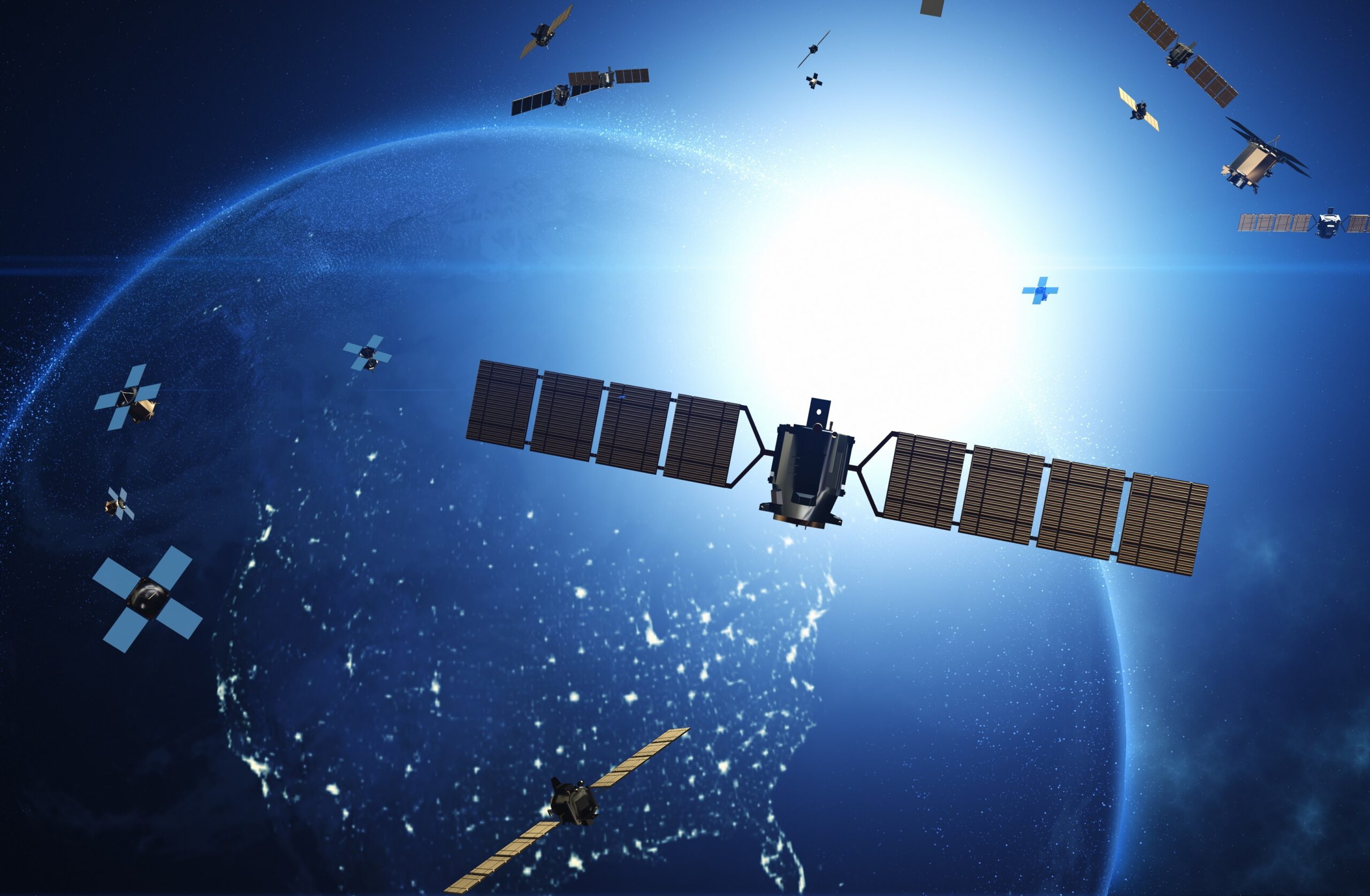
AIAA, along with Amazon Leo, Eutelsat, Iridium Communications, Inc., and SpaceX, has released the third edition of its best practices reference guide, “Satellite Orbital Safety Best Practices 3.0.”
The 3.0 version is updated since its original publication in 2022, including additional lessons learned and adding clarity and rationale for the recommendations. Extending the work of others, including NASA, the 18th Space Control Squadron, Secure World Foundation, and the Space Safety Coalition, the 3.0 version provides a consolidated, high-level set of recommended best practices that span design, launch, orbital operations, and disposal. “Satellite Orbital Safety Best Practices 3.0”
- Emphasizes the design phase for improved orbital safety
- Stresses pre-launch coordination and collision avoidance analysis, especially near crewed vehicles, mitigating hazards during post-launch identification and cataloging of new orbital objects
- Provides guidance on data sharing across design and operations emphasizing the critical importance of sharing and screening high quality ephemeris with covariance from deployment through disposal
- Includes an Appendix with data exchange recommendations to mitigate conjunctions
AIAA is providing access to download the reference guide, in advance of ASCEND 2026, to address the urgency of space traffic coordination. The document authors – low Earth orbit industry experts from major satellite constellation operators – will discuss the guide’s implementation during a panel discussion at ASCEND on 19 May at 3:30 p.m. Panelists include Sandra Magnus, principal, AstroPlanetview, LLC (moderator); Josef Koller, head of Space Safety and Sustainability, Amazon Leo; Dave Goldstein, Principal Guidance, Navigation, and Control Engineer, SpaceX; Pablo Minguijon Pallas, head of Flight Dynamics and Mission Analysis, Eutelsat (unable to attend); and Ryan Shepperd, Space Situational Awareness Lead, Iridium.
Registration for ASCEND 2026 is open.