
Eastern Iowa Airport Director Marty Lenss reflects on Iowa’s aerospace & defense industry and the future of the state’s aerospace cluster
From the moment 13-year-old Marty Lenss set foot in an airport, it was love at first flight.
“I remember how fascinating the commotion and chaos of the airport was, and of course, actually flying for the first time was incredible,” said Marty, recounting that first voyage to visit his sister in Canada. That love of flight was instrumental in leading him to become director of the Eastern Iowa Airport (CID).

“That experience lit the fuse,” he said.
Years later, after securing his pilot’s license and earning dual degrees in airport and business administration, Marty began a career in aviation that spanned multiple states and positions before being named CID’s director in 2014. During his tenure, Marty has become a central figure in Iowa’s burgeoning aerospace and defense industry, using his extensive aviation business background to help the state modernize and innovate into a new stratosphere among its regional competitors.
Building the foundation for regional aerospace leadership
Marty and the team at CID represent just some of the many Iowa-based aerospace and defense industry veterans leading this effort — a fundamental piece of which ensured that Iowa’s reputation for ease of doing business and lower-than-average operating costs aligned with how the state incentivizes aerospace-related businesses.
“About five years ago, we worked with state airport operators and aviation businesses to support the state legislature’s passage of the sales tax exemption bill on aircraft parts and labor,” said Marty. “For where we wanted to go, if you lack that sort of exemption, you’re dead in the water. So, enacting that was an important first step that’s helped supercharge our industry.”
While tax credits and needle-moving incentives are key for growth, workforce readiness is paramount for business leaders as well — especially in the midst of an industry-wide strain on talent. Fortunately, Iowa’s ecosystem of universities, apprenticeships and collegiate training programs aim to close this skills gap and ensure the state offers a deep pipeline of aerospace talent. CID itself is home to the Aviation Workforce Development Campus where students from Coe College and Kirkwood Community College train to meet the industry’s ongoing need for pilots and maintenance personnel. Programs such as these also give seasoned professionals like Marty an opportunity to share their knowledge with up-and-coming aviation professionals — a nod to the spirit of collaboration and mentorship that’s a consistent throughline among each of Iowa’s key industries.
“There’s a depth to this talent pipeline that I think is unmatched,” said Marty. “The quality of Iowa’s workforce speaks for itself, and legacy employers like Collins [Aerospace] and BAE [Systems] can tell you that firsthand.”
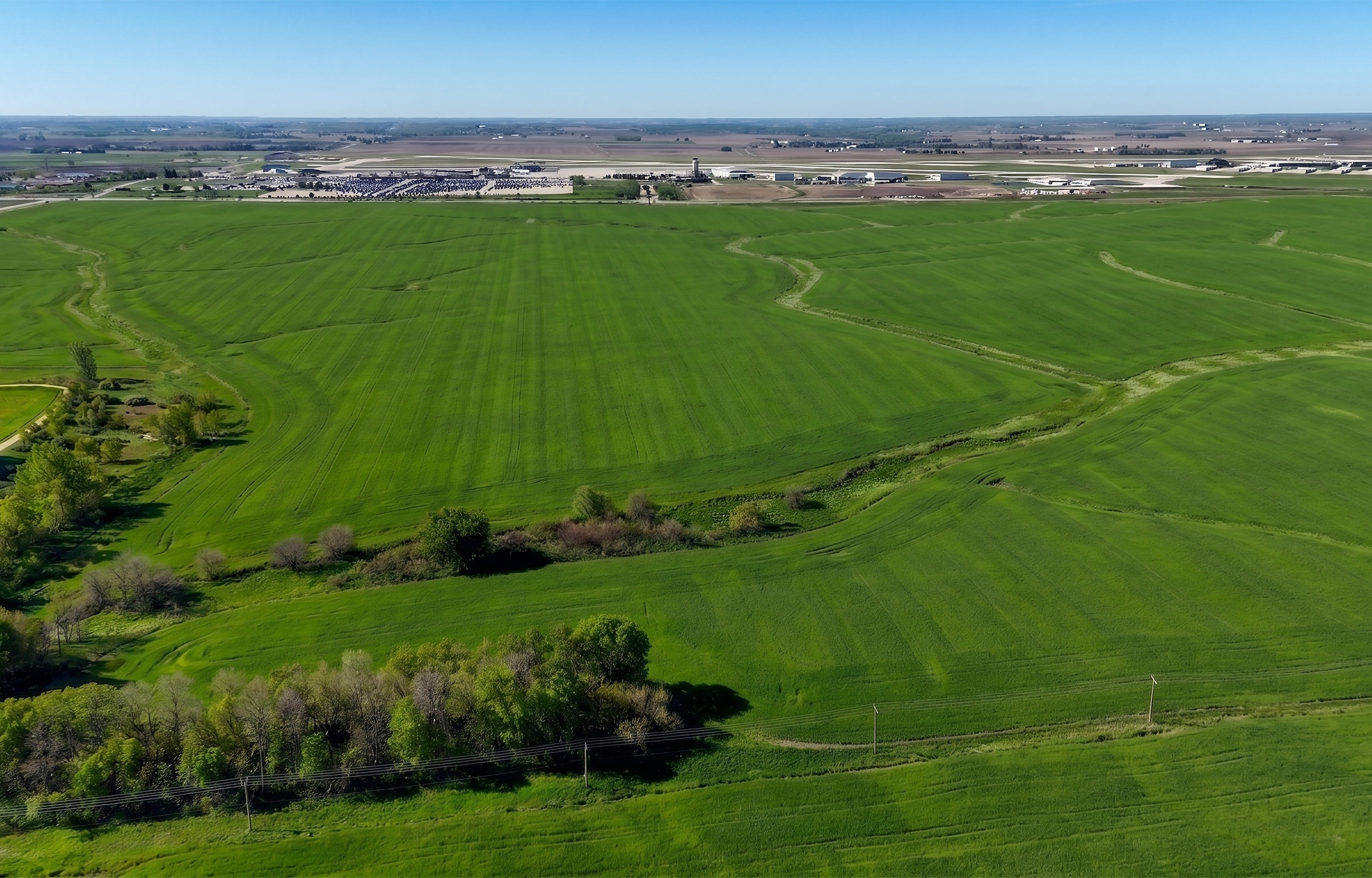
Another important building block for any aerospace and defense cluster is shovel-ready land and room to scale, both of which Iowa has in spades. Through Iowa’s very own Certified Sites program, developers were able to speed up selection of the 500-acre plot adjacent to CID as the future home of a SuperPark that will serve as the centerpiece of Iowa’s revamped aerospace and defense cluster for generations to come.
“Through the SuperPark, we want to create real opportunities for legacy aerospace companies operating here to drive deeper roots into Iowa, while also making Iowa even more attractive for companies considering expansion,” said Marty.
A legacy of excellence
The excitement for the forthcoming SuperPark and the cluster at large aside, Marty understands that it takes more than just talent, incentives and shovel-ready land to cement Iowa as a regional aerospace and defense hub: It requires a spirit of collaboration and support.
“There’s been this willingness from the state and other partners to identify the challenges we have collectively and come together to solve them,” said Marty. “That collaboration is part of what I think is going to help us really attract broad attention in the years ahead.”
With the building blocks in place and SuperPark construction slated to begin in 2026, Marty and state leaders are excited for the possibilities and ready to shine an even bigger spotlight on all that Iowa has to offer.
“Iowa’s legacy in aerospace is also a legacy of manufacturing, and our history in both is part of why Iowa sells itself,” said Marty. “We have the sites, we have the incentives, we have the workforce, we have the innovation. Here, you’re just a connection away from your next big thing.”
Get a closer look at the present and future of Iowa’s aerospace and defense industry during the 2026 Farnborough International Airshow (July 20-24) at booth #2428.