Transparency, safety and science: the UAP landscape in 2025
 By Cat Hofacker
 By Cat Hofacker
In January, the peer-review community marked a milestone when the paper “The New Science of Unidentified Aerospace-Undersea Phenomena (UAP)” appeared on arXiv, an online technical journal platform, synthesizing decades of government studies and charting a roadmap for scientific investigation. The paper laid out research questions and methodologies for the scientific community — a step toward systematizing UAP research. The survey signaled that UAP research was moving from speculation into mainstream academic discourse.
In February, the U.S. Congress revived legislative efforts for transparency. At the same time, the Pentagon’s All-Domain Anomaly Resolution Office (AARO) pursued reforms to professionalize case tracking and data handling. These changes aimed to create structured collection and declassification pathways to replace the ad hoc practices of earlier years.
In April, Rice University hosted the InterfaceRice conference that convened engineers, social scientists, historians, and defense experts to discuss policy, reporting standards, and research priorities. The event demonstrated growing interdisciplinary legitimacy within academia.
By May, AARO had drafted a case-management architecture designed to integrate inputs from the FAA, civil aviation, and military sensors, treating anomalous reports as a safety-of-flight concern rather than curiosities.
In July, Canada released the Sky Canada Project report via its Office of the Chief Science Advisor, recommending a dedicated UAP office under the Canadian Space Agency, a bilingual public reporting app, and a standardized database. Though not yet adopted, the report offered the most comprehensive national framework outside the U.S.
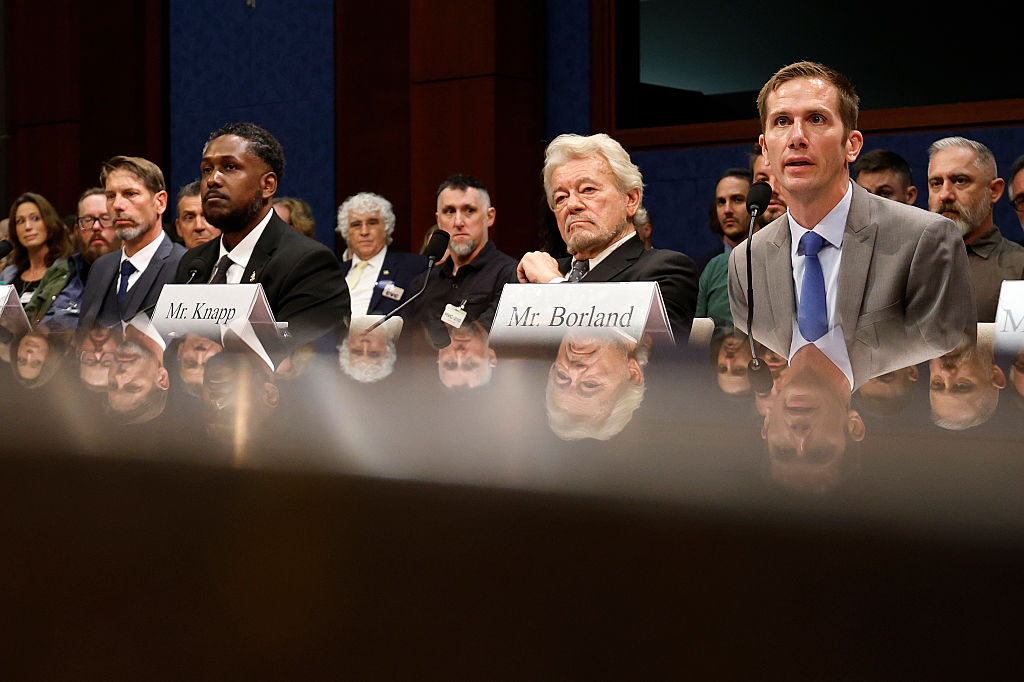
In early September, the U.S. House Oversight Committee convened a hearing, “Restoring Public Trust Through UAP Transparency and Whistleblower Protection.” Witnesses — including military veterans Jeffrey Nuccetelli and Dylan Borland — testified about UAP encounters and military responses. Lawmakers pressed for stricter oversight, whistleblower protection, and technical data standards.
That same month, H.R. 5231, the Safe Airspace for Americans Act, was reintroduced by Rep. Robert Garcia (D-Ca.) to mandate FAA procedures, archival practices and reporting safeguards. The legislation was originally introduced in 2024 and was endorsed by AIAA. In parallel legislation in the House of Representatives, the UAP Whistleblower Protection Act that was introduced in August seeks to shield individuals who disclose relevant research or operational spending.
In September, attention turned to the National Defense Authorization Act for fiscal year 2026. Lawmakers once again submitted UAP-related provisions calling for standardized reporting, further declassification requirements, and an interagency mechanism to evaluate potential aerospace hazards. As of mid-November, those amendments remained under negotiation in committee, with final adoption pending later in the legislative cycle. Their inclusion in such a central defense policy bill nevertheless demonstrated that UAP considerations have become institutionalized at the core of U.S. defense planning.
FAA formally issued Notice JO 7110.800, “Unidentified Anomalous Phenomena (UAP) Reports,” effective Oct. 26, ammending two key sections of FAA Order JO 7110.65, “Air Traffic Control.” In paragraph 1-2-6 “Abbreviations” and paragraph 9-8-1 “General,” the term “UFO” was replaced with “UAP.” The update, which also established mandatory reporting protocols for UAP observations by air traffic control personnel, explicitly links UAP reporting to the AARO framework created under 50 U.S.C. § 3373, recognizing UAPs as a “potential national security concern.” While the changes are largely terminological and procedural, aviation-safety advocates viewed them as meaningful steps toward reducing stigma around UAP reporting and integrating these events into mainstream Air Traffic Organization workflows.
Throughout the year, the UAP topic continued its evolution from a stigmatized subject to recognized aerospace research frontier and operational safety concern. For aerospace professionals, the lesson was practical and forward-looking: Treat anomalous aerial encounters as data to be collected, validated, and analyzed in the interest of flight safety, infrastructure protection, and scientific discovery.
Opener image: The U.S. House Oversight held a hearing in September 2025 on “Restoring Public Trust Through UAP Transparency and Whistleblower Protection.” Credit: Kevin Dietsch/Getty Images