
Hydrogen-powered projects take off, but barriers remain
 By Cat Hofacker
 By Cat Hofacker
In January, the BeautHyFuel project — a collaboration between several startups and industry giants in the European aeronautical industry — announced that it had achieved a successful ground test in September 2024 of the first liquid-hydrogen-fueled gas turbine engine for the light aircraft market. The test, performed jointly by Turbotech, Safran and Air Liquide of France, occurred at Air Liquide’s Grenoble Technologies Campus in France. A hydrogen-fueled gas turbine aeroengine based on an ultra-efficient regenerative cycle coupled to a cryogenic (minus 250 degrees Celsius) liquid storage system developed by Air Liquide was used to demonstrate the end-to-end integration of a propulsion system replicating all functions on a complete aircraft.
Also in January, Pratt & Whitney released details of its recently concluded Hydrogen Steam Injected Intercooled Turbine Engine project, which was awarded U.S. $3.8 million of funding from Advanced Research Projects Agency ‑ Energy in 2022. The design features a flow path with a reverse-facing hydrogen-burning engine core that produces both power and water vapor. A condenser, cooled by the liquid hydrogen fuel and cold fan air, removes water droplets from the airflow. This water proceeds to the evaporator where it cools the engine core exhaust while being converted to steam. The steam, in turn, is injected into the combustor, potentially improving energy efficiency by 35% compared to current single-aisle aircraft powerplants while achieving a 99.3% reduction in nitrogen oxide emissions.
In March, Beyond Aero of France announced several major updates to its BYA-1 electric light jet, including structurally integrated gaseous hydrogen tanks for enhanced safety, an advanced thermal management system for the electric ducted fans, and a battery-free 2.4 megawatt capacity hydrogen fuel cell system with built-in redundancy to power the two electric engines. The company claims that the design will cut operational costs by up to 55%, and that hydrogen fuel will cut fuel costs by 17% compared to Jet A-1 by 2030. Beyond Aero is working with the European Union Aviation Safety Agency to define a certification framework for hydrogen-powered aircraft.

In June, Conscious Aerospace, based in the Netherlands, received confirmation from the Dutch Ministry of Infrastructure and Water Management that the Hydrogen Aircraft Powertrain and Storage System (HAPSS) consortium, led by Conscious Aerospace, will receive €73 million (U.S. $85 million) for the next phase of hydrogen-fuel-cell-powered aviation. HAPSS aims to make the Netherlands a leading supplier of hydrogen fuel cell propulsion systems. The goal is to fly a fully certifiable liquid hydrogen electric propulsion system in the next four years.
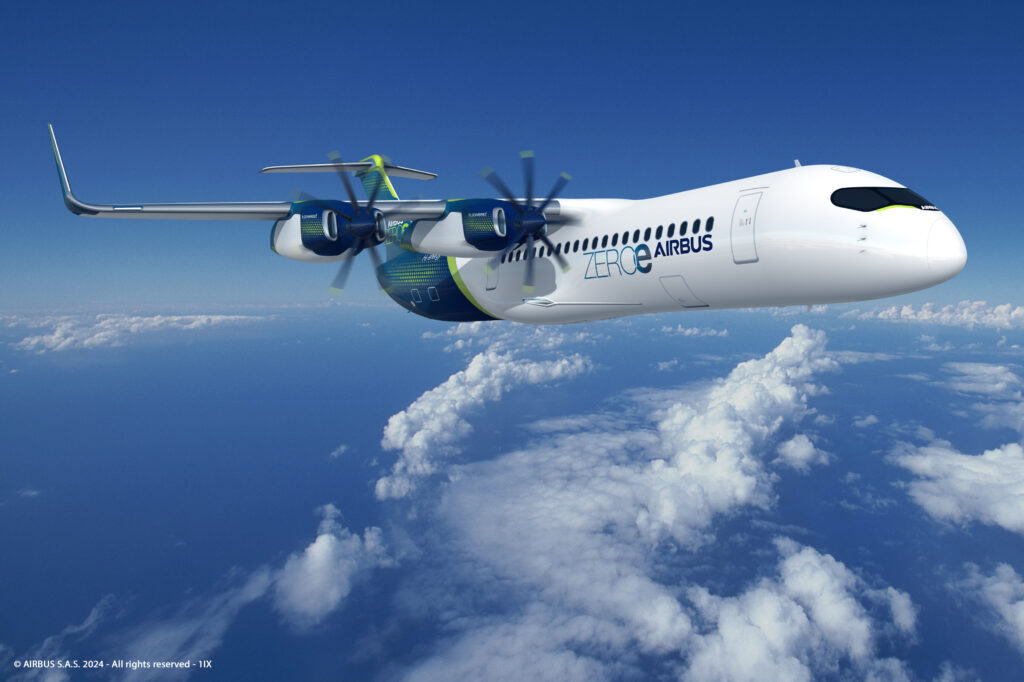
Amid this hype, however, came sobering news: Airbus announced in February that it is scaling back its ZEROe initiative to develop a hydrogen-fueled airliner by the mid-2030s, while looking at alternative paths using sustainable aviation fuels.
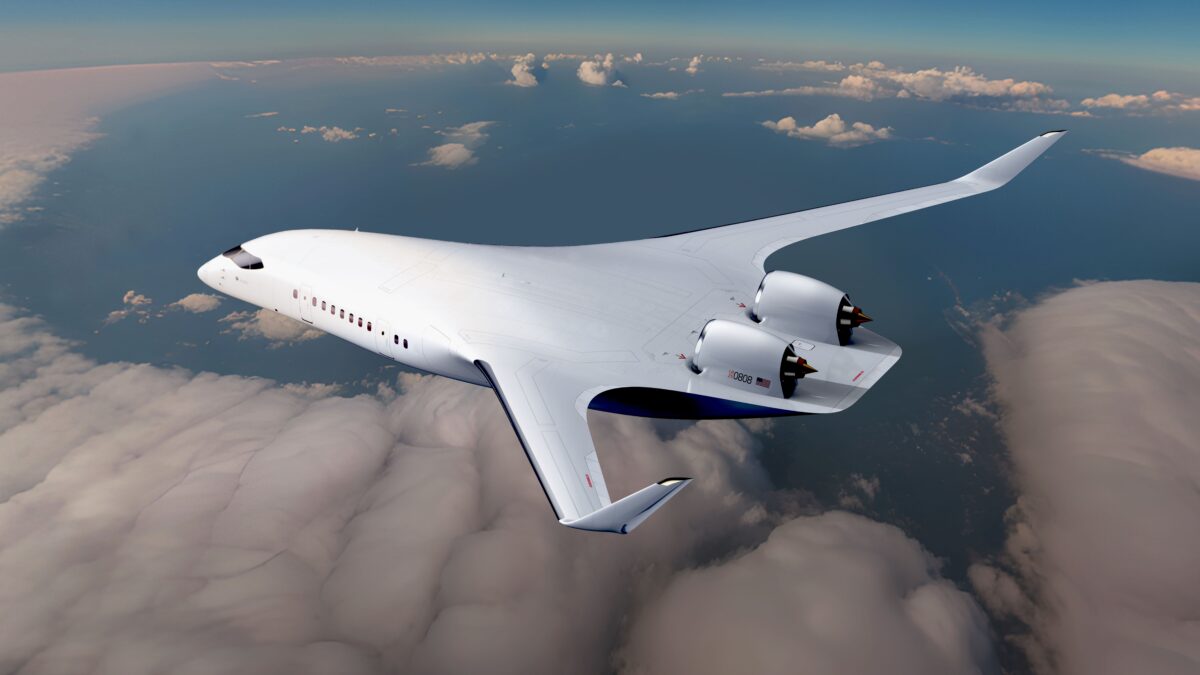
In more positive news, California startup JetZero announced in August that it will team with France-based SHZ Advanced Technologies under NASA’s Advanced Aircraft Concepts for Environmental Sustainability 2050 project. Their objective is to integrate SHZ’s patented liquid hydrogen storage and distribution technology into JetZero’s conceptual blended wing body, an airplane shape that permits larger hydrogen fuel tanks within the aircraft. Still, according to SHZ, JetZero will initially focus on a conventionally powered plane, with a hydrogen-based version as a potential variant.
Overall, companies report that the hesitation to adopt hydrogen involves practical implementation rather than with its potential to provide benefit as a fuel. Infrastructure, distribution and regulatory frameworks present enormous challenges, but the anticipated availability of green hydrogen, i.e. hydrogen produced from renewable energy sources at scale, is the barrier most often cited.
Opener image: California startup JetZero is developing a blended wing body demonstrator. This shape permits larger hydrogen fuel tanks to be integrated within the aircraft than is possible with a traditional tube and wing design. Credit: JetZero