
The Information and Command and Control Systems Technical Committee fosters a system-of-systems perspective on the conception, implementation, and sustainment of information and command and control systems in support of national security, aviation and space missions in public and private sectors.
IC2S areas in 2025 were dominated by next-generation architectures and prototyping at scale; AI, autonomy and human-machine teaming; resilient, adaptive and autonomous networking; joint, multi-domain and allied interoperability.
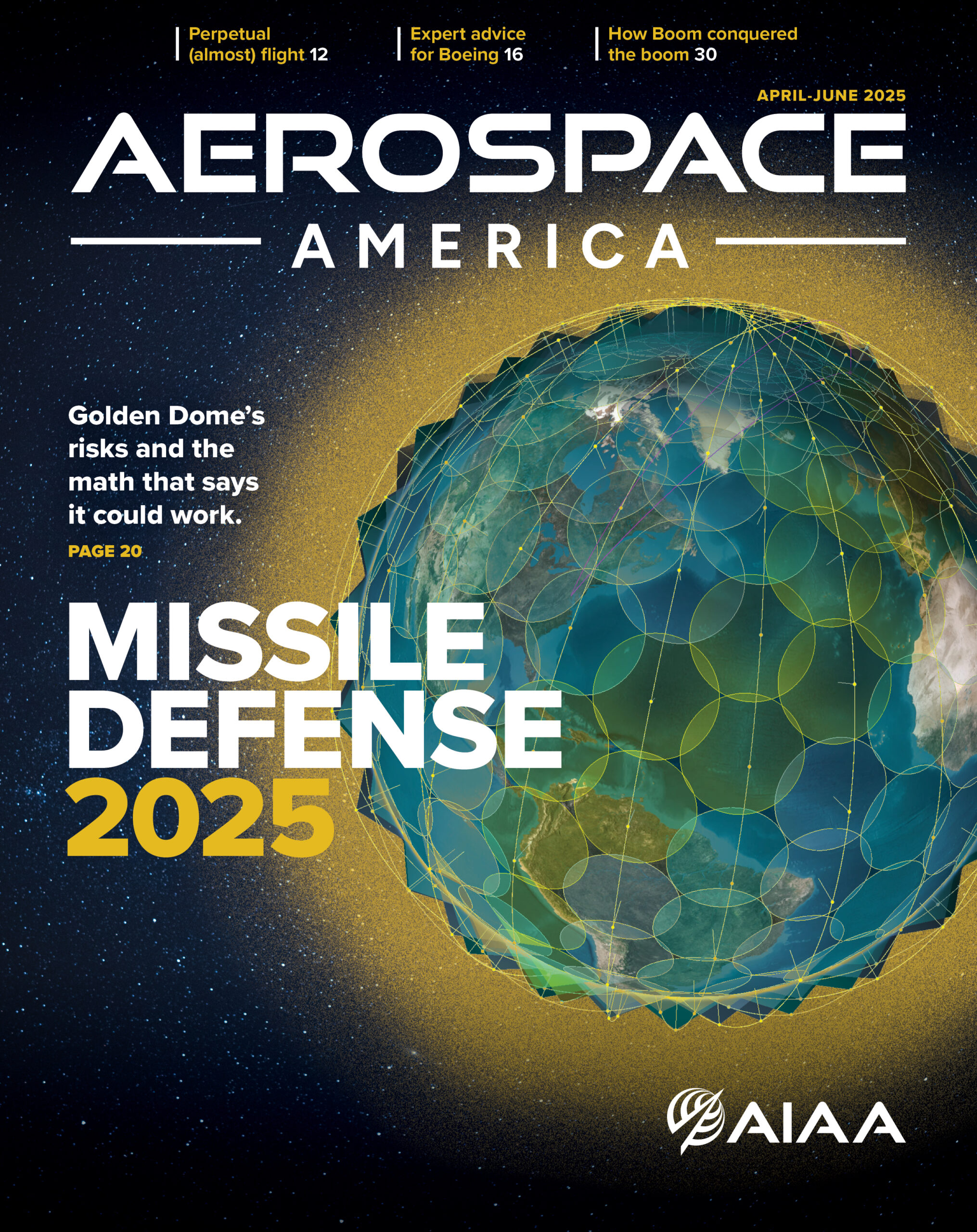
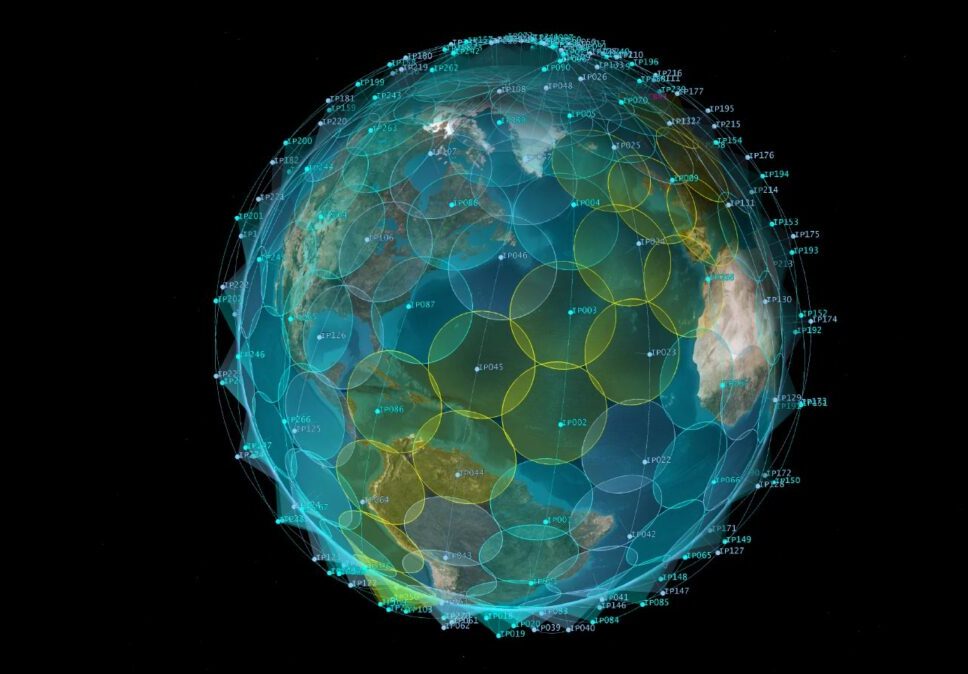
The year brought back an old adage from 1980s: the Reagan administration’s Strategic Defense Initiative (SDI) and space-based missile defense, often referred to as Star Wars. The renewed emphasis on space-based missile defense with the Trump administration’s proposed Golden Dome shield reinvigorated the roles of IC2S technologies for integrating distributed systems. Some of the technologies from SDI days were sensor fusion, lasers in space, vibration control and targeting and system reliability which remain central to the Golden Dome. A feasibility analysis of the Golden Dome concept, published in Aerospace America’s April-June 2025 issue, identified 273 satellite interceptor carriers seamlessly connected to the sensing and tracking layers to provide effective missile defense. Golden Dome, unlike SDI, would use proven technologies for networked systems, radar surveillance, and learning-based signal processing. Managing a large-scale system of systems integration entirely relies on the IC2S technologies that facilities timely decision making in dynamic and complex environments.
The Next Generation Command and Control System (NGC2) became a program of record in April. Designed to provide agile, modular and interoperable C2 services to the U.S. Army, the NGC2 technologies were tested under heavy and light formations during a large-scale exercise in March. This Project Convergence exercise brought together Army, Air Force, Navy, Marine Corps, Space Force, and international partners (including Australia, Canada, Japan and the U.K.). NGC2 and Project Convergence, which is focused on integrating sensors, effectors and communication systems to provide common operating picture and digital battle space, are cornerstone examples of IC2S.
In the civil realm, IC2S technologies are paving the path for operationalizing unmanned traffic management (UTM). In August, FAA issued draft regulations for permitting beyond-visual-line-of-sight (BVLOS) operations for uncrewed aerial vehicles (UAVs), a significant advancement toward scalable drone deployments. Almost a decade in the making, this new regulation could enable real-time coordination between drones for collision avoidance and FAA signed letters of agreements (LOA is the official regulatory approval that permits a company to operate beyond standard rules and use that technology in the National Airspace System) with emerging drone companies. This milestone set a precedent for nationwide and global drone traffic management, offering a scalable model for safe and efficient drone operations in increasingly crowded skies.
Looking forward, ongoing IC2S challenges include how to incorporate lessons from the Russia-Ukraine war with drone swarms; jamming and decoy payloads; automating on-entry decisions for small uncrewed aerial systems (sUAS) that request access to UTM-managed flight zones; and the Golden Dome technologies from many areas.
IC2S challenges grouped by domain:
Military & Defense Domain
- Drone Swarm Countermeasures: Addressing vulnerabilities exposed in the Russia-Ukraine conflict.
- Electronic Warfare Resilience: Mitigating effects of jamming and decoy payloads.
- Golden Dome Integration: Coordinating space-based missile defense across agencies (DoD, MDA, Space Force).
- Joint Interoperability: Ensuring seamless integration across multi-domain and allied forces.
Civilian & Aerospace Domain
- UTM Access Automation: Enabling real-time decision-making for small UAS requesting entry into managed airspace.
- BVLOS Operations: Scaling safe drone operations beyond visual line of sight.
- Airspace Coordination: Managing increasing drone traffic with real-time collision avoidance systems.
Technical & Cross-Domain Challenges
- System-of-Systems Complexity: Orchestrating large-scale, distributed systems with dynamic decision-making.
- Application-Agnostic Technology Deployment: Adapting IC2S technologies for diverse missions across defense, aerospace, and civilian sectors.
- Sensor Fusion & Reliability: Enhancing integration and dependability of sensing and targeting systems.
Opener image: A notional constellation of 273 interceptor carriers. Each of these satellites would be equipped with six missiles that could intercept missiles or nuclear warheads targeting the United States. Credit: Fred Kennedy with the Satellite Tool Kit