Global aviation all-accident rate down despite prominent accidents
 By Cat Hofacker
 By Cat Hofacker
In 2025, the volume of U.S. flights decreased by 1% from January to June relative to the same period in 2024, according to the U.S. Department of Transportation. Accordingly, U.S. airline on-time performance remained approximately constant over the same period relative to 2024. However, the percentage of flight cancellations grew over the same period — by 6%. One contributor was the ongoing air traffic control staffing shortages and problems caused by outdated equipment.
This was highlighted by a number of incidents, especially at Newark Liberty International Airport in New Jersey. For example, in April, air traffic controllers at Philadelphia’s terminal radar approach control, which manages traffic into Newark, lost radar communications with an aircraft for 30 seconds. In June, the U.S. Congress approved $12.5 billion for FAA to begin modernizing the U.S. air traffic control system through the Brand New ATC System (BNATCS) initiative.
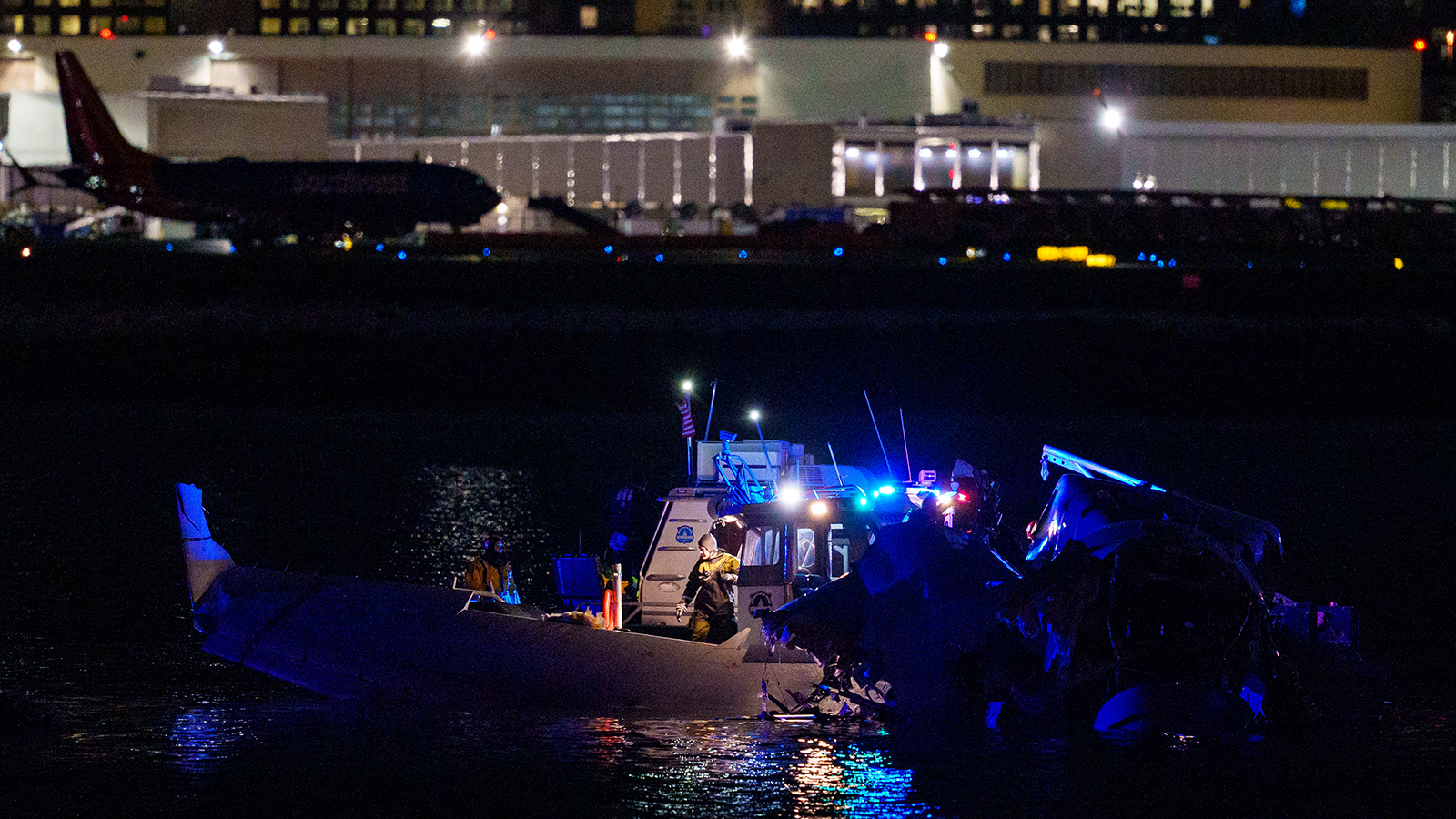
2025 also saw a handful of more serious incidents and deadly accidents. Among the most notable were the January midair collision between a U.S. Army helicopter and a Bombardier CRJ700 on approach to Ronald Reagan Washington National Airport, which killed all 67 aboard the two aircraft; and the June crash of an Air India Boeing 787-8 on takeoff from Ahmedabad Airport, with the loss of 241 lives on board the aircraft and 19 lives on the ground.
Despite these high-profile events, air accidents overall trended downward. As of June 20, the global all-accident rate as reported by International Air Transport Association was 0.77 per million flights — a 30% reduction relative to the 2024 rate.
In August, FAA released the long-awaited Notice of Proposed Rulemaking to normalize unmanned aircraft systems (UAS) beyond visual line of sight (BVLOS) operations. This included two new proposed regulations: Part 108, which will govern the operation of UAS for complex commercial operations such as BVLOS, and Part 146, which will govern and certify the use of automated data service providers that will support the digital infrastructure to enable those operations. The rule is expected to open up UAS operations in the U.S. to significant growth.
In June, U.S. President Donald Trump signed the executive order, “Unleashing American Drone Dominance,” which directed the above rulemaking process for BVLOS to be expedited while also directing the establishment of an electric vertical takeoff and landing (eVTOL) integration pilot program to accelerate the deployment of these aircraft. This came after the first global commercial advanced air mobility operations began in March, when EHang was granted an air operator certificate in China to conduct commercial, human-carrying flights. In the U.S., Joby Aviation performed its first flight between two U.S. airports in August, safely operating in FAA-controlled airspace alongside other aircraft, while Archer Aviation, also in August, completed its longest piloted flight of just under an hour.
Europe moved ahead with contrail mitigation strategies, with mandatory reporting of non-CO2 aviation impacts starting in January under the European Union’s Directive 2023/958. This may lead to potential new policies being introduced as early as 2027 if deemed necessary to reduce contrail impacts. The EU Emissions Trading System will eventually need to incorporate contrails into its carbon accounting rules, moving beyond fuel-based emissions.
In response, in January, NASA, FAA and NOAA published the Contrails Research Roadmap, which outlines four priority areas: atmospheric science, weather prediction, cruise emissions and operational management. In June, Trump also issued an executive order that began the process of removing the decades-long ban on commercial supersonic flight operations over land, by requiring FAA to repeal the overland restriction and develop new noise standards.
Contributors: Savas Uskent, Luke Burlovich, Gabriele Enea, Tom Reynolds
Opener image: Emergency response units assess the wreckage of the Bombardier CRJ700 that on Jan. 29 collided with a U.S. Army UH-60 helicopter near Reagan National Airport outside of Washington, D.C. Credit: Andrew Harnik/Getty Images