
From Golden Dome to Iron Dome, missile defense remains critical
 By Cat Hofacker
 By Cat Hofacker
During the ongoing conflict in Ukraine, there have been innumerable Russian drone and missile strikes targeting Ukraine’s critical energy infrastructure. Russian forces are launching large numbers of missiles and drones, while relying on ballistic missiles to strike specific targets. The Patriot air defense system is Ukraine’s answer to Russia’s ballistic missiles.
In June, Israel mounted an attack that began a 12-day war with Iran. That same month, U.S. troops targeted Iran’s nuclear infrastructure, and Iran retaliated by launching missiles at Al Udeid Air Base in Qatar. The Patriot saw its single largest engagement in U.S. military history protecting the air base from those missile strikes, according to Chairman of the Joint Chiefs of Staff Gen. Dan Caine.
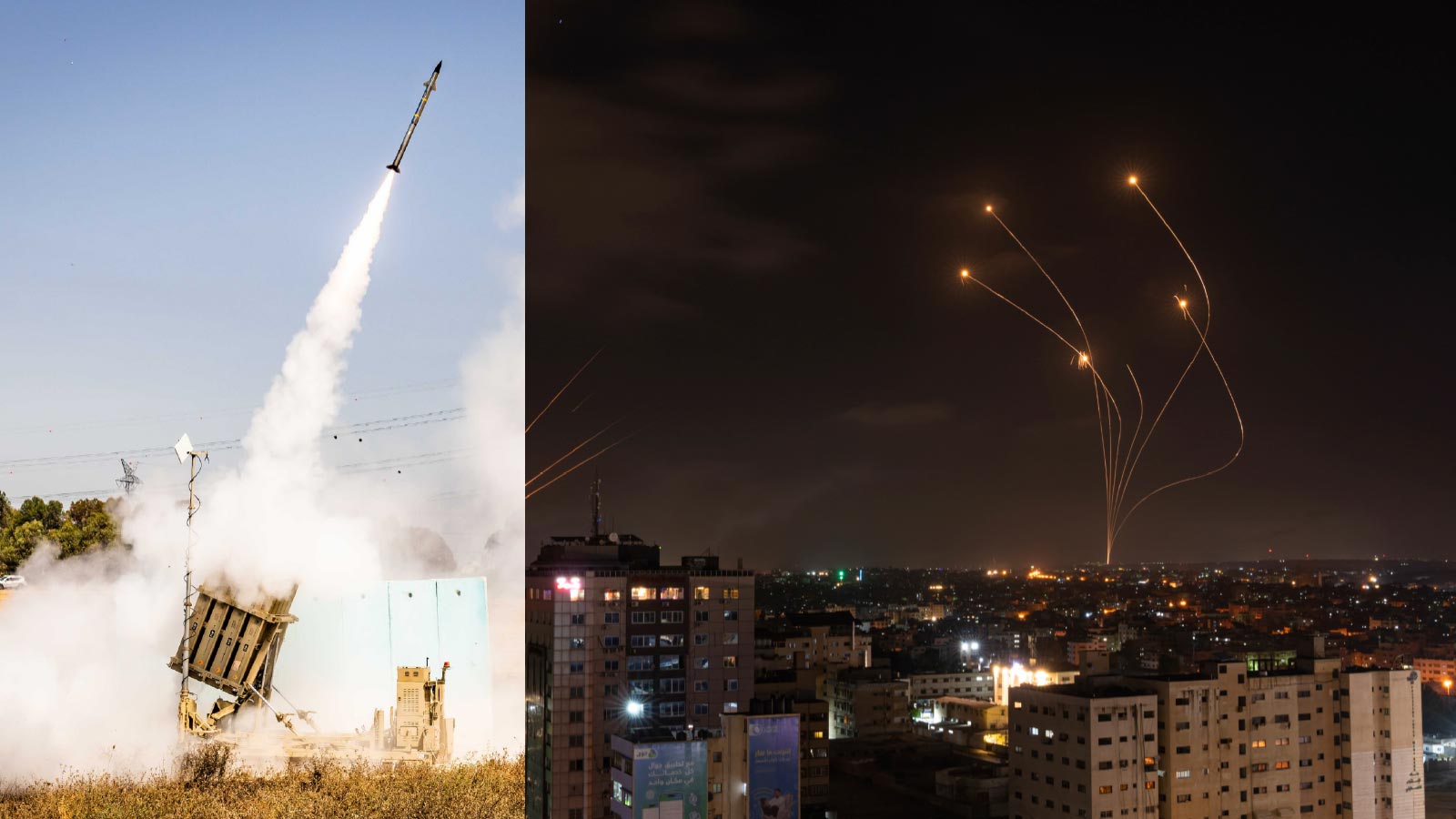
Israel has relied on its Iron Dome missile defense system to intercept adversarial threats. Iran attacked Israel during the 12-day conflict with missiles and drones, stressing Iron Dome and Israel’s overarching air defense systems. Iron Dome employs a radar to detect incoming threats, a battle management and control system that calculates threat trajectories, and missile launchers that fire interceptors when a rocket threatens lives or infrastructure. The American Jewish Committee estimates that Israel has intercepted approximately 90% of incoming threats during the 12-day conflict, leveraging Iron Dome, its own missile defense systems (for instance, David’s Sling, Arrow 3), and U.S.-supplied Terminal High Altitude Area Defense (THAAD) and Patriot systems.
In May, U.S. President Donald Trump announced he’d selected a design for his proposed Golden Dome missile defense shield, inspired by Iron Dome, to “protect our homeland.” Trump said Golden Dome is projected to cost $175 billion and should be operational by the end of his term in January 2029, and referred back to former President Ronald Reagan’s Star Wars defense system.
As the Pentagon worked to finalize the architecture, Golden Dome faced scrutiny over an uncertain budget and timeline. The independent Congressional Budget Office estimated it could cost as much as $831 billion over 20 years. From a technology standpoint, various experts noted Golden Dome is much more complex than Iron Dome because of the size of the U.S. (more than 400 times larger than Israel) and the types of threats to intercept. Iron Dome deals with relatively slow moving, short-range projectiles, but U.S. adversaries such as China and Russia have capabilities such as intercontinental ballistic missiles (ICBMs) that strike at hypersonic speeds.
These complexities are perhaps illustrated by ongoing delays and cost overruns plaguing the Sentinel and Next Generation Interceptor programs, the U.S.’s next-generation ICBM and ground-based midcourse defense systems, respectively.
In 2025, missile defense continued to prove itself critical through current ongoing conflicts, and it’s clear the U.S. will continue to advance its missile defense technology through Golden Dome and other programs.
Contributors: Marc Bernstein, Brandon Chynoweth
Opener image: Since 2011, Israel has relied on its Iron Dome short-range missiles (left) to intercept rockets and other weapons fired from within a 7,000-kilometer range. The image at right is of a May 2023 interception of rockets fired from Gaza. Credit: Fatima Shbair/AP, Israel Air Force