Space Force approach to launch could provide lessons for Pentagon acquisition reform, official says


ORLANDO, Fla. — The U.S. Space Force’s efforts to facilitate more government and commercial launches from Cape Canaveral could offer lessons for Defense Department officials seeking to overhaul the Pentagon’s acquisition approach, Air and Space Force officials said today.
In November, Defense Secretary Pete Hegseth detailed his vision for the former defense acquisition system. “It means that we will be open to buying the 85% solution and iterate together over time to achieve the 100% solution,” Hegseth said.
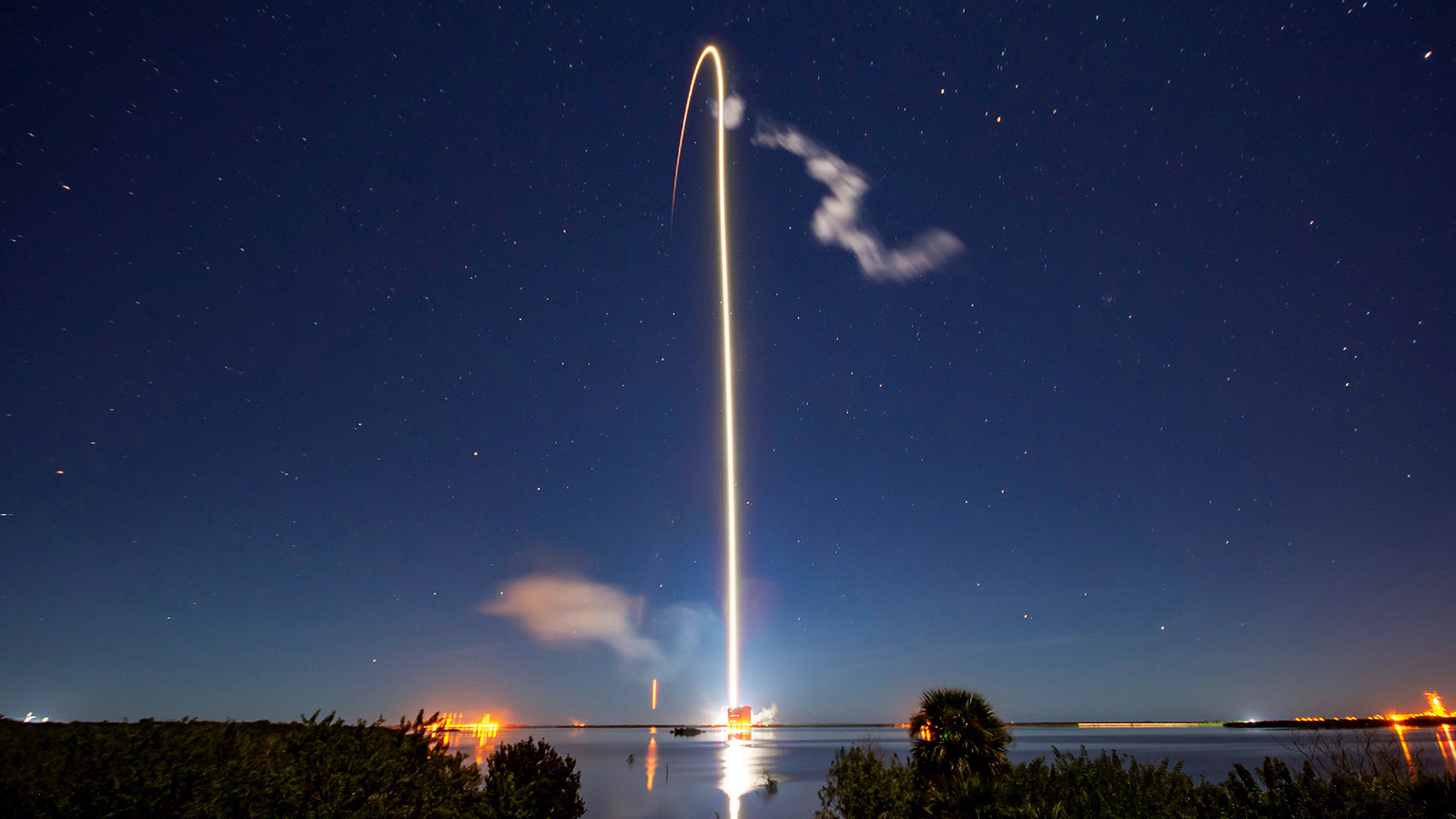
Asked during a panel at the Interservice/Industry Training, Simulation and Education Conference how the services can enable that, Space Force Maj. Gen. Jim Smith, commander of Space Training and Readiness Command, pointed to the transformation of the U.S. Eastern Range. When the space shuttle program ended in 2011, the region saw only a few launches annually, he said. This year, SpaceX alone is on track to conduct nearly 170.
“We’re talking about trading operational risk for acquisition risk, or accepting more acquisition risk to minimize operational risk,” Smith said. He recalled being in command of operations on the range when “some commercial companies were getting started and trying to launch faster.”
“For years, we were trained that the goal was to get risk as close as you can to zero. But as the commercial companies came onto our range, they questioned a lot of those assumptions,” Smith said.
Some of the increased cadence can be attributed to new technologies like automated launch abort systems, he said, but “it’s more a risk tradeoff that has occurred, and they’re willing to take some additional acquisition risk in order to drive operational outcomes at a faster rate. So, I think that’s what we need to do.”
He said such increased risk would never be to the public, but rather in “test, training, acquisition.”
“It’s a risk calculation, and we have to be careful of the areas that we take risks,” Smith added.
On the same panel, Air Force Maj. Gen. Luke Cropsey, program executive officer for command, control, communications and battle management, said he still needs insight and ideas on transitioning to more rapid deployment of simulation technologies.
“I would ask, what does a fully synthesized hybrid training environment look like, where I’m doing real exercises, and I am then augmenting the scale of that in a synthetic environment so that I am getting the best of both worlds,” Cropsey said.