Scrubbing away lunar dust
 By Keith Button
 By Keith Button
Researchers in Colorado are wrapping up testing this month on a device they hope will clean up a big problem for future astronauts: moon dust.
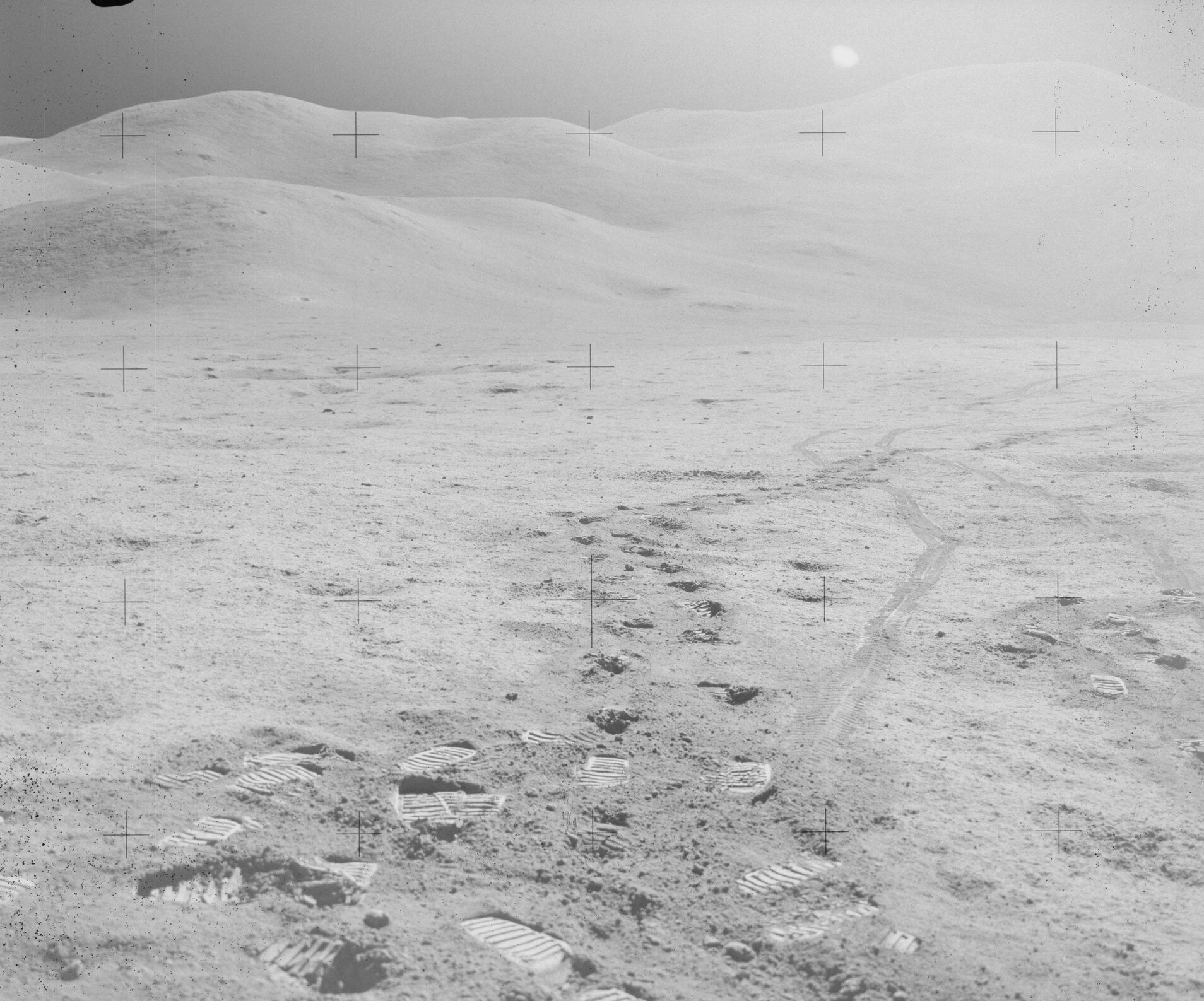
The staticky, sticky, abrasive substance could be a critical challenge for future surface missions as part of the Artemis program and a proposed surface base in 2030. A range of activities, from landers touching down to rovers traversing the lunar terrain, could kick up the fine particles, which linger in the vacuum surrounding the moon for long periods due to the weak gravity — one-sixth as strong as Earth’s.
That poses myriad risks for future habitats and other equipment. Dust could build up on solar panels and sap their power generation, or clump onto radiators or batteries and overheat them. If breathed in by astronauts, the particles could cause silicosis.
The engineers and scientists behind the Lunar SCRUB (Surface Cleaning Robotic Unit with electron-Beam) project propose to solve the dust problem with an electrostatic cleaning device. A smaller version of the toaster-sized metal box prototype could be mounted on the robotic arm of an autonomous lunar terrain vehicle or carried by an astronaut and passed over surfaces at an arm’s length distance to lift the dust away, said David Asner, chief science officer of Orbital Mining Corp. The Golden, Colo.-based company is developing the device with another startup as subcontractor, Space Dust Research & Technologies (SDRT), under a $150,000 NASA contract.
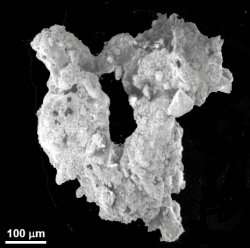
Moon dust consists of fine particles, like Portland cement powder, that are also microscopically more jagged than broken glass — the result of lava rock pulverized over millions of years by micrometeor impacts, without any of the smoothing effects of water or weather that surface particles on Earth are exposed to.
These abrasive particles become electrostatically charged from their exposure to the ultraviolet light of the sun and from rubbing together, said Christopher Dreyer, a space resources professor at the Colorado School of Mines and adviser to Orbital Mining. Dreyer is not part of Lunar SCRUB, but the project is renting the Colorado school’s vacuum chamber for testing.
All these factors make moon dust “hard to get off a surface,” Dreyer said, much like staticky Styrofoam packing peanuts that manage to escape their box. “But now imagine it’s all powder.”
The lunar environment compounds the problem. The absence of air and much weaker gravity means any strong force — such as a rocket plume — can send dust particles flying for long distances, even to the opposite side of the moon, according to Dreyer.
In the decades since the Apollo missions, researchers have studied various removal methods, with mixed results, Dreyer noted.
Physical tools like brushes are easily clogged and liable to scratch surfaces, while blowing dust clear with something like pressurized gas isn’t sustainable because it requires constant resupply. On the other hand, electrostatic cleaning shows promise because it could be solar-powered, he said.
Scientists are also considering surface treatments to repel moon dust, such as an electrostatically charged grid applied in a film like that of a cellphone touchscreen or microscopic etching to allow only a few high points to contact the surface of a dust particle, preventing adhesion.
Lunar SCRUB aims to solve the cleaning issue through the power of static charges. When an electron beam is pointed at moon dust that has collected on a surface, it induces secondary electrons that become trapped in the many microcavities created by the jagged dust particles, said Asner. As the static charge builds up, the charges repel and the dust is lofted off the surface.
This hands-off method also could prevent any hardware damage during removal, said Chris Tolton, CEO and co-founder of Orbital Mining. “We don’t want to scrape it and then damage equipment even more. We want to loft it away so it just falls to the ground,” Tolton said.
Built by SDRT, the electron beam device is a box about one-third the size of a loaf of bread, with a wire stretched across a circular opening covered by a wire mesh. When current runs through the wire, it glows like a filament in a lightbulb, giving off electrons that flow through the mesh to the target surface.
For the NASA project, the researchers wanted to prove Lunar SCRUB could remove dust from flat glass surfaces, like those of solar panels, and from parts with nooks and crannies. Starting in January, they tested it in a 2-meter-long cylindrical vacuum chamber at the Colorado School of Mines.
They tested with simulated moon dust — created on Earth and sold by the ton — representing three common types from the lunar south pole and the dust encountered by the Apollo missions. For the flat surface tests, the dust was sprinkled from a flour-sifter-like device onto 2.5 by 5-centimeter clear glass plates that were placed at a range of angles inside a vacuum chamber, with the electron beam device about 12 cm from the surface.
Video recordings show that once a vacuum had been pulled and the electron beam was turned on, the dust fell from the plates — sometimes suddenly after a puff of dust and at other times cascading slowly like a tiny waterfall.
The electron beam should be more effective in the vacuum around the moon than in the less-perfect vacuum of the test chamber, where stray molecules of air can still get in the way, Asner said. In some of the tests, molecules of air in the chamber became ionized, creating a faint plasma glow.
The trials demonstrated that the more vertical the test surface, the better the device worked. Lunar SCRUB was effective at removing even the tiniest particles, smaller than the thickness of a thin human hair, Asner said, which are the stickiest.
“That’s the stuff that mechanical methods like a brush can’t take off. And that is what NASA is worried about,” he said.
Also, the more power applied to the electron beam, the farther the distance it could clean from. “Ideally, you would like to have one that you can set as far away as you would like, and then cover a much larger surface with an all-in-one sweep,” he said.
The researchers next planned to mount the electron beam on a robot arm for testing, but the arm wasn’t designed for a vacuum environment. As a result, its lubrication dried out and it seized up, forcing them to adapt.
Instead of an actual robot arm, they decided to simulate the relative movement between an arm and a dusty surface. They mounted the electron beam device on a rail with a motor to control its linear movement and mounted the target surface on a motor to rotate the surface.
“If you change the angle of the electrons on surface, you can find your way into additional cavities that you might not have access to if both sample and beam are stationary with respect to each other,” Asner said. Besides varying the direction of the electron beam, future iterations of the device that can alternate between high and low power or pulse the beam on and off might help shake more dust free.
The Lunar SCRUB team plans to report its findings to NASA by the end of March and, if approved for a second-phase contract worth nearly $1.3 million, demonstrate a prototype in a NASA vacuum chamber, perhaps cleaning a vertical solar panel like those planned for deployment on the moon.
Orbital Mining also has entrepreneurial hopes for the device beyond NASA’s interest. Tolton, the company’s CEO, envisions a dust mitigation product that could be sold to launch providers or as a service for commercial lunar rovers when they recharge their batteries, much like a carwash-and-fill-up deal at a gas station.
“Imagine rovers are going to be kicking up a lot of dust; they’re going to need to remove it or address the issue, so they get recharged and cleaned,” he said.
And because dust removal could be a necessity for nearly every future lunar surface operation, the potential market could be “as large as the presence on the moon is,” Asner said.