

The United States enters 2026 at a pivotal moment for aerospace. Demand for safer and more resilient air transportation is rising. Space is becoming more congested, more commercial, and more geopolitically consequential. Defense requirements are evolving rapidly, shaped by real-world operational lessons and industrial-base constraints. At the same time, America’s long-term competitiveness depends on research investment, a strong workforce pipeline, and policy frameworks that enable innovation while protecting national security.
To help policymakers and the aerospace community focus on the most consequential priorities, the American Institute of Aeronautics and Astronautics (AIAA) has released its 2026 Key Issues. The Key Issues reflect AIAA’s mission as a neutral, technical convener at the intersection of government, industry, and academia. They are designed to support practical oversight, responsible modernization, and sustained U.S. leadership across the aerospace enterprise.
Across all domains, the Institute’s approach is consistent: strengthen safety, modernize systems, protect innovation incentives, and support the workforce and industrial base that make aerospace leadership possible.
Aviation: Modernizing the National Airspace System for Safety, Resilience, and Growth
AIAA’s aviation priorities center on modernization of the National Airspace System (NAS) to preserve safety and enable long-term growth. While the NAS remains one of the most advanced airspace systems in the world, many of its underlying infrastructure and monitoring systems are decades old and increasingly vulnerable to cyber-attacks and operational disruption.
The Institute urges sustained Federal Aviation Administration funding for the Next Generation Air Transportation System (NextGen), including time-based, precision flight operations and digital air traffic control modernization. These investments are essential to strengthening safety, cybersecurity, and resilience, and to preparing the NAS for emerging applications such as advanced air mobility and commercial space operations.
AIAA’s aviation platform also emphasizes the importance of regulatory and operational clarity for advanced air mobility (AAM) and autonomous flight. The near-term success of AAM will depend on scalable certification and integration pathways that enable early operations while methodically preparing for future autonomy. In parallel, the Institute highlights the need to address aviation manufacturing constraints, including qualification bottlenecks, supply-chain fragility, and skilled-trades workforce shortages that collectively slow technology adoption and production readiness.
National Security: Readiness Depends on Industrial Capacity, Sustainment, and Acquisition Speed
In national security, the Institute’s focus is on the growing gap between U.S. defense objectives and the practical constraints of industrial capacity, sustainment models, and acquisition timelines.
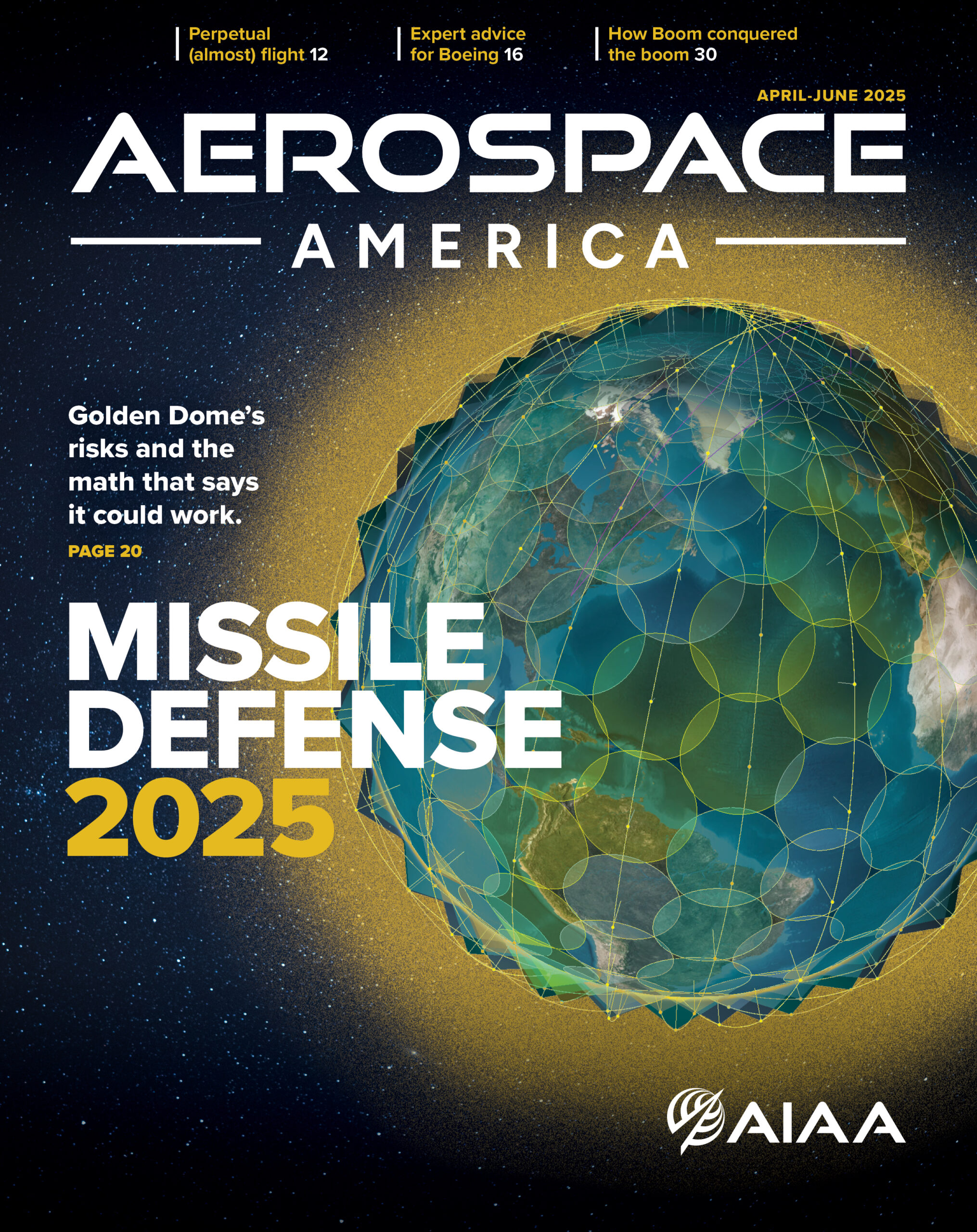
One of the most prominent emerging priorities is Golden Dome for America and broader multilayer defense architecture discussions. While the technology landscape is advancing, recent conflicts and war-gaming scenarios have underscored that industrial fragility, not only engineering feasibility, may be the decisive limiting factor. AIAA’s emphasis is on readiness, qualification speed, workforce capacity, and supply-chain resilience rather than any specific program or contractor outcome.
The defense right-to-repair debate is also a defining issue for 2026. Sustainment access is essential for readiness, but sweeping mandates risk undermining the intellectual property protections that incentivize private investment in defense innovation. The Institute supports smart sustainment approaches that ensure tailored access to technical data for maintenance and repair while preserving appropriate OEM oversight and protections.
Finally, AIAA continues to prioritize acquisition reform as a readiness imperative. The United States must field capability at the speed of relevance, but reforms must balance speed with accountability. The Institute supports approaches that increase transparency into industrial risk, incentivize predictable procurement, and accelerate qualification and testing processes without compromising operational realism or safety.
Research & Development: Innovation Requires Stable Investment and Policy Precision
Sustained U.S. aerospace leadership depends on a strong national innovation base. AIAA emphasizes stable federal research investment, modernization of laboratories and test infrastructure, and policies that encourage private-sector innovation.
The Institute urges Congress and the administration to support long-term research programs across NASA, the Pentagon, and other agencies while also investing in the physical and digital infrastructure that makes research possible. Laboratory recapitalization and test range modernization are not abstract priorities, rather they directly shape the pace of technology maturation and workforce training.
AIAA also highlights the importance of internal research and development (IR&D) incentives as well as the tax and accounting frameworks that influence private-sector investment decisions. For the aerospace sector, long-cycle innovation depends on sustained private R&D spending, particularly in dual-use technologies.
In export controls, the 2026 platform focuses on modernizing academic ITAR and export-control. The Institute supports reforms that protect national security through precision while preserving the STEM workforce pipeline. Universities and student teams remain essential sources of talent and innovation, and regulatory ambiguity can create chilling effects on hands-on learning and academic–industry collaboration. AIAA advocates for targeted reforms that clarify academic exemptions, align definitions with complementary safety frameworks, and enable responsible research engagement.
Space: Budget Stability, Soft Power, and Orbital Safety
Space remains a defining domain for U.S. leadership. AIAA highlights three priorities: NASA’s budget stability, cislunar soft power, and civil space traffic management.
The Institute emphasizes that NASA’s dual mission is exploration and science, which requires predictable, balanced funding. Program instability undermines workforce continuity and erodes U.S. leadership. Sustained investment across human exploration, scientific research, and technology development is needed.
AIAA identifies the growing geopolitical importance of cislunar space. The question is increasingly not only who returns to the moon first, but who shapes norms of behavior and operational expectations. AIAA supports U.S. leadership through bold missions, international partnerships, and policy frameworks that reinforce transparency, sustainability, and freedom of operation.
The Institute also highlights the urgency of space traffic management and space situational awareness. Orbital congestion is rising rapidly, and civil capabilities are essential for safety, attribution, and sustainable operations. AIAA supports stable funding and authority for civil space traffic coordination and integration of commercial data sources, ensuring the United States remains the global leader in safe, responsible space operations.
AIAA’s Role
The Institute stands ready to support policymakers and stakeholders with neutral technical expertise, standards development, and convening power to advance solutions that are achievable, measurable, and in the national interest.