Industry awaits Space Force guidance on maneuverable satellite refueling


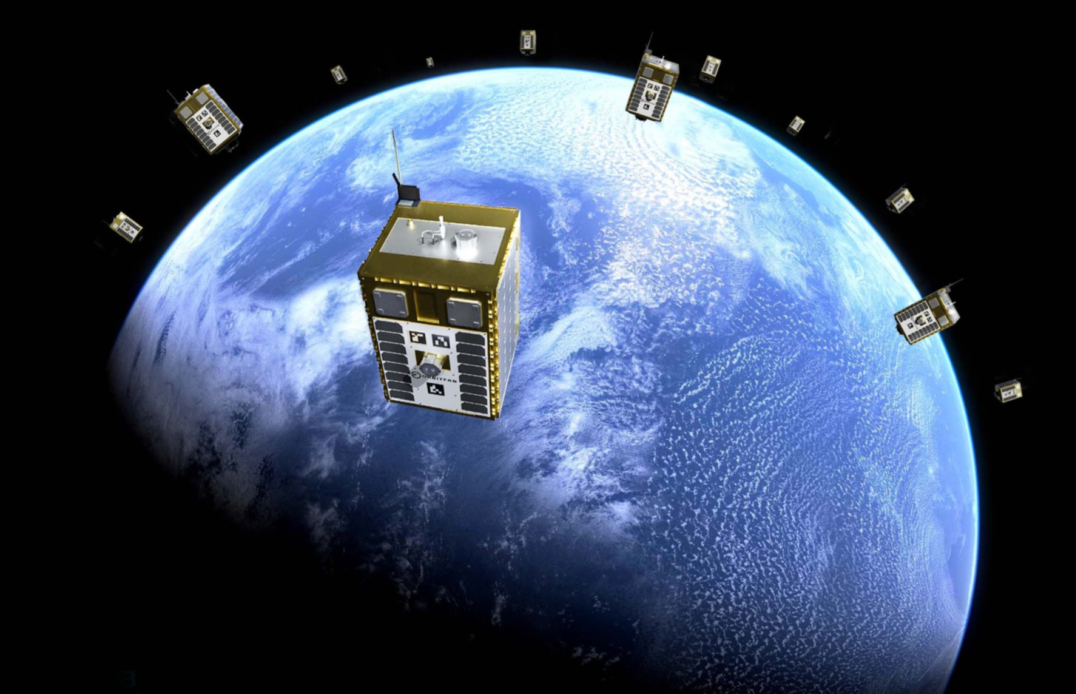
As space becomes an increasingly kinetic and contested warfighting domain, the U.S. military has its eye on technologies that would allow satellites to maneuver in geostationary orbit — both to avoid becoming sitting targets and to shift locations to better support military activity on the ground.
Key to these ambitions is the nascent industry focused on a host of on-orbit servicing activities, including satellite refueling. But even as these technologies continue to mature, the service has yet to make significant investments in acquiring refuelable satellites and the support infrastructure they’d require.
That could change this year, with Space Force poised to embark on a series of initiatives involving the test and evaluation of maneuverable satellites in GEO — some refuelable, some not. Industry officials and observers say they’re waiting on the military to publicly commit to a concept of operations and investment strategy that will help the private sector chart its own planning and spending. The upcoming tests and demonstrations are likely to inform those decisions.
A request for information published in September, though since removed from the federal contracting website sam.gov, would see Space Force partnering with commercial companies to purchase a fleet of maneuverable satellites. Another effort underway, known as RG-XX, focuses on developing a constellation of reconnaissance satellites to replace the existing Geosynchronous Space Situational Awareness Program (GSSAP) sats, with a refueling requirement explicitly built in. Separately, a pair of Space Force-funded demonstrations now planned for 2026 and 2027 — Tetra-5 and Tetra-6 — are set to test out on-orbit docking and refueling hardware from a trio of companies on satellites orbiting in GEO.
With additional refueling demos planned in the following years, it’s not yet clear which national security leaders will prefer: continuing to rely on less expensive, nonfuelable satellites that need to be disposed of at the end of their life, or investing in the infrastructure and equipment required for satellite refueling, which may be costlier up front but could yield cost savings over time.
“One of the biggest things that we want to get out of it is to help us flesh out the requirements and [concept of operations] and understand the real feasibility,” Lt. Gen. Philip Garrant, commander of U.S. Space Command, told reporters in April, according to an Air and Space Forces Magazine report. “And does it make sense? Is this a good business case? Does it make sense to do that, particularly when you talk about [the cost of] launch, or is it to better spend money on a cheaper satellite that’s just cheaper to replace?”
Space Force and Space Command declined to provide interviews or respond to written questions.
A December report from the NASA-funded Consortium for Space Mobility and ISAM Capabilities (COSMIC) made the case for investing in refueling. The authors concluded that the technology for refueling GEO satellites is ready and that U.S. government and national security organizations should lead the way in targeted spending that provides a demand signal to industry to invest in needed infrastructure.
“Current command structures treat on-orbit propellant as a scarce commodity, often requiring multiple levels of approvals before executing any maneuver out of concern that doing so will reduce the operational life of the spacecraft,” the report reads. “In a world where refueling is safe, reliable, and effective, operational commanders could maneuver more rapidly to perform missions that require mobility without having to worry about running out of fuel and shortening lifespan.”
Greg Richardson, executive director of COSMIC, said one simple step that the service and industry could take now would be to equip all new GEO satellites with relatively inexpensive grapple fixtures and fuel ports to enable the future possibility of refueling. A further one, he added, would be for Space Force to commit to a concept of operations and the kinds of fuel and infrastructure vendors should plan to provide.
“Our industry community is asking for clarity in terms of future requirements and needs,” Richardson said. “If the government can communicate, ‘Here’s how much fuel we need in this year delivered to this orbit with this kind of interface,’ then commercial is ready and willing to fill that gap. So one of the best things that Space Force can do is indicate their demand signal, talk about the future systems and when and where and how much fuel they’re planning on purchasing.”
Charles Galbreath, a retired Space Force colonel who now directs space studies at the Mitchell Institute’s Spacepower Advantage Center of Excellence, described another consequence of continuing with nonrefuelable craft: a larger and growing “graveyard orbit” of debris. In a paper he published at Mitchell in November, he also argued that refueling infrastructure would prove more cost effective over time, even if it initially doubled the cost of satellite launches.
In an interview, Galbreath said Space Force’s warfighting orientation demands a concept of operations related to maintaining a defensive posture and presence on orbit amid satellite repositioning — and, prospectively, servicing and refueling.
“The first step is to replace fuel; a next step might be to place a certain payload to upgrade its capabilities, or to augment an existing satellite with new capabilities that maybe add defensive measures,” he said. “So I see this as a necessary step in a larger defensive strategy for space systems.”
Space Access, Mobility and Logistics — a category that encompasses refueling activities — is now a line item in the annual defense policy legislation, but significant funding has not followed. The fiscal 2025 defense budget allocated $20 million to SAML; the fiscal 2026 defense authorization act, signed by the president in December, dedicates just $14.5 million.
In the commercial world, Impulse Space and Anduril have teamed on a self-funded effort to demonstrate rendezvous and proximity operations in GEO, using one of Impulse’s nonrefuelable Mira spacecraft to approach and observe a selected target object. The Mira design could easily be modified to enable refueling, Impulse president and COO Eric Romo told me, but he’s awaiting a “substantial investment” from the government to guide that shift.
“Voting with their dollars, I think, is the thing that will be the clearest signal,” Romo said. “There’s been papers and studies, and [concepts of operations] and proposed RFIs and all sorts of things. But it comes down to: What are the capabilities that need to be demonstrated to show that this is the direction the Space Force is going and investing in furthering that direction?”